Tribeca Real Estate Guide 2026
What Tribeca Actually Is — Boundaries, Character, How It Got Here
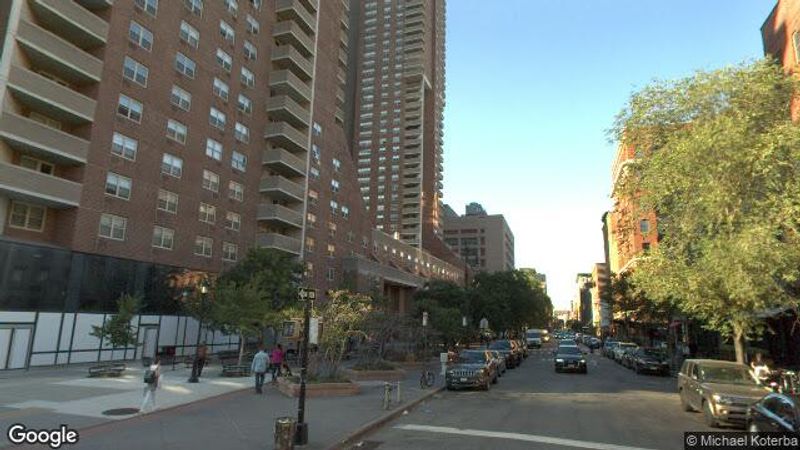
Tribeca, short for the Triangle Below Canal Street, sits in Lower Manhattan roughly bounded by Canal Street to the north, Broadway to the east, Chambers Street and the Civic Center to the south, and the Hudson River to the west. It is one of the most tightly defined and consistently prestigious neighborhoods our team advises clients on in New York.
The area's character was forged in the 19th century as a hub for the butter, egg, and produce trade, giving it its dense stock of cast-iron warehouses and loft buildings. Manufacturing decline in the mid-20th century left these structures vacant, and artists moved in during the 1970s, converting raw floors into live-work spaces long before that was fashionable.
By the 1990s, celebrities and finance executives followed, and Tribeca shed its industrial reputation for one of quiet, monied exclusivity. Today it reads as low-rise, cobblestoned, and deliberately understated compared to Midtown, appealing to buyers who want scale and privacy rather than skyline branding. Our team in New York frequently describes it as Manhattan's most residential downtown enclave.
The Housing Stock — Buildings, Architects, Eras, Unit Types
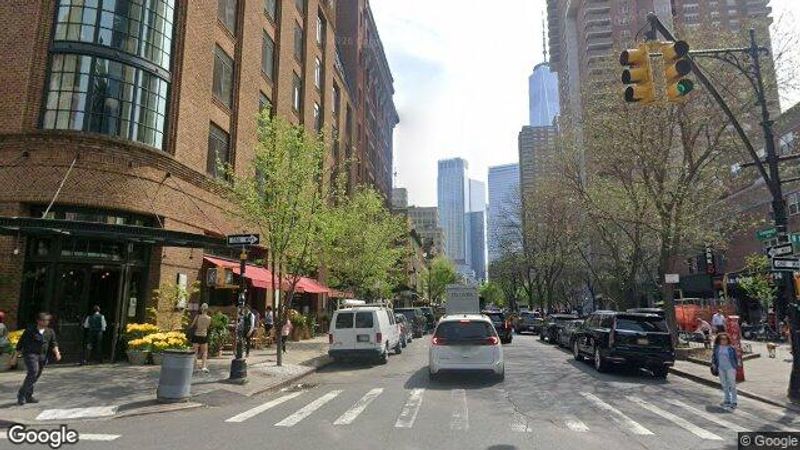
Tribeca's defining product is the converted loft: raw industrial floors reworked into apartments with 10-to-14-foot ceilings, exposed columns, and oversized windows. Buildings like 108 Leonard Street, a former New York Life clock tower converted by Elad Group, and 443 Greenwich Street, a former book bindery redeveloped with interiors by Ralph Lauren's design team, exemplify this genre.
New construction has layered a second identity onto the neighborhood. Herzog & de Meuron's 56 Leonard Street, nicknamed the Jenga Tower for its cantilevered stacked-glass form, and 111 Murray Street by Kohn Pedersen Fox, brought full-service condo towers with pools, screening rooms, and white-glove staff to a district once defined by walk-up loft buildings.
Unit types range widely: raw pre-war lofts of 1,500 to 4,000 square feet in buildings like the Powell Building at 105 Duane Street, mid-rise co-ops converted in the 1980s along Franklin and Harrison Streets, and full-service new-development condos on Warren, Murray, and Greenwich Streets. Townhouses on Harrison Street's row and along Staple Street round out the inventory for buyers seeking single-family scale.
Prices and Rents — What Tribeca Actually Costs
Tribeca consistently ranks among Manhattan's highest-priced residential markets, often trading above even the Upper East Side and Chelsea on a per-square-foot basis. Pricing depends heavily on whether a unit sits in a pre-war loft conversion or a full-service new-development tower, with the latter commanding a meaningful premium for amenities and building services.
As of early 2026, resale condos in Tribeca run roughly $2,000 to $3,200 per square foot, with trophy units in towers like 56 Leonard or 111 Murray exceeding that range. Co-op lofts trade somewhat lower, reflecting board approval processes and financing restrictions, while rentals track the overall strength of the downtown Manhattan leasing market. All figures below are approximate and subject to market conditions.
| Unit Type | Typical Size | Sale Price Range | Monthly Rent Range |
|---|---|---|---|
| Studio/1-bed co-op or condo | 500-750 sq ft | $900K - $1.6M | $4,000 - $6,500 |
| 2-bed loft conversion | 1,200-1,800 sq ft | $2.2M - $4.5M | $8,500 - $13,500 |
| 3-bed full-service condo | 1,800-2,500 sq ft | $4.5M - $8M | $14,000 - $22,000 |
| Penthouse/trophy unit | 3,000+ sq ft | $8M - $25M+ | $25,000 - $60,000+ |
| Townhouse | 3,500-6,000 sq ft | $9M - $20M+ | $30,000 - $70,000+ |
Tribeca approximate pricing by unit type, early 2026 (subject to market conditions)
Compared with SoHo or the West Village, Tribeca offers larger average floor plates and quieter streets for a comparable or slightly higher entry price. Our team in New York generally steers clients toward full-service condos when liquidity and rental flexibility matter, and toward loft co-ops when the priority is architectural character and long-term hold.
Daily Life and Transit — Getting Around, Schools, Parks, Groceries
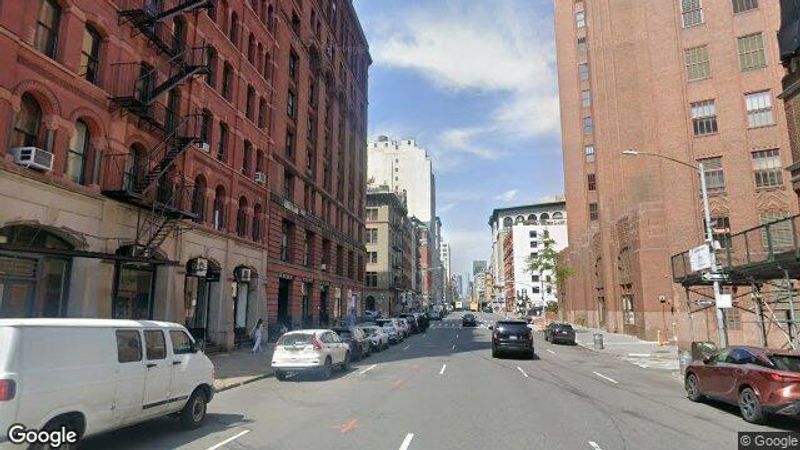
Tribeca is served by the 1, 2, 3, A, C, E trains along Chambers Street and Canal Street, plus the N/Q/R/W and J/Z lines within a short walk near Canal. Commutes to Midtown run roughly 15 to 20 minutes by subway, and the neighborhood's grid makes most errands walkable, a rarity for buyers accustomed to car-dependent cities.
Daily amenities skew upscale and low-key: Whole Foods on Warren Street, Eataly Downtown nearby, and independent grocers along Hudson Street cover essentials, while Washington Market Park and Hudson River Park's Tribeca segment provide green space and waterfront running paths. Families weigh options including P.S. 234 and the Spruce Street School, both well regarded within District 2.
| Subway Lines | Nearest Stations | Commute to Midtown | Commute to Financial District |
|---|---|---|---|
| 1, 2, 3 | Chambers St, Franklin St | 15-20 min | 5-8 min |
| A, C, E | Chambers St, Canal St | 12-18 min | 5-10 min |
| N, Q, R, W | Canal St | 18-22 min | 7-10 min |
| J, Z | Canal St | 20-25 min | 8-10 min |
Tribeca transit and commute snapshot
Tribeca's low building heights and cobblestone streets keep it noticeably quieter than SoHo just blocks north, making it attractive to families and executives who still want a five-minute commute to Wall Street or Midtown by car or subway. The Hudson River waterfront also offers ferry access to New Jersey, a useful alternative during subway disruptions.
Final Thoughts
Tribeca suits buyers who want scale, architectural pedigree, and proximity to both the Financial District and Midtown without the density of a high-rise-heavy neighborhood. It rewards those comfortable paying a premium for loft ceilings, cobblestone streets, and a genuinely low-key residential atmosphere rarely found this close to Wall Street.
It is less suited to buyers seeking nightlife density, younger rental inventory, or lower entry price points; SoHo, the West Village, or parts of Brooklyn typically serve those priorities better. Tribeca's co-op board processes also demand patience and financial documentation that some international buyers find unfamiliar, though far from unmanageable with proper guidance.
Our team in New York works within our licensed brokerage network to match overseas clients with the right building type, whether that's a full-service tower on Murray Street or a classic loft conversion on Franklin Street. For long-term capital preservation and daily livability in downtown Manhattan, few neighborhoods match Tribeca's track record.
Reinvent NY provides business consulting, operational support, and coordination services. Real estate services are provided through licensed professionals and applicable brokerage relationships. This article is for informational purposes only and does not constitute legal or investment advice.
Nearby neighbourhoods: Turtle Bay, Two Bridges, Upper East Side. All Manhattan guides are indexed under New York neighbourhood guides.
This article is also available on our Japanese site.

Satoshi Onodera
Founder & CEO, Reinvent NY Inc.
Founded Reinvent NY in 2024. Providing relocation support from all over the world to America.
Ready to Get Started?
Our team in New York is ready to help with your visa, real estate, or relocation needs.
Schedule a ConsultationFrequently Asked Questions
What are Tribeca's official boundaries?
Tribeca runs roughly from Canal Street south to Chambers Street, bounded by Broadway to the east and the Hudson River to the west. This triangle shape gives the neighborhood its name: Triangle Below Canal Street.
Are co-ops or condos more common in Tribeca?
Both exist in significant numbers. Pre-war loft conversions are frequently structured as co-ops, while newer towers like 56 Leonard and 111 Murray Street are condos, generally preferred by international buyers for easier purchase approval.
How does Tribeca compare in price to SoHo?
Tribeca often trades at a premium to SoHo on a per-square-foot basis, partly due to larger average unit sizes and quieter residential streets. Both remain among Manhattan's most expensive neighborhoods.
Is Tribeca a good fit for families?
Yes. Washington Market Park, Hudson River Park access, and well-regarded schools like P.S. 234 and the Spruce Street School make Tribeca a strong option for families wanting downtown proximity with green space.
What subway lines serve Tribeca?
The 1, 2, 3, A, C, and E trains stop at Chambers Street, with additional N, Q, R, W, and J, Z access near Canal Street. Most Midtown commutes run 15 to 20 minutes.
Can foreign buyers purchase in Tribeca easily?
Condos generally present fewer restrictions for foreign buyers than co-ops, which often require extensive financial disclosure. Our licensed brokerage network can guide structuring for smoother approval in either building type.
What is the typical rental range in Tribeca?
As of early 2026, one-bedrooms typically rent for $4,000 to $6,500 monthly, while larger lofts and full-service three-bedrooms range from $14,000 to $22,000, figures approximate and subject to market conditions.
Real Estate Guides & Data
More guides
- Marketing an Apartment: The Listing's Craft
- Reading NYC Market Reports: Data Without the Spin
- Moving Into a NYC Building: Movers, Rules, and COIs
- Buying New Development: The Costs Sponsors Shift to You
- Renting in New York: What It Costs and How Approval Works
- Owning Through Cycles: The Holder's Playbook
Related Articles
Greenwich Village Real Estate Guide 2026
A local advisor's guide to buying or renting in Greenwich Village, Manhattan: buildings, prices, transit, and daily life for international buyers.
West Village Real Estate Guide 2026
A local advisor's guide to buying and renting in West Village, Manhattan — buildings, prices, transit, and schools, compiled by Reinvent NY's New York team.
SoHo NYC Real Estate Guide 2026
An in-depth 2026 guide to buying and renting in SoHo, Manhattan — buildings, prices, transit, and daily life from our team on the ground in New York.
Chelsea NYC Real Estate Guide 2026
An expert guide to buying and renting in Chelsea, Manhattan: buildings, prices, transit, and lifestyle insight from our team on the ground in New York.