30 Park Place: Four Seasons Residences Downtown
30 Park Place brought Four Seasons service to Tribeca in a limestone tower. Robert A.M. Stern Architects designed it, the same practice responsible for 15 Central Park West and 220 Central Park South, and it opened in 2016 with a hotel below and private condominium residences above.
It is the downtown counterpart to what Stern built uptown, in a district with a very different character. Let's look at what the combination delivers.
1. What the Building Is
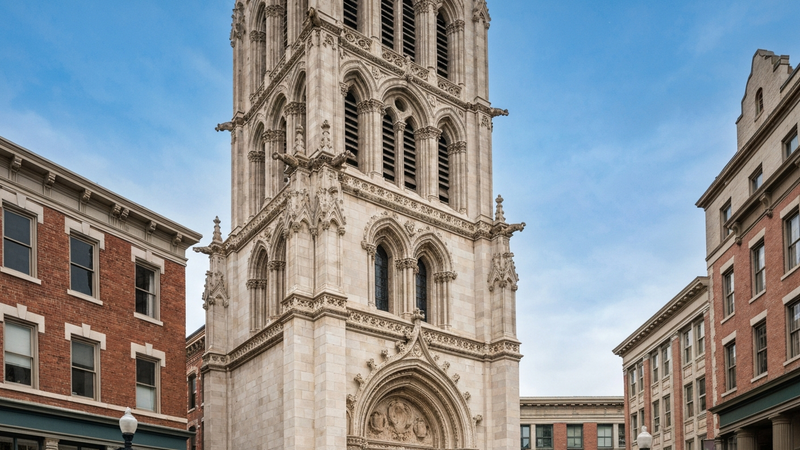
Stone rather than glass, with proportions drawn from prewar Manhattan rather than from contemporary tower design. In a downtown skyline dominated by curtain wall, that reads as a deliberate argument rather than a stylistic preference.
The internal arrangement is the standard branded configuration: a hotel occupying the lower portion, residences above, and a service infrastructure that exists because the hotel requires it and that residents draw on under the condominium documents.
That is the commercial logic of the whole model. A residential building alone could not justify staffing at hotel depth; a building already running a hotel can extend it upward at a marginal cost residents then fund monthly.
| Attribute | Detail |
|---|---|
| Address | 30 Park Place, Tribeca, Manhattan |
| Completed | 2016 |
| Architect | Robert A.M. Stern Architects |
| Configuration | Four Seasons hotel below, private residences above |
| Cladding | Limestone |
| Ownership | Condominium |
Building facts. Unit-level figures - size, exposure, charges, tax - must be obtained for the specific residence.
The location is on Google Maps here, near City Hall.
2. What the Branded Model Buys
Three separable things. A service standard set by an operator rather than by a volunteer board. A name that travels, which shortens the explanation at resale to a purchaser abroad. And an operating discipline, since the operator has its own reputation attached to how the building runs.
What it does not buy is permanence. The arrangement rests on an agreement with a term, and agreements end or are renegotiated. That is not a flaw in the model, but it does make the document something to read rather than assume.
It also costs money continuously. Branded buildings carry higher common charges because the staffing depth that justifies the name is funded every month, not once at purchase.
Our branded residences guide sets out the questions to ask about the agreement, and our article on branded buildings in New York covers how the market prices them.
3. Downtown Versus Uptown for the Same Architect
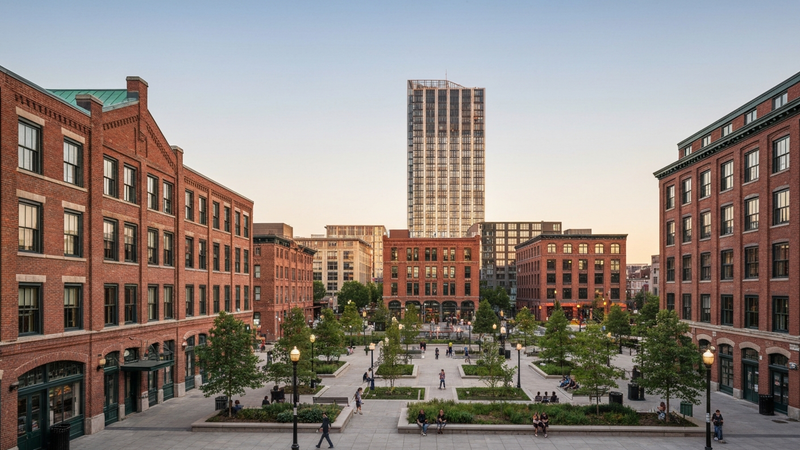
Stern's uptown buildings sell a park frontage that cannot be extended. This one sells something different: a limestone tower in a low-rise historic district, with the financial centre, the waterfront and the courts within walking distance.
The practical differences are real. Tribeca and the City Hall area have a quieter street pattern than Midtown, lower surrounding heights, and a much higher proportion of condominium stock — which matters enormously to a non-resident buyer.
The trade is recognition. Central Park needs no explanation to a purchaser who has never visited New York; a downtown address usually does, and at resale into an international market that sentence has a cost.
Weigh it against carrying cost. Manhattan condominium operating expense runs a median $15.52 per square foot a year, and branded buildings sit well above it — our luxury purchase guide covers how to model the full monthly figure.
4. Buying Here as an Overseas Purchaser

Procedurally straightforward as a condominium: no board approval vote, non-resident and entity ownership accepted, subletting subject to building rules. That is why branded condominiums appear so consistently on international shortlists.
Mansion tax reaches 2.25% between $5 and $10 million and 3.25% above $10 million, charged on the whole price and paid by the buyer at closing. Where units are sold by a sponsor, the New York City and State transfer taxes are customarily shifted to the purchaser, roughly a further 1.8 to 2.0%.
Settle ownership structure before contract; US estate tax reaches non-resident owners above a $60,000 exemption on US-situs assets. See our estate tax guide and new development guide.
Where the hotel ends and the residence begins
Establish which entrance residents use, which lifts serve the residential floors, how deliveries and service access are handled, and how shared costs are divided between the two operations. Mixed-use buildings work when that boundary is precise.
The allocation sits in documents rather than in conversation and determines a meaningful share of the monthly bill. Ask your attorney to identify exactly which costs the residential condominium bears.
Using an apartment part of the year
A branded building solves most of the practical problems of part-year occupancy, which is precisely why owners who split their time between countries gravitate toward this model rather than to unbranded buildings.
Confirm what is actually included as opposed to charged separately, and read the house rules on subletting before assuming an apartment can be let while you are away. Our pied-a-terre guide covers the arrangements that hold up.
What a resale market of this size looks like
Buildings of this type produce a steady but modest volume of closed sales, and each one is public record. That is enough to price an apartment properly, provided the comparison adjusts for floor, exposure and condition rather than averaging.
Where the record within the building is thin, extend the set to comparable branded buildings elsewhere in Manhattan. Our negotiation guide covers how to do that without importing the wrong assumptions.
Final Thoughts: Uptown Architecture, Downtown Address

This building offers the architectural language Stern established uptown and the service standard of a hotel operator, at a downtown address that costs less to buy into than the park frontage does. For a buyer who wants the service and does not need Central Park at the window, that is a rational trade rather than a compromise.
We cover Tribeca and the branded buildings on Satoshi Onodera's YouTube channel and on Instagram. Before signing at a sales gallery, talk to our team and we will read the operator agreement and the carrying costs first. Real estate brokerage services are provided through licensed professionals.
One comparison worth running before deciding. Put this building beside the branded options in Midtown and NoMad on three measures only: service depth, total carrying cost per square foot, and the remaining term of the operator agreement.
Buyers who begin certain that a particular brand is the requirement frequently discover that what they actually wanted was the staffing level, which several buildings provide at materially different prices.
A note on timing for a buyer abroad. Almost all of the diligence here is document work that can be completed before anyone travels, and the operator agreement in particular takes an attorney time to read properly. Begin that reading while the apartment is still one of several under consideration rather than after an offer has been accepted.
Reinvent NY provides business consulting, operational support, and coordination services. Legal advice and immigration filings are handled by independent licensed attorneys. Real estate services are provided through licensed professionals and applicable brokerage relationships. This article is for informational purposes only and does not constitute legal or investment advice.
More buildings worth knowing: Aman New York Residences, Brooklyn Point, The Brooklyn Tower. The full set is indexed under New York building profiles.

Satoshi Onodera
Founder & CEO, Reinvent NY Inc.
Founded Reinvent NY in 2024. Providing relocation support from all over the world to America.
Ready to Get Started?
Our team in New York is ready to help with your visa, real estate, or relocation needs.
Schedule a ConsultationFrequently Asked Questions
Where is 30 Park Place?
30 Park Place in Tribeca, near City Hall in lower Manhattan. The location is on [Google Maps](https://maps.google.com/?q=30+Park+Place+New+York).
Who designed it?
Robert A.M. Stern Architects, the practice behind 15 Central Park West and 220 Central Park South. The building was completed in 2016.
How is the building arranged?
A Four Seasons hotel occupies the lower portion and private condominium residences sit above it, which is the standard branded-residence configuration.
What does the brand actually provide?
Service standards delivered by the hotel operation under an agreement with the condominium. Owners hold ordinary condominium title regardless.
Why is it limestone rather than glass?
Stern's practice consistently uses stone and classical proportion rather than curtain wall, which is the deliberate contrast with the glass towers built in the same period.
Can an overseas buyer purchase here?
Yes. It is a condominium, so there is no board approval vote and non-resident and entity ownership are generally accepted.
What should I confirm first?
The term and renewal mechanics of the operator agreement, how hotel and residential costs are allocated, the reserve balance, assessment history, and the actual monthly charges for the specific residence.
Real Estate Guides & Data
More guides
- Trusts and US Property: The Structures Behind the Names
- US Real Estate Investing: Yields, Taxes and How to Buy
- Walk-Up vs Doorman Buildings: The Service Premium
- 1031 Exchanging Into NYC: Trading Up to Manhattan
- Assessed vs Market Value: Why the City's Number Differs
- Co-op to Condo Conversion: Why Buildings Rarely Switch
Related Articles
Buying a Townhouse in NYC: A 2026 Buyer's Guide
Buying a townhouse in NYC means owning the land, the roof and every repair. How pricing, property tax class, financing and due diligence actually work.
Woolworth Tower Residences: Living in a 1913 Landmark
The top of Cass Gilbert's 1913 Woolworth Building was converted to private residences. What a landmark conversion of this kind offers, and what to confirm.
Ditmas Park Brooklyn Real Estate Guide 2026
An authoritative 2026 guide to Ditmas Park real estate: Victorian housing stock, prices, rents, transit, and schools for international buyers and renters.
Windsor Terrace Brooklyn Real Estate Guide 2026
Our 2026 guide to Windsor Terrace, Brooklyn covers boundaries, housing stock, prices, rents, transit, and schools for buyers and renters.