Buying a Townhouse in NYC: A 2026 Buyer's Guide
A $6.5 million Manhattan condo and a $6.5 million Manhattan townhouse are not the same purchase. One buys an apartment inside a building someone else runs. The other buys the building, the land under it, and every obligation attached to both.
Townhouse buyers trade oversight for autonomy. There is no board interview, no common charges, and no managing agent deciding when the roof gets replaced — because there is nobody to decide but you.
In this article, we'll look at how townhouse pricing works across Manhattan and Brooklyn in 2026, how a two-to-four family building changes the financing and tax math, and the due diligence items condo buyers never have to think about.
What You Actually Own — and What You Carry
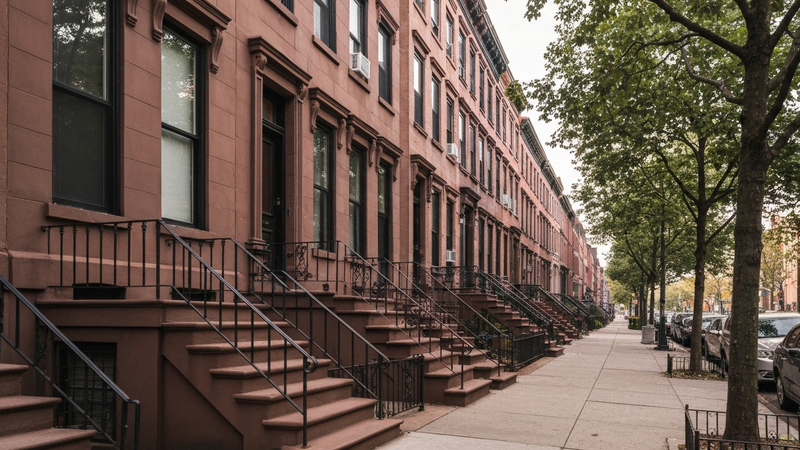
A townhouse is fee-simple real property. You hold title to the land, the structure, and the airspace above it — not a percentage interest in common elements, and not shares in a corporation that leases an apartment back to you.
That difference removes the two frictions buyers complain about most. There is no board package, no interview, and no approval standing between you and a closing or a future sale. Our guide to buying in NYC compares the three ownership structures side by side.
The trade is total responsibility. No common charges also means no reserve fund and no shared capital plan. A failed boiler, a six-figure facade repointing, a leaking roof, or a sidewalk violation lands on one balance sheet: yours.
Price Context in 2026: Manhattan Versus Brooklyn
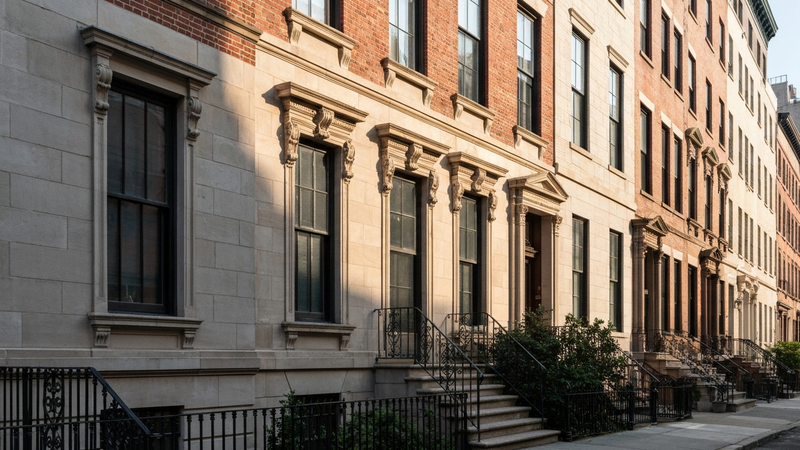
Prime Manhattan townhouses — the Upper East Side, Greenwich Village, the West Village, Chelsea — generally trade in a band of roughly $4 million to $8 million and well above, with trophy houses near Central Park clearing $20 million. Treat these as approximate ranges, not quotes.
Brooklyn brownstones in Park Slope, Brooklyn Heights, Fort Greene, Clinton Hill and Bedford-Stuyvesant generally run roughly $1.5 million to $4 million, with restored wide houses in the strongest districts pushing higher. Width often moves price more than the address does.
| Item | Townhouse | Condo |
|---|---|---|
| What you own | Fee simple: land, structure, airspace | Unit interior plus a percentage of common elements |
| Approval to buy | None — there is no board | Condo board right of first refusal, rarely exercised |
| Monthly common charges | None | Commonly around $1.50 to $3.00 per sq ft per month |
| Capital repairs | 100% yours, unbudgeted and unscheduled | Shared; funded through reserves and assessments |
| NYC tax class | Class 1 (1-3 family) or Class 2A (4-10 units) | Class 2 |
| Financing | Residential loan, including 2-4 unit programs | Standard residential condo mortgage |
| Resale pool | Thinner — fewer qualified, willing buyers | Deeper and more liquid |
Common charge figures are general 2026 market ranges and vary widely by building, block and condition.
A 20-foot-wide house lives dramatically better than a 16-foot house with the same square footage, and the market prices that gap. Delivery condition matters just as much: a house sold vacant and gut-ready and the same house with tenants in place are two different assets.
The Monthly Carry Nobody Quotes You
Because there is no common charge line, buyers often assume the monthly cost is simply the mortgage plus taxes. It is not. Insurance is the first surprise: you are insuring an entire structure rather than an apartment's interior, and townhouse policies frequently run several times a comparable condo HO-6 policy.
After that come heat and hot water for the whole building, water and sewer charges billed directly by the city, exterior and roof maintenance, snow and sidewalk obligations, and pest and gutter service. A disciplined owner also funds a private reserve — treating 1% to 2% of the house's value per year as a capital budget is a reasonable planning assumption, not a rule.
Single-Family or Two-to-Four Family?
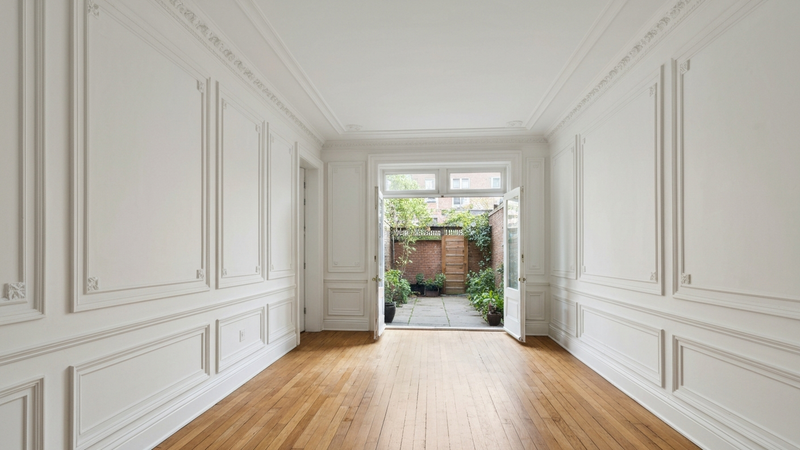
Most brownstones were built as multi-family or converted decades ago, and a two-to-four family house is a different instrument than a single-family. You occupy one unit and the rest of the building services part of the debt.
The financing advantage is structural. Buildings with one to four residential units qualify for residential mortgage programs; five units and up moves you into commercial underwriting, with shorter terms, balloon maturities and debt-service-coverage sizing. Our multifamily guide covers that threshold.
Taxes shift at the same line. One-to-three family houses sit in Class 1, where the NYC Department of Finance caps assessed value growth at 6% a year and 20% over five years, regardless of how fast the market moves.
A four-unit building moves into Class 2A, where those caps loosen to 8% a year and 30% over five years. It is a meaningful difference over a long hold, and it is the reason many buyers stop at three units. Our note on NYC property tax on condos covers the apartment side of the same system.
The Counterargument: You Just Became a Landlord
However, some argue the rental income is not worth what comes attached to it. You are now handling vacancies, repairs at 11pm, and New York's tenant protection rules — and if a unit has a regulated tenancy history, the rent you underwrote may not be the rent you can legally charge.
The objection is fair, which is why the rent roll and the DHCR registration history belong in due diligence rather than in the pro forma. But the arithmetic still favors the multi-family in most cases: a garden apartment covering a meaningful share of the monthly carry is what makes a $4 million house real instead of theoretical.
Due Diligence a Condo Buyer Never Has to Do
Start with the certificate of occupancy, and confirm it matches how the house is actually used. Many pre-1938 buildings have no C of O at all — the substitute is a Department of Buildings Letter of No Objection — and a house marketed as a legal three-family with paperwork for two is a problem you inherit at closing.
Structure and facade come next. Townhouses are usually too short to fall under the city's Facade Inspection Safety Program, which reaches buildings over six stories. That is not a reprieve; it means nobody has been legally required to look. Hire a structural engineer alongside the standard home inspection.
Then party walls. You share walls with the houses on both sides, so a neighbor's underpinning, roof work or unresolved water intrusion becomes your legal problem. Ask whether any party-wall agreements or easements are recorded, and have the engineer look at both shared walls, not just the interior.
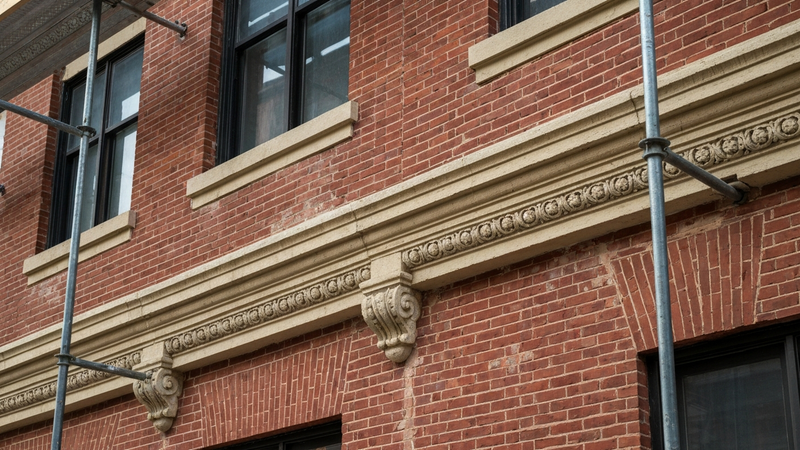
Landmark status is the other one. With roughly 38,000 properties inside New York City's historic districts, the Landmarks Preservation Commission may review your windows, cornice, stoop, ironwork and anything else visible from the street — which changes both the cost and the calendar of any renovation.
| Renovation scope | Approximate cost | Typical timeline |
|---|---|---|
| Cosmetic refresh: paint, floors, fixtures | $75-$150 per sq ft | 2-4 months |
| Kitchen, baths and systems upgrade | $200-$350 per sq ft | 6-10 months |
| Full gut renovation | $300-$600 per sq ft | 12-24 months |
| Gut plus rear extension or cellar dig-out | $600 per sq ft and up | 18-30 months |
Approximate 2026 New York City ranges only; landmark review, party-wall agreements and permit timing push both cost and schedule toward the top of each band.
Price the renovation before you bid, not after the contract is signed. Have a New York real estate attorney pull violations, open permits and the C of O history first — our overview of what a NYC real estate attorney does explains where that review sits in the timeline.
Final Thoughts

The last item is the exit. Townhouse resale pools are thinner than condo pools — fewer buyers can write the check, fewer still want the maintenance obligation, and in slow markets the marketing period stretches from months into quarters.
That argues for buying a house you would be content to hold for ten years rather than five, and for weighting width, light and block quality above finishes. Finishes can be bought later. A 16-foot lot cannot be widened.
For buyers who want control of their own building, want the option to rent part of it, and can absorb capital costs that arrive without a vote, a townhouse remains the most complete form of ownership in New York. Speak with our team about how a specific house prices out before you make an offer.
Reinvent NY provides business consulting, operational support, and coordination services. Legal advice and immigration filings are handled by independent licensed attorneys. Real estate services are provided through licensed professionals and applicable brokerage relationships. This article is for informational purposes only and does not constitute legal or investment advice.
More buying guides: Choosing a New York Property Advisor From Overseas, Financing a Branded Residence as a Foreign National, Buying a New York Condo as an International Buyer.

Satoshi Onodera
Founder & CEO, Reinvent NY Inc.
Founded Reinvent NY in 2024. Providing relocation support from all over the world to America.
Ready to Get Started?
Our team in New York is ready to help with your visa, real estate, or relocation needs.
Schedule a ConsultationFrequently Asked Questions
Do NYC townhouses have common charges or maintenance?
No. A townhouse is fee-simple property, so there is no condominium common charge and no co-op maintenance. In exchange, there is no reserve fund either — heating systems, roof, facade, plumbing and sidewalk repairs are funded entirely by the owner. Most owners we work with set aside a private reserve each year rather than waiting for the first six-figure repair.
Is there board approval when buying a townhouse in NYC?
No. There is no board package, no interview and no approval process, which is the main reason many international and self-employed buyers prefer townhouses to co-ops. The purchase is a straightforward transfer of real property, subject only to contract, title and lender requirements.
How are property taxes calculated on a NYC townhouse?
One-to-three family houses fall in Class 1, where the assessed value is a fraction of market value and assessment growth is capped at 6% a year and 20% over five years. A four-unit building falls into Class 2A, where the caps are 8% and 30%. Always pull the property's actual Department of Finance bill rather than estimating from the asking price.
Can I get a normal mortgage on a two-family or three-family townhouse?
Yes. Buildings with one to four residential units are financed as residential property, so standard 30-year amortizing programs are available, and lenders will often count a portion of the documented rental income toward qualifying. Five units or more shifts the loan into commercial underwriting with different terms.
What does a gut renovation cost in New York City?
Full gut renovations commonly run roughly $300 to $600 per square foot as of 2026, and adding a rear extension or digging out a cellar pushes past that. Landmark district review, party-wall agreements with neighbors and permit timing are the variables that move a project to the top of the range.
What is a party wall and why does it matter?
A party wall is a shared structural wall standing on the boundary between two attached houses, with each owner holding rights and obligations in it. It matters because a neighbor's excavation, roof replacement or unresolved leak can damage your property and create a dispute that no condo owner would ever face. Confirm the condition and any existing agreements before closing.
Are townhouses harder to sell than condos?
Generally yes. The buyer pool is smaller because the price point is higher and the maintenance responsibility deters some purchasers, so marketing periods tend to be longer than for comparable apartments. Buyers should underwrite a longer holding period and a wider bid-ask spread at resale.
Real Estate Guides & Data
Related Articles
Offering Plan NYC: What Buyers Check Before Signing
The NYC offering plan is the disclosure document filed with the NY Attorney General. What is inside it, why amendments matter, and what attorneys check first.
Greenwood Heights Brooklyn Real Estate Guide 2026
A senior advisor's guide to Greenwood Heights, Brooklyn: boundaries, housing stock, 2026 prices and rents, transit, and who this quiet neighborhood suits.
Woolworth Tower Residences: Living in a 1913 Landmark
The top of Cass Gilbert's 1913 Woolworth Building was converted to private residences. What a landmark conversion of this kind offers, and what to confirm.
30 Park Place: Four Seasons Residences Downtown
Robert A.M. Stern's 30 Park Place put Four Seasons service in Tribeca, hotel below and private residences above. What that model delivers and what to confirm.