Offering Plan NYC: What Buyers Check Before Signing
Every new condominium and cooperative offered in New York must be sold under an offering plan filed with the New York State Attorney General. It routinely runs several hundred pages, and most buyers never open it.
That omission has a price tag. The offering plan is the only document that binds the sponsor, and it contains the terms buyers otherwise discover the hard way: who controls the board, what the sponsor is free to change, and whether the first-year budget was ever realistic.
In this article, we'll break down what sits inside an offering plan, which sections an attorney reads first, why amendments often matter more than the original document, and how the Attorney General's escrow rules protect your deposit.
What an Offering Plan Is — and What It Is Not

An offering plan is the disclosure document a sponsor must file with the New York State Attorney General before selling condominium units, cooperative shares, or interests in a converted building. The authority comes from the Martin Act, New York's securities statute, which treats these interests as securities.
It is not an endorsement. The Attorney General accepts the plan for filing, which is a review of disclosure completeness — not a judgment that the building is well built, fairly priced, or a sound investment. Plans say so on the cover page, and buyers still misread it every year.
No unit may be offered or sold before the plan is accepted, and the sponsor must give you a copy before you sign a purchase agreement. Our new development guide covers how sponsor sales differ from resale, and our note on NYC sponsor units explains why they trade on different terms.
Inside the Plan: The Sections That Decide Your Deal

The plan opens with Special Risks — the sponsor's own list of what could go wrong, placed at the front by regulation. It is the shortest section and the highest-yield read: unresolved construction issues, tax abatement assumptions and sponsor rights to change the building all surface here first.
From there the document describes the property, the units and the money. Schedule A lists every unit with its price, square footage and common interest percentage. Schedule B is the projected first-year operating budget, and it produces the common charge or maintenance figure the sales office quoted you.
| Section | What it contains | What to check |
|---|---|---|
| Special Risks | The sponsor's list of material risks, printed at the front | Read it first — the most honest summary of the deal, in the fewest pages |
| Description of Property | Building, systems, and the architect or engineer report | Whether the report is a real condition survey or a formality |
| Schedule A | Unit prices, square footage, common interest percentages | Your common interest percentage — it fixes your share of every charge |
| Schedule B | First-year operating budget and projected charges | Tax assumptions, staffing levels, and whether reserves are funded |
| Rights and Obligations of Sponsor | What the sponsor may change and when | Rights to combine, subdivide or reconfigure unsold units |
| Control of the Board | How long the sponsor appoints board members | When control transfers and how many seats the sponsor keeps |
| Escrow and Deposits | Where deposits sit and who holds them | Named escrow agent, the bank, and the release conditions |
The Special Risks section is required at the front of the plan — it is the fastest read with the highest value per page.
Read Schedule A for your own line. The common interest percentage is not cosmetic: it fixes your share of common charges and your share of every future assessment for the life of the building, and it is very difficult to change afterward.
Amendments and Special Risks: Where the Problems Live
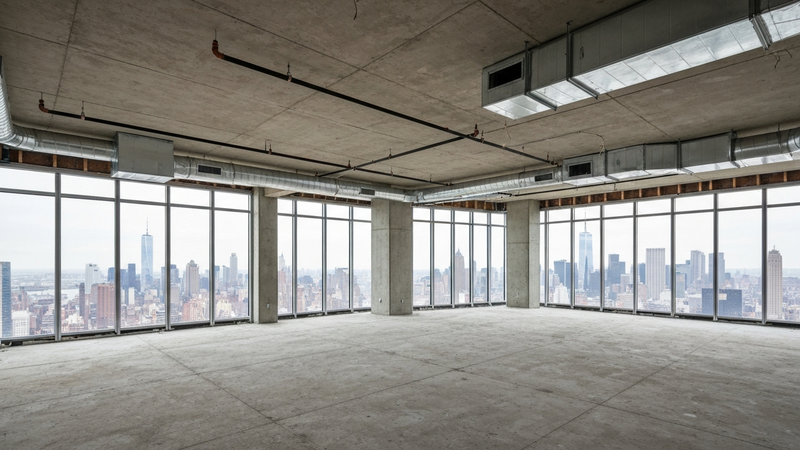
The original plan is a snapshot. Material changes — construction delays, price reductions, budget revisions, a shift in the projected tax abatement, a change in unit configuration — arrive as amendments, each filed with the Attorney General and delivered to purchasers.
Amendments are also a market signal. A plan amended repeatedly to cut prices or push back the projected first closing tells you more about absorption in that building than any marketing material will. Ask for the complete amendment history, not only the current version.
The Counterargument: Nobody Reads 400 Pages
Some argue the exercise is theater. The sponsor drafted the document, the Attorney General does not pass on its substance, and a buyer competing for a unit in a strong building has no leverage to change a single word of it.
That is true about the plan and wrong about the outcome. The negotiation happens in the rider to the purchase agreement, where experienced counsel adds outside dates, punch-list obligations, deposit protections and remedies for delay. You cannot draft that rider without first knowing what the plan already concedes to the sponsor.
Your Deposit, the First-Year Budget, and the Fine Print

Deposits in a sponsor sale are trust funds under New York law. They must be held in a segregated escrow account at a New York bank, with the escrow agent named in the plan, and they may not be released to the sponsor except on the terms the plan states.
The protection is real but not self-executing — the plan defines the account and the release conditions, and those terms vary between offerings. Our explanation of how earnest money deposits work covers what happens when a sponsor deal falls apart.
Then test Schedule B against reality. First-year budgets are projections, and the most common source of error is real estate taxes modeled on an abatement that has not been granted, or on an unfinished building the city has not yet fully assessed. Common charges rising after year one is the norm, not the exception.
Two line items surprise buyers at the closing table: a working capital contribution, commonly one to two months of common charges paid into the building and non-refundable, and the sponsor's transfer taxes, which new development contracts routinely shift onto the purchaser. Both are disclosed in the plan. Neither is in the price.
Final Thoughts

Resale buyers are not exempt. A co-op purchase in a 1962 building still runs on the original offering plan plus every amendment filed since, and those documents set the flip tax, the sublet policy, and what the corporation is entitled to charge you.
Ask the managing agent for the plan, the full amendment history and the last two years of financial statements, then read them alongside the board minutes. Our guide to making an offer covers where in the timeline that review belongs.
An offering plan is not light reading and is not meant to be read alone. Retain a New York real estate attorney before you sign — see our overview of what a NYC real estate attorney does — and treat the plan as the terms of the deal rather than as paperwork. Speak with our team if you want a second read before you commit.
Reinvent NY provides business consulting, operational support, and coordination services. Legal advice and immigration filings are handled by independent licensed attorneys. Real estate services are provided through licensed professionals and applicable brokerage relationships. This article is for informational purposes only and does not constitute legal or investment advice.

Satoshi Onodera
Founder & CEO, Reinvent NY Inc.
Founded Reinvent NY in 2024. Providing relocation support from all over the world to America.
Ready to Get Started?
Our team in New York is ready to help with your visa, real estate, or relocation needs.
Schedule a ConsultationFrequently Asked Questions
What is an offering plan in NYC?
An offering plan is the disclosure document a sponsor must file with the New York State Attorney General before selling condominium units, cooperative shares or interests in a converted building. It describes the property, the units, the sponsor's obligations and the projected first-year budget, and it is the document that legally governs the offering.
Does the Attorney General approve the offering plan?
No. The Attorney General accepts the plan for filing, which is a review of whether the required disclosures are present and adequate. It is expressly not an approval of the building's construction quality, the pricing, or the merits of the investment, and every plan states this on its cover.
Who has to give me the offering plan?
The sponsor's sales office must provide it, and you should have it before you sign a purchase agreement. If a sales team is collecting reservations or deposits without producing a plan and its amendments, that is a question for your attorney before any money moves.
What is the Special Risks section?
It is the sponsor's own disclosure of the material risks in the offering, required to appear at the front of the plan. It typically flags unresolved construction items, assumptions behind projected taxes, the sponsor's right to modify unsold units, and any litigation. It is the highest-value section relative to its length.
Is my deposit protected in a new development purchase?
Deposits are treated as trust funds under New York law and must be held in a segregated escrow account at a New York bank, with the escrow agent identified in the plan. The specific release conditions vary by offering, so your attorney should confirm who holds the money and under what circumstances it can be released to the sponsor.
Do I need the offering plan when buying a resale co-op?
Yes. The original plan plus every amendment still governs the building, and together they set the flip tax, sublet policy, alteration rules and the structure of the corporation. Request them from the managing agent along with the last two years of financial statements and recent board minutes.
Why do common charges usually rise after the first year?
Schedule B is a projection for the first year of operation only. Real estate taxes are often modeled before the city has fully assessed a completed building or before an abatement is granted, and staffing, insurance and energy costs tend to be estimated conservatively low. Budget for the figure quoted in the plan to increase once the building stabilizes.
Real Estate Guides & Data
More guides
- DSCR Loans: The Property Qualifies, Not You
- Your First 90 Days as a Landlord: The Setup Quarter
- New York vs Dubai, Singapore, Hong Kong, London
- Home Offices in NYC Apartments: Rules and Realities
- Five Ways Real Estate Investors Come Unstuck
- Buying Above $5 Million in New York: What Changes
Related Articles
One Wall Street: An Art Deco Bank, Now Apartments
Ralph Walker's 1931 tower at One Wall Street became one of New York's largest office-to-residential conversions. What that offers, and what to confirm first.
Coney Island Brooklyn Real Estate Guide 2026
An expert 2026 guide to buying and renting in Coney Island, Brooklyn — housing stock, prices, transit, and who this seaside neighborhood truly suits.
Greenwood Heights Brooklyn Real Estate Guide 2026
A senior advisor's guide to Greenwood Heights, Brooklyn: boundaries, housing stock, 2026 prices and rents, transit, and who this quiet neighborhood suits.
Buying a Townhouse in NYC: A 2026 Buyer's Guide
Buying a townhouse in NYC means owning the land, the roof and every repair. How pricing, property tax class, financing and due diligence actually work.