Earnest Money in NYC: Why the Deposit Is 10%
A buyer signing a contract on a $1,500,000 Manhattan apartment wires $150,000 the same week — to an escrow account controlled by the seller's attorney, months before closing, and often before a co-op board has seen the file.
In most of the United States that figure would be $15,000 to $45,000. New York's 10% custom is an outlier, and buyers arriving from other states or from abroad frequently misjudge both the amount and the moment it becomes payable.
In this article, we'll cover where the deposit is held, the circumstances in which a buyer forfeits it, the two contingencies that actually protect it, the mechanics of wiring 10% from overseas, and how new development deposit schedules differ.
Why New York Asks for 10% and the Rest of the Country Asks for 1%
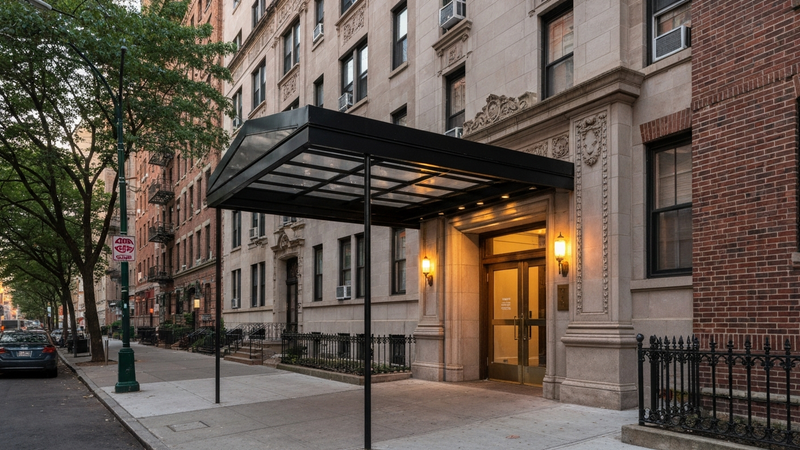
In New York City, the standard contract deposit is 10% of the purchase price, paid at contract signing. Elsewhere in the country, earnest money of 1% to 3% is typical, delivered with an accepted offer and often held by a title or escrow company.
The difference reflects a structural feature of the New York deal. There is no binding agreement here until both parties sign a contract prepared and negotiated by attorneys — an accepted offer creates no obligation on either side.
The deposit is the commitment
Because the handshake carries no legal weight, the deposit does the work. A seller taking an apartment off the market for two to four months while a co-op board schedules an interview wants a number large enough that walking away is expensive.
That timing also explains the sequence. The deposit is not due when an offer is accepted; it is due when the contract is signed, after the buyer's attorney has completed diligence. Our guide to making an offer sets out where signing falls in the process.
Is 10% excessive?
However, some argue the custom is an anachronism. Escrow rules and faster underwriting, the argument runs, make 3% sufficient security, and a six-figure deposit deters qualified buyers whose capital sits outside the United States.
The rebuttal is the calendar. A seller is off the market for two to four months waiting on a board, and the deposit is the only practical remedy for a failed deal. At 3%, a $1,500,000 apartment secures $45,000 — less than the price risk of relisting in a moving market.
Where the Money Sits and Who Controls It

The deposit goes into the seller's attorney's escrow account, not to the seller and not to a broker. The attorney holds it as escrow agent, a role separate from representing the seller, and the contract sets out the terms of release.
These accounts are typically non-interest-bearing. Where a deposit is large enough or the closing far enough out to make interest meaningful, the contract can direct the funds into a separate interest-bearing account under the buyer's tax identification number, but this must be negotiated in the rider.
Release requires agreement or a court
The escrow agent cannot hand the money to either side unilaterally once a dispute exists. Standard contract language requires written consent from both parties, a court order, or notice followed by an uncontested waiting period.
The practical consequence is worth absorbing before signing. In a genuine dispute the deposit can be frozen for months regardless of who is right, which is one reason buyers retain their own counsel early — a point covered in our guide to working with a New York real estate attorney.
When the Deposit Is at Risk

The short answer: a buyer who defaults on a signed contract without a contingency to fall back on generally loses the entire 10%. New York courts have long enforced that outcome, treating the deposit as liquidated damages rather than a penalty.
The point was settled in Maxton Builders v. Lo Galbo (1986), where the Court of Appeals held that a buyer who breaches cannot recover the down payment. In Uzan v. 845 UN Limited Partnership (2004), buyers forfeited deposits of 25% on new development units at a Manhattan tower.
| Scenario | Deposit outcome | What controls it |
|---|---|---|
| Buyer changes mind after signing | Forfeited | No contingency applies |
| Financing denied, contingency in place | Returned | Mortgage contingency clause and deadline |
| Financing denied, contingency waived | Forfeited | Buyer accepted the risk |
| Co-op board rejects the purchaser | Returned | Board approval condition in the contract |
| Buyer misses the board application deadline | At risk | Buyer failed a contract obligation |
| Seller cannot deliver clear title | Returned | Seller default |
| Closing delayed, no time-of-the-essence notice | Held | Adjourned closing date |
General outcomes under customary New York contract language. Specific rider terms govern any individual deal.
Two clauses do nearly all of the protective work, and both are negotiated rather than automatic.
The mortgage contingency
A mortgage contingency returns the deposit if the buyer applies in good faith within the stated period — commonly a few days after signing — and the lender declines to issue a commitment by the contingency date, usually 30 to 45 days out.
It expires. Once the date passes without a written cancellation, the buyer is generally committed regardless of what the lender does afterward, which makes calendar discipline the single most valuable habit in the transaction.
Board approval in a co-op
Cooperative contracts are conditioned on board approval, and a rejection returns the deposit in full. Boards need not give reasons, and the contract does not require them to. The protection is unusually clean, provided the buyer submits a complete package on time.
That proviso matters. A buyer who stalls on the application, submits an incomplete package, or declines an interview can be treated as being in default rather than as having been rejected — the same money, an entirely different outcome.
Wiring 10% From Abroad, and What Is Negotiable

Foreign buyers should plan the funding before signing, not after. A cross-border wire of $150,000 or more clears in one to three business days in the ordinary case, and considerably longer when the sending or receiving bank raises a compliance review.
US banks apply anti-money-laundering procedures set under the Bank Secrecy Act and administered by FinCEN, and escrow agents ask for source-of-funds documentation as a matter of routine. Assemble the sale contract, bank statements or the evidence of the source of the money in advance.
Practical measures reduce the friction: send from an account in the buyer's own name rather than a relative's or a company's, avoid splitting the deposit across several small transfers, and confirm wire instructions by telephone with a known contact. Our guide to sending money to the United States covers the sequence in detail.
Can the 10% be negotiated?
Sometimes, and less often than buyers hope. Sellers will occasionally accept 5% at signing with the balance due at a defined milestone, but the request weakens the offer, and in a competitive situation the full 10% is what makes a bid credible.
All-cash offers are the usual exception in reverse. Without a mortgage contingency the buyer carries more risk, and some agree to a larger deposit in exchange for a faster closing — leverage that only exists when the funds are already in a US account.
New development is a different schedule
Sponsor sales in new construction commonly stage deposits from 10% up to 20% or 25%, with instalments tied to milestones in the offering plan rather than to a single signing date.
Those funds are subject to the escrow requirements of the offering plan filed with the New York State Attorney General's office, which is a meaningful protection — and also why the *Uzan* forfeiture stood. Escrow protects the money from the sponsor, not from the buyer's own default.
Final Thoughts

The deposit is not a formality and it is not a fee. It is the buyer's entire downside in the deal, committed at the moment of signing and released only by performance, agreement or a court.
At closing it does what it was always going to do: credit against the purchase price, appearing on the settlement statement as a payment already made. The buyer wires the balance, and the escrow account clears.
Everything that determines whether the money is safe is decided before signing — the contingency dates, the escrow terms, the board application timetable. Our guide to buying in New York City and our overview of buying real estate in NYC set out how those pieces fit together.
Read the escrow and default clauses with your own attorney before the wire leaves, not after. On a $1,500,000 apartment, an afternoon spent on two paragraphs of a rider is protecting $150,000.
Reinvent NY provides business consulting, operational support, and coordination services. Legal advice and immigration filings are handled by independent licensed attorneys. Real estate services are provided through licensed professionals and applicable brokerage relationships. This article is for informational purposes only and does not constitute legal or investment advice.

Satoshi Onodera
Founder & CEO, Reinvent NY Inc.
Founded Reinvent NY in 2024. Providing relocation support from all over the world to America.
Ready to Get Started?
Our team in New York is ready to help with your visa, real estate, or relocation needs.
Schedule a ConsultationFrequently Asked Questions
How much is earnest money in NYC?
The customary contract deposit in New York City is 10% of the purchase price, paid at contract signing rather than when an offer is accepted. That is well above the 1% to 3% earnest money common in most other US markets, and it reflects the fact that no binding agreement exists in New York until an attorney-negotiated contract is signed by both parties.
Who holds the deposit in a New York transaction?
The seller's attorney holds it in an escrow account as escrow agent, a role distinct from representing the seller. The account is typically non-interest-bearing. Neither the seller nor a broker receives the funds, and the attorney cannot release them once a dispute arises without written consent from both parties or a court order.
Can I get my deposit back if my mortgage is denied?
Yes, if a mortgage contingency is in the contract and the deadlines are met. The buyer must apply in good faith within the stated period and deliver written notice of cancellation before the contingency date, usually 30 to 45 days after signing. If the contingency was waived or has expired, the deposit is generally at risk.
What happens to the deposit if a co-op board rejects me?
It is returned in full. Cooperative contracts are conditioned on board approval, and a rejection is not a buyer default. The protection depends on the buyer meeting their own obligations, so a purchaser who submits an incomplete package, misses the application deadline or declines an interview can be treated as in default instead.
Is the earnest money deposit applied to the purchase price?
Yes. At closing the escrowed deposit is credited against the purchase price and appears on the settlement statement as a payment already made. The buyer wires only the balance of the price plus closing costs, and the escrow agent releases the funds to the seller as part of the closing.
How long should foreign buyers allow for wiring the deposit?
Allow several business days rather than assuming same-day settlement. Cross-border wires typically clear in one to three business days, and longer when a bank opens a compliance review. Sending from an account in the buyer's own name and having source-of-funds documentation ready in advance materially reduces the risk of a delay.
Can the 10% deposit be negotiated down?
Occasionally. Some sellers accept 5% at signing with the balance due at a defined milestone, but the request weakens an offer and rarely succeeds in a competitive bidding situation. The reverse is also seen: all-cash buyers sometimes offer a larger deposit in exchange for a shortened closing timetable.
Why are new development deposits higher?
Sponsor sales commonly stage deposits from 10% up to 20% or 25%, tied to milestones set out in the offering plan rather than to a single signing date. Those funds must be escrowed under the terms of the plan filed with the New York State Attorney General's office, which protects the money against the sponsor but not against a buyer's own default.
Real Estate Guides & Data
More guides
- Moving to New York: The Order to Do Things In
- Renting Before Buying: The Test Year Strategy
- Seller Financing and Creative Deal Structures
- Small-Scale Development: From Owner to Builder
- Tenant Screening in NYC: Choosing Within the Rules
- Opening a US Bank Account: What a Non-Resident Needs
Related Articles
Sheepshead Bay Brooklyn Real Estate Guide 2026
An expert 2026 guide to buying or renting in Sheepshead Bay, Brooklyn — housing stock, prices, transit, and who this waterfront neighborhood truly suits.
Brighton Beach Brooklyn Real Estate Guide 2026
A 2026 guide to buying and renting in Brighton Beach, Brooklyn: housing stock, prices, transit, and who this seaside neighborhood suits.
Essex House: Art Deco on Central Park South
Essex House opened on Central Park South in 1931 and now combines a hotel with private residences. What the building offers and what a buyer should confirm.
Bay Ridge Brooklyn Real Estate Guide 2026
An authoritative 2026 guide to Bay Ridge, Brooklyn real estate: housing stock, prices, rents, transit, and schools for international buyers and renters.