Essex House: Art Deco on Central Park South
Essex House has faced Central Park since 1931. The Art Deco tower at 160 Central Park South sits on one of the shortest and most valuable residential frontages in Manhattan, a single block-deep strip where every building looks directly north over the park.
It has operated as a hotel for most of its history and now combines that with private residential units. For a buyer, the appeal and the complexity come from the same source. Let's work through both.
1. What the Building Is
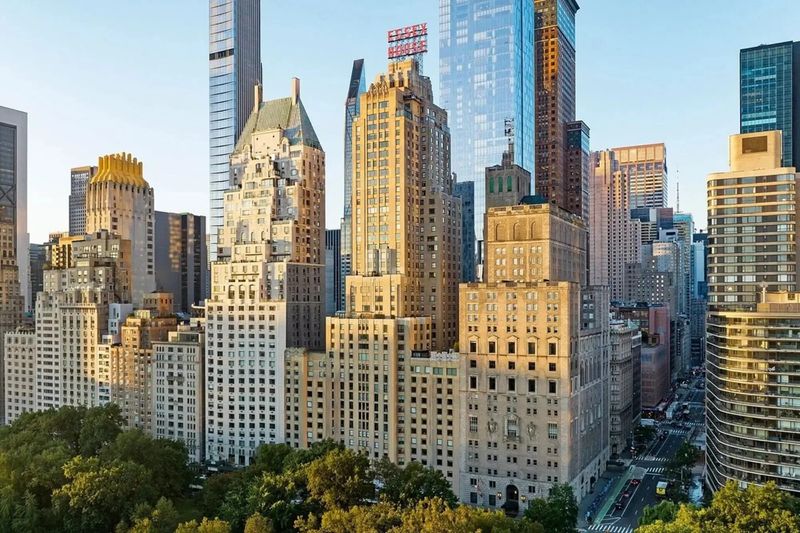
A 1931 Art Deco tower, built in the era that produced the Central Park South skyline as it is still recognised today. The proportions and detailing belong to that period rather than to any subsequent one, and the building has kept its silhouette on the park frontage for nearly a century.
The residential units sit alongside a hotel operation in the same structure. That arrangement predates the branded-residence model by decades and works on the same principle: a building already staffed to hotel depth can extend that service to residents.
What differs from a purpose-built branded tower is that this building was designed as a hotel first, and the residential accommodation exists within that logic rather than being planned from the outset as apartments.
| Attribute | Detail |
|---|---|
| Address | 160 Central Park South, Manhattan |
| Opened | 1931 |
| Style | Art Deco |
| Frontage | Directly facing Central Park |
| Uses | Hotel operation with private residences |
| Board approval | Depends on ownership form - confirm for the unit |
Building facts. Ownership form and unit-level figures - size, exposure, charges, tax - must be confirmed for the specific residence.
The location is on Google Maps here.
2. Why Central Park South Is Different
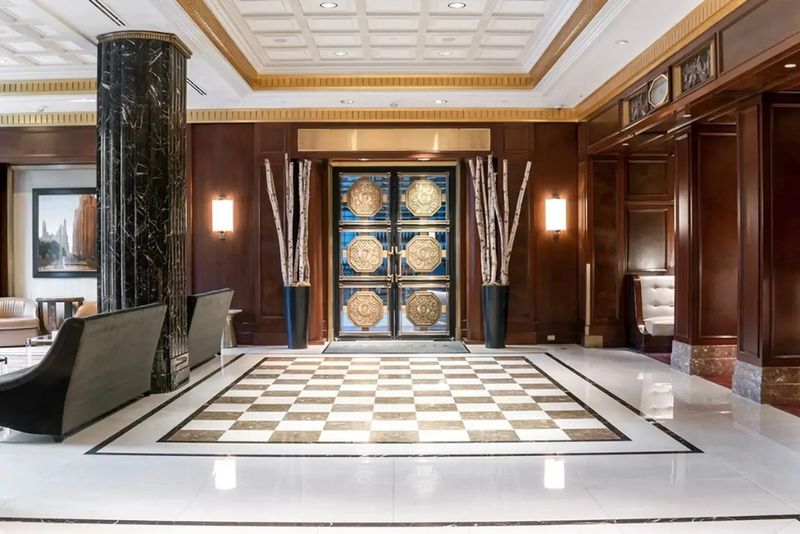
The frontage is finite in a way almost nothing else in Manhattan is. The park cannot be built on, and the number of buildings facing it directly along this block is fixed — no development anywhere in the city adds to that supply.
That is a fundamentally different kind of scarcity from height. A taller tower can always be built, and several have been within a few hundred metres of here. Another building on this frontage cannot.
The practical consequence for a buyer is that the outlook is the durable asset. Confirm exactly what the specific apartment sees, from which rooms and at what floor, because the difference between a park view and a park-facing building is priced accordingly and correctly.
Our luxury purchase guide covers how to weigh outlook, floor and exposure against price at this end of the market.
3. The Diligence a 1931 Building Requires
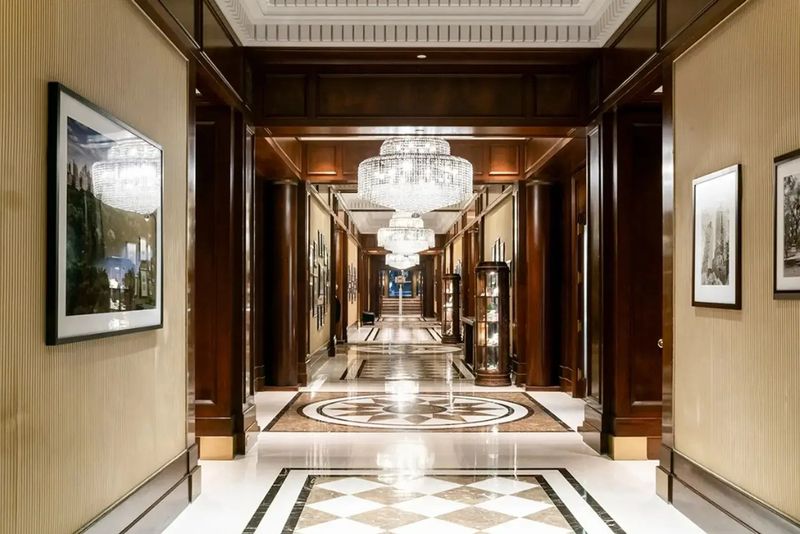
Start with the ownership form, because it determines everything that follows. Establish precisely what you would own, under which documents, and what approvals a sale requires — that answer differs between units in mixed buildings and cannot be assumed from the address.
Then the capital position. A building of this age has facade, lift, mechanical and system items with known replacement cycles, and the reserve study should state what is scheduled and how it is funded rather than leaving it to inference.
Then the allocation between hotel and residential operations: where the boundary sits, which entrances and lifts serve residents, how deliveries and service access work, and which costs each side bears.
Our building diligence guide lists the documents to request and what each reveals when read properly.
4. Buying Here as an Overseas Purchaser
Where the ownership is condominium the process is straightforward: no board approval vote, non-resident and entity ownership accepted, subletting governed by building rules. Where it is not, the requirements can be considerably heavier, which is why the form must be confirmed before anything else.
Mansion tax applies from $1 million on the whole price, reaching 2.25% between $5 and $10 million and 3.25% above $10 million, paid by the buyer at closing. Obtain the monthly charges and the property tax for the specific unit rather than a building average.
Settle ownership structure before contract; US estate tax reaches non-resident owners above a $60,000 exemption on US-situs assets. See our estate tax guide and condo versus co-op guide.
Prewar rooms and what they are worth
Apartments in buildings of this era have proportions that new construction rarely reproduces, because the structural logic and the expectations of 1931 were different. Rooms are frequently better shaped and worse serviced than their modern equivalents.
The variation between units is also much wider. In a new tower you can reason from the building average; here you cannot, and the specific apartment carries far more of the value than the address does.
Living in a building that is also a hotel
The service depth is real and so is the traffic. A hotel operation means arrivals, departures, deliveries and events on a scale a purely residential building never generates, and residents experience some part of that.
Ask how the separation is handled in practice rather than in principle, and ask to see it. A walkthrough at a busy hour tells you more about the arrangement than any description of it will.
The neighbouring towers
The blocks immediately south and west of here now hold several of the tallest residential buildings in New York, and the streetscape around this frontage has changed substantially in the past decade.
For a buyer that means two things. Establish which views are protected and which are not, and recognise that the resale competition on this stretch is now deeper than it has ever been — which disciplines pricing in a careful purchaser's favour.
Final Thoughts: A Frontage That Cannot Be Extended
This building offers something no new development can manufacture: a 1931 tower on a park frontage that has been fully built out for a century. The work a buyer has to do is heavier than in a new condominium, because ownership form, capital plan and the hotel relationship all require answers. Get those in writing and what remains is a genuinely rare position.
We cover Central Park South on Satoshi Onodera's YouTube channel and on Instagram. If a unit here is in view, talk to our team and we will confirm the ownership structure and the financials first. Real estate brokerage services are provided through licensed professionals.
For a buyer choosing between this and a new tower nearby, the comparison is between two kinds of certainty. New construction offers documented systems, predictable layouts and no surprises in the first decade. A prewar building on the park offers rooms and an outlook that cannot be recreated, in exchange for a longer document list.
Both are defensible. What is not defensible is choosing between them on photographs, and this is precisely the kind of building where a properly run live walkthrough changes a buyer's mind in one direction or the other.
Reinvent NY provides business consulting, operational support, and coordination services. Legal advice and immigration filings are handled by independent licensed attorneys. Real estate services are provided through licensed professionals and applicable brokerage relationships. This article is for informational purposes only and does not constitute legal or investment advice.
More buildings worth knowing: 432 Park Avenue, 53 West 53rd, Aman New York Residences. The full set is indexed under New York building profiles.

Satoshi Onodera
Founder & CEO, Reinvent NY Inc.
Founded Reinvent NY in 2024. Providing relocation support from all over the world to America.
Ready to Get Started?
Our team in New York is ready to help with your visa, real estate, or relocation needs.
Schedule a ConsultationFrequently Asked Questions
Where is Essex House?
160 Central Park South, on the block facing the park between Sixth and Seventh Avenues. The location is on [Google Maps](https://maps.google.com/?q=160+Central+Park+South+New+York).
When was it built?
It opened in 1931, an Art Deco tower on the Central Park South frontage, and has operated as a hotel for most of its history.
Are there private residences?
The building combines hotel operation with private residential units. Confirm the ownership form and the governing documents for the specific unit you are considering.
What is Central Park South?
The single block-deep strip along the park's southern edge, one of the shortest and most valuable residential frontages in Manhattan.
How do prewar layouts differ from new construction?
They follow a 1931 structure, so ceiling heights, window positions and room proportions vary between units far more than in a purpose-built modern tower.
Can an overseas buyer purchase here?
Where the ownership is condominium, yes - no board approval vote, and non-resident and entity ownership are generally accepted. Confirm the form before proceeding.
What should I confirm first?
The ownership structure, how residential and hotel costs are allocated, the reserve balance and capital plan for a building of this age, and the actual monthly charges for the specific unit.
Real Estate Guides & Data
More guides
- Real Estate Attorneys in NY: What Counsel Actually Does
- Apartment Handover: The First 72 Hours of Ownership
- Heating and Cooling in NYC Buildings
- NYC Foreclosure Auctions: Deep Discounts, Real Traps
- Capital Gains Tax on US Property
- University-Anchored Markets: Investing Where Schools Are
Related Articles
Brighton Beach Brooklyn Real Estate Guide 2026
A 2026 guide to buying and renting in Brighton Beach, Brooklyn: housing stock, prices, transit, and who this seaside neighborhood suits.
Earnest Money in NYC: Why the Deposit Is 10%
New York contracts take a 10% deposit at signing, not the 1-3% used elsewhere. Where the money sits, when it is forfeited, and the clauses that protect it.
Bay Ridge Brooklyn Real Estate Guide 2026
An authoritative 2026 guide to Bay Ridge, Brooklyn real estate: housing stock, prices, rents, transit, and schools for international buyers and renters.
New York vs Miami Real Estate: A 2026 Investor View
Manhattan trades near $1,500 per square foot, Miami near $700. We compare yield, taxes, insurance, assessment risk and liquidity in the two markets.