Bay Ridge Brooklyn Real Estate Guide 2026
What Bay Ridge Actually Is — Boundaries, Character, How It Got Here
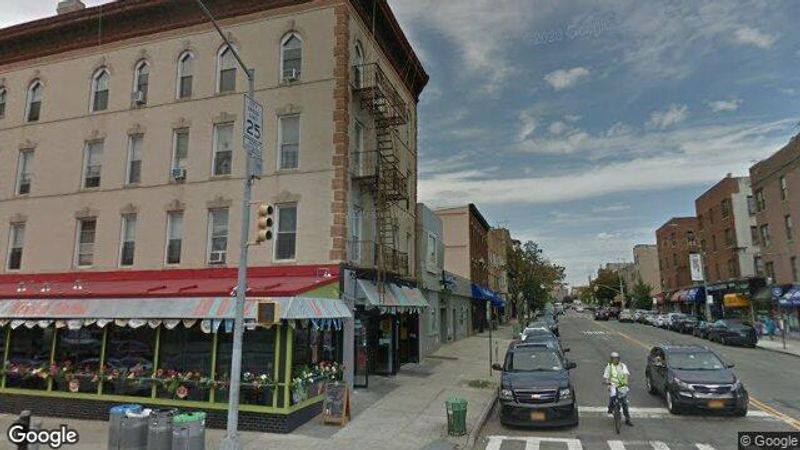
Bay Ridge sits at Brooklyn's southwestern edge, bounded roughly by 65th Street to the north, the Verrazzano-Narrows Bridge and Fort Hamilton to the south, Owl's Head Park and the harbor to the west, and Dyker Heights to the east. Our team in New York treats it as the borough's most underrated low-density enclave — residential, harborfront, and distinctly suburban in feel.
The neighborhood developed from farmland into a streetcar suburb in the late 1800s, then filled out with rowhouses and apartment buildings through the 1920s-1940s as subway access improved. Norwegian, Irish, and Italian immigrant waves shaped its early identity; more recent decades brought strong Arab, Chinese, and Eastern European communities, giving Third Avenue and Fifth Avenue their current commercial character.
Today Bay Ridge reads as family-oriented and architecturally consistent, with tree-lined side streets, low-rise co-ops, and a genuine waterfront promenade. It lacks Manhattan's density and skyline views but offers space, quiet, and a strong sense of permanence — qualities that appeal to buyers seeking long-term residential value rather than speculative appreciation.
The Housing Stock — Buildings, Eras, Unit Types
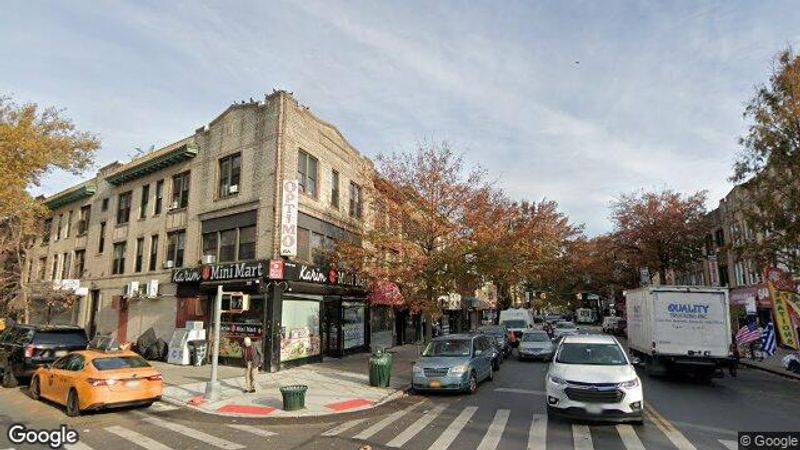
Bay Ridge's housing stock is dominated by pre-war rowhouses and limestone townhouses, particularly along Colonial Road, Narrows Avenue, and Shore Road, many built between 1905 and 1930. These streets feature detached and semi-detached homes with driveways and gardens — a rarity in Brooklyn — often in Tudor Revival or Renaissance Revival styles favored by early 20th-century developers.
Apartment living centers on mid-rise co-ops built from the 1920s through the 1960s, including notable prewar buildings along Shore Road and Ridge Boulevard with elevator service and courtyard layouts. Postwar towers near the Belt Parkway and Fort Hamilton Parkway added larger unit counts, while newer condo conversions on Third Avenue and 92nd Street offer smaller, amenity-light developer product.
Unit types skew toward one- and two-bedrooms in co-ops, with three- and four-bedroom houses available for those wanting full ownership of land. Renovation quality varies widely by building age; our licensed brokerage network typically flags board financial health and flip-tax policy on co-ops before advising clients, since these materially affect resale flexibility and closing costs.
Prices and Rents — Concrete Numbers
Bay Ridge remains one of Brooklyn's better value propositions per square foot. Co-op apartments typically list between $300,000 and $650,000 for one- and two-bedrooms, while townhouses and limestone rowhouses range from $1.1 million to $2.5 million depending on street and condition. Figures below are approximate and subject to market conditions.
Condos, though limited in supply, command a premium over co-ops due to fewer board restrictions, typically $550,000 to $950,000 for two-bedroom units. Rental demand stays steady given the neighborhood's family appeal and relative affordability compared to northern Brooklyn, with one-bedrooms generally renting for $2,200 to $2,900 per month.
| Unit Type | Sale Price Range | Monthly Rent Range | Common Building Era |
|---|---|---|---|
| Studio co-op | $220,000 – $340,000 | $1,700 – $2,100 | 1930s–1960s |
| 1-bedroom co-op | $300,000 – $450,000 | $2,000 – $2,600 | 1920s–1960s |
| 2-bedroom co-op/condo | $450,000 – $650,000 | $2,600 – $3,400 | 1920s–2010s |
| Townhouse (attached) | $1.1M – $1.7M | N/A | 1900s–1930s |
| Detached limestone house | $1.6M – $2.5M | N/A | 1905–1930 |
Approximate Bay Ridge Sale and Rental Prices, 2026
Compared with neighboring Sunset Park or Dyker Heights, Bay Ridge offers larger square footage per dollar, though it trades slightly slower than trend-driven neighborhoods closer to Manhattan. Our team in New York advises clients to weigh commute time against space gained, since price efficiency here is real but liquidity on resale can take longer than in Park Slope or Cobble Hill.
Daily Life and Transit
Transit runs on the R train, which terminates at 95th Street and runs local through Bay Ridge stations at 86th, 77th, 69th, and 59th Streets, reaching Downtown Brooklyn in roughly 30 minutes and Manhattan's Union Square in 45-55 minutes. Express bus service (BM4) offers a faster, pricier commute directly into Midtown for residents prioritizing time over cost.
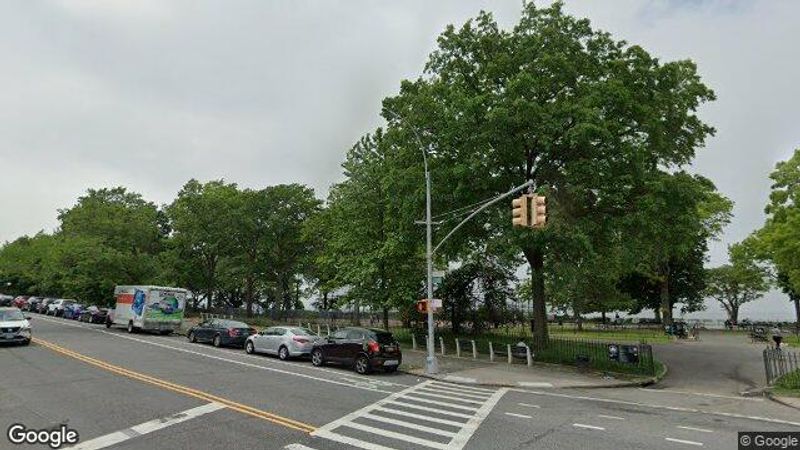
Daily life centers on Third Avenue for restaurants and bars and Fifth Avenue and 86th Street for groceries, banks, and general retail, including a Trader Joe's and multiple halal and Middle Eastern markets reflecting the area's demographics. Families rely on Shore Road Park, Owl's Head Park, and the waterfront Bay Ridge Promenade for recreation and running paths overlooking the Narrows.
| Destination | Transit Option | Approx. Travel Time | Notes |
|---|---|---|---|
| Downtown Brooklyn | R train (local) | 25–30 min | Frequent daytime service |
| Union Square, Manhattan | R train | 45–55 min | Longer at rush hour |
| Midtown Manhattan | BM4 express bus | 40–50 min | Premium fare, seated commute |
| JFK Airport | Car/taxi via Belt Pkwy | 30–45 min | Traffic dependent |
| Verrazzano Bridge / Staten Island | Car | 10–15 min | Direct highway access |
Approximate Bay Ridge Commute and Lifestyle Reference
Public schools include well-regarded elementary options like P.S. 185 and P.S. 102, with families also considering nearby parochial schools such as Fontbonne Hall Academy. The area's low crime rates, walkable retail corridors, and green space make it a genuinely functional neighborhood for daily family life rather than a purely transactional real estate market.
Final Thoughts
Bay Ridge suits buyers prioritizing space, quiet, and value over proximity to Manhattan's core. Families seeking a house with a yard, generous co-op layouts, or long-term stability will find genuine advantages here that are increasingly rare and expensive in northern Brooklyn or Manhattan proper.
It does not suit buyers who need a five-minute Manhattan commute, nightlife density, or rapid resale liquidity. The R train's slower pace and the neighborhood's residential character mean this is a hold-and-live market, not a flip-and-exit one, and pricing reflects that longer investment horizon accordingly.
Our team in New York generally recommends Bay Ridge to clients who value lifestyle stability and are comfortable with a 45-minute Manhattan commute in exchange for meaningfully larger, more affordable homes. For clients wanting connectivity above all else, we typically steer conversations toward Brooklyn Heights or Downtown Brooklyn instead.
Reinvent NY provides business consulting, operational support, and coordination services. Real estate services are provided through licensed professionals and applicable brokerage relationships. This article is for informational purposes only and does not constitute legal or investment advice.
Nearby neighbourhoods: Bedford-Stuyvesant, Boerum Hill, Brighton Beach. All Brooklyn guides are indexed under New York neighbourhood guides.

Satoshi Onodera
Founder & CEO, Reinvent NY Inc.
Founded Reinvent NY in 2024. Providing relocation support from all over the world to America.
Ready to Get Started?
Our team in New York is ready to help with your visa, real estate, or relocation needs.
Schedule a ConsultationFrequently Asked Questions
Is Bay Ridge a good investment for overseas buyers?
Bay Ridge offers strong value per square foot and stable long-term demand from families, but slower liquidity than trend-driven Brooklyn neighborhoods. It suits buyers prioritizing lifestyle and space over rapid appreciation or quick resale timelines.
How long is the subway commute from Bay Ridge to Manhattan?
The R train from 86th Street to Union Square typically takes 45-55 minutes. The BM4 express bus reaches Midtown faster, around 40-50 minutes, but at a premium fare compared to standard subway service.
What types of properties are available in Bay Ridge?
Buyers will find prewar co-ops, limestone townhouses, detached houses with driveways, and a smaller supply of newer condo conversions. Co-ops dominate the apartment market, while houses concentrate along Colonial Road, Narrows Avenue, and Shore Road.
Are co-op board approvals difficult in Bay Ridge?
Approval processes vary by building but are generally comparable to other Brooklyn co-ops, requiring financial documentation and board interviews. Our licensed brokerage network reviews building bylaws and flip-tax policies before submitting client applications.
What is the price range for a townhouse in Bay Ridge?
Attached townhouses generally range from approximately $1.1 million to $1.7 million, while detached limestone houses can reach $2.5 million depending on lot size, condition, and proximity to Shore Road or the promenade.
Is Bay Ridge family-friendly?
Yes. The neighborhood has well-regarded public schools, low crime rates, several large parks including Owl's Head Park and Shore Road Park, and a walkable retail corridor along Third and Fifth Avenues suited to daily family life.
How does Bay Ridge compare to Dyker Heights or Sunset Park?
Bay Ridge offers more waterfront access and a stronger commercial corridor than Dyker Heights, and larger, higher-priced housing stock than Sunset Park. It sits between the two in both price and density.
Real Estate Guides & Data
More guides
- Real Estate Scams and Red Flags: The Fraud Field Guide
- Selling a US Property: Timeline, Costs, Net
- Square Footage in NYC: Why the Number Lies
- Timing the NYC Market: Cycles, Seasons, and Honesty
- US Estate Tax for Non-Residents: The $60,000 Exemption
- Vacation Homes Beyond NYC: Hamptons, Hudson, and the Math
Related Articles
Earnest Money in NYC: Why the Deposit Is 10%
New York contracts take a 10% deposit at signing, not the 1-3% used elsewhere. Where the money sits, when it is forfeited, and the clauses that protect it.
Essex House: Art Deco on Central Park South
Essex House opened on Central Park South in 1931 and now combines a hotel with private residences. What the building offers and what a buyer should confirm.
New York vs Miami Real Estate: A 2026 Investor View
Manhattan trades near $1,500 per square foot, Miami near $700. We compare yield, taxes, insurance, assessment risk and liquidity in the two markets.
Olympic Tower: The Building That Started Fifth Avenue
Olympic Tower opened at 641 Fifth Avenue in 1976 as one of Manhattan's first mixed-use condominiums. What the building offers and what to confirm first.