Bedford-Stuyvesant Brooklyn Real Estate Guide 2026
What Bedford-Stuyvesant Actually Is
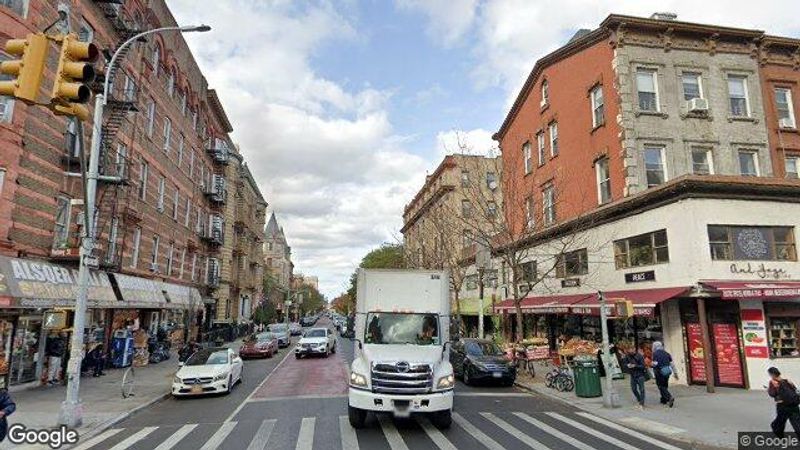
Bedford-Stuyvesant, known locally as Bed-Stuy, sits in north-central Brooklyn, bordered roughly by Flushing Avenue, Broadway, Atlantic Avenue, and Classon Avenue. It absorbed the historic hamlets of Bedford and Stuyvesant Heights, forming one of Brooklyn's largest residential districts. Our team in New York finds international buyers drawn to its scale, its architecture, and its position between Williamsburg and Crown Heights.
The neighborhood's character formed in the late 19th and early 20th centuries as a prosperous enclave for German and Scandinavian merchants, later becoming the cultural and political center of Black Brooklyn from the 1930s onward. That legacy shows in its churches, community institutions, and dense brownstone rows, many now protected within local historic districts.
Today Bed-Stuy is one of Brooklyn's most actively transforming markets, with steady restoration of pre-war housing alongside new development along Nostrand and Marcy Avenues. Our licensed brokerage network sees consistent interest from buyers seeking authentic architecture and long-term appreciation rather than turnkey convenience.
The Housing Stock
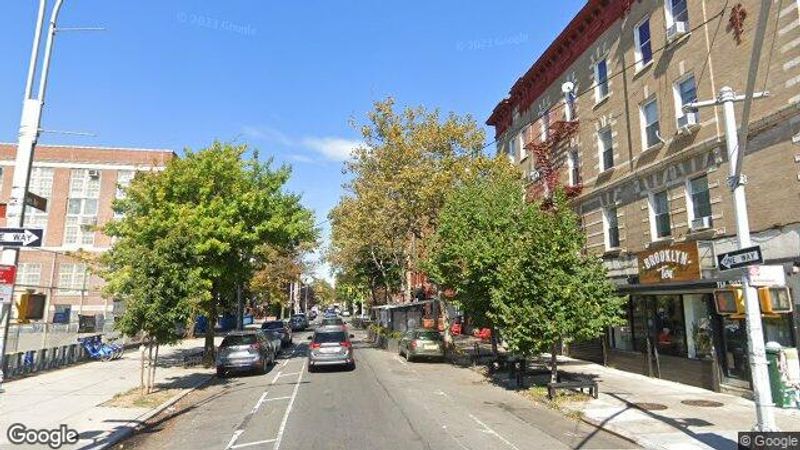
Bed-Stuy's defining asset is its brownstone and limestone rowhouse stock, largely built between 1870 and 1910. Streets like Hancock, MacDonough, and Decatur retain unbroken rows of Italianate and Renaissance Revival facades, many designed by prolific Brooklyn architects such as Montrose Morris, whose work anchors the Stuyvesant Heights Historic District.
Beyond rowhouses, the neighborhood includes pre-war walk-ups, mid-century apartment buildings along Bedford Avenue, and a growing number of new-construction condominiums near the Nostrand Avenue corridor and Marcy Avenue. Unit types range from studio conversions in classic six-family brownstones to full-floor condo layouts with private outdoor space in newer buildings completed since 2015.
Renovation quality varies significantly street to street, so our team in New York advises careful due diligence on mechanical systems and landmark restrictions before purchase. Many brownstones retain original parlor floors, pressed-tin ceilings, and marble mantels, features that command a meaningful premium when authentically preserved rather than gut-renovated.
Prices and Rents
Pricing in Bed-Stuy remains more accessible than in Fort Greene or Clinton Hill, though the gap has narrowed steadily. Approximate 2026 figures, subject to market conditions, show full brownstones trading between $1.8 million and $3.4 million depending on condition, lot size, and landmark status, with turnkey renovations at the top of that range.
Condominium pricing in new developments runs roughly $700 to $950 per square foot, while co-op and older condo units in walk-up buildings trade lower. Rental demand remains strong given proximity to the L, A/C, and G trains, with one-bedrooms commonly leasing between $2,600 and $3,400 monthly depending on building age and finishes.
| Housing Type | Typical Price Range | Notes |
|---|---|---|
| Full Brownstone | $1.8M - $3.4M | Varies by condition and landmark status |
| New Condo (per sq ft) | $700 - $950 | Near Nostrand and Marcy corridors |
| Co-op / Older Condo | Below new condo pricing | Located in older walk-up buildings |
| 1-Bedroom Rental | $2,600 - $3,400/month | Depends on building age and finishes |
Our team in New York notes that pricing dispersion within Bed-Stuy is wide, with blocks near the Clinton Hill border commanding notably higher premiums than those near Broadway. Buyers should treat these figures as directional; block-level negotiation with our licensed brokerage network remains essential for accurate underwriting.
Daily Life and Transit
Bed-Stuy is served by the A and C trains along Fulton Street, the G train at Bedford-Nostrand Avenues, and the J/Z at Gates Avenue, giving reasonably direct access to Manhattan and downtown Brooklyn. Typical commute times to Midtown run 35 to 45 minutes, while trips to Downtown Brooklyn or Williamsburg are considerably shorter.
Grocery options include Key Food on Nostrand Avenue and a growing cluster of specialty markets along Tompkins and Malcolm X Boulevards, supplemented by weekend greenmarkets. Green space centers on Herbert Von King Park, with additional access to Fort Greene Park just west of the neighborhood boundary for larger recreational needs.
| Subway Line | Key Station | Approx. Midtown Commute |
|---|---|---|
| A / C | Fulton Street | 35-45 minutes |
| G | Bedford-Nostrand Avenues | Transfer required |
| J / Z | Gates Avenue | 35-45 minutes |
Public and charter school options are numerous, though quality varies by zone, prompting many buyer clients to prioritize proximity to specific schools during their search. Our team in New York routinely maps school zoning against candidate listings, since this single factor materially affects resale demand among family buyers.
Final Thoughts
Bed-Stuy suits buyers who value architectural authenticity, are comfortable with block-by-block variation, and take a medium- to long-term view on appreciation. It rewards those willing to research landmark rules, renovation history, and precise subway proximity rather than buying on neighborhood name alone.
It is a poor fit for buyers seeking immediate luxury-building amenities, doorman staffing, or the polish of Brooklyn Heights or Park Slope. Those priorities are better served elsewhere in Brooklyn, and our team in New York will say so directly when a client's expectations do not match this market's realities.
For clients prioritizing character, scale, and value relative to Manhattan-adjacent Brooklyn, Bed-Stuy remains one of the borough's most compelling opportunities in 2026. Our licensed brokerage network can arrange private tours and detailed comparables for serious buyers evaluating this neighborhood against alternatives.
Reinvent NY provides business consulting, operational support, and coordination services. Real estate services are provided through licensed professionals and applicable brokerage relationships. This article is for informational purposes only and does not constitute legal or investment advice.
Nearby neighbourhoods: Boerum Hill, Brighton Beach, Brooklyn Heights. All Brooklyn guides are indexed under New York neighbourhood guides.

Satoshi Onodera
Founder & CEO, Reinvent NY Inc.
Founded Reinvent NY in 2024. Providing relocation support from all over the world to America.
Ready to Get Started?
Our team in New York is ready to help with your visa, real estate, or relocation needs.
Schedule a ConsultationFrequently Asked Questions
What are the boundaries of Bedford-Stuyvesant?
Bed-Stuy is generally bounded by Flushing Avenue to the north, Broadway to the east, Atlantic Avenue to the south, and Classon Avenue to the west, encompassing the historic Bedford and Stuyvesant Heights sections of Brooklyn.
Is Bedford-Stuyvesant a good investment in 2026?
Many analysts view it favorably given continued renovation activity, strong rental demand near transit, and pricing still below neighboring Clinton Hill and Fort Greene. Our team in New York recommends block-level analysis before committing to any purchase.
What type of housing dominates Bed-Stuy?
Pre-war brownstones and limestone rowhouses from the 1870s-1910s dominate, particularly within the Stuyvesant Heights Historic District, alongside pre-war walk-ups and a growing supply of new-construction condominiums near Nostrand and Marcy Avenues.
How is the subway access in Bedford-Stuyvesant?
The A, C, G, and J/Z lines serve the neighborhood, providing routes into Manhattan, Downtown Brooklyn, and Williamsburg, with typical Midtown commutes of 35 to 45 minutes depending on the specific station used.
Are there landmark restrictions on Bed-Stuy properties?
Yes, portions of the neighborhood fall within the Stuyvesant Heights Historic District, which restricts exterior alterations. Buyers considering renovation should confirm landmark status early, as it affects both permitted work and project timelines.
How do Bed-Stuy prices compare to Fort Greene or Clinton Hill?
Bed-Stuy remains meaningfully more affordable, with brownstones often priced 15-30% below comparable properties in Fort Greene or Clinton Hill, though the gap has been narrowing steadily as renovation activity increases.
What amenities and green space does Bed-Stuy offer?
Herbert Von King Park anchors local green space, supplemented by proximity to Fort Greene Park. Grocery and retail options concentrate along Nostrand Avenue, Tompkins Avenue, and Malcolm X Boulevard, with weekend farmers markets in several locations.
Real Estate Guides & Data
More guides
- Real Estate Scams and Red Flags: The Fraud Field Guide
- Selling a US Property: Timeline, Costs, Net
- Square Footage in NYC: Why the Number Lies
- Timing the NYC Market: Cycles, Seasons, and Honesty
- US Estate Tax for Non-Residents: The $60,000 Exemption
- Vacation Homes Beyond NYC: Hamptons, Hudson, and the Math
Related Articles
Financing a Branded Residence as a Foreign National
How overseas buyers finance branded residences in New York: 30-40% down on pre-construction, deposit schedules.
Buying New Construction in Hudson Yards: Terms to Read
Hudson Yards was built in one go, and the purchase terms reflect it. Tax abatements, sponsor position and what an overseas buyer should read before signing.
Bushwick Brooklyn Real Estate Guide 2026
An authoritative 2026 guide to Bushwick, Brooklyn for overseas buyers and renters: boundaries, buildings, prices, transit, and who the neighborhood suits.
520 Park Avenue: One Residence to a Floor
Robert A.M. Stern's limestone tower for Zeckendorf on the Upper East Side, built around full-floor residences.