Financing a Branded Residence as a Foreign National
Financing a branded residence combines two things lenders find awkward: a borrower with no US credit file and a property that may not exist yet. Neither is disqualifying, but together they change the sequence — the loan is usually committed close to completion, not at contract, and the buyer carries the rate risk in between.
Understanding that sequence before signing is what separates a smooth closing from a forced cash call. Let's work through the deposit schedule, the loan itself, and the risk that sits between the two.
1. The Deposit Schedule Comes First
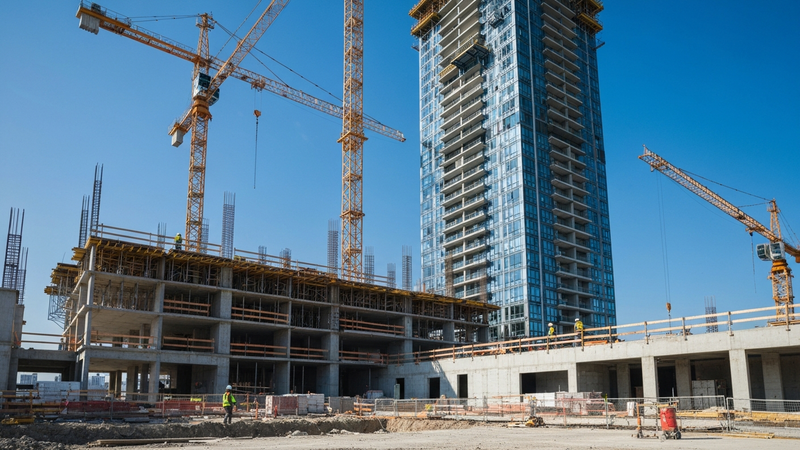
Before any lender is involved, a new development contract requires staged deposits. A typical structure is 10% at contract with further instalments at construction milestones, reaching 20% or more before closing — all of it cash, none of it financeable.
New York requires sponsor deposits on residential new construction to be held in escrow under the offering plan. The escrow terms and the conditions under which funds release are in that document, and your attorney should confirm both before you sign rather than after.
| Stage | Typical requirement | Financeable? |
|---|---|---|
| Contract signing | 10% of price | No — cash |
| Construction milestones | Further 10%+ in instalments | No — cash |
| Closing | Balance of price | Yes — mortgage or cash |
| Closing costs | 4-6% in new development | No — cash |
| Post-closing reserves | 6-12 months of payments | Must be demonstrated |
Illustrative structure for pre-construction purchases. The offering plan sets the actual schedule for each building.
Note the closing cost line. New development sponsors customarily shift the New York City and State transfer taxes onto the buyer, which adds roughly 1.8-2.0% on top of the mansion tax — the full itemization is in our closing costs article.
2. The Loan Itself: What Foreign Nationals Get

Two programmes serve buyers without US credit. Foreign national loans underwrite home-country income, bank references and assets. Portfolio loans — held by the lender rather than sold on — offer the most flexibility on unusual properties, which branded buildings with hotel operations sometimes are.
Expect down payments of 30-40% on new construction, above the 25-30% typical for a resale, plus reserves of six to twelve months of payments and a rate premium of roughly one to two points. Documentation generally requires certified translation.
One branded-specific point: the higher monthly carrying cost affects debt-to-income calculations, and some lenders limit exposure to buildings with rental programmes or hotel components. Establish lender appetite for the specific building early — our foreign national mortgage guide covers the general programme mechanics.
What the lender will ask you to produce
The document set is predictable and slow to assemble from abroad. Two to three years of home-country tax filings with certified translation, bank statements covering the deposit trail, a letter from your bank confirming the relationship, proof of the source of funds, and identification documents that satisfy US anti-money-laundering requirements.
Where income comes from a company you own, expect the corporate filings alongside the personal ones. Start this file when you start viewing, not when the lender asks — translation and certification routinely add two to three weeks, and that is time the closing schedule rarely has spare.
Currency and the multi-year gap
A buyer funding from another currency across a two-year construction period is running an unhedged position on every remaining deposit instalment as well as on the closing balance. A ten percent adverse move on a $4 million purchase is $400,000 of additional cost in home-currency terms, arriving on a date fixed by someone else's construction schedule.
The options are ordinary treasury management: convert early and hold dollars, arrange forward contracts covering the scheduled payments, or accept the exposure deliberately with capacity to absorb it. What does not work is discovering the question at the closing table.
3. The Gap Between Contract and Closing

Here is the structural risk. A pre-construction contract may close one to three years after signing, and no lender commits terms that far ahead. The buyer signs at today's confidence and finances at a future rate that nobody can quote today.
Three currencies of risk sit in that window: interest rates, which may be materially higher at closing; appraisal, if the completed unit values below the contract price; and exchange rates, for a buyer funding from another currency across a multi-year gap.
The honest mitigation is capacity rather than cleverness. Buyers who could close in cash if financing disappoints carry the gap comfortably; buyers who depend on a specific rate should consider completed inventory instead, where the loan and the closing happen in the same month.
4. The Counterargument: Why Not Just Pay Cash?

Many buyers at this level do exactly that, and the case is strong. Cash removes the appraisal condition, removes the rate risk, strengthens negotiation on price and terms, and closes faster — sponsors and sellers of trophy property regularly accept a lower certain number over a higher conditional one.
The rebuttal is leverage and treasury. Financing preserves capital for other uses, and mortgage interest on a US rental property is generally deductible against rental income for a non-resident owner filing a US return. Some buyers do both: close in cash for the negotiating advantage, then place a mortgage on the completed unit within the first year — capturing the terms without carrying the closing risk.
Whichever route, ownership structure should be settled before contract rather than at closing. Non-resident owners face US estate tax exposure above a $60,000 exemption, as our estate tax guide sets out, and the structure decision is expensive to change later.
One practical warning about entity purchases in pre-construction: if the contract is signed in a personal name and the buyer later wants to close in an LLC, sponsor consent is usually required and is not always given. Decide the buying entity before the contract is drawn, and have your attorney confirm that the offering plan permits an assignment or a change of purchaser if plans might shift.
Final Thoughts: Arrange the Money Before the Unit

The sequence that works: confirm lender appetite for the specific building, model the deposit schedule as cash outflows on real dates, price the closing costs including the sponsor's transfer taxes, and stress-test the closing at a rate meaningfully above today's. Then choose the unit.
We coordinate lender introductions, deposit schedule modelling and closing for international buyers, with brokerage services provided through licensed professionals. Talk to our team before you commit to a pre-construction contract.
Reinvent NY provides business consulting, operational support, and coordination services. Legal advice and immigration filings are handled by independent licensed attorneys. Real estate services are provided through licensed professionals and applicable brokerage relationships. This article is for informational purposes only and does not constitute legal or investment advice.
More buying guides: Choosing a New York Property Advisor From Overseas, Buying a New York Condo as an International Buyer, NYC Apartments for Sale.

Satoshi Onodera
Founder & CEO, Reinvent NY Inc.
Founded Reinvent NY in 2024. Providing relocation support from all over the world to America.
Ready to Get Started?
Our team in New York is ready to help with your visa, real estate, or relocation needs.
Schedule a ConsultationFrequently Asked Questions
Can a foreign national finance a branded residence in New York?
Yes, through foreign national or portfolio loan programmes. Expect higher down payment requirements than a standard resale purchase — commonly 30-40% for new construction — and a rate premium over conforming loans.
Why is pre-construction harder to finance?
A lender cannot appraise or take security over a unit that does not yet exist. Financing is generally arranged for the closing, which may be one to three years after contract, so the loan is committed near completion rather than at signing.
How much deposit does a sponsor require?
New development contracts commonly stage deposits — often 10% at contract with further instalments at construction milestones, reaching 20% or more before closing. The offering plan sets the exact schedule.
Are deposits protected?
New York requires sponsor deposits on residential new construction to be held in escrow under the offering plan. Confirm the escrow arrangements and the release conditions with your attorney before signing.
What happens if rates rise before closing?
That risk sits with the buyer. A commitment obtained near closing reflects rates at that time, not at contract. Buyers who cannot absorb a materially higher rate at closing should either buy completed inventory or plan to close in cash.
Do lenders treat branded residences differently?
Some do. Higher monthly carrying costs affect debt-to-income calculations, and a few lenders limit exposure to buildings with hotel operations or rental programmes. Establishing lender appetite early prevents a late surprise.
Is buying cash and financing later a real strategy?
It is common at this level. A cash purchase strengthens negotiation and removes closing risk, and a mortgage can be placed afterwards against the completed unit — subject to the rates and terms available at that time.
Real Estate Guides & Data
More guides
- Open Houses: The Buyer's Working Visit
- Donating US Property: Charitable Structures for Real Estate
- US Property Insurance: The Line That Breaks a Rental Model
- Reading Building Financials: The Numbers Behind the Lobby
- Rent Stabilization for Buyers: What Regulation Means
- Schools and School Zoning in New York
Related Articles
Branded Residences in NYC: What Buyers Are Paying For
How hotel-branded residences work in New York: the premium over comparable condos, what the brand fee covers, and the questions to ask before contract.
NYC Co-op Board Approval for Overseas Buyers
Why New York co-op boards reject overseas buyers, what the package must show without US credit or W-2 income, and when a condo is the faster route instead.
Buying New Construction in Hudson Yards: Terms to Read
Hudson Yards was built in one go, and the purchase terms reflect it. Tax abatements, sponsor position and what an overseas buyer should read before signing.
Bedford-Stuyvesant Brooklyn Real Estate Guide 2026
An in-depth 2026 guide to Bedford-Stuyvesant real estate: boundaries, housing stock, prices, rents, transit, and buyer fit for international clients.