NYC Condo Closing Costs for Buyers: The Full Itemized List
A New York condo buyer with $200,000 saved for a down payment on a $1 million apartment does not have enough. Closing costs on that purchase run roughly $25,000 to $50,000 in cash on top of the deposit, and the largest single item — mansion tax at 1% — is triggered by the price crossing $1 million at all.
None of it can be financed. Let's itemize what a buyer actually pays, where new development differs, and how the co-op comparison works out.
1. The Line Items, Itemized
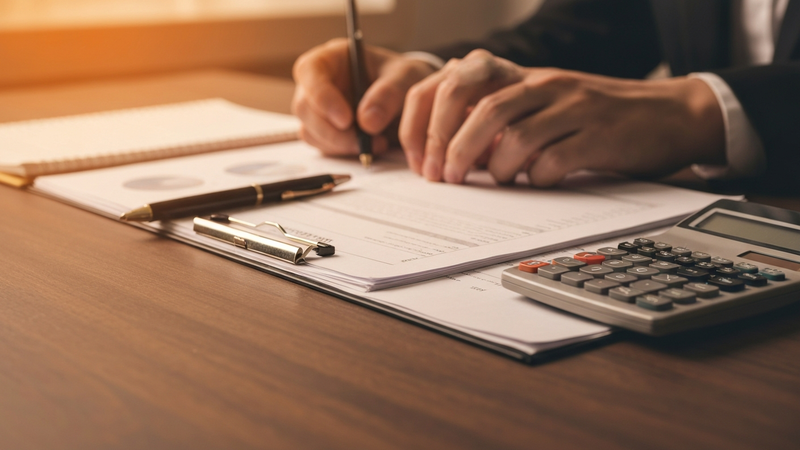
Buyer-side costs fall into three groups: taxes, which dominate above $1 million; lender charges, which apply only to financed purchases; and professional and building fees, which are modest but numerous.
The figures below assume a $1.5 million resale condo with 70% financing, which is a common shape for the market.
| Cost | Rate or amount | On $1.5M with $1.05M loan |
|---|---|---|
| Mansion tax | 1.00% at $1M-$2M | $15,000 |
| Mortgage recording tax | 1.925% less 0.25% lender share | $17,588 |
| Title insurance (owner's) | About 0.45% of price | $6,750 |
| Buyer's attorney | Flat fee, typically | $3,000 - $5,000 |
| Lender fees and appraisal | Varies by lender | $2,000 - $4,000 |
| Building move-in and application fees | Set by the building | $500 - $2,000 |
| Tax and common charge adjustments | Prorated to closing date | Varies |
Illustrative figures for a resale condo. Rates should be confirmed at contract; New York tax rates are set by statute and change.
That totals roughly $45,000 to $50,000, or about 3% of the price. The mansion tax and mortgage recording tax alone account for two thirds of it — see our closing costs guide for the seller side of the same transaction.
2. Mansion Tax: The Cliff at Every Threshold

New York's mansion tax is not marginal. A purchase at $2,000,001 pays 1.25% on the entire price, not on the last dollar — so crossing a threshold costs meaningfully more than the price difference that crossed it.
The practical effect is visible in the market: negotiations cluster just beneath thresholds, and a seller asking $2,010,000 will often accept $1,999,000 because the buyer's tax saving exceeds the price concession.
The brackets run 1% from $1 million, 1.25% from $2 million, 1.5% from $3 million, 2.25% from $5 million, 3.25% from $10 million, 3.5% from $15 million, 3.75% from $20 million and 3.9% above $25 million. Our mansion tax article works through the arithmetic at each level.
Negotiating around a threshold
When an asking price sits just above a bracket line, the tax saving from getting under it frequently exceeds what a seller would concede on price alone. On a $2,010,000 asking price, moving to $1,999,000 saves the buyer roughly $5,000 in tax on top of the $11,000 price reduction.
Sellers understand this too, which is why listings cluster at $999,000 and $1,995,000 rather than at round numbers just above the lines. Where a property is genuinely worth more than the threshold, the honest move is to pay it rather than to strip out fixtures and furniture in an attempt to reallocate value — that path invites scrutiny and rarely survives it.
3. New Development: Where the Sponsor Shifts Costs
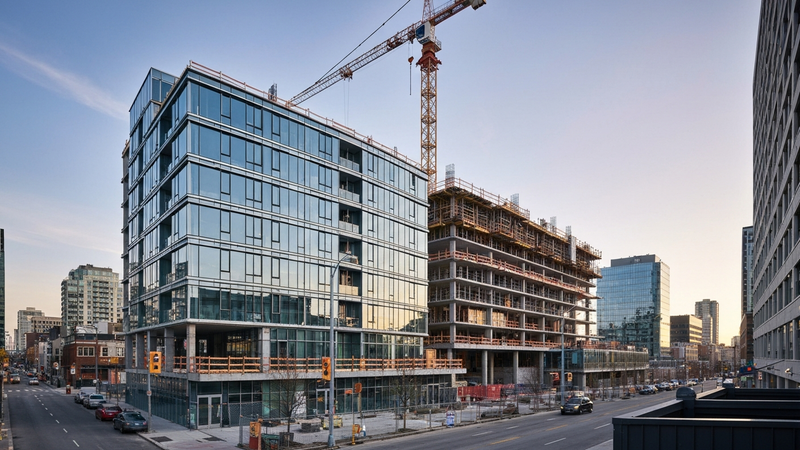
In a resale, the seller pays New York City transfer tax — 1.425% above $500,000 — and New York State transfer tax at 0.4%. In new development, the sponsor's contract customarily shifts both onto the buyer, adding roughly 1.8-2.0% of the price to the closing bill.
Sponsor contracts also commonly pass through the sponsor's attorney fees, a working capital contribution to the building's reserve fund, and in some cases resident manager unit costs. None of these appear in the marketing materials, and all are disclosed in the offering plan.
This is negotiable more often than buyers assume, particularly on remaining inventory in a completed building. Our new development guide covers what to read in the offering plan and where sponsors typically concede.
What sponsors concede, and when
Sponsor flexibility follows inventory. Early in a sell-out with strong absorption, the answer is usually no. Late in a sell-out, on the less desirable exposures, sponsors routinely agree to absorb their own transfer taxes or credit the working capital contribution rather than reduce the headline price.
The reason is that a recorded price sets the comparable for every remaining unit, while a closing credit does not. That asymmetry is useful to a buyer: ask for the concession in a form the sponsor can grant, and the same economic outcome becomes achievable when a price reduction is not.
4. The Counterargument: Why Buy a Condo at All?
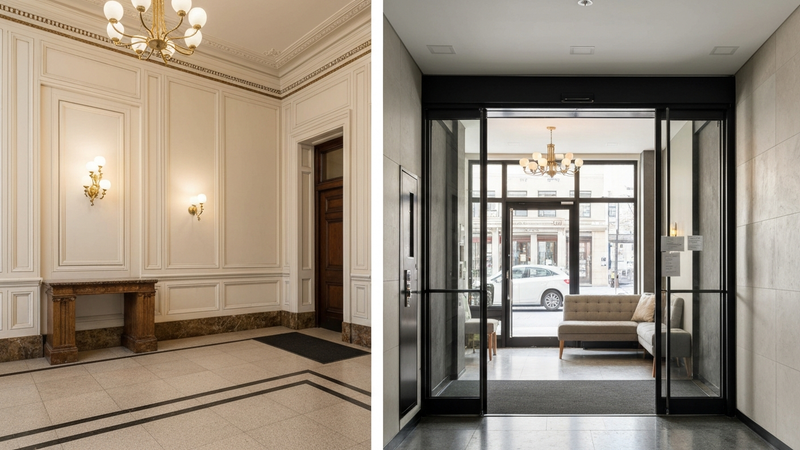
A co-op purchase avoids title insurance and mortgage recording tax entirely, because co-op shares are personal property rather than real estate. That is 1-2% of the price saved at closing, and co-ops typically trade 10-25% below comparable condos per square foot in the first place. On cost alone the co-op wins clearly.
The rebuttal is what the extra cost purchases. A condo has no board approval vote, permits subletting far more freely, accepts non-resident and entity ownership, and draws from a global buyer pool at resale. For an international buyer, an investor, or anyone who may want to rent the apartment out, those freedoms are the reason the market prices condos higher — and the closing cost differential is small against a failed board application.
The structural comparison is in our condo versus co-op guide, and you can model both against a specific price with our cost simulators.
The costs that continue after closing
Closing costs are the entry fee; the carrying costs decide whether the purchase works. A condo owner pays common charges monthly and property tax directly, and both rise over time — New York condo operating expense has grown roughly 3.9% a year over the past decade.
Budget both from the outset rather than treating the mortgage payment as the cost of ownership. On a Manhattan apartment, charges plus tax frequently approach or exceed the mortgage payment itself, which is the single most common surprise for buyers arriving from markets where neither is significant.
Final Thoughts: Budget the Cash, Not the Percentage

The discipline is simple: before you make an offer, compute the actual cash required at closing for the actual price, including the mansion tax bracket that price falls into and the mortgage recording tax on the actual loan. Percentages are for articles; closings require a number in an account.
We prepare closing cost estimates as part of underwriting a purchase and coordinate attorneys and lenders through to closing, with brokerage services provided through licensed professionals. Talk to our team with a specific apartment and we will produce the figure.
Reinvent NY provides business consulting, operational support, and coordination services. Legal advice and immigration filings are handled by independent licensed attorneys. Real estate services are provided through licensed professionals and applicable brokerage relationships. This article is for informational purposes only and does not constitute legal or investment advice.
More on US property tax: NYC Property Tax Appeal, US Real Estate Tax Benefits for Foreign Investors, US Estate Tax for Nonresidents.

Satoshi Onodera
Founder & CEO, Reinvent NY Inc.
Founded Reinvent NY in 2024. Providing relocation support from all over the world to America.
Ready to Get Started?
Our team in New York is ready to help with your visa, real estate, or relocation needs.
Schedule a ConsultationFrequently Asked Questions
What are total closing costs for a NYC condo buyer?
Typically 2-5% of the purchase price for a resale condo. New development pushes that toward 4-6% because sponsors customarily shift the New York City and State transfer taxes onto the purchaser.
How much is the mansion tax?
It begins at 1% on purchases of $1 million and rises through eight brackets to 3.9% above $25 million. The buyer pays it at closing, and it applies to the whole price rather than the amount above the threshold.
What is the mortgage recording tax in New York City?
For residential property in the city it is 1.8% on loans under $500,000 and 1.925% at or above that figure, less a 0.25% portion customarily paid by the lender. It applies only to financed purchases.
Do condo buyers pay transfer tax in New York?
In a resale, the seller pays the New York City and State transfer taxes. In new development, the sponsor's contract customarily shifts them to the buyer, adding roughly 1.8-2.0% of the price.
Is title insurance required?
Lenders require a policy protecting their interest. An owner's policy is optional but standard practice, and is a one-time premium of roughly 0.45% of the price that protects against defects in the ownership record.
Can closing costs be financed?
Not directly. They are cash due at closing, on top of the down payment, which is why buyers should budget them as a separate figure from day one rather than discovering them at contract.
How do co-op closing costs compare?
Co-op purchases avoid title insurance and mortgage recording tax because shares are personal property rather than real estate, which typically makes them 1-2% of the price cheaper to close than an equivalent condo.
Real Estate Guides & Data
More guides
- The Property Data Room: Records That Transact
- Refinancing US Property: When the Numbers Say Move
- US Rental Income Tax for Non-Residents: Gross or Net
- The Second Property: From Owner to Portfolio
- Buying Short Sales: Discounts on the Lender's Clock
- Tax Treaties and US Property: Avoiding Double Taxation
Related Articles
Buying NYC Property From Abroad: The Practical Logistics
The mechanics overseas buyers struggle with: moving funds and proving their source, remote signing, documentation, and the sequence that avoids closing delays.
Buying in a NYC Historic District: The Landmark Rules
Inside a New York historic district the city regulates what an owner may change: what needs approval, how long it takes, and what it adds to a renovation.
Florida Domicile: How to Establish It and What It Saves
Establishing Florida domicile properly: the 183-day count, the documents that prove intent, homestead protection.
Buying a House in New York State: The 10 Steps
The New York house-buying sequence: attorney review, contract deposit, inspection, mortgage commitment, title and closing.