NYC Mansion Tax 2026: All Eight Brackets Explained
Buy a Manhattan apartment at $2,000,000 and the mansion tax is $25,000. Buy the same apartment at $1,999,999 and it is $19,999.99. One dollar of purchase price carries $5,000 of tax.
That is because New York's mansion tax is a cliff tax, not a marginal one. The rate set by the top of the price applies to the entire consideration, and the buyer pays it in cash at closing — it cannot be rolled into the mortgage.
In this article, we'll lay out the full eight-bracket schedule enacted in 2019, show how the tax sits alongside the state transfer tax and the mortgage recording tax, and identify the price points where the arithmetic is worth a negotiation.
What the Mansion Tax Is and Who Pays It
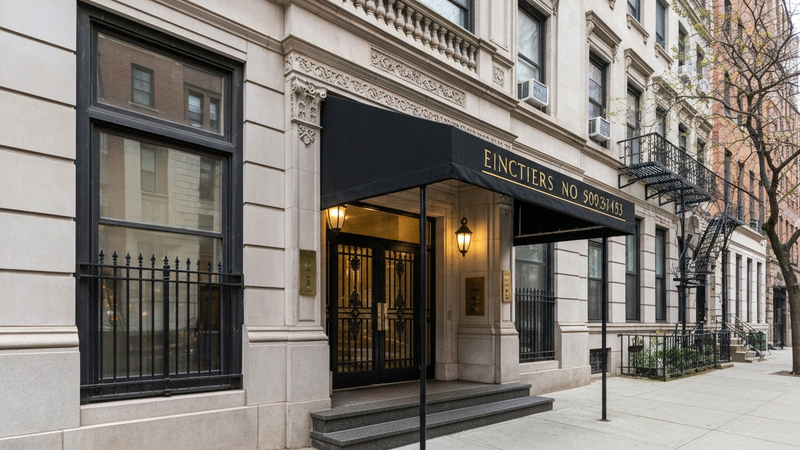
The mansion tax is a New York State tax on residential conveyances of $1,000,000 or more, and it is paid by the grantee — the buyer. It has applied statewide at a flat 1% since 1989.
The progressive brackets above 1% were added in 2019 and reach only conveyances in a city with a population of one million or more. In practice, that means New York City alone. A $5,000,000 house in Westchester pays 1%; the same price in Brooklyn pays 2.25%.
Scope, filing, and the seller's backstop
It covers condominiums, cooperative shares, and one-to-three family homes, and it is reported on Form TP-584 and filed with the deed within 15 days of closing. Purely commercial property falls outside it.
If the buyer is exempt or simply fails to pay, the statute makes the seller liable, which is why a seller's attorney confirms payment rather than assumes it. Our New York closing cost guide shows where the tax falls within the wider bill.
What counts as consideration
The price is not always the figure on the first page of the contract. Consideration includes any debt the buyer assumes and, in sponsor sales, the seller's transfer taxes where the purchaser agrees to pay them.
That distinction decides brackets. A $1,975,000 new development unit on which the buyer absorbs roughly $36,000 of the sponsor's transfer taxes clears $2,000,000 for this purpose, and the tax moves from $19,750 to about $25,100.
The Eight Brackets in Full

The rate is set by total consideration and then applied to all of it. At $10,000,000 the tax is not 1% on the first million and 3.25% on the balance — it is 3.25% on the full ten million, or $325,000.
| Purchase price | Total rate | Tax at an example price |
|---|---|---|
| $1,000,000 to $1,999,999 | 1.00% | $15,000 on $1,500,000 |
| $2,000,000 to $2,999,999 | 1.25% | $31,250 on $2,500,000 |
| $3,000,000 to $4,999,999 | 1.50% | $60,000 on $4,000,000 |
| $5,000,000 to $9,999,999 | 2.25% | $168,750 on $7,500,000 |
Brackets one to four. Each rate is the total payable, including the 1% statewide base.
Above $10,000,000 the schedule steps up in quarter points to a ceiling of 3.90%, where it has stood since the 2019 amendment took effect on July 1 of that year.
| Purchase price | Total rate | Tax at an example price |
|---|---|---|
| $10,000,000 to $14,999,999 | 3.25% | $390,000 on $12,000,000 |
| $15,000,000 to $19,999,999 | 3.50% | $595,000 on $17,000,000 |
| $20,000,000 to $24,999,999 | 3.75% | $825,000 on $22,000,000 |
| $25,000,000 and above | 3.90% | $1,170,000 on $30,000,000 |
Brackets five to eight. These upper rates apply in New York City only.
Elsewhere in the state, only the first line of that schedule exists: a residential purchase at any price above $1,000,000 pays a flat 1%, as set out by the New York State Department of Taxation and Finance.
How It Stacks With the Other Closing Taxes

The mansion tax is the buyer's largest transfer-related cost, though not the only one in the file. New York State transfer tax runs 0.40% of price, rising to 0.65% on residential sales of $3,000,000 or more, and is customarily a seller expense.
New York City's Real Property Transfer Tax adds 1.00% on residential consideration up to $500,000 and 1.425% above that, also a seller cost by convention. New development is the exception, where sponsors routinely shift both taxes to the purchaser.
The mortgage recording tax
A financed purchase adds the mortgage recording tax: 2.05% of the loan amount in New York City below $500,000 and 2.175% at or above it, less the 0.25% the lender absorbs. The buyer's effective rate is therefore 1.80% or 1.925%. Co-op purchases avoid it entirely, since no mortgage is recorded against real property.
On a $3,000,000 condominium with 25% down, that is $45,000 of mansion tax plus about $43,300 of mortgage recording tax before title insurance — roughly $88,000 in taxes alone. Our cost simulator models the full set.
Title insurance is the other cost that scales with price, at approximately 0.45% of the purchase price for an owner's policy in New York, plus a lender's policy on the loan. Taken together, buyer closing costs on a financed condominium purchase commonly land between 3% and 5% of the price.
A $2,500,000 condominium, itemized
Take a $2,500,000 condominium with 25% down. The mansion tax at 1.25% is $31,250. The mortgage recording tax on the $1,875,000 loan, at the buyer's effective rate of 1.925%, adds about $36,100.
Title insurance contributes roughly $12,000 across the owner's and lender's policies, with attorney and lender fees near $7,000. The buyer funds close to $86,000 beyond the deposit — about 3.4% of the price, and none of it recoverable on resale.
Where the Thresholds Actually Move a Deal

Only a few price points genuinely matter. The $2,000,000 line costs $5,000 to cross. The $3,000,000 line costs the buyer $7,500 in mansion tax and the seller a further $7,500 in state transfer tax — a combined $15,000 swing on one dollar of price.
That makes a contract written at $2,999,999 rather than $3,000,000 one of the few negotiations in New York where both sides gain from the same concession.
However, some argue this is noise. On a $3,000,000 purchase, $7,500 is a quarter of one percent — a rounding error next to a mispriced apartment, and a seller with a live second bidder will not move a dollar for it.
That is fair on a competitive listing. It is not fair on the many resales that sit for months, where the tax line is the cheapest concession a seller can make. Raise it before the price anchors on a round number, not after the contract is drawn.
Flip taxes and seller credits
Co-op buyers have a second number to model. Most buildings levy a flip tax on resale — commonly 1% to 3% of the price, or a fixed sum per share — and although it is customarily the seller's expense, it governs how much room a seller actually has to concede near a threshold.
That points to the more common structure. Instead of arguing the price down by a dollar, buyers ask for a seller credit at closing equal to the tax step. It does not reduce the tax, since consideration is unchanged, but it shifts the cost while leaving the recorded price and the comparable sale intact.
Two approaches that do not work
Allocating part of the price to furniture to slip under a bracket only holds if the personal property is genuinely worth the figure on a separate bill of sale. And in sponsor sales, transfer taxes the buyer agrees to pay for the seller are added back into consideration, which can push a deal over the very line it was structured to avoid.
Splitting a purchase is no more reliable. Buying an apartment and its adjoining storage or parking unit under separate contracts does not dependably create two sub-threshold sales, since related conveyances made as part of a single plan can be read together. Raise the structure with the closing attorney rather than the broker.
Final Thoughts
The mansion tax is unusual among American property taxes in being large, entirely front-loaded, and payable in cash by the buyer. At $4,000,000 it is $60,000 that never shows up in a mortgage calculator.
It is also completely predictable, which makes it plannable. Every figure above is fixed by statute — none of it turns on an appraisal, a lender's discretion, or the state of the market on closing day.
Budget it at the offer stage, next to the mortgage recording tax and title insurance, rather than meeting it on a closing statement. Our guide to buying in New York City covers the full sequence, and our analysis of Manhattan apartment prices shows how much of the market now sits above the $1,000,000 line.
Reinvent NY provides business consulting, operational support, and coordination services. Legal advice and immigration filings are handled by independent licensed attorneys. Real estate services are provided through licensed professionals and applicable brokerage relationships. This article is for informational purposes only and does not constitute legal or investment advice.
Related reading: mansion tax.

Satoshi Onodera
Founder & CEO, Reinvent NY Inc.
Founded Reinvent NY in 2024. Providing relocation support from all over the world to America.
Ready to Get Started?
Our team in New York is ready to help with your visa, real estate, or relocation needs.
Schedule a ConsultationFrequently Asked Questions
Who pays the NYC mansion tax, the buyer or the seller?
The buyer pays it. New York law places the mansion tax on the grantee. If the buyer is exempt from the tax or fails to pay it, the seller becomes liable, so both attorneys typically confirm payment before the deed is recorded.
Is the mansion tax marginal or does it apply to the whole price?
It applies to the whole price. The bracket is determined by the total consideration, and that single rate is then charged against every dollar of the purchase. A $10,000,000 sale pays 3.25% on all ten million, not only on the amount above a threshold.
Does the mansion tax apply outside New York City?
The 1% base rate applies statewide to residential purchases of $1,000,000 or more. The progressive brackets from 1.25% to 3.90% apply only in cities with a population of one million or more, which in practice means New York City alone.
Do co-op purchases pay the mansion tax?
Yes. The tax reaches residential cooperative shares as well as condominiums and one-to-three family homes. Co-ops do avoid the mortgage recording tax, because a co-op loan is secured by shares and a proprietary lease rather than by recorded real property.
Can the mansion tax be financed or deducted?
It cannot be financed; lenders treat it as a closing cost the buyer must fund in cash. It is not deductible as a state and local tax either, but transfer taxes paid by a buyer are generally added to the property's cost basis, reducing the taxable gain on a later sale.
When is the mansion tax due?
It is reported on New York State Form TP-584 and paid when the deed is recorded, generally within 15 days of closing. In practice the funds are collected at the closing table and remitted by the title company or the attorney handling the transfer.
Does it apply to new development purchases?
Yes, and sponsor contracts frequently require the buyer to pay the seller's transfer taxes as well. Those amounts are treated as additional consideration, which can raise the taxable price and, in a borderline deal, push it into the next mansion tax bracket.
What is the highest mansion tax rate in 2026?
3.90% on residential purchases of $25,000,000 or more in New York City, unchanged since the progressive schedule took effect on July 1, 2019. At that rate, a $30,000,000 purchase carries $1,170,000 of mansion tax payable at closing.
Real Estate Guides & Data
More guides
- The New York Rental Application and the 40x Rule
- The Seasonal Owner's Playbook: Months Away, Done Right
- Sending Money to the US for a Property Purchase
- NYC Tax Abatements: What Happens When They Expire
- Buying a NYC Townhouse: One Building, All Yours
- US Property Tax for Overseas Owners: Why Averages Mislead
Related Articles
ITIN for Real Estate Investors: The W-7 Process Explained
How foreign real estate investors get an ITIN: who needs one, the Form W-7 process, acceptance agents, processing times, and why the number cuts your tax.
Kips Bay NYC Real Estate Guide 2026
An authoritative 2026 guide to Kips Bay, Manhattan: boundaries, buildings, prices, rents, transit, and schools for international buyers and renters.
Two Bridges Manhattan Real Estate Guide 2026
A concrete 2026 guide to Two Bridges, Manhattan: buildings, prices, rents, transit and daily life for overseas buyers and renters.
DSCR Loan for Foreign Nationals: 2026 Terms Explained
How DSCR loans let foreign nationals and self-employed investors finance US rental property on the rent it earns: 2026 rates, down payments, and fine print.