Bushwick Brooklyn Real Estate Guide 2026
What Bushwick Actually Is — Boundaries, Character, and How It Got Here
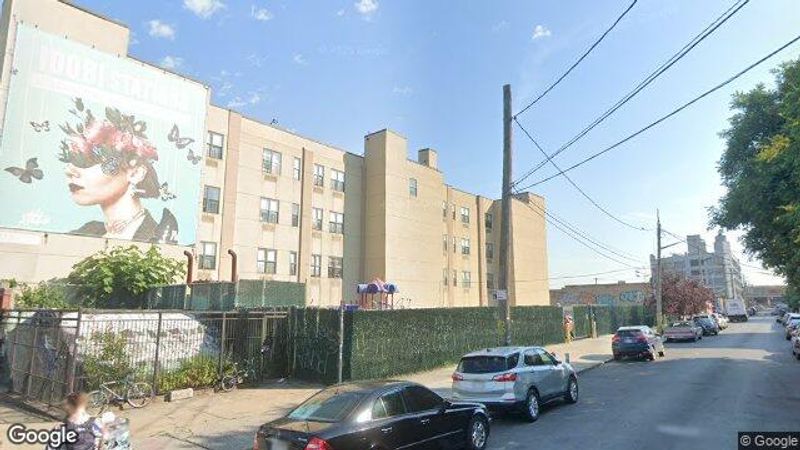
Bushwick sits in north-central Brooklyn, bordered roughly by Flushing Avenue to the north, the Queens line near Cypress Hills to the east, Broadway toward Bedford-Stuyvesant to the west, and the industrial belt near East Williamsburg to the south. Our team in New York treats it as several distinct pockets rather than one uniform district, from Jefferson Street's warehouse core to quieter blocks near Irving Square Park.
The neighborhood was historically German and later Puerto Rican and Dominican, built on breweries and manufacturing along the Bushwick Brewery District. Deindustrialization hit hard through the 1970s, but low rents drew artists in the 2000s, and that migration reshaped the area's reputation into what is now one of Brooklyn's defining creative-class neighborhoods.
Today Bushwick reads as a patchwork of converted loft buildings, mural-covered warehouses, and rowhouse blocks that never industrialized. Our licensed brokerage network sees strong interest from overseas buyers precisely because that contrast — grit alongside genuine architectural stock — keeps values below Williamsburg while offering comparable cultural energy and a still-evolving streetscape.
The Housing Stock — Buildings, Eras, and Unit Types
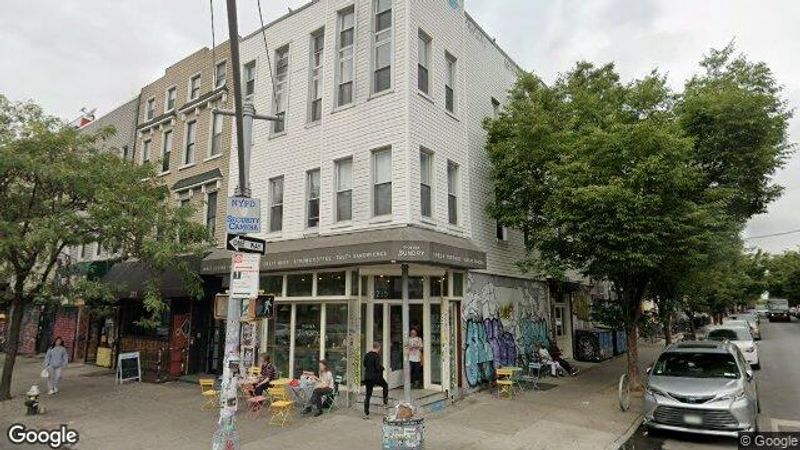
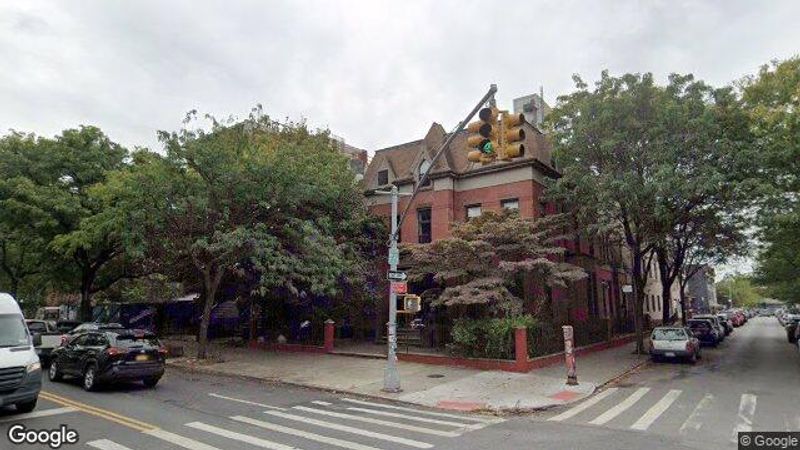
Bushwick's residential base splits into three eras: pre-war rowhouses and small multifamilies from the 1890s–1930s, mid-century tenement-style walk-ups, and a wave of post-2010 ground-up condominiums and converted industrial lofts. Streets like Woodbine, Willoughby, and Cornelia retain intact rows of brick and brownstone-front houses, many still configured as two- or three-family homes.
Loft conversions define the neighborhood's upper tier, with buildings such as The Rheingold development near Bushwick Place occupying former brewery land, and converted manufacturing buildings along Ingraham Street and Grattan Street offering exposed brick, oversized windows, and open floor plans. Newer construction, including mid-rise condos near the Jefferson Street L stop, targets buyers seeking elevator buildings with in-unit laundry and parking.
Unit types range widely: studios and one-bedrooms in converted tenements, family-sized duplexes in rowhouses, and two- to three-bedroom lofts in industrial conversions. Ceiling heights and raw square footage tend to exceed comparable Manhattan units substantially, which is a major draw for our clients prioritizing space, natural light, and architectural character over doorman-building formality.
Prices and Rents — What Things Actually Cost
Bushwick remains one of Brooklyn's more accessible entry points relative to Williamsburg and Greenpoint. Approximate 2026 figures, subject to market conditions, show one-bedroom condos trading in the low-to-mid $600,000s, with loft-style two-bedrooms reaching into the $900,000–$1.1M range. Renovated rowhouses, when available whole, command $1.5M and above depending on lot size and condition.
Rental demand stays strong given proximity to Manhattan and the neighborhood's nightlife and studio-space economy. Studios generally run $2,200–$2,700 per month, one-bedrooms $2,600–$3,400, and two-bedroom loft shares often exceed $4,000. Our team in New York advises clients that pricing varies sharply by proximity to the L train corridor versus the neighborhood's quieter eastern edge.
| Unit Type | Sale Price | Monthly Rent |
|---|---|---|
| Studio | N/A | $2,200–$2,700 |
| One-Bedroom Condo | $600,000–$700,000 | $2,600–$3,400 |
| Loft Two-Bedroom | $900,000–$1.1M | $4,000+ |
| Renovated Rowhouse | $1.5M+ | N/A |
Price growth has been steady rather than explosive, which our clients often find reassuring compared to more volatile Brooklyn submarkets. Buyers should budget for co-op or condo carrying costs where applicable, and for rowhouses, factor renovation costs into total acquisition price, since much of the pre-war stock requires significant systems upgrades before rental or resale.
Daily Life and Transit — Getting Around, Groceries, Schools, Parks
Bushwick is served primarily by the L train (Morgan Avenue, Jefferson Street, DeKalb Avenue stations), the M train along Myrtle Avenue, and the J/Z lines skirting the neighborhood's southern edge. A typical commute to Union Square runs roughly 20–30 minutes via the L, making the neighborhood genuinely practical for Manhattan-based work schedules.
Green space centers on Maria Hernandez Park and Irving Square Park, both offering playgrounds, sports courts, and community programming. Grocery options include Key Food on Wyckoff Avenue and a growing number of specialty markets and greenmarkets, while public schooling is mixed in quality, prompting many families to research zoning carefully or consider private options nearby.
| Transit Line | Key Stations | Manhattan Commute |
|---|---|---|
| L Train | Morgan Ave, Jefferson St, DeKalb Ave | 20–30 minutes to Union Square |
| M Train | Myrtle Avenue corridor | 30–40 minutes |
| J/Z Trains | Southern neighborhood edge | 25–35 minutes |
Daily life here favors independence: fewer chain retailers than Manhattan, more local cafés, galleries, and studio spaces filling ground-floor commercial units. Our team in New York frequently notes that residents value the walkability of Wyckoff and Knickerbocker Avenues, though the neighborhood still lacks the retail density found in more established Brooklyn districts.
Final Thoughts
Bushwick suits buyers and renters who want authentic loft living, proximity to Brooklyn's creative economy, and meaningful savings versus Williamsburg or Manhattan, without sacrificing subway access. It rewards those comfortable with a neighborhood still mid-transition, where some blocks feel fully residential and others remain industrial or in active redevelopment.
It is less suited to buyers seeking established luxury infrastructure, doorman buildings, or top-tier public school zoning out of the gate. Families prioritizing school quality or those wanting a finished, uniformly polished streetscape may find neighboring areas like Park Slope or Cobble Hill a better long-term fit despite the higher entry cost.
For value-focused buyers and design-minded renters, Bushwick remains one of Brooklyn's stronger opportunities in 2026. Our team in New York, working alongside our licensed brokerage network, regularly guides overseas clients through building-by-building comparisons here, since the difference between a strong loft conversion and an overpriced flip can be substantial.
Reinvent NY provides business consulting, operational support, and coordination services. Real estate services are provided through licensed professionals and applicable brokerage relationships. This article is for informational purposes only and does not constitute legal or investment advice.
Nearby neighbourhoods: Carroll Gardens, Clinton Hill, Cobble Hill. All Brooklyn guides are indexed under New York neighbourhood guides.

Satoshi Onodera
Founder & CEO, Reinvent NY Inc.
Founded Reinvent NY in 2024. Providing relocation support from all over the world to America.
Ready to Get Started?
Our team in New York is ready to help with your visa, real estate, or relocation needs.
Schedule a ConsultationFrequently Asked Questions
Is Bushwick a good investment compared to Williamsburg?
Bushwick generally offers lower entry prices with similar transit access via the L train. It carries more variability by block, so our team advises careful building-level due diligence rather than assuming neighborhood-wide appreciation matching Williamsburg's trajectory.
What subway lines serve Bushwick?
The **L train** runs through Morgan Avenue, Jefferson Street, and DeKalb Avenue stops, while the **M train** follows Myrtle Avenue. The J/Z lines touch the neighborhood's southern edge, giving multiple routes into Manhattan and other Brooklyn hubs.
Are Bushwick's loft buildings legal residential conversions?
Most contemporary loft buildings marketed for sale or rent have completed formal residential conversion and certificate of occupancy processes. Our licensed brokerage network verifies this documentation during due diligence, since older industrial buildings sometimes retain ambiguous zoning history.
What does a one-bedroom condo cost in Bushwick in 2026?
Approximate pricing, subject to market conditions, places one-bedroom condos between $600,000 and $700,000. Loft-style units with more square footage or better finishes can exceed this range depending on proximity to transit and building amenities.
Is Bushwick family-friendly?
Some blocks near Maria Hernandez Park and Irving Square Park work well for families, but public school quality varies significantly by zone. Families often research zoning carefully or weigh private school options before committing to a specific block.
How far is Bushwick from Manhattan?
Via the L train from Jefferson Street or Morgan Avenue, Union Square is typically 20–30 minutes. Commute times can extend during service changes, which are relatively common on the L line and worth factoring into daily planning.
Which Bushwick blocks are considered most desirable right now?
Streets near Maria Hernandez Park, the Jefferson Street corridor, and converted loft buildings along Ingraham and Grattan Streets are currently strongest. Our team in New York tracks block-by-block shifts closely given how quickly conditions change here.
Real Estate Guides & Data
Related Articles
Buying New Construction in Hudson Yards: Terms to Read
Hudson Yards was built in one go, and the purchase terms reflect it. Tax abatements, sponsor position and what an overseas buyer should read before signing.
Bedford-Stuyvesant Brooklyn Real Estate Guide 2026
An in-depth 2026 guide to Bedford-Stuyvesant real estate: boundaries, housing stock, prices, rents, transit, and buyer fit for international clients.
520 Park Avenue: One Residence to a Floor
Robert A.M. Stern's limestone tower for Zeckendorf on the Upper East Side, built around full-floor residences.
Clinton Hill Brooklyn Real Estate Guide 2026
A local advisor's guide to buying and renting in Clinton Hill, Brooklyn: housing stock, prices, transit, and daily life for 2026 buyers.