Cobble Hill Brooklyn Real Estate Guide 2026
What Cobble Hill Actually Is
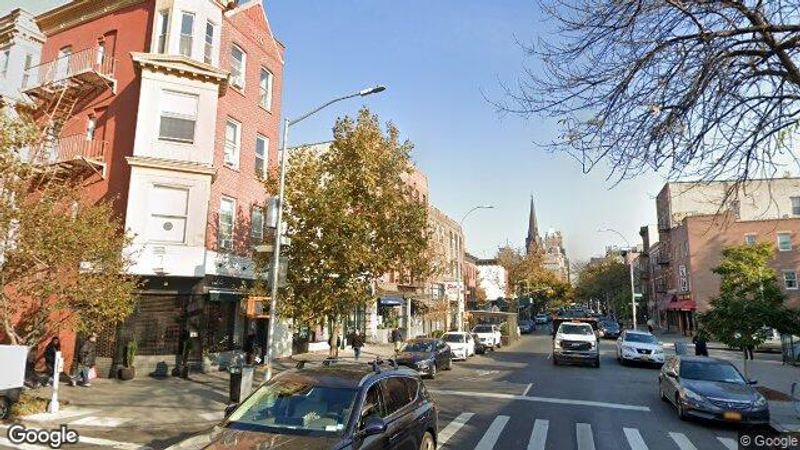
Cobble Hill sits in western Brooklyn, bounded roughly by Atlantic Avenue to the north, Degraw Street to the south, Court Street to the east, and the BQE toward the harbor to the west. It borders Brooklyn Heights, Carroll Gardens, and Boerum Hill. Our team in New York treats it as one of the borough's most consistently low-key, high-value residential enclaves.
The neighborhood developed in the mid-19th century as a merchant and shipping district, its rowhouses built for sea captains and traders working the nearby docks. It escaped the tower construction that reshaped Downtown Brooklyn, largely because of its historic district designation in 1969, which locked in scale and materials block by block.
Today Cobble Hill reads as residential and unhurried: tree-lined streets, low foot traffic, independent shops rather than chains. It draws long-term owners, families, and professionals who want Manhattan proximity without Manhattan density. Our licensed brokerage network sees consistent demand here precisely because so little new supply ever enters the market.
The Housing Stock
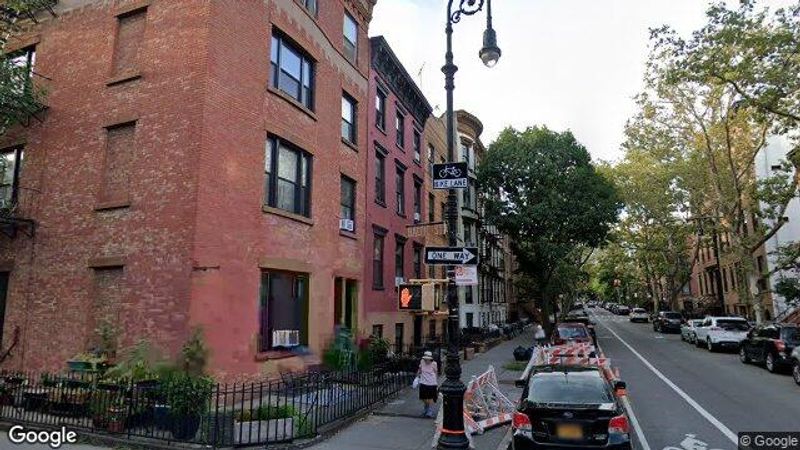
Cobble Hill's core housing type is the brownstone rowhouse, mostly built between 1840 and 1880 in Greek Revival and Italianate styles, concentrated on Warren, Baltic, Kane, and Strong Place. Many remain single-family or have been converted into two- or three-unit configurations, with original cornices, stoops, and parlor-floor ceiling heights preserved under landmark rules.
Prewar apartment buildings fill in around Clinton and Henry Streets, generally four to six stories, offering one- and two-bedroom co-ops with prewar detailing. Newer development is scarce given landmark constraints, though Cobble Hill Towers on Baltic and Warren, a Romanesque Revival complex from the 1870s originally built as model tenements, offers a distinct rental and co-op alternative.
Condo product is limited but present near the Atlantic Avenue edge and in scattered boutique conversions, typically five to fifteen units. Buyers should expect walk-ups without elevators to be common even at premium price points, since landmark and structural constraints make elevator retrofits rare. Our team advises clients to weigh floor level carefully against price.
Prices and Rents
Approximate 2026 figures, subject to market conditions: a one-bedroom co-op or condo in Cobble Hill runs roughly $650,000 to $950,000, while two-bedrooms range from $1.1 million to $1.9 million. Full brownstones, when they surface, typically trade between $3.5 million and $6.5 million depending on width, condition, and whether they carry rental income.
Rental pricing tracks tightly with the ownership market's scarcity. Studios rent from $2,600 to $3,400 monthly, one-bedrooms $3,300 to $4,600, and two-bedrooms $4,800 to $7,000, with brownstone floor-throughs commanding premiums for private outdoor space. Our licensed brokerage network notes inventory turns slowly, so well-priced listings rarely sit more than three weeks.
| Unit Type | Sale Price Range | Monthly Rent Range |
|---|---|---|
| Studio | N/A | $2,600 - $3,400 |
| One-Bedroom | $650,000 - $950,000 | $3,300 - $4,600 |
| Two-Bedroom | $1.1M - $1.9M | $4,800 - $7,000 |
| Brownstone (Full) | $3.5M - $6.5M | N/A |
Compared to neighboring Brooklyn Heights, Cobble Hill trades at a modest discount, roughly 8 to 12 percent lower per square foot, while sitting above Carroll Gardens on average. Buyers seeking landmark-district character at a relative discount within brownstone Brooklyn often shortlist Cobble Hill precisely for this positioning between its two better-known neighbors.
Daily Life and Transit
Transit access is a genuine strength. The F and G trains at Bergen Street, and the A, C, F, and R trains at Jay Street–MetroTech a short walk away, put Lower Manhattan roughly 10 to 15 minutes distant. The 2, 3, 4, and 5 trains at Borough Hall are also within reasonable walking range for residents near Court Street.
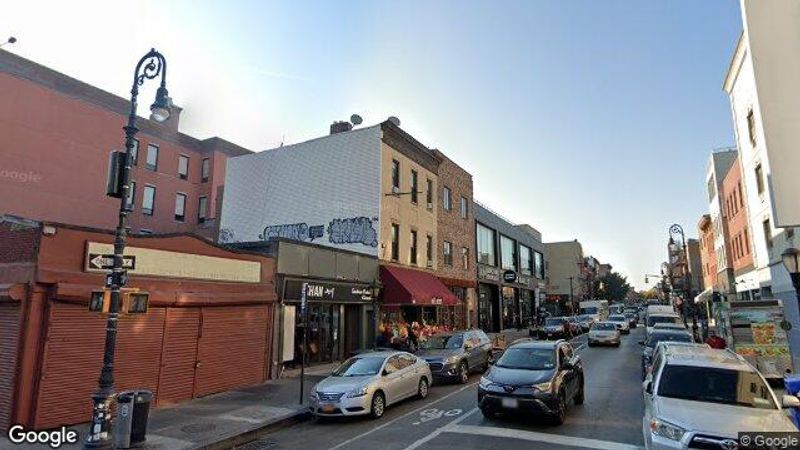
Daily life centers on Court Street and Smith Street, lined with grocers, bakeries, and restaurants, plus a Trader Joe's on Atlantic Avenue. Families favor P.S. 29 and P.S. 261, both zoned locally, and green space comes via Cobble Hill Park and the nearby Brooklyn Bridge Park waterfront, a ten-minute walk toward the water.
| Subway Line | Station | Walk Time to Manhattan |
|---|---|---|
| F, G | Bergen Street | 10-15 minutes |
| A, C, F, R | Jay Street-MetroTech | 10-15 minutes |
| 2, 3, 4, 5 | Borough Hall | 10-18 minutes |
Commutes into Lower Manhattan financial districts average 20 to 25 minutes door-to-desk, making Cobble Hill attractive for professionals unwilling to trade convenience for quiet streets. The absence of major avenues cutting through the core keeps traffic noise low, a detail our team consistently highlights to clients comparing it against louder, denser Brooklyn options.
Final Thoughts
Cobble Hill suits buyers and tenants who prioritize architectural character, walkability, and a settled residential atmosphere over nightlife density or new construction amenities. Families drawn to brownstone living, professionals wanting a fast Manhattan commute without Manhattan pricing, and long-term investors comfortable with landmark-district restrictions all find strong reasons to commit here.
It suits less well those seeking large elevator condos with full amenity packages, doorman buildings at scale, or ground-floor retail investment upside, since inventory of that type is genuinely scarce. Renovation buyers must also budget for landmark commission approval timelines, which can add months to any exterior or facade-visible work.
Our team in New York treats Cobble Hill as a durable, low-volatility corner of brownstone Brooklyn rather than a growth play. Clients should approach it as a long-hold neighborhood purchase, and we recommend working through our licensed brokerage network early, given how quickly well-priced listings move once they appear.
Reinvent NY provides business consulting, operational support, and coordination services. Real estate services are provided through licensed professionals and applicable brokerage relationships. This article is for informational purposes only and does not constitute legal or investment advice.
Nearby neighbourhoods: Coney Island, Crown Heights, Ditmas Park. All Brooklyn guides are indexed under New York neighbourhood guides.

Satoshi Onodera
Founder & CEO, Reinvent NY Inc.
Founded Reinvent NY in 2024. Providing relocation support from all over the world to America.
Ready to Get Started?
Our team in New York is ready to help with your visa, real estate, or relocation needs.
Schedule a ConsultationFrequently Asked Questions
Is Cobble Hill a good investment in 2026?
It behaves as a stable, low-volatility market rather than a high-growth one. Limited new supply due to landmark status supports pricing over time. Investors should expect steady appreciation and strong rental demand rather than rapid short-term gains.
How does Cobble Hill compare to Brooklyn Heights?
Cobble Hill typically trades 8 to 12 percent below Brooklyn Heights per square foot, offering similar brownstone character with a smaller footprint and fewer large prewar apartment buildings, making it attractive to buyers priced out of the Heights.
Are there elevator buildings in Cobble Hill?
Very few. Most housing stock is walk-up brownstones or low-rise prewar buildings without elevators, a direct result of landmark district restrictions on height and structural alteration. Buyers prioritizing elevator access should expect a narrower search.
What subway lines serve Cobble Hill?
The F and G trains stop at Bergen Street within the neighborhood, while the A, C, F, and R lines at Jay Street–MetroTech and the 2, 3, 4, 5 lines at Borough Hall are both within a 10 to 18 minute walk.
Is Cobble Hill good for families?
Yes. It offers zoned schools including P.S. 29 and P.S. 261, low traffic residential streets, Cobble Hill Park, and nearby Brooklyn Bridge Park. Many brownstones convert well to family-sized floor-throughs with private outdoor space.
What is the historic district designation and does it affect renovations?
Cobble Hill became a landmark historic district in 1969, meaning exterior and facade-visible renovations require approval from the Landmarks Preservation Commission. This preserves character but can extend renovation timelines by several months.
Can I find new construction condos in Cobble Hill?
New construction is rare given landmark constraints; most condo product comes from small boutique conversions of existing buildings, typically five to fifteen units. Buyers wanting large new-build amenity buildings should look toward Downtown Brooklyn instead.
Real Estate Guides & Data
More guides
- Timing the NYC Market: Cycles, Seasons, and Honesty
- US Estate Tax for Non-Residents: The $60,000 Exemption
- Vacation Homes Beyond NYC: Hamptons, Hudson, and the Math
- Real Estate Attorneys in NY: What Counsel Actually Does
- Apartment Handover: The First 72 Hours of Ownership
- Heating and Cooling in NYC Buildings
Related Articles
Waldorf Astoria Residences: A Landmark, Reworked
The Waldorf Astoria's Park Avenue landmark now houses private residences alongside the hotel: what ownership includes and what the monthly carry covers.
Carroll Gardens Real Estate Guide 2026
An expert 2026 guide to buying and renting in Carroll Gardens, Brooklyn — boundaries, brownstones, prices, transit, and who this neighborhood truly suits.
NYC Buyer Agent Commission: Who Pays in 2026
Who pays the buyer's agent in New York City after the NAR settlement, why REBNY's listing service follows different rules, and what your agreement should say.
220 Central Park South: Limestone Against the Glass
Robert A.M. Stern's limestone tower fronting Central Park, the building that answered the glass supertalls. What it offers, and what to confirm first.