220 Central Park South: Limestone Against the Glass
220 Central Park South made the same argument as 15 Central Park West, on a better site. Robert A.M. Stern's limestone tower fronts the park directly rather than looking over the buildings in front of it, and it did so while glass supertalls were rising a block south on 57th Street.
The market's response to that contrast has been one of the more instructive results in recent Manhattan history. This walk along Billionaires' Row shows the neighbourhood it sits in.
1. What the Building Is
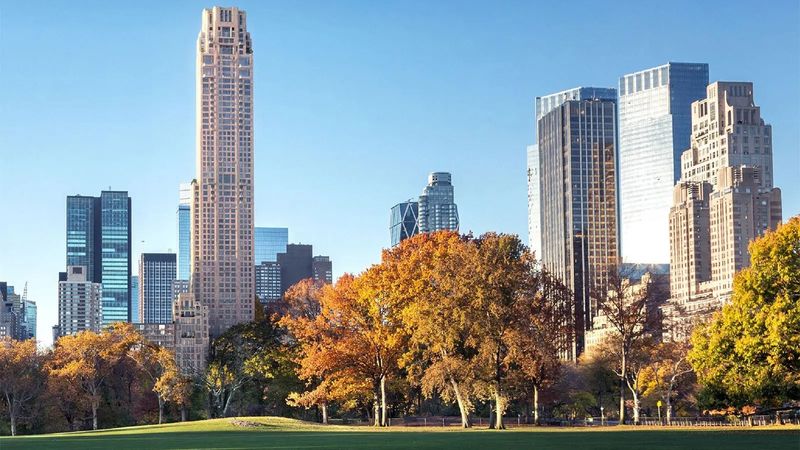
Limestone rather than curtain wall, with setbacks and proportions drawn from prewar Manhattan rather than from contemporary tower design. The same practice, and essentially the same thesis, that produced 15 Central Park West a decade earlier.
The difference is the site. 15 Central Park West sits at the park's southwestern corner; 220 Central Park South fronts the park along its southern edge, which is among the most constrained and most sought-after residential frontage in the city.
| Attribute | Detail |
|---|---|
| Address | 220 Central Park South, Manhattan |
| Architect | Robert A.M. Stern Architects |
| Cladding | Limestone |
| Position | Fronting Central Park directly |
| Design language | Prewar proportions and setbacks |
| Ownership | Condominium |
| Board approval | Right of first refusal only |
Building facts. Unit-level figures — size, charges, tax, exposure — must be obtained for the specific residence.
The location is on Google Maps here, on the park's southern edge.
2. Why Fronting the Park Is Different
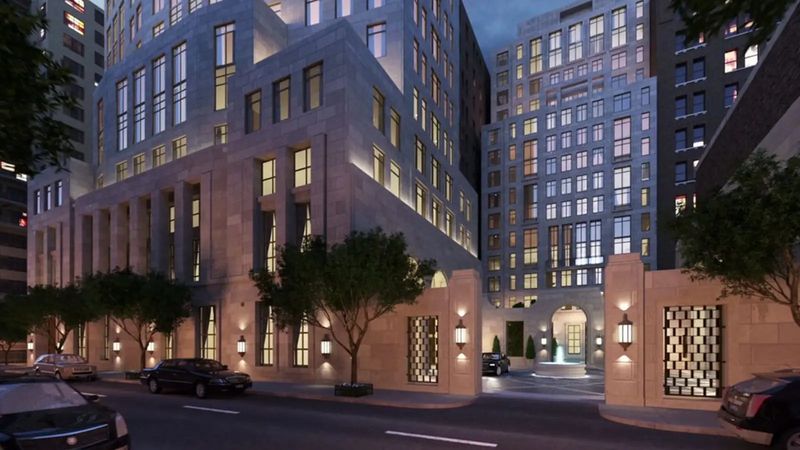
A tower on 57th Street looks at Central Park over the buildings between it and the park. A building on Central Park South looks at the park from its edge. The difference is not only distance — it is what stands between you and the view, and whether that can change.
That is the durable part of the argument. Park frontage is fixed supply in a way that height is not: a taller tower can always be built, but the row of sites facing the park's southern edge is finite and already developed.
For a remote buyer, ask for each window's outlook filmed continuously rather than photographed, and ask what the zoning permits on any site between the apartment and the park — our remote viewing guide covers the full checklist.
3. The Limestone Argument, Commercially
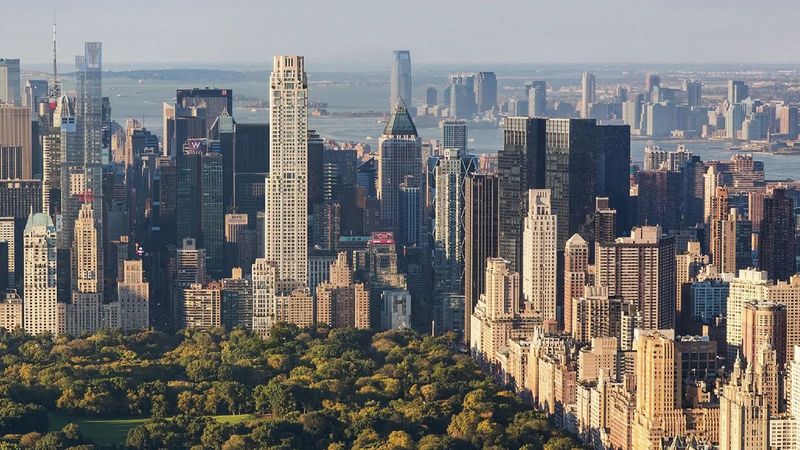
Stern's commercial insight is that stone weathers while glass dates. A curtain wall tower looks its age within a decade or two as glazing technology and taste move on; a limestone building with classical proportions reads the same in 2040 as it did on completion.
Whether that premium is worth paying is a matter for each buyer, but the argument is not merely aesthetic. Resale in twenty years depends partly on whether the building still looks current, and the two materials answer that question very differently.
The same thesis, tested a decade earlier and in a different location, is set out in our 15 Central Park West article.
4. Buying Here as an Overseas Purchaser
As a condominium, procedurally straightforward: no board approval vote, non-resident and entity ownership accepted, subletting far freer than in the prewar cooperatives this building resembles. That combination is precisely why Stern's condominiums appeal to international buyers.
Mansion tax reaches 2.25% between $5 and $10 million, 3.25% above $10 million and 3.9% above $25 million, charged on the whole price and paid by the buyer at closing. Common charges and property tax are separate — obtain both for the specific unit.
Settle ownership structure before contract; US estate tax reaches non-resident owners above a $60,000 exemption on US-situs assets. See our luxury purchase guide and estate tax guide.
Park frontage is the fixed supply
Height can always be exceeded — the next tower will be taller, and the one after that taller still. What cannot be manufactured is a site on the park's southern edge, because that row is finite and already built.
For a buyer thinking in decades rather than years, that distinction is the whole argument. A view over intervening buildings depends on those buildings staying as they are; a view from the park's edge depends on nothing.
What to establish about the specific line
Even in a building with park frontage, apartments differ substantially. Floor height, whether the outlook is straight over the park or angled, how the setbacks affect the window line, and what is visible to the sides all vary and all affect value.
Ask for the view filmed continuously from every window rather than photographed, at a specified time of day. Then request the closed sale prices for the same line a few floors apart — public record in New York — and price against those rather than against the building's reputation.
Final Thoughts: The Site Is the Argument
220 Central Park South combines the most constrained frontage in Manhattan with an architectural approach designed to age rather than date. For a buyer choosing between it and a glass supertall a block south, the question is whether you are buying the view from the building or the building itself. Here, unusually, both arguments point the same way.
We cover Central Park South and 57th Street on Satoshi Onodera's YouTube channel and on Instagram. If a line here is in view, talk to our team and we will obtain the financials and comparables first. Real estate brokerage services are provided through licensed professionals.
For an international buyer there is one further point worth stating. The prewar limestone buildings on Fifth and Park Avenues that this tower deliberately evokes are almost all cooperatives, and most of them will not accept a non-resident purchaser or an entity. Stern's condominiums deliver that architectural language without the constraint, and for a buyer based abroad that is a structural advantage rather than a stylistic preference.
One practical note on the resale market for a building of this kind. Limestone towers with classical proportions attract a specific buyer, and that buyer pool is deep but not identical to the one shopping glass supertalls. In a soft market that shows up as time rather than price, which matters most to an owner who may need to sell on someone else's schedule.
Plan the holding period accordingly. Round-trip transaction costs in New York run roughly 10-15% once buying and selling are combined, so any building that trades on a specific taste rewards an owner who intended to keep it for years.
That is the honest summary. This is a building for an owner rather than a trader, bought because the site cannot be replicated and the architecture is designed to outlast the taste that produced it.
Reinvent NY provides business consulting, operational support, and coordination services. Legal advice and immigration filings are handled by independent licensed attorneys. Real estate services are provided through licensed professionals and applicable brokerage relationships. This article is for informational purposes only and does not constitute legal or investment advice.

Satoshi Onodera
Founder & CEO, Reinvent NY Inc.
Founded Reinvent NY in 2024. Providing relocation support from all over the world to America.
Ready to Get Started?
Our team in New York is ready to help with your visa, real estate, or relocation needs.
Schedule a ConsultationFrequently Asked Questions
Where is 220 Central Park South?
220 Central Park South, directly facing Central Park between Broadway and Seventh Avenue. The location is on [Google Maps](https://maps.google.com/?q=220+Central+Park+South+New+York).
Who designed it?
Robert A.M. Stern Architects — the same practice behind 15 Central Park West, and the same argument: limestone and classical proportion rather than glass.
How does it differ from the glass towers nearby?
Materially and visually. Where One57 and Central Park Tower are glass, this is a limestone building with setbacks drawn from prewar Manhattan, on a site that faces the park directly rather than looking at it from a block south.
Why does facing the park directly matter?
The towers on 57th Street look over the buildings in front of them. A building on Central Park South fronts the park itself, which changes both the outlook and how protected it is.
Can an overseas buyer purchase here?
Yes. It is a condominium, so there is no board approval vote and non-resident and entity ownership are accepted.
Is limestone actually better than glass?
It is different, and it ages differently. Stone facades weather rather than date, which is part of the commercial argument Stern's buildings make against curtain wall towers.
What should I confirm before buying?
The reserve balance, assessment history, two years of board minutes, and the actual common charges and property tax for the specific unit.
Real Estate Guides & Data
More guides
- Searching for US Property: Zillow, StreetEasy, Redfin
- REITs vs Direct Ownership: Two Ways to Hold US Property
- Rental Yield: Gross, Net, Cap Rate, Cash-on-Cash
- Security Deposits in NY: The One-Month Rulebook
- NYC Short-Term Rental Rules: Local Law 18
- Smart Apartments: Technology Worth Installing
Related Articles
Cobble Hill Brooklyn Real Estate Guide 2026
A senior advisor's guide to Cobble Hill, Brooklyn: boundaries, brownstones, 2026 prices and rents, transit, schools, and who this quiet neighborhood suits.
NYC Buyer Agent Commission: Who Pays in 2026
Who pays the buyer's agent in New York City after the NAR settlement, why REBNY's listing service follows different rules, and what your agreement should say.
Brooklyn Heights Real Estate Guide 2026
An advisor-level guide to buying and renting in Brooklyn Heights: boundaries, buildings, 2026 prices, transit, and who this landmark district truly suits.
US Estate Tax for Nonresidents: The $60,000 Trap
Nonresident owners of US real estate get only a $60,000 estate tax exemption. How the 18-40% rates work, what treaties change, and what planning costs.