One Central Park West: The Tower at Columbus Circle
One Central Park West is a 1960s office building that was taken apart and rebuilt as a tower. The structure at Columbus Circle, originally the Gulf and Western Building, was stripped to its frame, reinforced, entirely reclad and reopened in 1997 as a hotel and residential tower.
That history explains both what the building offers and the questions a buyer should ask about it. Let's take the address, the conversion and the practical diligence in turn.
1. The Address Does the Work
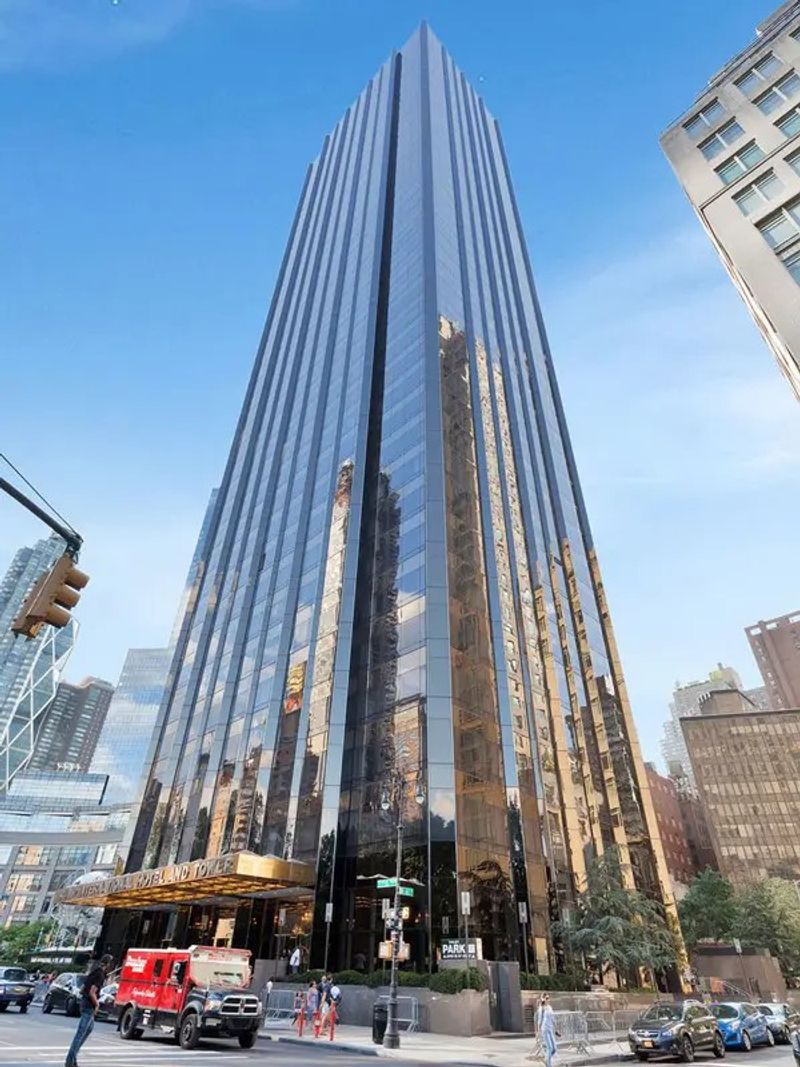
Columbus Circle is one of the very few points in Manhattan where several things meet at once. The south-west corner of Central Park, a major subway interchange, the top of Midtown and the base of the Upper West Side all converge within a block of the building.
That convergence is why so much has been built around it in the decades since, and why the position remains valuable regardless of what any individual tower does. An address is the one attribute of a building that cannot be improved by renovation or eroded by age.
For an international buyer the practical effect is straightforward. Almost everything a visitor to New York wants to reach is either within walking distance or one train away, which matters more for an apartment used part of the year than for a primary residence.
| Attribute | Detail |
|---|---|
| Address | 1 Central Park West, Manhattan |
| Position | Columbus Circle, at the park's south-west corner |
| Original building | 1960s office tower |
| Conversion | Reclad and reopened 1997 |
| Design | Philip Johnson and Costas Kondylis |
| Uses | Hotel and residences |
Building facts. Unit-level figures - size, exposure, charges, tax - must be obtained for the specific residence.
The location is on Google Maps here.
2. What a Conversion Means for a Buyer
A building rebuilt on an existing frame differs from one built from nothing, and the differences are worth understanding rather than fearing. The structural grid was set in the 1960s, which shapes column positions, floor plate depth and where windows can go.
That is why layouts in converted buildings vary more between units than in purpose-built towers where every floor repeats. Some apartments are exceptional and some are ordinary, and the gap between them is wider than a price per square foot suggests.
It also means the specific unit matters enormously. In a purpose-built tower you can reason from the building average; here you cannot, and the only reliable approach is to inspect the actual apartment carefully rather than a comparable one on another floor.
Ask for ceiling heights and room dimensions measured on camera during a live walkthrough rather than taken from a marketing floor plan. Our remote viewing guide covers what to request.
3. The Diligence a Building of This Age Requires
Two layers. First the ordinary condominium review: audited financial statements, the reserve balance in dollars, assessment history and two years of board minutes. Those four documents tell you more about the next ten years of ownership than any tour will.
Second, the questions specific to a converted mixed-use building. How the residential and hotel operations divide shared costs, where the boundary sits between them, and what the facade and systems replaced during the conversion are now due for as they reach their own end of life.
None of that is a reason to avoid the building. A 1997 recladding is younger than a great deal of prized Manhattan housing stock. But the answers should come from documents rather than from a broker's summary.
Our building diligence guide sets out the full document list and what each one reveals when read carefully.
4. Buying Here as an Overseas Purchaser
Where the ownership is condominium, procedurally straightforward: no board approval vote, non-resident and entity ownership accepted, subletting subject to building rules rather than a board's discretion. That contrast with the prewar cooperatives further up Central Park West is significant, since most of them are effectively closed to non-resident buyers.
Mansion tax applies from $1 million on the whole price, reaching 2.25% between $5 and $10 million and 3.25% above $10 million. It is paid by the buyer at closing and is calculated on the entire price rather than on the excess above each threshold.
Settle ownership structure before contract; US estate tax reaches non-resident owners above a $60,000 exemption on US-situs assets. See our estate tax guide and condo versus co-op guide.
How the neighbourhood changed around it
When this tower opened in 1997 it was the tallest thing at Columbus Circle by a wide margin. It no longer is. The blocks immediately south and east now hold several of the tallest residential buildings in the city, and the skyline from the park has changed completely.
For a buyer that has two consequences. Views that were once permanent may not be, so establish what is protected and what is not. And the competition at resale is now considerably deeper than it was, which disciplines pricing in a way that benefits a careful purchaser.
Park frontage and what it is worth
Direct park outlook is the single most durable premium in Manhattan residential property, because the park cannot be built on and the number of apartments facing it is fixed. That is a genuinely different kind of scarcity from height, which the next tower can always exceed.
Confirm exactly what the specific apartment sees, from which rooms, and at what floor. A building on the park is not the same as an apartment facing it, and the price difference between the two within a single building is frequently substantial.
Using an apartment part of the year
Many owners at this end of the market occupy an apartment for part of the year rather than continuously, which raises a set of practical questions about closing the property down, mail, maintenance, insurance and who holds keys.
Those are solvable, but they should be solved before purchase rather than after. Our pied-a-terre guide covers the arrangements that work and the ones that produce problems in the second year.
Final Thoughts: Position Outlasts Architecture
Taller and newer buildings now surround this one, and more will follow. What none of them can do is occupy this corner, and that is the durable part of the proposition. A buyer here is acquiring a position at the meeting point of the park, the subway and Midtown, in a building whose age is a set of questions to answer rather than a reason to look elsewhere.
We cover Central Park West and Columbus Circle on Satoshi Onodera's YouTube channel and on Instagram. If a unit here is in view, talk to our team and we will obtain the financials and the comparables first. Real estate brokerage services are provided through licensed professionals.
One comparison worth making before deciding. The newer towers a few blocks south offer contemporary construction and deeper amenity at a materially higher price per square foot and a higher carrying cost. This building offers the same park and the same transport at a lower entry point in exchange for an older structure.
Which of those is the better purchase depends entirely on how long the apartment will be held and how much of the budget the monthly cost is allowed to consume. Run both numbers before choosing, because the answer is frequently not the one a buyer expects at the outset.
Reinvent NY provides business consulting, operational support, and coordination services. Legal advice and immigration filings are handled by independent licensed attorneys. Real estate services are provided through licensed professionals and applicable brokerage relationships. This article is for informational purposes only and does not constitute legal or investment advice.

Satoshi Onodera
Founder & CEO, Reinvent NY Inc.
Founded Reinvent NY in 2024. Providing relocation support from all over the world to America.
Ready to Get Started?
Our team in New York is ready to help with your visa, real estate, or relocation needs.
Schedule a ConsultationFrequently Asked Questions
Where is One Central Park West?
At Columbus Circle, on the north-west corner of Central Park where Broadway, Central Park West and 59th Street meet. The location is on [Google Maps](https://maps.google.com/?q=1+Central+Park+West+New+York).
What was the building before?
A 1960s office building, the Gulf and Western Building. It was stripped to its frame and reclad as a hotel and residential tower, reopening in 1997.
Who redesigned it?
Philip Johnson and Costas Kondylis worked on the conversion, which replaced the original facade entirely and reinforced the structure.
Why does Columbus Circle matter?
It is one of the few points in Manhattan where the park, the subway interchange, Midtown and the Upper West Side all meet, which is why so much has been built around it since.
Is it a condominium?
The residential portion is condominium. Confirm the ownership form and the documents for the specific unit you are considering.
Can an overseas buyer purchase here?
Where the ownership is condominium, yes - no board approval vote, and non-resident and entity ownership are generally accepted.
What should I confirm first?
The reserve balance, assessment history, two years of board minutes, how the residential and hotel operations divide costs, and the actual monthly charges for the specific unit.
Real Estate Guides & Data
More guides
- Real Estate Attorneys in NY: What Counsel Actually Does
- Apartment Handover: The First 72 Hours of Ownership
- Heating and Cooling in NYC Buildings
- NYC Foreclosure Auctions: Deep Discounts, Real Traps
- Capital Gains Tax on US Property
- University-Anchored Markets: Investing Where Schools Are
Related Articles
Sunset Park Brooklyn: 2026 Real Estate Guide
A concrete guide to Sunset Park, Brooklyn for international buyers and renters: boundaries, housing stock, prices, transit.
Gowanus Brooklyn Real Estate Guide 2026
An expert 2026 guide to buying and renting in Gowanus, Brooklyn — housing stock, prices, transit, and lifestyle for international buyers.
Red Hook Brooklyn Real Estate Guide 2026
Our 2026 guide to Red Hook, Brooklyn: buildings, prices, rents, transit, and daily life for overseas buyers and renters considering this waterfront enclave.
Downtown Brooklyn Real Estate Guide 2026
Our 2026 guide to Downtown Brooklyn real estate covers boundaries, buildings, prices, rents, transit, and schools for international buyers and renters.