Downtown Brooklyn Real Estate Guide 2026
What Downtown Brooklyn Actually Is
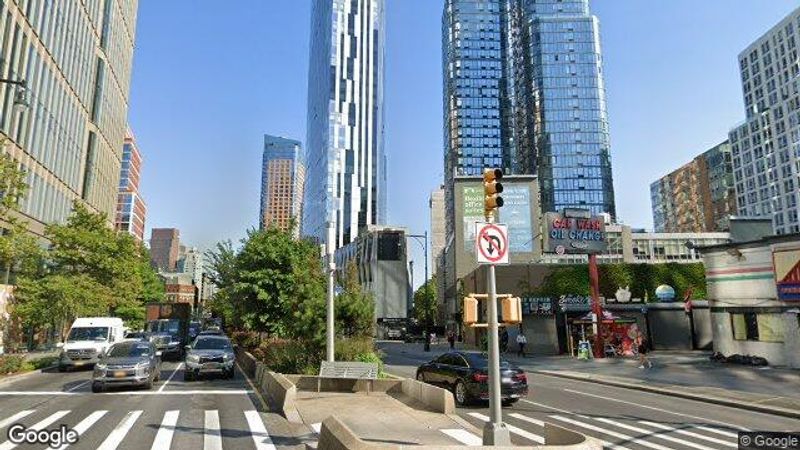
Downtown Brooklyn sits between Brooklyn Heights, Fort Greene, and Boerum Hill, roughly bounded by Flatbush Avenue, Tillary Street, and Atlantic Avenue. It functions as Brooklyn's civic and commercial core, home to courts, MetroTech Center's corporate campuses, and a cluster of universities including NYU Tandon and City Tech. Our team in New York treats it as the borough's true downtown.
The neighborhood's modern identity dates to a 2004 rezoning that permitted high-rise residential towers where low-scale commercial buildings once stood. That policy shift triggered nearly two decades of vertical construction, transforming a government-and-retail district into one of Brooklyn's densest residential zones, with towers now rivaling those across the river in Manhattan.
Today the area reads as glassy and vertical rather than brownstone-lined, though its edges blend into historic Fort Greene and Boerum Hill. Retail along Fulton Street, the Alamo Drafthouse, and City Point's shops and food hall give it a genuine street life. It appeals to buyers wanting scale, newness, and proximity to Manhattan without paying Manhattan prices.
The Housing Stock
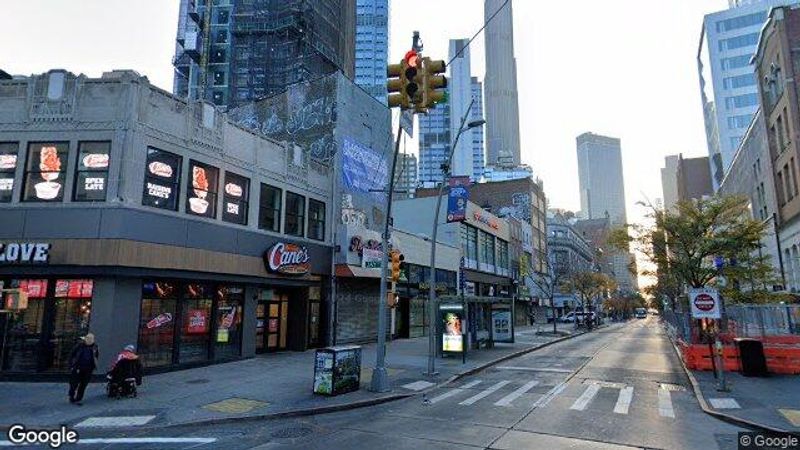
Downtown Brooklyn's residential base is overwhelmingly new construction, dominated by condominium towers built after the 2004 rezoning. Landmark projects include The Hub at 333 Schermerhorn Street, a 720-foot Gensler-designed tower, and 10 Nevins Street, alongside rental giants like Avalon Willoughby Square and the Brooklyner at 1 DeKalb Avenue, which reshaped the skyline.
City Point, the mixed-use megadevelopment spanning several blocks off DeKalb Avenue, added condominiums above retail, including the tower at 1 City Point. Unit types skew toward studios and one-bedrooms aimed at professionals and investors, though many towers include family-sized two- and three-bedroom layouts with floor-to-ceiling glass and skyline or harbor views.
Prewar stock is scarce here compared with neighboring Brooklyn Heights, but a handful of loft conversions and low-rise buildings survive along Livingston and Duffield Streets. Buyers seeking prewar character typically look just outside the core boundary. Within Downtown Brooklyn proper, expect full-service amenity buildings with doormen, gyms, and rooftop terraces as the norm rather than the exception.
Prices and Rents
Pricing in Downtown Brooklyn remains more accessible than Brooklyn Heights or Manhattan's Financial District, though it has climbed steadily since the pandemic recovery. As of early 2026, approximate figures suggest one-bedroom condominiums generally trade between $700,000 and $1.1 million, subject to building age, amenities, and market conditions, with resale inventory tighter than new development.
Rentals move quickly given the density of professionals and students nearby. Studios commonly rent from roughly $2,700 to $3,400 monthly, while two-bedrooms in amenity-rich towers can reach $5,500 or more. Our licensed brokerage network reports that towers with concierge service and skyline views command a consistent premium over comparable Fort Greene or Boerum Hill units.
| Neighborhood | Studio Rent | 1BR Sale Price | 2BR Rent | 2BR Sale Price |
|---|---|---|---|---|
| Downtown Brooklyn | $2,700–$3,400 | $700K–$1.1M | $4,200–$5,500 | $1.1M–$1.7M |
| Brooklyn Heights | $3,000–$3,800 | $900K–$1.4M | $5,000–$6,500 | $1.5M–$2.5M |
| Fort Greene | $2,600–$3,300 | $650K–$1.0M | $3,900–$5,200 | $1.0M–$1.6M |
| Financial District (Manhattan) | $3,200–$4,000 | $850K–$1.3M | $5,200–$6,800 | $1.4M–$2.2M |
Approximate 2026 sale and rental price ranges by neighborhood (subject to market conditions)
Investors should note that carrying costs, including common charges in newer towers, can be substantial given extensive amenities. Comparing Downtown Brooklyn against neighboring markets helps frame relative value, particularly for buyers weighing proximity to Manhattan against per-square-foot cost, a calculation that consistently favors Brooklyn's downtown core over equivalent Manhattan submarkets.
Daily Life and Transit
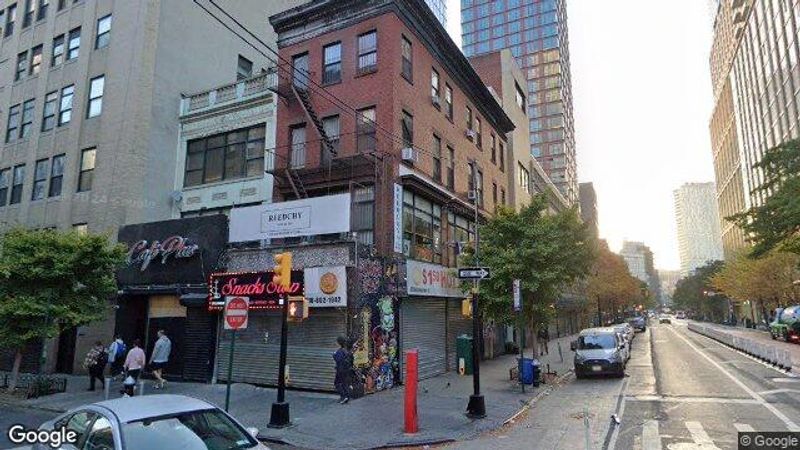
Downtown Brooklyn is arguably the best-connected residential district in the borough. The Jay Street-MetroTech and DeKalb Avenue stations funnel the A, C, F, R, B, D, N, and Q trains, plus the 2, 3, 4, and 5 at Borough Hall and Nevins Street. Manhattan's Financial District is typically reachable in under 15 minutes.
Daily errands center on City Point, which houses a Trader Joe's, DeKalb Market Hall's food vendors, and Alamo Drafthouse Cinema. Fort Greene Park and Brooklyn Bridge Park lie within walking distance, offering green space that the immediate downtown core otherwise lacks. Families often look toward District 13 and 15 zoned schools spanning the surrounding blocks.
| Category | Location/Line | Approx. Travel or Distance | Notes |
|---|---|---|---|
| Subway | Jay Street-MetroTech (A, C, F, R) | 12–15 min to Lower Manhattan | Major interchange hub |
| Subway | Borough Hall (2, 3, 4, 5) | 10 min to Wall Street | Serves Brooklyn Heights edge |
| Park | Brooklyn Bridge Park | 10–15 min walk | Waterfront, sports courts |
| Park | Fort Greene Park | 10 min walk | Historic Olmsted-designed park |
| Groceries | Trader Joe's, City Point | On-site at DeKalb Ave | Also DeKalb Market Hall |
Key transit and lifestyle access points in Downtown Brooklyn
Commuters benefit from proximity to both the Brooklyn and Manhattan Bridges, useful for drivers, while cyclists use dedicated lanes along Jay Street and Tillary Street. The area's density means most daily needs, groceries, pharmacies, gyms, are within a five-minute walk, a convenience factor our team frequently highlights to clients relocating from car-dependent cities.
Final Thoughts
Downtown Brooklyn suits buyers and renters who prioritize transit connectivity, new-construction amenities, and relative value compared with Manhattan or Brooklyn Heights. Professionals working across the bridge, investors seeking rental demand from students and corporate tenants, and anyone wanting doorman-building convenience without prewar maintenance concerns will find this market well matched to their needs.
It suits less well those seeking brownstone charm, tree-lined quiet streets, or a slower pace; Cobble Hill, Fort Greene's residential blocks, or Park Slope serve that preference better. Families prioritizing sprawling green space directly outside their door may also find the immediate core too dense, though nearby parks partially offset that concern.
Our team in New York generally recommends Downtown Brooklyn to clients who value efficiency and future appreciation potential over historic character. With continued development and strong transit fundamentals, we view it as a durable long-term hold. We connect international clients with our licensed brokerage network to evaluate specific buildings against individual investment or lifestyle goals.
Reinvent NY provides business consulting, operational support, and coordination services. Real estate services are provided through licensed professionals and applicable brokerage relationships. This article is for informational purposes only and does not constitute legal or investment advice.
Nearby neighbourhoods: DUMBO, Fort Greene, Gowanus. All Brooklyn guides are indexed under New York neighbourhood guides.

Satoshi Onodera
Founder & CEO, Reinvent NY Inc.
Founded Reinvent NY in 2024. Providing relocation support from all over the world to America.
Ready to Get Started?
Our team in New York is ready to help with your visa, real estate, or relocation needs.
Schedule a ConsultationFrequently Asked Questions
Is Downtown Brooklyn a good investment for overseas buyers?
Yes, particularly for rental income given proximity to universities, MetroTech's corporate campuses, and Manhattan. Approximate pricing remains below Brooklyn Heights and Manhattan equivalents, though buyers should factor in building-specific common charges and consult our licensed brokerage network before purchasing.
What subway lines serve Downtown Brooklyn?
Jay Street-MetroTech connects the A, C, and F trains, while DeKalb Avenue serves the B, D, N, and Q. Borough Hall and Nevins Street add the 2, 3, 4, and 5, making this one of the most transit-dense areas in New York City.
Are there prewar or historic buildings in Downtown Brooklyn?
Prewar stock is limited within the core, though scattered loft conversions exist along Livingston and Duffield Streets. Buyers wanting significant historic character typically look toward adjacent Brooklyn Heights or Fort Greene, both within easy walking distance of Downtown Brooklyn.
What is the typical price range for a one-bedroom condominium?
Approximate 2026 pricing places one-bedroom condominiums between $700,000 and $1.1 million, subject to market conditions, building amenities, and floor level. Newer towers with skyline views generally command the upper end of that range.
Is Downtown Brooklyn family-friendly?
It suits some families, particularly those valuing school access within Districts 13 and 15 and proximity to Fort Greene Park. Others may prefer quieter, lower-density residential blocks nearby, as the core itself is dominated by high-rise towers.
How does Downtown Brooklyn compare to the Financial District in Manhattan?
Downtown Brooklyn typically offers lower per-square-foot pricing and comparable transit access, with a commute to Lower Manhattan often under 15 minutes. It provides similar corporate proximity at generally more accessible price points, according to our team's ongoing market analysis.
What amenities can buyers expect in newer buildings?
Most post-2004 towers include doorman service, fitness centers, rooftop terraces, and resident lounges. Buildings like those within City Point also offer direct retail access, making daily errands, dining, and grocery shopping highly convenient for residents.
Real Estate Guides & Data
More guides
- Commercial vs Residential: Two Investment Grammars
- Cost Segregation: Accelerating US Property Depreciation
- Divorce and NY Real Estate: Dividing the Apartment
- Exit Planning Five Years Out: Selling Starts Early
- Furnished and Corporate Rentals: The 30-Day-Plus Market
- How to Hold US Property: Personal, LLC or Corporation
Related Articles
One Central Park West: The Tower at Columbus Circle
One Central Park West sits at Columbus Circle, converted from a 1960s office slab in 1997. What the address delivers, and what a buyer should confirm first.
Red Hook Brooklyn Real Estate Guide 2026
Our 2026 guide to Red Hook, Brooklyn: buildings, prices, rents, transit, and daily life for overseas buyers and renters considering this waterfront enclave.
Co-op Financial Statements: What Buyers Must Check
How to read a NYC co-op's financial statements before you buy: underlying mortgage, reserves, sponsor units, flip tax reliance, and capital project risk.
The Ritz-Carlton Residences NoMad: Service, Downtown
Rafael Vinoly's tower at 25 West 24th Street put Ritz-Carlton service in NoMad. What a branded residence delivers, and what a buyer should confirm first.