Fort Greene Brooklyn Real Estate Guide 2026
What Fort Greene Actually Is — Boundaries, Character, and History
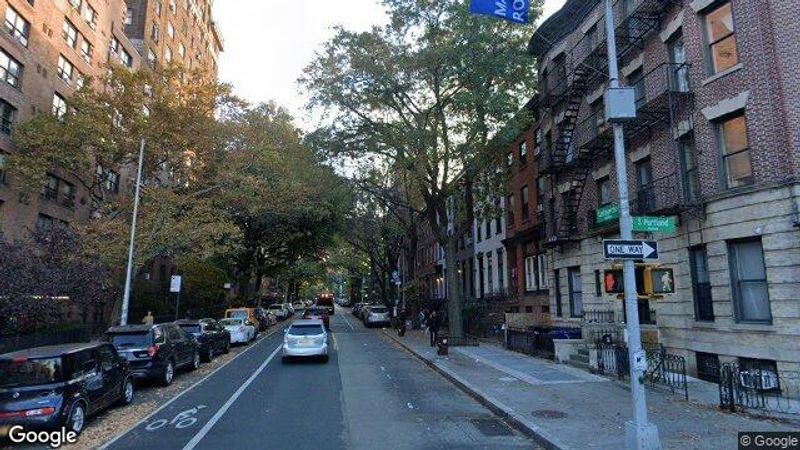
Fort Greene sits in northwest Brooklyn, bounded roughly by Flatbush Avenue, Myrtle Avenue, Classon Avenue, and the BQE. Its heart is Fort Greene Park, an Olmsted and Vaux design predating Central Park's completion. Our team in New York consistently points overseas clients here first because it combines historic architecture with a genuinely mixed, still-evolving population.
The neighborhood grew around the Brooklyn Navy Yard, which shaped its rowhouse blocks and working-class roots through the 20th century. By the 1980s and 90s it became a center of Black cultural and artistic life, anchored by BAM (Brooklyn Academy of Music). That legacy remains visible in local institutions even as gentrification has reshaped ownership patterns since the 2000s.
Today Fort Greene reads as leafy, brownstone-lined, and dense with independent retail rather than chains. It's smaller and quieter than neighboring Downtown Brooklyn, yet walkable to it. Clients seeking a historic residential feel with strong cultural infrastructure, rather than a glossy waterfront tower district, tend to respond well to what Fort Greene offers.
The Housing Stock — Buildings, Architects, and Unit Types
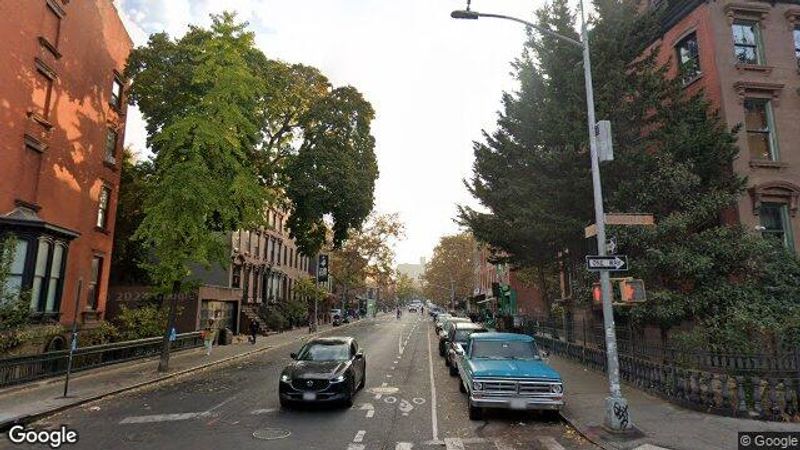
Fort Greene's core housing stock is 19th-century rowhouses, primarily Italianate and Neo-Grec brownstones built between 1860 and 1890, concentrated on streets like South Portland Avenue, Cumberland Street, and Clermont Avenue. Many retain original stoops, parlor floors, and cornices. Full-building acquisitions and duplex/triplex conversions are both common, giving buyers flexibility between whole-house ownership and single-floor units.
Postwar and contemporary development supplements the brownstones. The Toren, a glass tower near Flatbush Avenue Extension, and One Hanson Place, the converted Williamsburgh Savings Bank tower with condos in its upper floors, represent the neighborhood's larger-scale, amenity-driven condo product. Newer mid-rise developments near the BQE and Navy Yard edge add loft-style rentals and condos with more contemporary layouts.
Co-ops appear less frequently here than in Manhattan but do exist in prewar apartment buildings along DeKalb and Willoughby Avenues. For international buyers, condos remain the simpler acquisition path; brownstone purchases typically require more extensive due diligence on building systems, landmarks-district rules, and multi-unit configurations, which our licensed brokerage network can walk through property by property.
Prices and Rents — What Things Actually Cost
As of early 2026, condo prices in Fort Greene run approximately $850,000 to $1.4 million for one-bedrooms and $1.5 million to $2.8 million for two-bedrooms, depending on building age and amenities. Full brownstones trade approximately $2.5 million to $5.5 million depending on width, condition, and whether the building is delivered vacant or with income-producing units.
Rental demand stays strong given proximity to Downtown Brooklyn employers and BAM's cultural draw. Studios and one-bedrooms in newer buildings command a premium over walk-up rowhouse units of comparable size, though the latter often offer more character and outdoor space. All figures below are approximate and subject to market conditions, seasonal shifts, and unit-specific factors.
| Unit Type | Purchase Price (approx.) | Monthly Rent (approx.) | Common Building Type |
|---|---|---|---|
| Studio | $450,000 – $650,000 | $2,600 – $3,300 | Prewar walk-up / small condo |
| 1-Bedroom | $850,000 – $1.4M | $3,300 – $4,200 | Condo or brownstone floor-through |
| 2-Bedroom | $1.5M – $2.8M | $4,500 – $6,200 | Condo tower or duplex |
| 3-Bedroom | $2.2M – $3.8M | $6,500 – $9,000 | Brownstone triplex |
| Full Townhouse | $2.5M – $5.5M | N/A (owner-occupied or multi-unit) | 19th-century rowhouse |
Fort Greene approximate prices and rents, early 2026
Compared with brownstone Brooklyn peers like Park Slope or Boerum Hill, Fort Greene remains marginally more accessible for equivalent square footage, though the gap has narrowed considerably since 2020. Clients treating this as an income-generating purchase should budget for common charges on condos and for ongoing maintenance costs typical of pre-1900 rowhouse structures.
Daily Life and Transit — Getting Around, Schools, and Parks
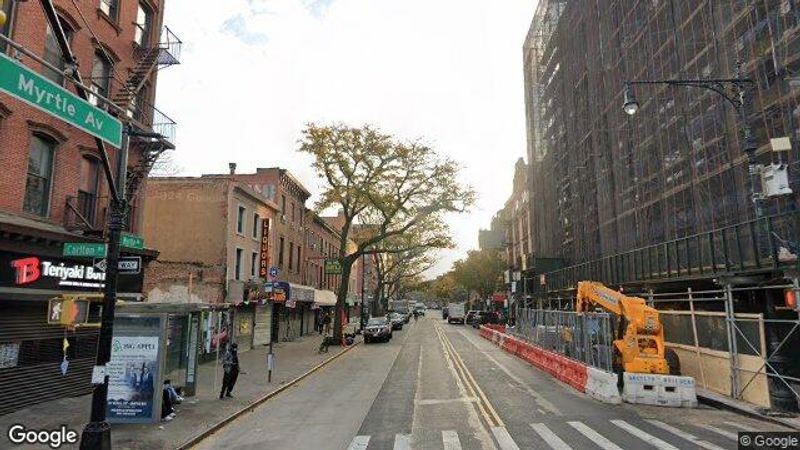
Fort Greene is one of Brooklyn's best-connected residential neighborhoods. The C train at Lafayette Avenue, the G train at Clinton–Washington Avenues, and the 2, 3, 4, 5, B, D, N, Q, R lines converging at Atlantic Avenue–Barclays Center all sit within a short walk of most blocks. Manhattan commutes to Midtown or Wall Street typically run 25 to 35 minutes.
Daily errands center on the Fort Greene Greenmarket at the park, plus grocers along DeKalb Avenue and Myrtle Avenue, including Trader Joe's-adjacent shopping in Downtown Brooklyn a short walk south. Fort Greene Park itself anchors weekend life with its dog runs, farmers market, and views from the Prison Ship Martyrs Monument at the summit.
Public and private school options include P.S. 20 and the Brooklyn Latin feeder network, along with several sought-after independent schools in adjacent Clinton Hill and Boerum Hill. Families weighing school access alongside commute times generally find Fort Greene's central position within Brooklyn a practical advantage over more peripheral neighborhoods.
Final Thoughts
Fort Greene suits buyers and renters who want authentic 19th-century Brooklyn architecture, strong transit, and cultural depth without committing to a purely new-development environment. It works particularly well for clients drawn to brownstone ownership as both residence and long-term asset, and for those who value walkable, tree-lined streets over waterfront glass towers.
It suits less well those who prioritize brand-new full-amenity buildings, doorman-heavy condo living at scale, or immediate proximity to Manhattan's core business districts. Buyers uncomfortable with the maintenance realities of prewar structures, or seeking maximal rental-income efficiency from day one, may find other Brooklyn or Manhattan neighborhoods a closer fit for those specific goals.
Our team in New York has guided international clients through Fort Greene acquisitions across both brownstone and condo product for several years, and we see continued resilience in demand here. For a shortlist matched to your specific budget and use case, our licensed brokerage network can arrange viewings tailored to timing and objectives.
Reinvent NY provides business consulting, operational support, and coordination services. Real estate services are provided through licensed professionals and applicable brokerage relationships. This article is for informational purposes only and does not constitute legal or investment advice.
Nearby neighbourhoods: Gowanus, Greenpoint, Greenwood Heights. All Brooklyn guides are indexed under New York neighbourhood guides.

Satoshi Onodera
Founder & CEO, Reinvent NY Inc.
Founded Reinvent NY in 2024. Providing relocation support from all over the world to America.
Ready to Get Started?
Our team in New York is ready to help with your visa, real estate, or relocation needs.
Schedule a ConsultationFrequently Asked Questions
Is Fort Greene a good investment compared to other Brooklyn neighborhoods?
Fort Greene has shown steady appreciation due to limited historic housing supply and strong transit access. It generally trades at a modest discount to Park Slope or Cobble Hill, making it attractive for buyers seeking brownstone Brooklyn exposure at a comparatively lower entry price.
Can international buyers purchase brownstones in Fort Greene?
Yes, there are no citizenship or residency restrictions on purchasing real estate in New York. International buyers regularly acquire brownstones and condos in Fort Greene; our licensed brokerage network can coordinate financing, closing, and remote transaction logistics.
How far is Fort Greene from Manhattan?
Fort Greene sits roughly 25 to 35 minutes from Midtown or Lower Manhattan via the C train or connections at Atlantic Avenue–Barclays Center. It's one of the closer brownstone neighborhoods to Manhattan's core business districts.
What's the difference between buying a condo and a full brownstone here?
Condos offer simpler transactions, defined common charges, and often amenities like elevators or doormen. Full brownstones require more diligence on building systems and possible landmarks-district rules but offer greater space, privacy, and potential rental-unit income.
Are there landmarked districts within Fort Greene?
Yes, portions of Fort Greene fall within the Fort Greene Historic District, which regulates exterior alterations to preserve architectural character. Buyers of rowhouses in these blocks should confirm landmarks status early, as it affects renovation timelines and approvals.
What income do renters typically need to qualify in Fort Greene?
Most landlords and management companies require annual income of roughly 40 times the monthly rent, or a guarantor meeting a higher threshold. International renters without US income history may need to provide upfront deposits or use a guarantor service instead.
Is Fort Greene walkable and family-friendly?
Yes. Fort Greene Park anchors a walkable, low-traffic residential grid, and the neighborhood has several elementary schools plus proximity to independent schools in Clinton Hill. Many families choose it specifically for the combination of green space and transit access.
Real Estate Guides & Data
More guides
- Hotel Condos and Serviced Apartments
- Reading a US Lease: The Clauses That Cost You
- Managing a US Rental From Abroad: Choosing the Manager
- NYC Mortgage Recording Tax: The Cost of Borrowing
- Researching Neighborhoods From Abroad: The Remote Method
- Where to Buy in New York, by Neighbourhood
Related Articles
520 Park Avenue: One Residence to a Floor
Robert A.M. Stern's limestone tower for Zeckendorf on the Upper East Side, built around full-floor residences.
Clinton Hill Brooklyn Real Estate Guide 2026
A local advisor's guide to buying and renting in Clinton Hill, Brooklyn: housing stock, prices, transit, and daily life for 2026 buyers.
Pied-a-Terre NYC: A 2026 Guide for Part-Time Owners
What a pied-a-terre in NYC really costs in 2026: co-op restrictions, second-home financing, lost tax benefits, and the 30-day rule on renting it out.
Brooklyn Point: Downtown Brooklyn at a Manhattan Standard
Brooklyn Point at City Point: tower-scale amenity in Downtown Brooklyn, the tax abatement attached to it, and what buying there costs to own month to month.