Pied-a-Terre NYC: A 2026 Guide for Part-Time Owners
The apartment is used eleven weeks a year. It carries common charges every month, property taxes every quarter, and an insurance policy written for a home that is empty most of the time. On paper it is an indulgence. In practice, for a certain kind of buyer, it is the cheapest reliable way to be in New York on short notice.
A pied-à-terre is a secondary residence used part-time, and New York has one of the deepest markets for them in the world. It also has a set of rules — building policies, lender pricing, and tax treatment — that penalize part-time ownership in ways full-time buyers never encounter.
Most of those penalties are predictable and can be planned around, provided you know about them before you make an offer rather than during a board interview. Let's examine what actually changes when the apartment is not your primary home.
What Counts as a Pied-à-Terre in New York
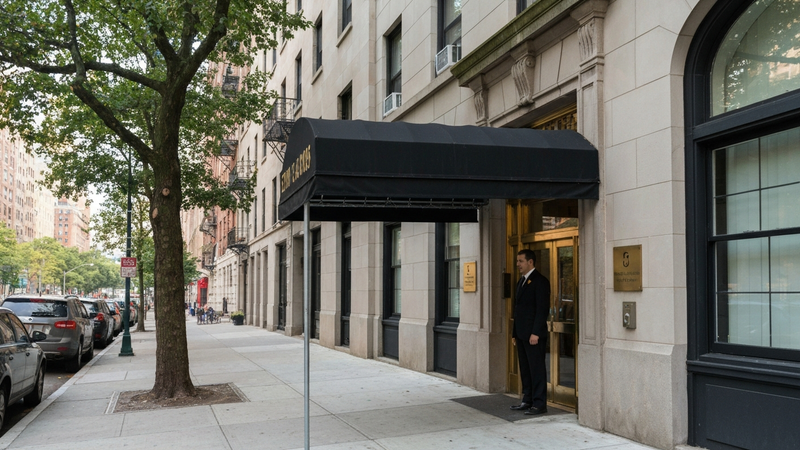
The definition that matters is not a legal one — it is the one your building uses. A pied-à-terre is generally understood as a unit the owner occupies part of the year while maintaining a primary residence elsewhere, whether that is Los Angeles, London, or Westchester.
That framing has consequences on three fronts at once: who will approve you, who will lend to you, and which tax benefits you forfeit. Each is decided by a different party, and none of them consults the others.
Buyers usually arrive at a pied-à-terre from one of a few directions — an executive with recurring business in New York, a family with a child at a local university, a second-home buyer who wants an alternative to hotel costs, or an owner planning a future full-time move. The building's view of each of those profiles is not identical, which is where the process starts.
Condo or Co-op: The First Fork in the Road
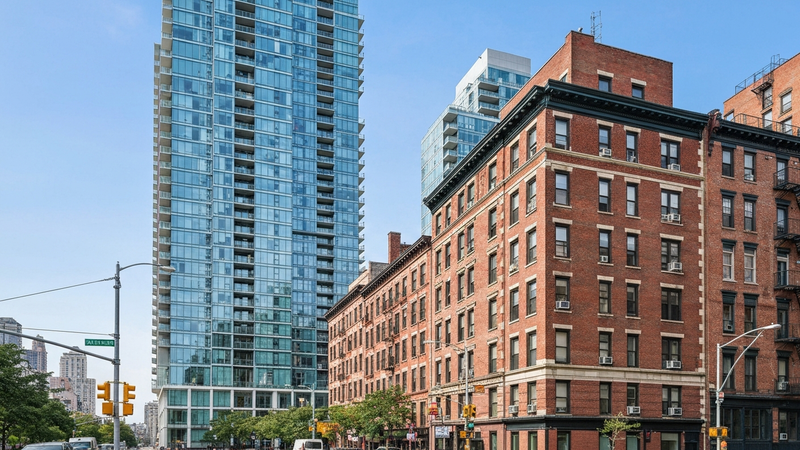
This single decision determines most of what follows. Roughly three quarters of Manhattan's apartment stock is cooperative, and a substantial share of co-op boards either prohibit pied-à-terre ownership outright or permit it only case by case, sometimes with a surcharge or a minimum occupancy expectation.
Condominiums are the practical default. A condo board's authority at sale is generally limited to waiving a right of first refusal, and offering plans rarely restrict part-time occupancy. Our condo vs co-op guide covers the ownership structures in detail.
| Factor | Condominium | Co-op |
|---|---|---|
| Part-time use | Generally permitted | Often restricted or prohibited by board policy |
| Approval process | Waiver of right of first refusal, typically weeks | Board package and interview, often one to three months |
| Down payment | Lender-driven, commonly 20-25% for a second home | Building minimums apply, frequently 25-50% |
| Post-closing liquidity | Set by the lender only | Boards commonly require one to two years of costs in reserve |
| Closing costs | Higher — title insurance and mortgage recording tax apply | Lower — no title insurance or mortgage recording tax |
| Guest and family use | Usually flexible | Frequently written into house rules |
Building-level policy always governs. Confirm the specific rules in writing before making an offer.
Two segments suit part-time buyers particularly well. Sponsor units — apartments still held by the building's original owner — avoid board approval entirely in co-ops, though the buyer typically absorbs the transfer taxes. We cover those trade-offs in our piece on buying NYC sponsor units.
New development condominiums are the second. Offering plans in new construction are drafted with an international buyer pool in mind, so they rarely contain occupancy restrictions, and the sponsor has no interest in policing how often a unit is used.
Financing a Second Home in New York

Second-home mortgages price above primary residences. In current conditions the gap commonly runs about a quarter to three quarters of a percentage point, driven largely by the loan-level pricing adjustments the agencies apply to second-home loans.
Down payment expectations shift as well. Where a primary buyer might close with 10 to 20 percent down, second-home borrowers in New York City are usually looking at 20 to 25 percent, and co-op buildings frequently impose their own floor on top of that.
One classification issue is worth flagging early. If a lender concludes the apartment is really an income property — because of rental history, distance, or how the application is worded — pricing moves to investment-property terms, which are more expensive again. Describe the intended use accurately from the first conversation. For the broader sequence, see our guide to buying in NYC.
Reserves matter more here than most buyers expect. Lenders commonly want six to twelve months of the apartment's full carrying cost — principal, interest, common charges, and taxes — documented in liquid accounts after closing, and co-op boards routinely ask for more. Buyers without established US credit should review our foreign national mortgage guide before applying.
The Tax Position and the Cost of an Empty Apartment
Part-time owners lose the benefits that require primary residency. The NYC co-op and condo property tax abatement is available only for units that serve as the owner's primary residence, and the STAR exemption carries the same requirement. A pied-à-terre pays the full unabated bill, which our NYC condo property tax breakdown walks through.
On acquisition, the mansion tax applies exactly as it would for any other buyer, starting at 1 percent of the purchase price at $1 million and rising in steps on higher-priced transactions. Details are in our NYC mansion tax guide.
| Recurring line item | Illustrative annual cost | Note |
|---|---|---|
| Common charges | $18,000 | $1,500 per month, mid-range Manhattan condominium |
| Property taxes | $16,000 | No co-op and condo abatement without primary residence |
| Homeowner (HO-6) insurance | $1,200 | Carriers may limit coverage after extended vacancy |
| Utilities and connectivity | $1,800 | Kept active year-round to protect the unit |
| Total carrying cost | $37,000 | Before mortgage principal and interest |
Illustrative figures for a roughly $1.5 million unit. Actual costs vary widely by building.
Then comes the question every part-time owner eventually asks: why not rent it out for the months you are not there? Short-term letting is not the answer. New York State's Multiple Dwelling Law bars rentals of under 30 days in most apartment buildings unless the permanent occupant is present.
New York City layered a registration requirement on top of that in 2022, enforced against hosts and booking platforms alike. A conventional lease of a year or longer is legal, but it converts the apartment into an income property with tax and lender consequences — and it removes the availability you bought the unit for.
One more item deserves a clear answer. A pied-à-terre tax — an annual surcharge on non-primary residences — has been proposed in Albany repeatedly since 2019 and has not been enacted as of 2026. It remains a live legislative idea rather than a current cost, and we treat it as a risk to monitor, not a number to budget.
Final Thoughts

The honest counterargument is that hotels are cheaper. For eleven weeks a year at $500 a night, that is around $38,500 — close to the illustrative carrying cost above, with no mansion tax, no closing costs, and no exposure to the resale market.
The rebuttal is that the two purchases are not the same product. Owning buys a fixed address, storage, the ability to arrive on a day's notice, and a position in an asset market. Buyers who value only the room nights should rent. Buyers who value the address should own, and should price the decision on carrying cost rather than nightly rate.
The practical sequence is short. Decide condo or co-op first, get a lender's second-home terms in writing before you shop, model the full unabated tax line, and confirm the building's written policy on part-time occupancy and guest use. Buyers who complete those four steps before making an offer rarely encounter surprises after it.
Reinvent NY provides business consulting, operational support, and coordination services. Legal advice and immigration filings are handled by independent licensed attorneys. Real estate services are provided through licensed professionals and applicable brokerage relationships. This article is for informational purposes only and does not constitute legal or investment advice.

Satoshi Onodera
Founder & CEO, Reinvent NY Inc.
Founded Reinvent NY in 2024. Providing relocation support from all over the world to America.
Ready to Get Started?
Our team in New York is ready to help with your visa, real estate, or relocation needs.
Schedule a ConsultationFrequently Asked Questions
Can I buy a co-op as a pied-à-terre in New York City?
Sometimes, but many co-op boards restrict or prohibit part-time occupancy, and some that allow it impose surcharges or conditions. Condominiums are the more reliable route. Always obtain the building's written policy before making an offer.
Do I pay higher mortgage rates on a pied-à-terre?
Generally yes. Second-home loans price above primary residences, commonly by about a quarter to three quarters of a percentage point, and lenders typically expect a larger down payment. If the loan is classified as an investment property, pricing rises further.
Is there a pied-à-terre tax in New York?
No. An annual surcharge on non-primary residences has been proposed in the New York State legislature several times since 2019 but has not been enacted as of 2026. It remains a proposal to monitor rather than a current cost.
Do I qualify for the NYC co-op and condo property tax abatement?
Not for a pied-à-terre. That abatement requires the unit to be the owner's primary residence, as does the STAR exemption. Part-time owners pay the full unabated property tax bill.
Can I rent out my pied-à-terre while I am away?
Not on a short-term basis. New York State law bars rentals of under 30 days in most apartment buildings unless the permanent occupant is present, and New York City requires host registration. A lease of a year or longer is legal but changes the property's tax and financing treatment.
How much does it cost to hold a pied-à-terre each year?
For an illustrative $1.5 million condominium, common charges, unabated property taxes, insurance, and utilities can total in the range of $37,000 annually before any mortgage payment. Figures vary widely by building and unit size.
Should I keep insurance on an apartment that sits empty?
Yes, and you should tell your carrier how the unit is used. Many HO-6 policies limit or exclude certain coverages once a unit has been unoccupied for an extended period, so the policy should be written for part-time occupancy from the start.
Why do sponsor units and new development suit pied-à-terre buyers?
Sponsor units in co-ops avoid board approval, and new development condominium offering plans are drafted for a broad buyer pool and rarely restrict part-time occupancy. Both remove the approval risk that derails many pied-à-terre purchases.
Real Estate Guides & Data
More guides
- REITs vs Direct Ownership: Two Ways to Hold US Property
- Rental Yield: Gross, Net, Cap Rate, Cash-on-Cash
- Security Deposits in NY: The One-Month Rulebook
- NYC Short-Term Rental Rules: Local Law 18
- Smart Apartments: Technology Worth Installing
- Umbrella Liability: The Cheap Layer Above Everything
Related Articles
Clinton Hill Brooklyn Real Estate Guide 2026
A local advisor's guide to buying and renting in Clinton Hill, Brooklyn: housing stock, prices, transit, and daily life for 2026 buyers.
Fort Greene Brooklyn Real Estate Guide 2026
Our 2026 guide to Fort Greene, Brooklyn: townhouses, condos, prices, rents, schools, and transit access for international buyers and renters alike.
Brooklyn Point: Downtown Brooklyn at a Manhattan Standard
Brooklyn Point at City Point: tower-scale amenity in Downtown Brooklyn, the tax abatement attached to it, and what buying there costs to own month to month.
Prospect Heights Brooklyn Real Estate Guide 2026
An expert 2026 guide to Prospect Heights, Brooklyn: boundaries, housing stock, prices, rents, transit, and schools for international buyers and renters.