NYC Property Tax on a Condo: How It Actually Works
A $2 million condominium in Midtown Manhattan and a $2 million single-family house in Westchester can carry annual property tax bills that differ by more than a factor of two. That gap is not an accident or an assessment error. It is written into the way New York State law tells the city to value apartments.
Buyers arriving from markets where the tax bill tracks the purchase price find the New York City system opaque. In practice it is mechanical: four tax classes, a published assessment ratio, a rate set each fall, and an abatement schedule fixed in statute.
In this article we'll walk through where condos and co-ops sit in that structure, why the effective rate on a Manhattan apartment usually lands near 1% of what you paid, how the co-op and condo abatement works, and what happens when a new building's tax exemption runs out.
Why Condos and Co-ops Sit in Class 2
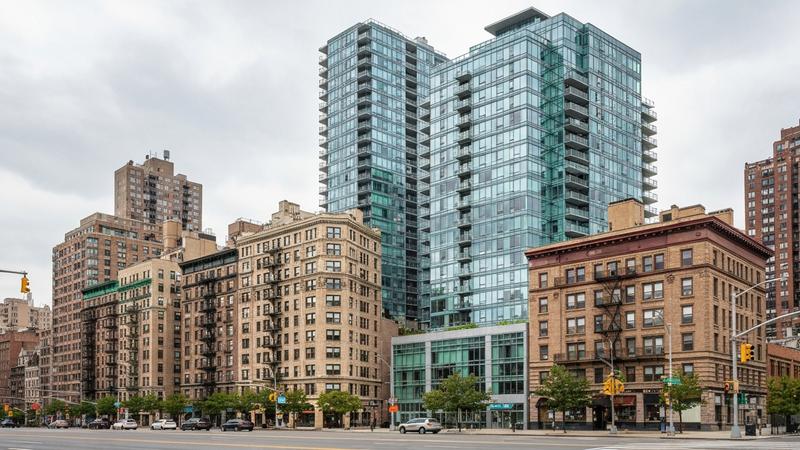
Every parcel in New York City falls into one of four tax classes, and the class does most of the work in determining your bill. Class 1 covers one-, two-, and three-family homes. Class 2 covers everything else residential: condominiums, cooperatives, and rental buildings with four or more units.
Class 3 is utility property and Class 4 is commercial and industrial. The class sets both the share of market value that becomes assessed value and the tax rate applied to it, and those two numbers move in opposite directions.
| Tax class | What it covers | Assessment ratio | Recent tax rate |
|---|---|---|---|
| Class 1 | One- to three-family homes | 6% | About 20% |
| Class 2 | Condos, co-ops, rentals of 4+ units | 45% | About 12.5% |
| Class 3 | Utility property | 45% | About 12% |
| Class 4 | Commercial and industrial | 45% | About 10.6% |
Rates are approximate and are reset by the City Council each fiscal year, which runs July 1 to June 30.
The pairing matters. A Class 1 house is assessed at 6% of market value and taxed near 20%, while a Class 2 apartment is assessed at 45% and taxed near 12.5%. Read alone, that 12.5% alarms every buyer who sees it. It is not the number that reaches your bill.
The rental-comparable rule
Section 581 of the New York State Real Property Tax Law requires the Department of Finance to value condos and co-ops as though they were rental apartment buildings. The agency selects comparable rental properties, capitalizes their net operating income, and applies the result to your unit.
The consequence is direct: your sale price does not set your tax. A condo that traded at $3 million can carry a Department of Finance market value well under half that, because the rental building it is measured against never sold at condo pricing.
From Market Value to the Bill

The calculation runs in four steps, and each one shrinks the number. Start with the Department of Finance market value, apply the 45% Class 2 assessment ratio to get the target assessed value, apply the phase-in limits, then multiply by the class tax rate and subtract abatements and exemptions.
The phase-in is where large jumps get absorbed. Class 2 properties with 10 or fewer units are limited to assessment increases of 8% in one year and 30% over five years. Larger buildings phase increases in over five years rather than taking them at once.
What the effective rate looks like
Stack those steps and most Manhattan and Brooklyn condominiums end up paying roughly 0.8% to 1.2% of actual market value each year before any abatement. Co-ops in older buildings often sit lower, because the rental comparables assigned to them carry modest income.
Against national benchmarks that is unremarkable, and our US property tax guide covers how the states compare. It sits far below what the headline Class 2 rate implies, which is why quoted rates mislead almost everyone who reads them cold.
Property tax is also only part of the monthly carry. Common charges or maintenance sit on top of it and are set by the building rather than the city; our NYC common charge guide breaks down what those cover and how they move.
The Co-op and Condo Abatement, Tier by Tier

Owner-occupants get a second reduction that investors do not. The Cooperative and Condominium Property Tax Abatement removes 17.5% to 28.1% from the bill, and the size of the cut depends on the average assessed value per unit across the building, not on your own apartment.
The unit must be your primary residence as of the January 5 taxable status date, and it must be held by an individual. Units owned through an LLC or a corporation do not qualify, which is the most common reason a cross-border buyer never sees the abatement at all.
| Average assessed value per unit | Abatement |
|---|---|
| $50,000 or less | 28.1% |
| $50,001 to $55,000 | 25.2% |
| $55,001 to $60,000 | 22.5% |
| $60,001 and above | 17.5% |
Tiers are set by statute and apply to the whole building, so two identical apartments in different buildings can receive different abatements.
Buildings apply on behalf of their owners. The managing agent files with the Department of Finance ahead of a mid-February deadline for the following fiscal year, so if you bought recently and the abatement is missing, the building's filing is usually where the problem sits.
Two conditions that trip people up
The abatement cannot be combined with 421-a, J-51, or the clergy exemption on the same unit. Buildings whose average assessed value per unit exceeds $60,000 must also certify that building service employees are paid the prevailing wage, a condition added in 2022.
Neither condition is discretionary, and neither is something an individual owner can cure alone. Both belong in due diligence, confirmed with the managing agent before an offer rather than discovered on the first bill after closing.
Exemption Expirations and Reading Your NOPV
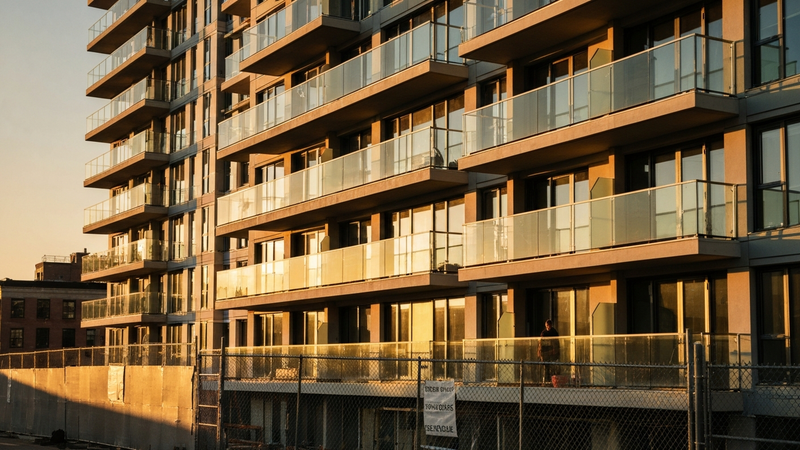
The largest property tax surprises in New York City are not rate increases. They are phase-outs. A new condominium built under 421-a can open with a token tax bill that steps up in stages until it reaches the full amount, often over 10, 15, 20, or 25 years.
The 421-a program lapsed for new projects in June 2022 and was replaced in 2024 by a successor program, 485-x. Buildings already vested continue on their original schedules, so a 2019-vintage condo can still be several steps from its stabilized bill. Our new development guide covers what to ask the sponsor.
The case that none of this is modelable
Some argue the system is too arbitrary to underwrite. The Tax Equity Now New York lawsuit, revived by the New York Court of Appeals in March 2024, contends the class structure produces unequal burdens across neighborhoods and property types, and a court-forced overhaul would reset everyone's assumptions.
The argument is fair on the merits and weak on timing. Any remedy runs through Albany, while the inputs you actually need are published on a fixed calendar every year. Model the schedule that exists and treat reform as an option you have not paid for.
The NOPV and where to verify
The Notice of Property Value arrives each January. It states the Department of Finance market value, the assessed and billable assessed values, any exemptions, and an estimate for the fiscal year beginning July 1. Class 2 owners who disagree generally have until March 1 to file with the Tax Commission.
Before you bid, pull the building's own record. The NYC Department of Finance publishes tax bills, assessment rolls, and exemption status by block and lot, and state-level pricing context sits in our New York market data.
Final Thoughts

The New York City property tax system rewards owners who read the paperwork. The assessment ratio, the rental-comparable rule, and the abatement tiers are public and fixed. What varies is whether a buyer models them before signing or meets them on the first bill.
For a primary-residence purchase the checklist is short. Confirm the tax class and the current billable assessed value, check whether the abatement is being applied to the line, and ask for the remaining schedule on any 421-a or J-51 benefit attached to the building.
For an investment purchase, drop the abatement from the model entirely and underwrite the full bill, because an entity-owned unit will never receive it. We support clients on this kind of pre-offer analysis through our licensed brokerage network, and the gap between a modeled bill and an assumed one often decides whether a deal clears.
Reinvent NY provides business consulting, operational support, and coordination services. Legal advice and immigration filings are handled by independent licensed attorneys. Real estate services are provided through licensed professionals and applicable brokerage relationships. This article is for informational purposes only and does not constitute legal or investment advice.

Satoshi Onodera
Founder & CEO, Reinvent NY Inc.
Founded Reinvent NY in 2024. Providing relocation support from all over the world to America.
Ready to Get Started?
Our team in New York is ready to help with your visa, real estate, or relocation needs.
Schedule a ConsultationFrequently Asked Questions
What tax class is a condo in New York City?
Condominiums and cooperatives are Class 2 property, the same class as rental buildings with four or more units. Class 2 property is assessed at 45% of the Department of Finance market value and taxed at a rate that has recently run near 12.5%, though phase-in limits and abatements reduce what actually reaches the bill.
Why is my condo's assessed value so much lower than what I paid?
Section 581 of the New York State Real Property Tax Law requires the city to value condos and co-ops as if they were rental apartment buildings. The Department of Finance capitalizes the net income of comparable rentals rather than looking at condo sale prices, so the resulting market value is usually well below the price you paid.
What is the effective property tax rate on a Manhattan condo?
After the assessment ratio, phase-in limits, and abatements, most Manhattan and Brooklyn condominiums pay roughly 0.8% to 1.2% of actual market value per year. Individual buildings vary, and older co-ops with modest rental comparables can land lower. Always check the specific bill rather than applying an average.
How much is the co-op and condo property tax abatement?
The abatement ranges from 17.5% to 28.1% of the tax bill. Buildings with an average assessed value per unit of $50,000 or less receive 28.1%, tiers between $50,001 and $60,000 receive 25.2% or 22.5%, and buildings above $60,001 receive 17.5%. The unit must be the owner's primary residence.
Can a foreign buyer or an LLC get the condo tax abatement?
No. The abatement requires that the unit be the owner's primary residence and that it be held by an individual rather than an LLC, corporation, or similar entity. Buyers who hold property through an entity for liability or estate reasons should underwrite the full tax bill with no abatement applied.
What happens to my taxes when a 421-a exemption expires?
The bill steps up toward the full amount on a published schedule, often over 10, 15, 20, or 25 years depending on the version of the program. The increases are gradual rather than instant, but the cumulative change can be large. Ask the sponsor or managing agent for the remaining phase-out schedule in writing.
Where can I check a building's property taxes before making an offer?
The NYC Department of Finance publishes property tax bills, assessment rolls, and exemption status by borough, block, and lot. Search the building's address to see its current billable assessed value, tax class, and any exemptions or abatements in place before you commit to a price.
Real Estate Guides & Data
More guides
- US Estate Tax for Non-Residents: The $60,000 Exemption
- Vacation Homes Beyond NYC: Hamptons, Hudson, and the Math
- Real Estate Attorneys in NY: What Counsel Actually Does
- Apartment Handover: The First 72 Hours of Ownership
- Heating and Cooling in NYC Buildings
- NYC Foreclosure Auctions: Deep Discounts, Real Traps
Related Articles
Rent Stabilized Building Investment in NYC After 2019
What rent stabilization means for NYC investors after HSTPA: RGB increases, IAI caps, valuation discounts, and how to verify a unit's status before you buy.
Harlem Real Estate Guide 2026
An expert 2026 guide to buying and renting in Harlem, Manhattan — boundaries, buildings, prices, transit, and who this historic neighborhood truly suits.
One57: The Tower That Started Billionaires' Row
One57 at 157 West 57th Street: 75 storeys above a Park Hyatt, the building that opened Billionaires' Row, and what a residence there costs to own and hold.
Morningside Heights NYC Real Estate Guide 2026
Our 2026 guide to Morningside Heights covers boundaries, historic buildings, prices, rents, transit, and schools for international buyers and renters.