Rent Stabilized Building Investment in NYC After 2019
Roughly one million apartments in New York City are rent stabilized. The 2023 New York City Housing and Vacancy Survey counted somewhere near 960,000, close to half the city's rental stock, which means almost any multifamily building of consequence in the five boroughs contains some of them.
Before June 2019 that was an opportunity. A stabilized building was priced on the gap between regulated rent and market rent, and the strategies for closing that gap were well understood by every operator in the market.
The Housing Stability and Tenant Protection Act removed most of them in a single legislative session. In this article we'll examine what stabilization now covers, which levers the 2019 law closed, what the repricing has done to multifamily valuations, and how a buyer verifies a unit's status before committing capital.
What Rent Stabilization Covers Today
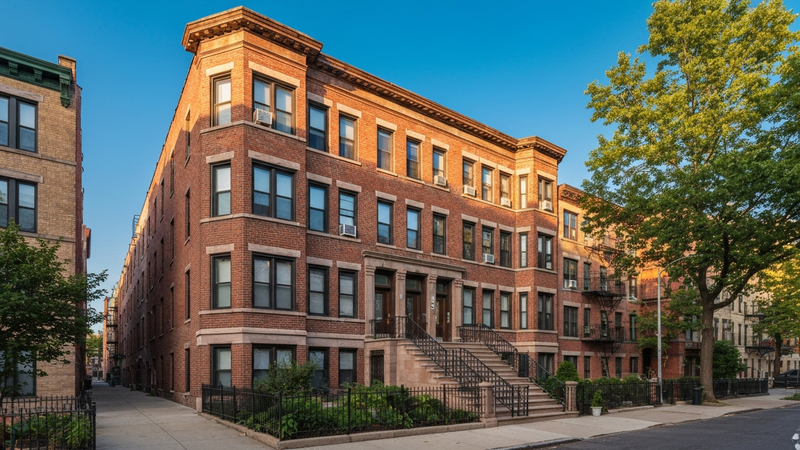
Rent stabilization applies broadly to apartments in buildings of six or more units built before 1974, plus units brought into the system through tax benefit programs such as 421-a and its successors. Newer construction is generally free market unless a public subsidy attached regulation to it.
The economics are set annually. The New York City Rent Guidelines Board votes each June on the increases owners may charge on renewal leases beginning October 1. One-year increases have run in the low single digits in recent years, around 3%, with two-year renewals somewhat higher.
That is the entire revenue model. There is no market reset on turnover, no negotiation, and no mechanism to catch up after a stretch of below-market rent. Our NYC rent market guide covers where free-market rents have moved over the same period.
Registration is what makes the status real
Owners must register each stabilized unit annually with New York State Homes and Community Renewal, the agency formerly known as DHCR. That registration history is the legal record of the rent, and a gap or an unexplained jump in it is a liability that transfers with the building.
What HSTPA Closed

The Housing Stability and Tenant Protection Act of 2019 did two things at once. It made rent regulation permanent, ending the cycle of scheduled renewals in Albany, and it eliminated nearly every mechanism by which a unit could leave the system or a rent could jump.
Vacancy decontrol is gone. Before 2019, a stabilized unit that crossed a rent threshold on vacancy became free market. That exit no longer exists at any rent. High-income decontrol and the 20% vacancy bonus were removed at the same time.
| Mechanism | Before June 2019 | After HSTPA |
|---|---|---|
| Vacancy decontrol | Unit left stabilization above a rent threshold | Eliminated |
| Vacancy bonus | Up to 20% increase on a new lease | Eliminated |
| High-income decontrol | Deregulation at high rent plus high income | Eliminated |
| Preferential rent | Could reset to legal rent at renewal | Fixed for the tenancy |
| MCI increase cap | 6% per year | 2% per year |
| Owner-use recovery | Multiple units permitted | Generally one unit, with a necessity showing |
The 2019 law is permanent by design; there is no scheduled sunset date for these provisions.
Preferential rents were also fixed for the duration of the tenancy. An owner who rented below the legal registered rent can no longer reset to that legal rent at renewal, which stranded a large amount of paper value that buyers had been paying for.
Improvements, capital work, and owner use
Individual apartment improvements were capped in 2019 at $15,000 over 15 years across up to three units, amortized over 168 or 180 months depending on building size. At the maximum that produced roughly $83 to $89 a month, and the increase is removed entirely after 30 years.
The 2024 state budget raised that cap, to approximately $30,000 over 15 years with a larger allowance for units vacant for many years. The figures have moved once already, so confirm the current numbers with counsel before underwriting a renovation program.
Owner-occupancy recovery narrowed as well. An owner may generally recover one unit for personal use rather than several, and must show an immediate and compelling necessity. Long-tenured senior and disabled tenants carry additional protection against recovery.
What This Does to Valuation
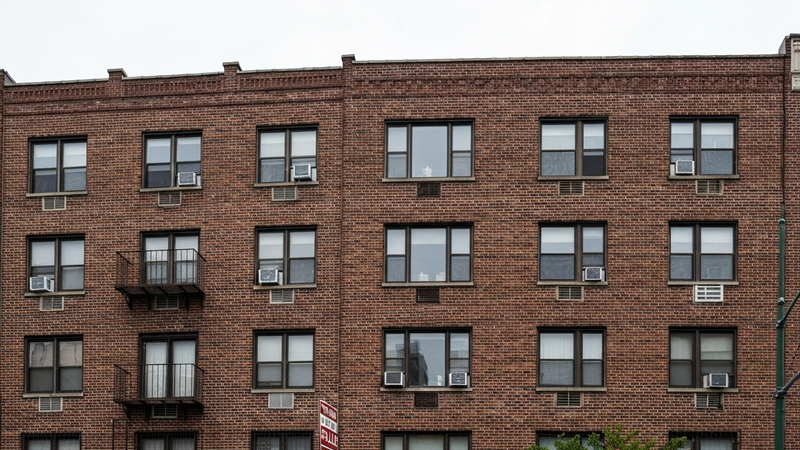
Rent-stabilized multifamily repriced, and the repricing has been severe. With no turnover premium and increases capped in the low single digits, income growth is bounded while property taxes, insurance, and debt service are not.
The clearest public mark came in December 2023, when the FDIC sold the roughly $5.8 billion rent-regulated loan portfolio inherited from Signature Bank to a joint venture at a reported discount of approximately 60% of face value. Whole-building trades in heavily regulated submarkets have shown per-unit declines of a comparable order.
The practical result is a persistent cap rate spread. Stabilized assets clear at meaningfully wider cap rates than free-market comparables and lenders size them at lower proceeds. Our rental yield guide sets out how to build the return math from the rent roll up.
The counterargument
Some investors argue the discount has overshot. Stabilized buildings run near-zero vacancy, rents far below market provide a floor in any downturn, and the assets are trading below replacement cost to operators with the balance sheet to hold them for decades.
There is something to that, but it is a yield trade, not a value-add trade. The floor is real; the ceiling is statutory. An operator who buys at a discount and underwrites eventual deregulation is underwriting a change in state law, and no lender will finance that assumption.
Checking a Unit's Status Before You Sign

Never rely on the seller's rent roll alone. The regulatory status of a unit is a matter of state record, and the record does not always agree with what the offering memorandum says it is.
The tenant of record can request a unit's full rent registration history from HCR's Office of Rent Administration, and buyers ordinarily obtain the registrations through the seller during diligence. HCR also publishes borough-level lists of buildings with registered stabilized units.
| Factor | Free market | Rent stabilized |
|---|---|---|
| Annual increase | Set by owner, subject to Good Cause limits in many buildings | Rent Guidelines Board order, recently near 3% for one year |
| Lease renewal | Not required | Tenant holds a renewal right |
| Reset to market on vacancy | Yes | Generally unavailable |
| Typical cap rate | Tighter | Wider, reflecting capped income |
| Primary underwriting risk | Vacancy and market rent | Regulatory and overcharge exposure |
New York's 2024 Good Cause Eviction law also limits increases in many market-rate NYC buildings, so free market no longer means unrestricted.
The exposure that matters most is overcharge liability. Where a registered rent cannot be substantiated, a tenant claim can reach back several years, and a willful overcharge carries treble damages. That liability follows the building, not the seller.
Condos, co-ops, and the sponsor unit problem
Individual condominiums are almost always free market, which is why condo investors rarely meet stabilization directly. The exception is affordable units created under 421-a or its successor 485-x, which are regulated by design for the life of the benefit.
Cooperatives are different. Where a building converted under a non-eviction plan, tenants who declined to buy remained in place as rent-stabilized occupants, and the sponsor's unsold shares still carry them. A sponsor unit sold with such a tenant in occupancy is a regulated asset regardless of the co-op's overall status.
Final Thoughts

The 2019 law did not make stabilized buildings uninvestable. It turned them into a different asset class, long duration and income-bounded and priced accordingly, and the error we see most often is investors applying pre-2019 underwriting to post-2019 assets.
If the thesis depends on turnover, renovation recapture, or deregulation, the numbers will not hold. If it depends on buying durable occupancy below replacement cost at a wide cap rate, it can. Broader context sits in our New York real estate market analysis and in our New York market data.
For most cross-border buyers the cleaner entry remains free-market condominium ownership, where the income is unregulated and diligence is bounded. We support clients on both paths through our licensed brokerage network, and in either case the first step is reading the registrations rather than the rent roll.
Reinvent NY provides business consulting, operational support, and coordination services. Legal advice and immigration filings are handled by independent licensed attorneys. Real estate services are provided through licensed professionals and applicable brokerage relationships. This article is for informational purposes only and does not constitute legal or investment advice.
More buying guides: NYC Apartments for Sale, Buying a New York Condo as an International Buyer.

Satoshi Onodera
Founder & CEO, Reinvent NY Inc.
Founded Reinvent NY in 2024. Providing relocation support from all over the world to America.
Ready to Get Started?
Our team in New York is ready to help with your visa, real estate, or relocation needs.
Schedule a ConsultationFrequently Asked Questions
How many rent stabilized apartments are there in New York City?
The 2023 New York City Housing and Vacancy Survey counted roughly 960,000 rent-stabilized units, close to half of the city's rental housing. The figure is commonly rounded to about one million. It shifts slightly each year as units enter through tax benefit programs and leave through conversion or demolition.
What did HSTPA change for rent stabilized building owners?
The 2019 law made rent regulation permanent and eliminated vacancy decontrol, high-income decontrol, and the 20% vacancy bonus. It fixed preferential rents for the duration of a tenancy, capped individual apartment improvement spending, cut the major capital improvement cap from 6% to 2% a year, and narrowed owner-use recovery.
Can a rent stabilized apartment still become free market?
Rarely. The rent-based exits were closed in 2019. Remaining paths are narrow and fact-specific, such as substantial demolition, certain co-op or condo conversions, or the expiration of a tax benefit that was the only source of regulation. None of these should be assumed in an underwriting model.
How do I check whether a New York apartment is rent stabilized?
The tenant of record can request the unit's full rent registration history from HCR's Office of Rent Administration, and buyers normally obtain the registrations from the seller during diligence. HCR also publishes borough-level lists of buildings with registered stabilized units, which is a useful first screen before an offer.
Why do rent stabilized buildings sell at a discount?
Income growth is capped near the low single digits while taxes, insurance, and financing costs are not, so the asset has a bounded ceiling. The FDIC's December 2023 sale of the roughly $5.8 billion Signature Bank rent-regulated loan portfolio priced at a reported discount near 60% of face value, which set a widely cited public mark.
Are New York condominiums rent stabilized?
Individual condominium units are almost always free market. The main exception is affordable units created under 421-a or its successor 485-x, which carry regulation for the life of the tax benefit. This is one reason cross-border investors more often buy condos than walk-up multifamily.
What is the risk of a rent overcharge claim when buying a building?
If a registered rent cannot be substantiated by the records, a tenant can bring an overcharge claim that reaches back several years, and a willful overcharge can carry treble damages. The liability attaches to the property, so it survives the sale. Reviewing the full registration history before closing is the only real defense.
Real Estate Guides & Data
More guides
- REITs vs Direct Ownership: Two Ways to Hold US Property
- Rental Yield: Gross, Net, Cap Rate, Cash-on-Cash
- Security Deposits in NY: The One-Month Rulebook
- NYC Short-Term Rental Rules: Local Law 18
- Smart Apartments: Technology Worth Installing
- Umbrella Liability: The Cheap Layer Above Everything
Related Articles
53 West 53rd: The MoMA Tower, and What It Asks of a Buyer
Jean Nouvel's tower above the Museum of Modern Art: the diagonal structure that enters some apartments, and what an overseas buyer should check first.
East Harlem Real Estate Guide 2026
An insider look at East Harlem real estate in 2026: buildings, prices, rents, transit, and schools for international buyers and renters.
Harlem Real Estate Guide 2026
An expert 2026 guide to buying and renting in Harlem, Manhattan — boundaries, buildings, prices, transit, and who this historic neighborhood truly suits.
NYC Property Tax on a Condo: How It Actually Works
How NYC property tax works for condo and co-op owners: the Class 2 rules, the 45% assessment ratio, real effective rates, and the 17.5% to 28.1% abatement.