Prospect Heights Brooklyn Real Estate Guide 2026
What Prospect Heights Actually Is
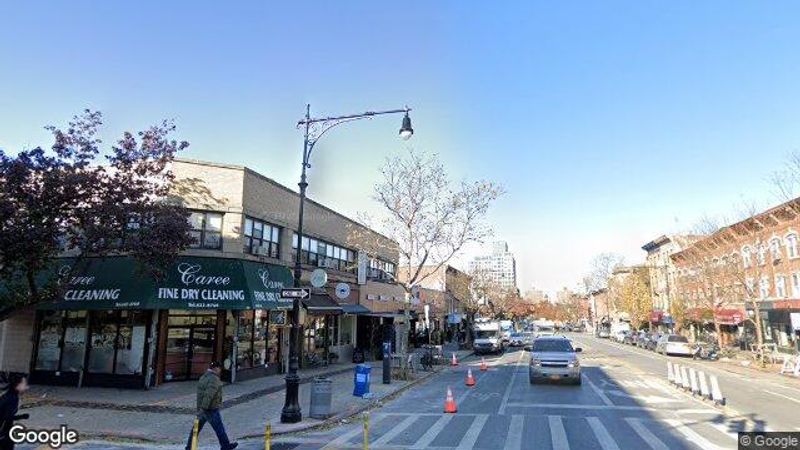
Prospect Heights is a compact Brooklyn enclave bounded roughly by Flatbush Avenue, Atlantic Avenue, Washington Avenue, and Eastern Parkway, wrapping the northwest corner of Prospect Park. Our team in New York treats it as one of Brooklyn's tightest, most walkable submarkets, small enough to cross on foot in fifteen minutes yet dense with institutional and cultural anchors.
The neighborhood developed in the late 19th century alongside Prospect Park and the Eastern Parkway, drawing brownstone rowhouses for merchant families, followed by prewar apartment buildings in the early 20th century. Mid-century decline gave way to steady gentrification from the 1990s onward, accelerated sharply after the 2010 opening of the Barclays Center at its northern edge.
Today the character is a blend of tree-lined residential blocks and a commercial spine along Vanderbilt Avenue and Flatbush Avenue. Our clients find it more residential and less nightlife-driven than nearby Fort Greene, with a strong sense of civic identity anchored by the Brooklyn Museum and Brooklyn Botanic Garden immediately to the south.
The Housing Stock
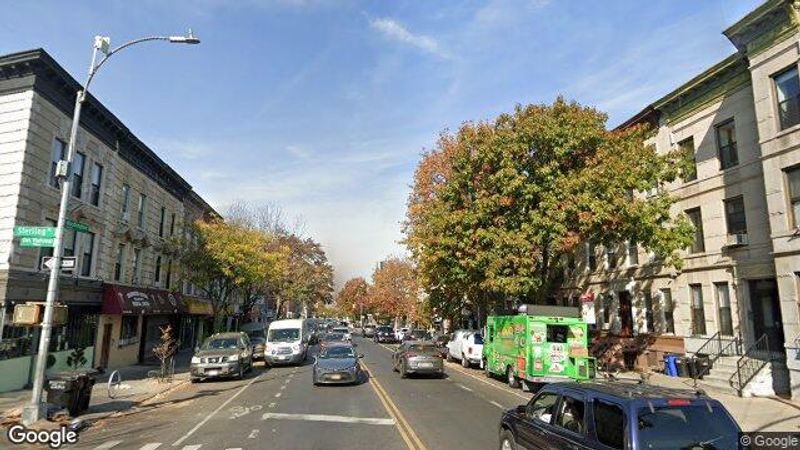
The core housing stock is brownstone rowhouses built between the 1880s and 1900s, concentrated on Park Place, Prospect Place, St. Marks Avenue, and Underhill Avenue. Many retain original parlor floors, marble mantels, and pressed-tin ceilings, and have been converted into two- or three-unit configurations or restored as single-family homes for buyers seeking scale near the park.
Prewar apartment buildings line Eastern Parkway and Plaza Street, offering prewar co-ops with high ceilings and formal layouts, while Vanderbilt and Washington Avenues carry a newer wave of construction. Notable newer developments include The Brooklyner-adjacent towers near Atlantic Terminal and condo conversions along Bergen Street, appealing to buyers who want elevator buildings and modern systems.
Unit types split cleanly: brownstones and townhouses for buyers wanting outdoor space and full-building control, prewar co-ops for classic Brooklyn scale, and postwar or new-build condos for turnkey convenience. Our licensed brokerage network sees strong demand across all three categories, with co-op board approval timelines remaining a key planning factor for overseas buyers.
Prices and Rents
Pricing in Prospect Heights sits above the Brooklyn borough median, reflecting park proximity and transit access. As of 2026, approximate figures show one-bedroom condos ranging from $650,000 to $950,000, and two-bedroom brownstone units or condos from $1.1 million to $1.8 million, subject to market conditions and building specifics.
Full brownstone townhouses, when available, typically trade between $2.8 million and $5.5 million depending on width, condition, and whether the building is delivered vacant or with income-producing rental units. Rental rates track closely with Fort Greene and Park Slope, though slightly softer, giving tenant clients modest negotiating room in slower leasing months.
| Unit Type | Typical Price/Rent Range |
|---|---|
| Studio Rental | $2,300 - $2,900/month |
| One-Bedroom Condo | $650,000 - $950,000 |
| Two-Bedroom Condo/Co-op | $1.1M - $1.8M |
| Full Brownstone Townhouse | $2.8M - $5.5M |
| Two-Bedroom Rental | $3,600 - $4,500/month |
Compared with Park Slope or Brooklyn Heights, Prospect Heights offers a meaningful discount for similar architectural quality, while still commanding a premium over Crown Heights to its east. Our advisors position it as a value entry point into Brooklyn's premier brownstone belt, particularly for buyers targeting long-term appreciation near the park.
Daily Life and Transit
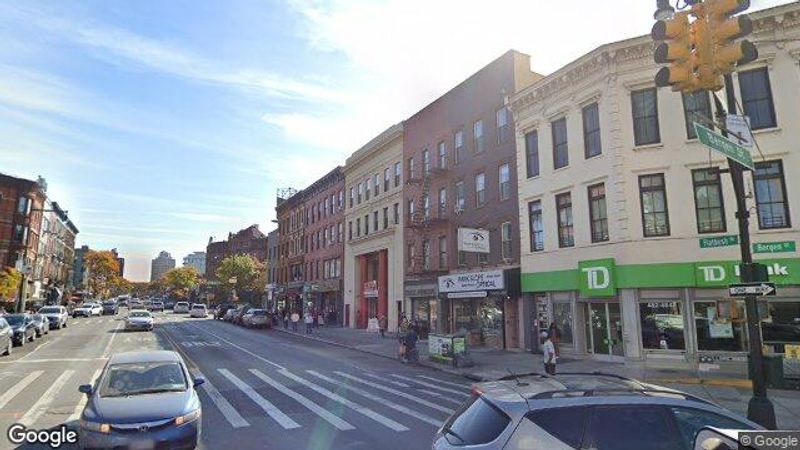
Transit access is a defining strength: the 2, 3, 4, 5, B, Q, and Franklin Avenue Shuttle lines converge at Atlantic Avenue-Barclays Center and Franklin Avenue, and the S train shuttle links directly to Prospect Park and Botanic Garden stations. Manhattan's Midtown is typically 25-35 minutes by subway, with Downtown Brooklyn reachable in under ten.
Daily errands center on Vanderbilt Avenue and Washington Avenue, home to Greenlight Bookstore, a Trader Joe's-adjacent grocery corridor, and independent cafes and restaurants. Families rely on Prospect Park for recreation and P.S. 9 Sarah Anderson School as a widely cited zoned elementary option, alongside private options in neighboring Park Slope and Clinton Hill.
| Subway Line | Station | Approx. Time to Midtown |
|---|---|---|
| 2, 3 | Atlantic Ave-Barclays Ctr | 30 min |
| 4, 5 | Atlantic Ave-Barclays Ctr | 28 min |
| B, Q | Atlantic Ave-Barclays Ctr | 32 min |
| S Shuttle | Franklin Avenue | Connects to Prospect Park |
Green space and culture are unusually concentrated: Prospect Park, the Brooklyn Museum, and the Brooklyn Botanic Garden all sit within a fifteen-minute walk of most addresses. This density of amenities, paired with multi-line subway access, makes Prospect Heights one of the more logistically efficient residential choices in brownstone Brooklyn.
Final Thoughts
Prospect Heights suits buyers who want brownstone Brooklyn character with stronger transit redundancy than Park Slope offers, and who value cultural amenities like the museum and botanic garden as part of daily life rather than occasional destinations. It works particularly well for those planning long-term holds near Prospect Park.
It suits less well those seeking large new-construction floor plates, extensive nightlife, or the scale of Downtown Brooklyn's high-rise inventory. Buyers wanting maximum square footage per dollar may find better value slightly east in Crown Heights, though with a tradeoff in transit density and architectural consistency.
Our team in New York generally recommends Prospect Heights to clients prioritizing walkability, park access, and durable long-term demand over sheer unit size. Working with our licensed brokerage network early in the search helps navigate co-op board requirements and competitive brownstone listings before they move quickly.
Reinvent NY provides business consulting, operational support, and coordination services. Real estate services are provided through licensed professionals and applicable brokerage relationships. This article is for informational purposes only and does not constitute legal or investment advice.
Nearby neighbourhoods: Red Hook, Sheepshead Bay, Williamsburg. All Brooklyn guides are indexed under New York neighbourhood guides.

Satoshi Onodera
Founder & CEO, Reinvent NY Inc.
Founded Reinvent NY in 2024. Providing relocation support from all over the world to America.
Ready to Get Started?
Our team in New York is ready to help with your visa, real estate, or relocation needs.
Schedule a ConsultationFrequently Asked Questions
What are the exact boundaries of Prospect Heights?
Prospect Heights is generally bounded by Flatbush Avenue to the north and east, Atlantic Avenue to the north, Washington Avenue to the east, and Eastern Parkway and Prospect Park to the south and west, per most real estate and community board definitions.
Is Prospect Heights good for families?
Yes, it offers proximity to Prospect Park, the Brooklyn Botanic Garden, and zoned schools like P.S. 9 Sarah Anderson School. Many families favor brownstone floor-throughs or two-bedroom co-ops for space, though private school options are more concentrated in adjacent neighborhoods.
How does Prospect Heights compare to Park Slope for buyers?
Prospect Heights typically offers a modest price discount versus Park Slope for comparable brownstone or prewar co-op stock, while providing superior subway access via Atlantic Avenue-Barclays Center and Franklin Avenue, making it attractive for buyers prioritizing commute flexibility.
What subway lines serve Prospect Heights directly?
The 2, 3, 4, 5, B, and Q lines converge at Atlantic Avenue-Barclays Center, with the 2, 3, 4, 5, and Franklin Avenue Shuttle also stopping at Franklin Avenue, giving residents unusually broad multi-line access within the neighborhood itself.
Are there co-op buildings or is it mostly condos?
Both exist. Prewar co-ops line Eastern Parkway and Plaza Street, while condos are more common in newer construction along Vanderbilt and Washington Avenues. Brownstones can be structured as single-family, multi-unit, or condominium-style ownership depending on the building.
What does a typical two-bedroom cost in 2026?
Approximate 2026 pricing for a two-bedroom condo or co-op in Prospect Heights ranges from $1.1 million to $1.8 million, subject to market conditions, building amenities, and whether the unit is in a brownstone conversion or a doorman building.
Is Prospect Heights walkable without a car?
Yes, it ranks among Brooklyn's most walkable neighborhoods, with Prospect Park, the Brooklyn Museum, grocery stores, and multiple subway trunk lines all within a ten- to fifteen-minute walk of most residential blocks, reducing reliance on car ownership significantly.
Real Estate Guides & Data
More guides
- Depreciation on a US Rental: The 27.5 Years
- Renting to Students in NYC: Guarantors and Group Leases
- Mortgages for Foreign Nationals: US Property Financing
- Common Charges vs Maintenance: What Monthlies Contain
- Buying in Manufactured Districts: Hudson Yards Logic
- Marketing an Apartment: The Listing's Craft
Related Articles
Pied-a-Terre NYC: A 2026 Guide for Part-Time Owners
What a pied-a-terre in NYC really costs in 2026: co-op restrictions, second-home financing, lost tax benefits, and the 30-day rule on renting it out.
Brooklyn Point: Downtown Brooklyn at a Manhattan Standard
Brooklyn Point at City Point: tower-scale amenity in Downtown Brooklyn, the tax abatement attached to it, and what buying there costs to own month to month.
421-a Tax Abatement: A 2026 Guide for NYC Condo Buyers
How the 421-a tax abatement phases out, what it does to a NYC condo's monthly carry and resale price, and exactly what to verify before you sign.
The Plaza Residences: Living in a New York Institution
Private residences inside the Plaza at Fifth Avenue and Central Park South: what ownership includes, what the monthly carry covers, and how resale behaves.