NYC Sponsor Units: No Board Approval, at a Price
In a Manhattan co-op, a board can reject a fully qualified buyer and never say why. It is the single largest execution risk in a New York apartment purchase, and one category of listing removes it completely.
Sponsor units come with no board package and no interview. They also come with a bill: the buyer customarily pays the transfer taxes a seller would normally carry, which on a $1.5 million apartment runs to roughly $27,000 before anything else.
In this article, we'll explain what qualifies as a sponsor unit, why buyers pay a premium for one, what the true added cost looks like line by line, and the three diligence checks that decide whether the trade is worth making.
What Makes a Unit a Sponsor Unit
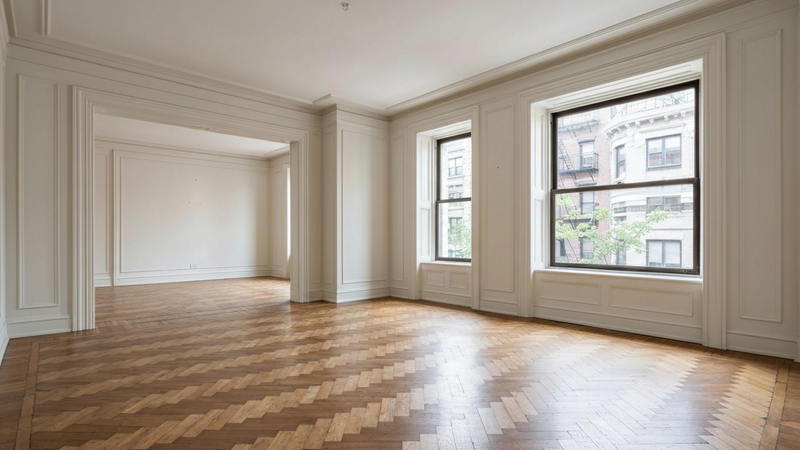
A sponsor unit is an apartment that has never been sold to an individual. It is still owned by the sponsor — the developer that built the building, or the entity that converted it from rentals decades ago.
Most of the city's sponsor inventory traces back to the conversion wave of the late 1970s and 1980s, when rental buildings on the Upper East and Upper West Sides went co-op under offering plans filed with the State Attorney General. Apartments held by non-purchasing tenants stayed with the sponsor.
The second source is new construction. In a new condominium, every unsold apartment is a sponsor unit until it closes with a first buyer, which is why the term appears constantly across new development listings.
Why the Label Carries Legal Weight
The offering plan governs the conversion or the development, and it reserves the sponsor's right to sell or lease without board consent. That reservation attaches to the units the sponsor still holds, and it is the entire basis for the appeal.
It also means you are negotiating with an entity, not a family. There is no seller sentiment, no school-year moving deadline to leverage, and no interest in a compelling story about your offer. Price, terms, and closing date are the whole conversation.
Identifying them is straightforward. Listings advertise the status directly because it is a selling point, and the city's ACRIS property records will show a corporate or partnership owner with no prior individual sale — often a deed dating to the conversion year.
The Real Draw: No Board Package, No Interview

In a standard co-op resale, the board reviews your finances, your employment, and your references, then votes without owing you an explanation. A sponsor sale eliminates that step entirely.
That matters most for buyers whose finances are perfectly sound but hard to present in the format boards expect: self-employed income, assets held outside the United States, a short domestic credit history, or a purchase made for a family member who will live there.
Timing follows directly. A co-op resale typically runs 60 to 90 days from contract because the board package must be assembled, reviewed, and scheduled for an interview. Sponsor deals routinely close in 30 to 45 days.
| Sponsor unit | Resale unit | |
|---|---|---|
| Board approval | Not required | Required; rejection needs no reason |
| Board interview | None | Standard in co-ops |
| NYC and NYS transfer taxes | Customarily paid by the buyer | Paid by the seller |
| Seller's attorney fee | Buyer typically pays the sponsor's fee | Each side pays its own |
| Condition | Often original or estate condition, sold as is | Varies; frequently renovated |
| Contract to closing | 30 to 45 days | 60 to 90 days in co-ops |
Every line here is set by the offering plan and the contract of sale, so confirm each with your attorney before signing.
One caution that gets lost in the enthusiasm: the co-op's own rules on financing limits, subletting, and renovation still bind you the day after closing. Only the approval step disappears, not the proprietary lease you inherit.
What That Convenience Costs

The headline cost is transfer taxes. In a sponsor sale the buyer customarily pays what a seller would normally owe, and in New York City that is not a rounding error.
The NYC Real Property Transfer Tax is 1% on residential sales of $500,000 or less and 1.425% above that threshold. The New York State transfer tax adds 0.4%, rising to 0.65% on residential sales above $3 million.
Then come the smaller lines: the sponsor's attorney fee, commonly $3,000 or more, and in new condominiums a working capital contribution of roughly one to two months of common charges. Neither is negotiable by default. Both are negotiable in principle.
| Line item | Rate | On a $1,500,000 purchase |
|---|---|---|
| NYC Real Property Transfer Tax | 1.425% | $21,375 |
| New York State transfer tax | 0.40% | $6,000 |
| Sponsor's attorney fee | Flat fee | About $3,000 |
| Added cost versus a resale | — | About $30,375, roughly 2.0% of price |
| Mansion tax, owed either way | 1.00% | $15,000 |
Illustrative figures. The mansion tax applies to any purchase at $1 million or above and is not specific to sponsor sales; confirm all rates at contract.
There is a compounding effect worth flagging. Because the buyer is paying an obligation that legally belongs to the seller, those payments are treated as additional consideration, grossing up the taxable price and occasionally pushing a deal across a mansion tax bracket line.
One item runs the other way. Many offering plans exempt the sponsor from the co-op's flip tax, a charge that can reach 1% to 2% of price on an ordinary resale. Confirm it in the plan rather than assuming it, because the exemption is not universal.
Diligence and Negotiation Before You Sign
The obvious objection is that this is a convenience premium and nothing more. Sponsor units often trade at or above comparable resales while the buyer absorbs roughly 2% in costs a seller would otherwise carry. Some argue a discounted resale more than covers the friction.
That argument holds only if approval is a formality for you. A rejection costs the rate lock, the deposit timeline, and the apartment, with no explanation and no appeal. For buyers with non-standard financials, certainty of closing is the product being purchased.
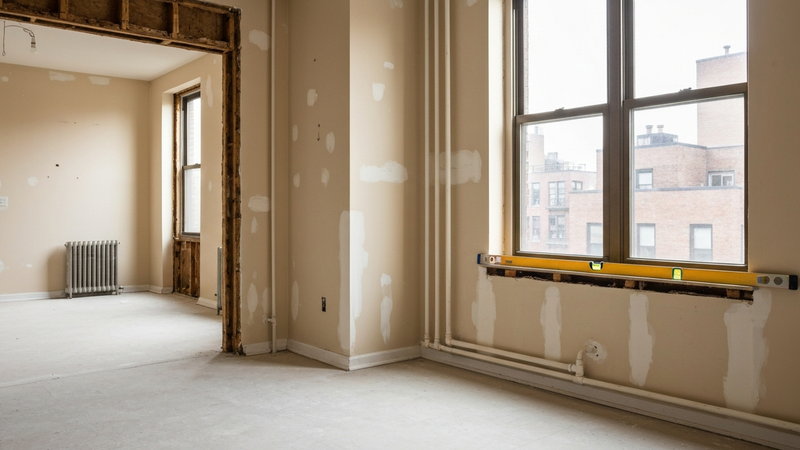
Condition is the more concrete risk. Plenty of conversion-era sponsor units have not been touched since the 1980s, and a Manhattan gut renovation commonly runs $300 to $500 per square foot before permits and building approvals. Price the work before you price the apartment.
Three Checks That Change the Math
First, ask what share of the building the sponsor still owns. Heavy concentration makes lenders cautious, and conventional condo guidelines generally cap single-entity ownership near 10% of units in projects of 21 or more, which can render a building non-warrantable.
Second, ask whether a tenant occupies the unit. Some conversion-era sponsor apartments come with a rent-stabilized tenant in place, and since the 2019 Housing Stability and Tenant Protection Act ended vacancy decontrol, that tenancy does not simply expire on your schedule.
Third, read the offering plan and every amendment with your attorney. It sets the flip tax treatment, the sponsor's remaining obligations to the building, and whether the reserve fund was ever properly funded. Our condo versus co-op comparison covers the structural differences.
Final Thoughts

Sponsor units solve one specific problem — board risk — and introduce two others in cost and condition. The trade is worth making when approval is genuinely uncertain and the numbers still work after the extra 2%.
Negotiation is where most buyers leave money behind. Sponsors carry real costs on unsold inventory and respond to firm closing dates, so asking them to split or absorb the transfer taxes is a standard opening position rather than an insult.
Build the full closing cost picture before you decide, not after the contract arrives. Our co-op and condo comparison for buyers and our closing costs breakdown set out what each route actually costs, and we support buyers through licensed New York real estate professionals.
One structural note for anyone weighing timing: this inventory only shrinks. Every conversion-era unit that sells leaves the pool permanently, so the supply of no-board-approval apartments in prewar buildings is smaller each year than the year before.
Reinvent NY provides business consulting, operational support, and coordination services. Legal advice and immigration filings are handled by independent licensed attorneys. Real estate services are provided through licensed professionals and applicable brokerage relationships. This article is for informational purposes only and does not constitute legal or investment advice.
Related reading: sponsor units.

Satoshi Onodera
Founder & CEO, Reinvent NY Inc.
Founded Reinvent NY in 2024. Providing relocation support from all over the world to America.
Ready to Get Started?
Our team in New York is ready to help with your visa, real estate, or relocation needs.
Schedule a ConsultationFrequently Asked Questions
What is a sponsor unit in NYC?
A sponsor unit is an apartment in a co-op or condominium that has never been sold to an individual owner. It is still held by the original sponsor, meaning the developer that built the building or the entity that converted it from a rental. Because the offering plan reserves the sponsor's right to sell without board consent, these units trade differently from ordinary resales.
Do I need board approval to buy a sponsor unit?
No. The offering plan reserves the sponsor's right to sell without the board's consent, so there is no board package and no interview. Some buildings still ask for an informational application after the fact. Once you own the shares, however, the co-op's rules on subletting, renovation, and financing apply to you exactly as they do to every other shareholder.
Who pays the transfer taxes on a sponsor unit?
The buyer, by custom. In a resale the seller pays the New York City Real Property Transfer Tax and the New York State transfer tax, but in sponsor sales the contract shifts both to the purchaser. On a $1,500,000 apartment that is about $21,375 to the city at 1.425% and $6,000 to the state at 0.4%. It is negotiable, though sponsors often decline.
Are sponsor units cheaper than resale apartments?
Usually not. Sponsor units frequently trade at or slightly above comparable resales because buyers pay for the certainty of skipping board approval. Once you add roughly 2% in transfer taxes and the sponsor's attorney fee, the effective cost is higher than a resale at the same asking price. The value is in execution risk removed, not in price.
Can I get a mortgage on a sponsor unit?
Generally yes, but check two things. In a co-op, the building's financing limit still applies, so if the proprietary lease caps loans at 75% of price, that governs regardless of the sponsor. In a condo, heavy sponsor ownership can make the building non-warrantable under conventional guidelines, which pushes the loan into portfolio or foreign national programs at different terms.
Can a sponsor unit come with a tenant already living in it?
Yes, and this is the risk buyers most often miss. Conversion-era sponsor units were frequently occupied by non-purchasing tenants, and some of those tenancies are rent-stabilized. Since the Housing Stability and Tenant Protection Act of 2019 eliminated vacancy decontrol, a stabilized tenancy does not end when the unit is sold. Confirm occupancy status in writing before contract.
Do sponsor units exist in condominiums as well as co-ops?
Yes. In a new condominium every unsold apartment is a sponsor unit until it closes with its first buyer. The board approval advantage matters less there because condo boards hold only a right of first refusal rather than a veto, but the cost structure is the same: buyers typically pay the transfer taxes, the sponsor's attorney fee, and a working capital contribution.
Real Estate Guides & Data
Related Articles
One57: The Tower That Started Billionaires' Row
One57 at 157 West 57th Street: 75 storeys above a Park Hyatt, the building that opened Billionaires' Row, and what a residence there costs to own and hold.
Morningside Heights NYC Real Estate Guide 2026
Our 2026 guide to Morningside Heights covers boundaries, historic buildings, prices, rents, transit, and schools for international buyers and renters.
Lincoln Square NYC Real Estate Guide 2026
An authoritative 2026 guide to buying and renting in Lincoln Square, Manhattan: buildings, prices, transit, and who this Upper West Side enclave suits.
Sutton Place Manhattan: 2026 Real Estate Guide
A local expert's guide to Sutton Place real estate: buildings, prices, rents, and daily life for international buyers considering Manhattan in 2026.