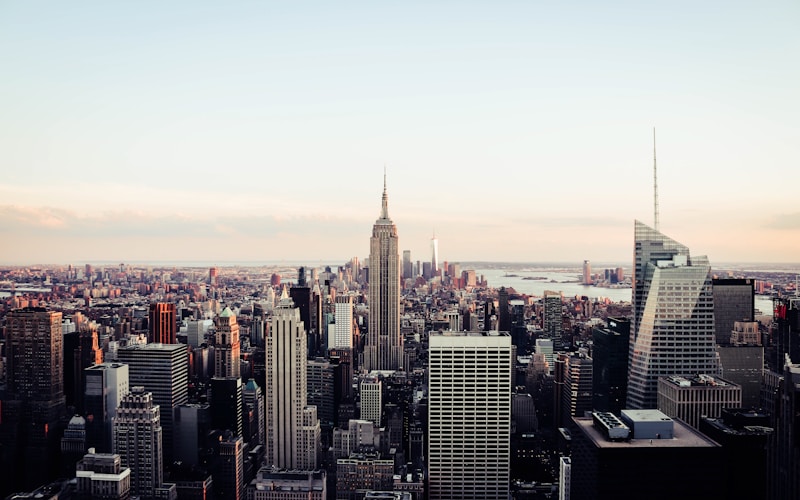
Knowing the block
from eight time zones
The neighborhood knowledge a year of living builds can be substantially assembled from abroad — with method. The layers, the tools, and the honest limits of remote certainty.
Before you read on
- General information as of August 2026.
- Fair-housing discipline throughout: infrastructure and housing stock, never demographics.
- The remote method complements, never replaces, the rent-first option.
Point 1The data layers
The objective foundation assembles fast: transit reality (the subway map plus commute calculators to your actual destinations — the minutes that price everything), the housing-stock composition (the buying-guide chapters' product lens applied by area), price and rent levels with trends (our markets pages and the report-reading chapter's methods), flood and noise maps (the diligence chapters' overlays), and the zoning-pipeline layer (what is being built — permits and plans are public).
The service layer follows: school zones where relevant (the education chapters), the retail-and-amenity presence readable from maps (supermarkets, pharmacies, parks — density and distance), and the institutional anchors (hospitals, universities, business districts) whose gravity the university-market chapter describes. Two evenings assembles a dossier most local buyers never compile.
Point 2The street-level techniques
Street-view fluency: walking candidate blocks virtually — building conditions, retail vacancy, street width and tree cover, the scaffolding count — with the history slider showing change over years (the corridor improving or tiring is visible in the archive). The technique's yield per hour rivals anything in remote research.
The live layers: webcams where they exist, the listing-photo corpus (every listing on the block is a documented interior), and video calls with your agent walking the street at your chosen hours — the noise-and-light chapter's protocol by proxy, including the evening walk no listing schedule offers. The agent-walk request is normal; the buyers who make it are remembered as serious.
Point 3The proxy and network methods
The interview craft: specific questions beat general ones — 'where do residents grocery shop and how' over 'is it nice' — and triangulation across sources beats any single authority. The forums' texture reading: what a neighborhood's residents complain about reveals its actual character faster than any promotional description.
| Method | What it yields |
|---|---|
| Agent neighborhood interviews | The professional read, cross-examined |
| Friends-of-friends residents | The lived texture data misses |
| Community forums and local press | The issues the neighborhood argues about |
| Google reviews' geography | Service quality patterns by block |
| A commissioned visit checklist | Your specific questions, answered in person |
| The trial stay | A week's furnished rental — the compressed test |
The trial stay is the method's capstone — the renting-before-buying chapter compressed into a reconnaissance week.
Point 4The honest limits and the decision
What remote research cannot deliver: the felt sense of scale and energy (streets read different in person), the acoustic reality (the silence test needs ears on site), and the serendipity layer (the block you discover walking to the one you researched). The mitigations: the proxy protocols above, the trial stay, and — for the risk-averse — the rent-first path the library keeps endorsing.
The framework's conclusion: remote research narrows honestly to a shortlist worth a trip — or a trial stay — and the final walk remains the final walk. But the buyers who arrive with the dossier evaluate in days what unprepared visitors cannot in weeks; the method's product is not certainty but compression. Like everything in this library: the preparation is the speed.
You can narrow to a defensible shortlist remotely — data layers, street-view fluency, proxy walks. The final selection deserves feet on the street or the trial-stay week.
Street-view block-walking with the history slider — conditions, vacancy, and trajectory visible per hour of effort. The agent's live video walk adds the hours photos miss.
Specifics over verdicts: shopping patterns, commute realities, what residents complain about. Forum arguments reveal character faster than promotions.
A week's furnished rental in the leading candidate — the rent-first strategy compressed into reconnaissance. It resolves shortlist ties better than any research.
Felt scale, acoustics, and serendipity — the in-person layers. The method's honest product is a compressed, defensible shortlist, not final certainty.
The method studies infrastructure, stock, prices, and services — never who lives where. The discipline is legal, ethical, and analytically superior anyway.
RELATED GUIDES
Let’s talk first
Building the dossier from abroad? We will assemble the layers, walk the blocks on video, and compress your shortlist to trip-worthy.
Important notice
The figures on this page are general information as of August 2026 and do not represent an offer, a quote, or a guarantee of any transaction terms. Reinvent NY does not provide legal, tax, or investment advice. Confirm anything material with an attorney and a CPA before you act on it. Nothing here is a solicitation to invest, and no return is promised. Real estate brokerage services are provided through R New York.