Columbus Circle NYC Real Estate Guide 2026
What Columbus Circle Actually Is
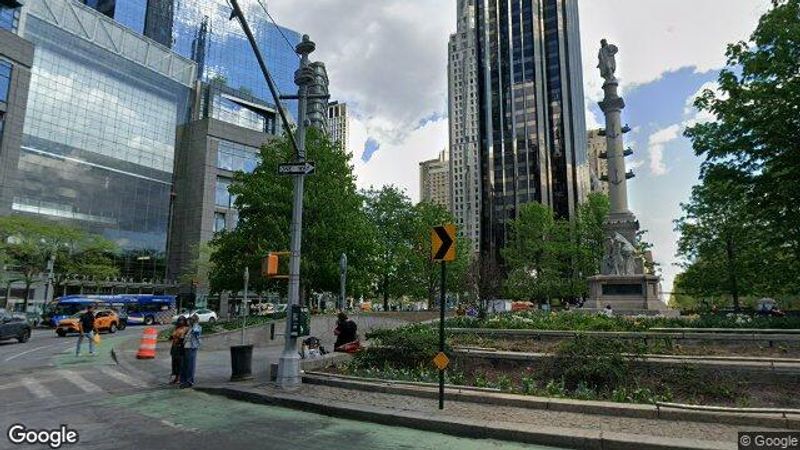
Columbus Circle sits at the southwest corner of Central Park, where Broadway, Eighth Avenue, Central Park West, and 59th Street converge around the traffic circle itself. Our team in New York treats it as the hinge between Midtown's density and the Upper West Side's residential calm, a five-minute walk from Lincoln Center and Hell's Kitchen alike.
The area's modern identity dates to the early 2000s, when the redevelopment of the old Coliseum site into the Time Warner Center (now Deutsche Bank Center) transformed a traffic-choked plaza into a vertical mixed-use anchor with retail, offices, and residences. That single project reset land values for blocks in every direction.
Today Columbus Circle reads as glassy, corporate, and vertical near the Circle itself, softening into prewar rowhouse blocks as you move north toward the 60s and 70s. Our clients often underestimate how compact it is: the commercial core is only a few blocks, ringed by genuinely residential streets.
The Housing Stock
The defining address is One Central Park (also marketed as the Deutsche Bank Center residences), the twin-towered glass complex above the Shops at Columbus Circle, designed by Skidmore, Owings & Merrill. Units here range from one-bedrooms to sprawling penthouses, many with direct Central Park views and hotel-style amenities tied to the on-site Mandarin Oriental.
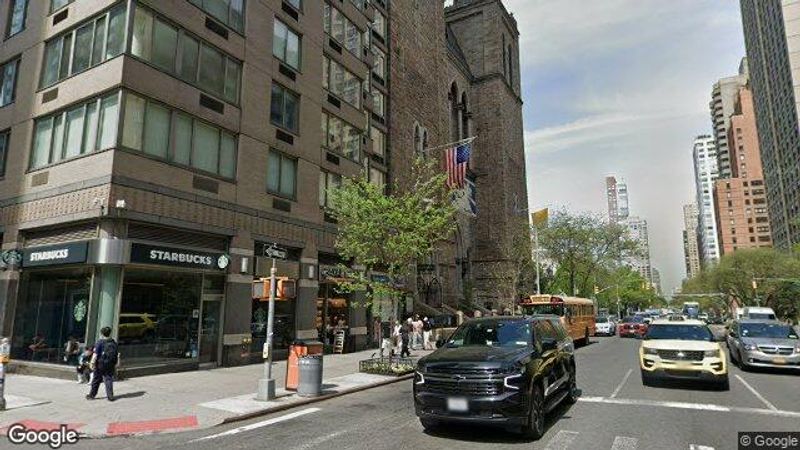
West on 58th and 59th Streets, buyers find prewar co-ops from the 1910s–1920s, including limestone-clad buildings along Central Park West's southern reach, where classic six and seven layouts with high ceilings and formal dining rooms remain the benchmark for old-money buyers. These co-ops typically require board approval and carry conservative financing rules.
Newer construction along Broadway and West 57th Street adds sleek condo towers with floor-to-ceiling glass, private storage, and fitness centers, appealing to buyers who want doorman service without co-op board scrutiny. Studio and one-bedroom rentals cluster in postwar buildings on side streets between Ninth and Tenth Avenues, offering a lower-cost entry point.
Prices and Rents
Columbus Circle commands a premium tied directly to park proximity and building pedigree. Condo pricing at One Central Park and comparable towers reflects trophy-asset demand, while prewar co-ops on Central Park West price per room rather than strictly per square foot, a distinction our licensed brokerage network walks every overseas buyer through before making an offer.
Rental demand stays strong year-round given the concentration of corporate offices, Lincoln Center, and Midtown employers within walking distance. Landlords in doorman buildings rarely negotiate heavily on one-bedrooms, though larger three-bedroom rentals see more flexibility, particularly in shoulder seasons like January and August.
| Unit Type | Purchase Price Range | Monthly Rent Range | Typical Building Type |
|---|---|---|---|
| Studio | $650,000 – $950,000 | $3,200 – $4,200 | Postwar rental/condo |
| One-bedroom | $950,000 – $1.6M | $4,200 – $6,000 | Condo or prewar co-op |
| Two-bedroom | $1.8M – $3.5M | $6,500 – $9,500 | Condo tower or co-op |
| Three-bedroom+ | $3.5M – $8M+ | $10,000 – $18,000 | Prewar co-op, park view |
| Penthouse/trophy | $10M – $30M+ | $25,000+ | One Central Park, similar |
Columbus Circle approximate pricing, 2026 (subject to market conditions)
All figures below are approximate and subject to market conditions, reflecting listing activity our team tracks through 2026. Buyers should expect co-op maintenance fees and condo common charges to run meaningfully higher here than in less amenity-dense Manhattan neighborhoods, a factor that materially affects net yield calculations.
Daily Life and Transit
Transit access is a core selling point: the Columbus Circle–59th Street station carries the A, B, C, D, and 1 trains, giving direct reach to Midtown, Downtown, and the Upper West Side within minutes. Most residents reach Times Square in under 10 minutes and Wall Street in roughly 25 by subway.
Daily errands center on Whole Foods inside the Deutsche Bank Center concourse, along with Trader Joe's a short walk north on the Upper West Side. Central Park itself functions as the neighborhood's backyard, with entrances at 59th Street and Columbus Circle feeding directly into the park's southwest corner and the Merchant's Gate.
| Category | Detail | Approx. Time/Distance |
|---|---|---|
| Subway | A, B, C, D, 1 trains at Columbus Circle–59th St | On-site station |
| Commute to Midtown | Times Square via 1 or A/C/B/D | 8–10 minutes |
| Commute to Downtown | Wall Street via A or C express | 22–28 minutes |
| Groceries | Whole Foods, Deutsche Bank Center | 0–5 minute walk |
| Green space | Central Park (Merchant's Gate entrance) | 0–3 minute walk |
| Culture | Lincoln Center | 10 minute walk |
Columbus Circle transit and lifestyle snapshot
Families weigh proximity to zoned public schools on the Upper West Side against private options near Lincoln Center; our team advises overseas buyers to confirm current school zoning directly, as boundaries shift periodically. Riverside Park and the Hudson River waterfront are also within a 10–15 minute walk west.
Final Thoughts
Columbus Circle suits buyers who want a globally recognizable address, direct Central Park access, and turnkey building amenities without sacrificing subway connectivity. Our team in New York regularly places overseas clients here specifically because it functions equally well as a primary residence, a pied-à-terre, or a long-term rental hold.
It suits those comfortable paying a premium for location and prepared to navigate either co-op board processes or condo common charges that run higher than average. It does not suit buyers seeking a quiet, low-density residential feel, or those prioritizing maximum square footage per dollar.
Investors chasing higher rental yields typically look further from the park, while those prioritizing prestige, liquidity, and long-term value retention find Columbus Circle a defensible core holding. Our licensed brokerage network can model specific buildings against a client's yield versus lifestyle priorities before any offer is made.
Reinvent NY provides business consulting, operational support, and coordination services. Real estate services are provided through licensed professionals and applicable brokerage relationships. This article is for informational purposes only and does not constitute legal or investment advice.
Nearby neighbourhoods: East Harlem, East Village, Financial District. All Manhattan guides are indexed under New York neighbourhood guides.

Satoshi Onodera
Founder & CEO, Reinvent NY Inc.
Founded Reinvent NY in 2024. Providing relocation support from all over the world to America.
Ready to Get Started?
Our team in New York is ready to help with your visa, real estate, or relocation needs.
Schedule a ConsultationFrequently Asked Questions
Is Columbus Circle a good area for a primary residence?
Yes, particularly for buyers who value Central Park access, strong transit, and Midtown proximity. It works well for professionals and families who prioritize location and amenities over larger square footage found elsewhere in Manhattan.
What is the best-known building in Columbus Circle?
One Central Park, within the Deutsche Bank Center complex, is the area's signature address, offering park views, hotel-style services, and designs by Skidmore, Owings & Merrill. Prewar Central Park West co-ops nearby are equally prestigious.
Are co-op boards difficult for overseas buyers here?
Prewar co-ops near Columbus Circle can involve thorough board reviews, including financial disclosures and interviews. Condo buildings, including newer towers, generally involve simpler approval processes, which our licensed brokerage network can clarify per building.
Which subway lines serve Columbus Circle?
The A, B, C, D, and 1 trains all stop at Columbus Circle–59th Street, providing fast connections to Midtown, Downtown, and the Upper West Side. Few Manhattan addresses offer this level of direct subway access.
How do prices compare to other Central Park–adjacent neighborhoods?
Columbus Circle generally prices in line with or slightly below Central Park South, given its mixed commercial-residential character. It remains more accessible than Fifth Avenue frontage while offering comparable park proximity and transit.
Is this a good rental investment neighborhood?
Rental demand is consistently strong due to corporate and cultural proximity, though yields can be modest relative to purchase price given premium valuations. Larger units and prewar co-ops sometimes offer better relative rental returns.
What lifestyle does Columbus Circle not suit?
Buyers wanting a quiet, low-traffic residential feel or maximum space for their budget should look elsewhere. Columbus Circle is dense, commercially active, and priced for location and prestige rather than square footage value.
Real Estate Guides & Data
More guides
- How to Hold US Property: Personal, LLC or Corporation
- Inheriting US Property: The Heir's Playbook
- LLCs for Rental Property: Liability, Cost, Disclosure
- Miami vs New York: Two US Strategies Compared
- Moving Purchase Funds to the US: Timing and Source of Funds
- New Development Walk-Throughs: The Snag List That Pays
Related Articles
Real Estate Attorney NYC: Why Every Deal Needs One
New York closings run through attorneys, not escrow. What a real estate attorney in NYC does for buyers and sellers, typical flat fees, and when to hire one.
111 West 57th Street: Steinway Tower, and What It Costs
Steinway Tower at 111 West 57th Street: the slenderest tower in the world, built above Steinway Hall, and what a residence in it costs to buy and to hold.
Central Park South NYC Real Estate Guide 2026
An expert 2026 guide to Central Park South real estate: buildings, prices, rents, transit, and daily life for international buyers and tenants.
432 Park Avenue: The Tower That Tested a Thesis
Rafael Vinoly's square-windowed supertall on Park Avenue: what the building is, what its owners have learned about slender towers.