Financial District Manhattan Real Estate Guide 2026
What Financial District Actually Is
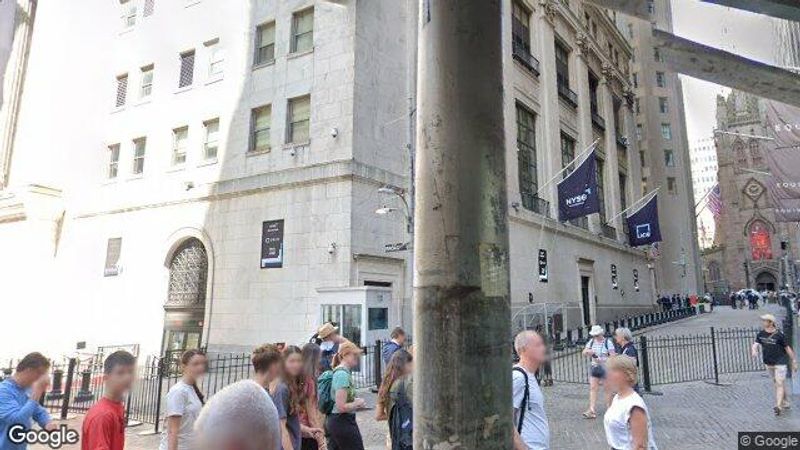
The Financial District, often shortened to FiDi, sits at the southern tip of Manhattan, bounded roughly by Chambers Street to the north, the East River, Battery Park, and the Hudson River. Our team in New York treats it as distinct from Tribeca and Battery Park City, though the borders blur socially and commercially along Broadway and West Street.
Historically this was New York's original commercial core, home to Wall Street, the New York Stock Exchange, and centuries of shipping and banking activity. For most of the 20th century it emptied out after business hours. That changed decisively after 2001, when tax incentives and office-to-residential conversions began pulling permanent residents into what had been a nine-to-five district.
Today FiDi reads as a hybrid: glass residential towers beside pre-war banking halls, cobblestone lanes near Stone Street, and a growing base of families and professionals rather than just traders. Our licensed brokerage network describes it as one of Manhattan's most transformed neighborhoods, with a skyline dominated by One World Trade Center and a street grid unlike anywhere else in the borough.
The Housing Stock
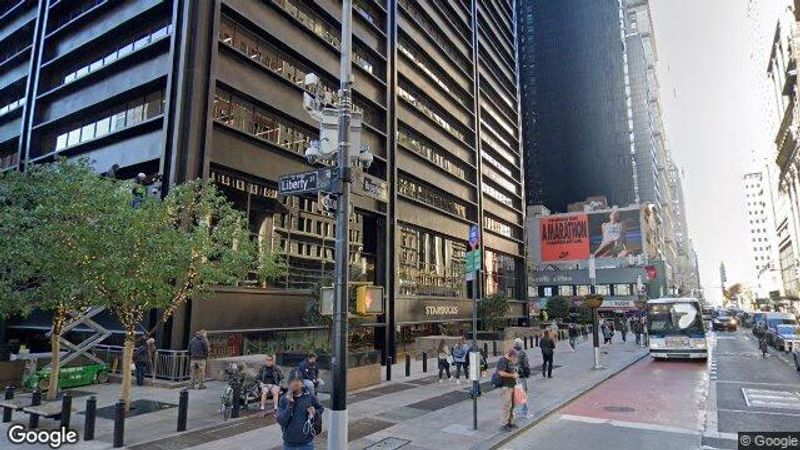
FiDi's residential inventory splits into two eras: early-2000s office-to-residential conversions and true ground-up luxury towers built after 2010. Converted buildings like 20 Exchange Place, a 1931 Art Deco tower once housing City Bank Farmers Trust, offer studios through two-bedrooms with deep floor plates and small windows typical of pre-war commercial architecture repurposed for living.
New-construction landmarks define the upper tier. 8 Spruce Street, designed by Frank Gehry, sits just north near City Hall and offers rippled stainless-steel facades with rental and condo units. One Wall Street, the Art Deco Ralph Walker tower converted by Macklowe Properties, delivers some of the district's most talked-about condominiums, with red-gold Moderne lobbies and full-floor residences.
Further south, 50 West Street by Helmut Jahn and Four Seasons Private Residences on Barclay Street (technically bordering Tribeca) represent the glass-tower segment favored by international buyers. Unit types run from compact studios in older conversions to four-bedroom sponsor units with river views. Pre-war conversions trade at a discount to new glass towers of comparable size and location.
Prices and Rents
Pricing in FiDi remains more accessible than Tribeca or the West Village while still commanding premium rates for river-view units. As of early 2026, condo prices in older conversions start around $900,000 for a one-bedroom, while new-construction towers like One Wall Street push comparable units well above $1.5 million. All figures below are approximate and subject to market conditions.
Rental demand has stayed strong, driven by proximity to downtown employers and a maturing retail scene along Fulton Street and the Oculus at Westfield World Trade Center. Renters should expect meaningful premiums for high floors and unobstructed harbor or river views, and relatively soft pricing on lower floors of older conversion buildings.
| Unit Type | Sale Price Range (Approx.) | Monthly Rent Range (Approx.) | Typical Building Era |
|---|---|---|---|
| Studio | $550,000 – $800,000 | $3,000 – $3,800 | Conversion (1920s–1990s) |
| One-Bedroom | $900,000 – $1.3M | $3,800 – $5,200 | Conversion / New Build |
| Two-Bedroom | $1.4M – $2.2M | $5,500 – $7,500 | New Construction |
| Three-Bedroom | $2.3M – $4M+ | $8,000 – $12,000 | Luxury Tower |
| Penthouse / Full-Floor | $5M – $15M+ | $18,000+ | Signature Tower |
Approximate Financial District Prices and Rents, Early 2026
Our team in New York advises overseas buyers that carrying costs matter as much as sticker price: many conversion buildings carry higher common charges due to older infrastructure and full-service staffing. New towers often price in amenities like pools and private dining rooms, which affects both purchase price and the ongoing monthly budget.
Daily Life and Transit
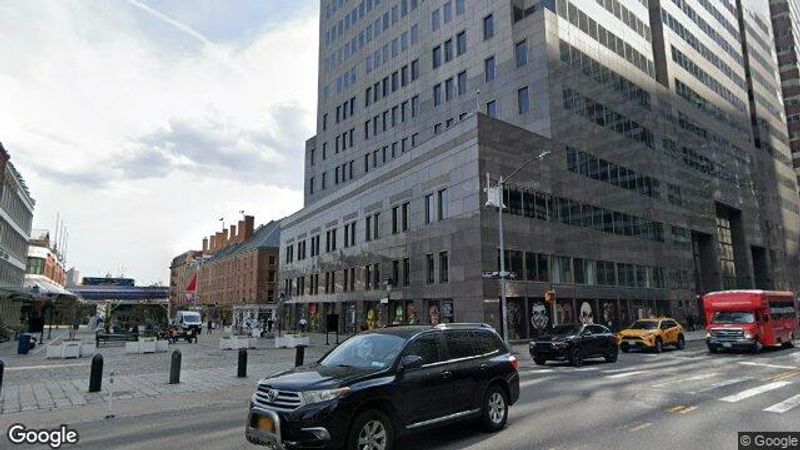
FiDi is arguably Manhattan's best-connected residential neighborhood. Fulton Street Station consolidates the A, C, J, Z, 2, 3, 4, and 5 lines, while the R and W stop at Rector Street and Cortlandt Street. Commutes to Midtown run roughly 15–20 minutes, and PATH trains at the World Trade Center hub reach Jersey City and Newark directly.
Daily life centers on Battery Park, the Hudson River Greenway, and Brookfield Place, which houses a curated retail and dining collection alongside Le District's French marketplace. Grocery options include Whole Foods on Greenwich Street and a Target on John Street; families increasingly consider Peck Slip School and Spruce Street School, both well-regarded public elementary options within the district.
| Category | Option | Detail |
|---|---|---|
| Subway | Fulton St (A/C/J/Z/2/3/4/5) | Major transfer hub, central FiDi |
| Subway | Rector St / Cortlandt St (R/W) | West side, near WTC |
| Regional Rail | PATH at WTC | Direct to Jersey City, Newark |
| Green Space | Battery Park | Harbor views, waterfront paths |
| Green Space | Hudson River Greenway | Running and cycling access |
| Grocery | Whole Foods, Greenwich St | Full-service, walkable |
Financial District Transit and Lifestyle Snapshot
Evenings and weekends bring a noticeably quieter pace than Midtown or Soho, with fewer late-night venues but a growing collection of restaurants around Stone Street's historic block. Our licensed brokerage network notes that residents trade some nightlife density for green waterfront space, shorter commutes, and a neighborhood that has become genuinely residential rather than purely commercial.
Final Thoughts
Financial District suits buyers and renters who prioritize transit connectivity, waterfront access, and newer building stock over historic townhouse charm. International purchasers drawn to statement architecture, from Gehry's residential tower to the restored One Wall Street, will find some of downtown Manhattan's most distinctive addresses concentrated within a compact, walkable footprint.
It also suits professionals working downtown or in New Jersey via PATH, and families willing to trade brownstone streetscapes for high-rise living near strong public schools and Battery Park's open space. The neighborhood rewards those comfortable with a still-maturing retail and dining scene rather than an established one.
It suits less well those seeking pre-war townhouse character, dense nightlife, or the tree-lined intimacy of Greenwich Village or the West Village. Our team in New York generally steers such clients toward Tribeca or the West Village instead, reserving FiDi for those who value skyline views, modern infrastructure, and a fast commute above neighborhood texture.
Reinvent NY provides business consulting, operational support, and coordination services. Real estate services are provided through licensed professionals and applicable brokerage relationships. This article is for informational purposes only and does not constitute legal or investment advice.
Nearby neighbourhoods: Flatiron District, Gramercy Park, Greenwich Village. All Manhattan guides are indexed under New York neighbourhood guides.

Satoshi Onodera
Founder & CEO, Reinvent NY Inc.
Founded Reinvent NY in 2024. Providing relocation support from all over the world to America.
Ready to Get Started?
Our team in New York is ready to help with your visa, real estate, or relocation needs.
Schedule a ConsultationFrequently Asked Questions
Is Financial District a good investment for overseas buyers?
It can be, particularly in newer towers with strong rental demand from downtown professionals. Liquidity is generally good given transaction volume, though pricing per square foot trails Tribeca and Soho for comparable finishes.
What subway lines serve Financial District?
Fulton Street Station serves the A, C, J, Z, 2, 3, 4, and 5 lines. The R and W stop at Rector Street and Cortlandt Street, and PATH trains connect at the World Trade Center hub.
Are there family-friendly buildings in Financial District?
Yes. Many newer towers offer two- and three-bedroom layouts, and families often consider proximity to Peck Slip School or Spruce Street School, both public elementary options within or near the district.
How do prices compare to Tribeca?
Financial District generally prices below Tribeca for comparable square footage, particularly in older conversion buildings. New-construction towers narrow that gap, especially for units with river or harbor views.
What is the difference between conversion buildings and new towers?
Conversion buildings, like 20 Exchange Place or One Wall Street, were originally commercial and later converted to residential use, often with deep floor plates. New towers are purpose-built, typically offering larger windows and modern amenities.
Is Financial District quiet at night?
Compared to Midtown or Soho, yes. Retail and dining are concentrated around Stone Street and Brookfield Place, and the pace slows considerably after business hours, appealing to residents who prefer a calmer evening environment.
What green space is available nearby?
Battery Park anchors the southern tip of Manhattan with harbor views, and the Hudson River Greenway provides continuous waterfront paths for walking, running, and cycling directly along the district's western edge.
Real Estate Guides & Data
More guides
- Buying US Property From Overseas: The Full Sequence
- Choosing a Real Estate Agent: Five Things to Verify
- Commercial vs Residential: Two Investment Grammars
- Cost Segregation: Accelerating US Property Depreciation
- Divorce and NY Real Estate: Dividing the Apartment
- Exit Planning Five Years Out: Selling Starts Early
Related Articles
Nolita NYC Real Estate Guide 2026
A 2026 guide to buying and renting in Nolita, Manhattan — boundaries, buildings, prices, and daily life, from our team on the ground in New York.
Battery Park City Guide 2026
A 2026 guide to Battery Park City for overseas buyers and renters: buildings, prices, transit, and daily life along Manhattan's waterfront enclave.
Lower East Side NYC Real Estate Guide 2026
An expert 2026 guide to buying and renting in Lower East Side, Manhattan — housing stock, prices, transit, and lifestyle for overseas buyers.
Upper West Side NYC Real Estate Guide 2026
Our 2026 guide to Upper West Side real estate: boundaries, building stock, prices, transit, and schools for overseas buyers and renters.