One Wall Street: An Art Deco Bank, Now Apartments
One Wall Street was built in 1931 as a bank headquarters and is now apartments. Ralph Walker's Art Deco tower at the corner of Wall Street and Broadway, originally the Irving Trust Company building, became one of the largest office-to-residential conversions ever undertaken in New York.
The financial district has been converting its office stock to housing for three decades, and this is the most ambitious example of it. Let's look at what that produces and what a buyer must establish.
1. What the Building Is

A limestone tower with a fluted, faintly rippling facade — Walker's signature, and one of the reasons the building has been admired since it opened. It is a designated landmark, which shaped what the conversion could do to the exterior and to certain interior spaces.
The conversion took a structure designed for banking floors and reorganised it for housing. That is a far heavier undertaking than reworking an existing apartment building, and it is why projects of this scale are rare rather than routine.
For a buyer the consequence is variation. Floor plate depth, window arrangement and ceiling condition differ across the building in ways a purpose-built residential tower never exhibits, because the original structure was solving a different problem.
| Attribute | Detail |
|---|---|
| Address | 1 Wall Street, Manhattan |
| Completed | 1931 |
| Architect | Ralph Walker |
| Original use | Irving Trust Company headquarters |
| Status | Designated landmark |
| Current use | Residential conversion with commercial space |
Building facts. Unit-level figures - size, exposure, charges, tax - must be obtained for the specific residence.
The location is on Google Maps here.
2. What a Conversion of This Scale Delivers
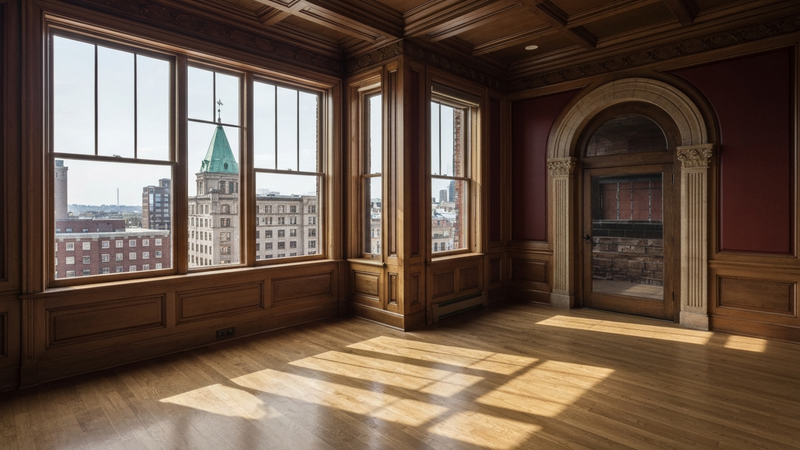
An address that requires no explanation anywhere in the world, in a building whose architecture is genuinely admired rather than merely tall. Wall Street is among the most recognised street names on earth, which at international resale is a commercial quality.
The apartments themselves come from a 1931 office frame. Deep floor plates in a converted building mean some units have exceptional light and others are more interior, and the difference between them within a single price band can be substantial.
That is not a defect. It simply means the specific apartment matters far more here than the building average, and the only reliable method is to inspect the actual unit rather than a comparable one.
Ask for room dimensions, ceiling heights and window positions measured on camera. Our remote viewing guide covers what to request and what to film.
3. The Financial District as a Place to Live
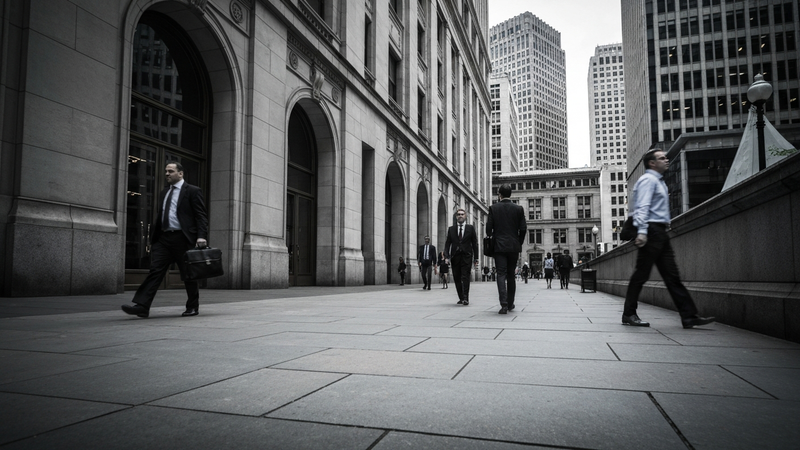
The district has changed substantially over three decades. It was overwhelmingly commercial and is now substantially residential, with schools, food shops and the waterfront parks that a working neighbourhood requires.
The practical qualities are transport and price. The subway convergence here is among the densest in the city, and the price per square foot has historically sat below comparable Midtown and park-adjacent addresses.
For an overseas buyer there is a further point. Because so much of the district's housing was converted or newly built, the stock is heavily condominium rather than cooperative, which widens what is actually purchasable considerably.
Our condo versus co-op guide explains why that distinction settles most international searches before price is discussed.
4. Buying Here as an Overseas Purchaser

Straightforward where the ownership is condominium: no board approval vote, non-resident and entity ownership accepted, subletting governed by building rules.
Mansion tax applies from $1 million on the whole price, reaching 2.25% between $5 and $10 million and 3.25% above $10 million, paid by the buyer at closing. Where units are sold by a sponsor, the New York City and State transfer taxes are customarily shifted to the purchaser, roughly a further 1.8 to 2.0%.
Settle ownership structure before contract; US estate tax reaches non-resident owners above a $60,000 exemption on US-situs assets. See our estate tax guide and new development guide.
Landmark obligations and who funds them
Designated exteriors and interiors carry approval processes and maintenance obligations, and the condominium funds them. Ask what is designated, what work is anticipated, and how the reserve study treats it.
A building that answers those questions in writing is demonstrating that the conversion was structured to be examined. One that treats them as detail is telling you something too.
Sponsor position in a large conversion
In any recent development or conversion, establish how many units the sponsor still holds. While a significant block remains unsold the sponsor controls the board, sets budgets and reserve contributions, and can dispose of units in bulk at a discount.
That last point matters directly to a buyer, because a bulk disposal resets the comparables under your own eventual resale. Ask when board control transfers and what proportion of units has closed.
Living downtown part of the year
The district is unusually well suited to part-year occupancy: transport is excellent, the airports are reachable, and buildings here are largely condominium with fewer restrictions on how an apartment is used.
Settle the practical arrangements before purchase rather than after. Our pied-a-terre guide covers mail, maintenance, insurance and key-holding for an apartment that sits empty for months.
Final Thoughts: An Address Everyone Already Knows

Very few residential buildings anywhere carry an address this recognisable, and fewer still are genuinely good architecture rather than merely famous. What a buyer takes on in exchange is the diligence a landmark conversion demands: designated obligations, a 1931 capital plan, and apartments that vary far more than in new construction. Do that work and what remains is a rare position at a price the district still supports.
We cover the financial district on Satoshi Onodera's YouTube channel and on Instagram. If a unit here is in view, talk to our team and we will obtain the financials and the landmark obligations first. Real estate brokerage services are provided through licensed professionals.
For a buyer comparing this with Tribeca a few blocks north, the difference is character rather than quality. Tribeca is low-rise, quieter and more residential in feel; the financial district is denser, taller and busier on weekdays, with better transport and lower prices per square foot.
Both are heavily condominium and both are fully open to a non-resident purchaser. Walk each of them at the hour you would actually be living there, and the choice usually makes itself within a day.
A final practical note on financing. Converted buildings occasionally raise questions for lenders that purpose-built residential ones do not, particularly where commercial space shares the structure. Confirm early that your lender is comfortable with the building itself, not merely with you as a borrower, because discovering otherwise late is expensive.
Reinvent NY provides business consulting, operational support, and coordination services. Legal advice and immigration filings are handled by independent licensed attorneys. Real estate services are provided through licensed professionals and applicable brokerage relationships. This article is for informational purposes only and does not constitute legal or investment advice.
More buildings worth knowing: 432 Park Avenue, 53 West 53rd, 56 Leonard Street. The full set is indexed under New York building profiles.

Satoshi Onodera
Founder & CEO, Reinvent NY Inc.
Founded Reinvent NY in 2024. Providing relocation support from all over the world to America.
Ready to Get Started?
Our team in New York is ready to help with your visa, real estate, or relocation needs.
Schedule a ConsultationFrequently Asked Questions
Where is One Wall Street?
At the corner of Wall Street and Broadway in Manhattan's financial district. The location is on [Google Maps](https://maps.google.com/?q=1+Wall+Street+New+York).
When was it built?
It was completed in 1931 to the design of Ralph Walker, as the headquarters of the Irving Trust Company.
What is it now?
One of the largest office-to-residential conversions undertaken in New York. The tower now holds residential condominium units alongside commercial space at the base.
Is it a landmark?
The building is a designated landmark, which governs exterior work and certain designated interior spaces including its well-known mosaic room.
How do converted layouts differ from new construction?
They follow a 1931 office structure, so floor plate depth, window positions and ceiling conditions vary between units more than in a purpose-built residential tower.
Can an overseas buyer purchase here?
Yes, where the ownership is condominium - no board approval vote, and non-resident and entity ownership are generally accepted.
What should I confirm first?
The landmark obligations and how they are funded, the reserve balance and capital plan, how residential and commercial costs are allocated, and the actual charges for the specific unit.
Real Estate Guides & Data
More guides
- Refinancing US Property: When the Numbers Say Move
- US Rental Income Tax for Non-Residents: Gross or Net
- The Second Property: From Owner to Portfolio
- Buying Short Sales: Discounts on the Lender's Clock
- Tax Treaties and US Property: Avoiding Double Taxation
- Trusts and US Property: The Structures Behind the Names
Related Articles
Astoria Queens Real Estate Guide 2026
What Astoria in Queens costs in 2026: the housing stock street by street, sale and rent ranges, the trains into Midtown, and what a buyer should check first.
Long Island City Real Estate Guide 2026
An expert 2026 guide to buying and renting in Long Island City, Queens — buildings, prices, rents, transit, and honest advice from our New York team.
Coney Island Brooklyn Real Estate Guide 2026
An expert 2026 guide to buying and renting in Coney Island, Brooklyn — housing stock, prices, transit, and who this seaside neighborhood truly suits.
Offering Plan NYC: What Buyers Check Before Signing
The NYC offering plan is the disclosure document filed with the NY Attorney General. What is inside it, why amendments matter, and what attorneys check first.