56 Leonard Street: Herzog & de Meuron in Tribeca
56 Leonard is the rare tower where the floors do not repeat. Herzog and de Meuron's first New York residential building, completed in 2017, stacks individually sized floor plates that cantilever out at different points, producing an irregular profile above Tribeca's low brick and cast iron.
That decision is not decoration. It changes what the apartments are, and it changes what a buyer has to check. Let's take both in turn.
1. What the Building Is
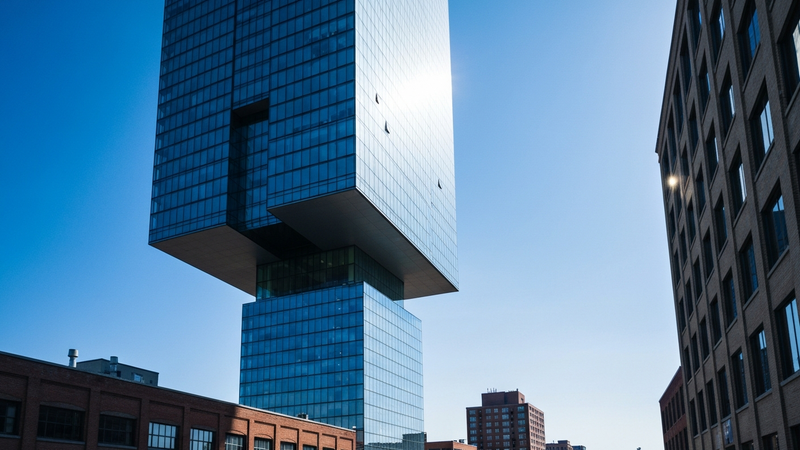
A tower assembled from plates of varying size rather than one plate repeated upward. The visible consequence is the silhouette; the practical consequence is that the outdoor space, the ceiling conditions and the plan differ from floor to floor.
Herzog and de Meuron are a practice better known for museums and cultural buildings than for residential towers, and the building reads that way. It was designed as an object first and a stack of apartments second, which is unusual and not universally desirable.
For a buyer that means the ordinary shortcut does not work. You cannot reason from a comparable sale two floors up, because two floors up may be a materially different apartment with different terraces and a different plan.
| Attribute | Detail |
|---|---|
| Address | 56 Leonard Street, Tribeca, Manhattan |
| Completed | 2017 |
| Architect | Herzog and de Meuron |
| Structure | Individually sized cantilevered floor plates |
| Outdoor space | Terraces on many floors, varying by unit |
| Ownership | Condominium |
Building facts. Unit-level figures - size, terrace, exposure, charges, tax - must be obtained for the specific residence.
The location is on Google Maps here, in the middle of Tribeca.
2. What Non-Repeating Floors Deliver
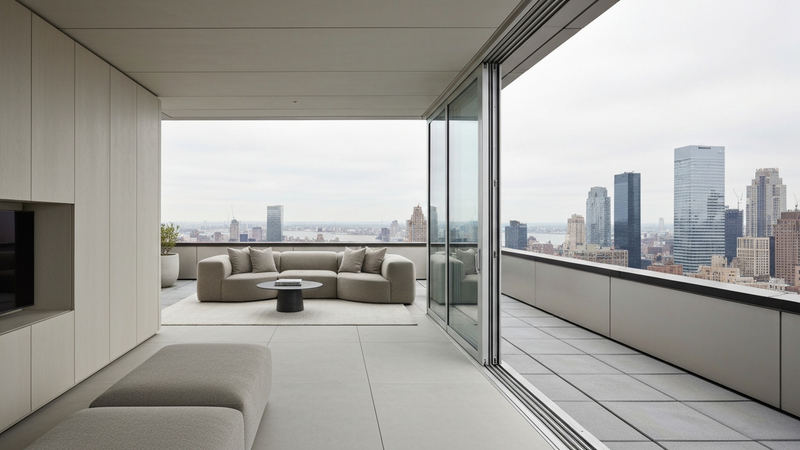
Private outdoor space at height, which is genuinely scarce in Manhattan. A terrace on a high floor of a tower is a different asset from a balcony, and buildings that offer it in quantity are rare because cantilevering costs money and complicates the structure.
It also produces variety. In a conventional tower every apartment on a line is the same apartment at a different elevation; here the line is not a reliable guide, and buyers who want a specific configuration may find only one or two in the building.
The corresponding obligation is maintenance. Terraces, drainage and a complex facade have their own cycle, and the building funds that through common charges and reserves rather than through goodwill.
Ask what the reserve study says about facade and terrace work specifically. Our building diligence guide covers how to read a reserve study properly.
3. Tribeca as a Position
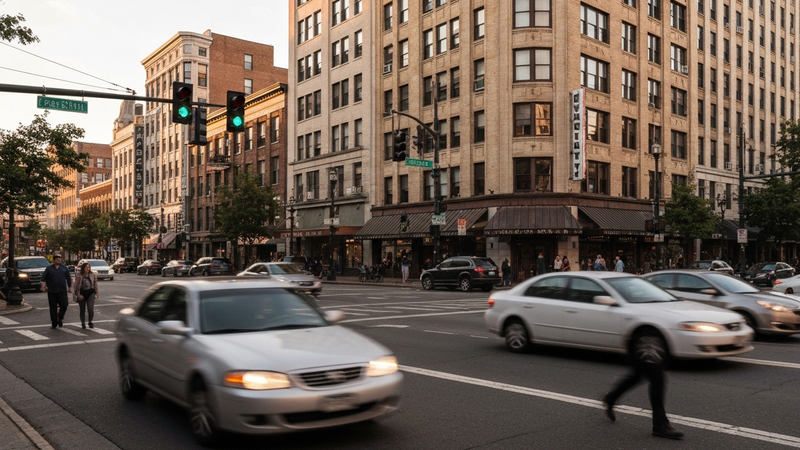
The district is former industrial fabric — cast iron, brick, loft floors — converted to housing over the past forty years. The building heights around it are low, which is why a tower here reads as an intervention rather than as one more entry in a skyline.
For a resident the practical qualities are the street pattern and the scale. Fewer through-routes, less through-traffic and a quieter condition than any comparable address in Midtown, with the financial district and the waterfront within walking distance.
For an overseas buyer, the neighbourhood also has an unusually high proportion of condominium rather than cooperative stock, because so much of it was converted or built recently. That materially widens what is actually purchasable.
Our condo versus co-op guide explains why that distinction decides most international searches before price ever enters the conversation.
4. Buying Here as an Overseas Purchaser

Straightforward as a condominium: no board approval vote, non-resident and entity ownership accepted, subletting governed by building rules rather than a board's discretion.
Mansion tax applies from $1 million on the whole price, reaching 2.25% between $5 and $10 million and 3.25% above $10 million, paid by the buyer at closing. Obtain common charges and property tax for the specific unit, since they vary with terrace area as well as interior size.
Settle ownership structure before contract; US estate tax reaches non-resident owners above a $60,000 exemption on US-situs assets. See our estate tax guide and buying from overseas guide.
Inspecting an apartment that has no twin
In this building the walkthrough carries more weight than usual, because there is no identical unit elsewhere to reason from. Ask for ceiling heights and room dimensions measured on camera, and ask specifically about the terrace: its size, its access, its exposure and how it drains.
Our remote viewing guide sets out the full sequence for running that from another country, including what to ask an agent to film rather than describe.
Comparables when the units differ
Closed sale prices are public record in New York, but in a building where the apartments are not equivalent, a raw price per square foot comparison misleads. A unit with a large terrace and one without are different products at the same nominal size.
The workable method is to compare against terraced apartments in other downtown buildings as well as within this one, adjusting for floor and exposure. Our negotiation guide covers how to build that set.
Architecture and resale
A building by an internationally known practice carries a name that travels, which shortens the explanation required when selling to a purchaser abroad. That is a real commercial quality rather than a sentimental one.
It also narrows the audience slightly. A distinctive building attracts buyers who specifically want it, which is a deep pool but a particular one, and pricing behaves accordingly in both directions.
Final Thoughts: The Apartment, Not the Building
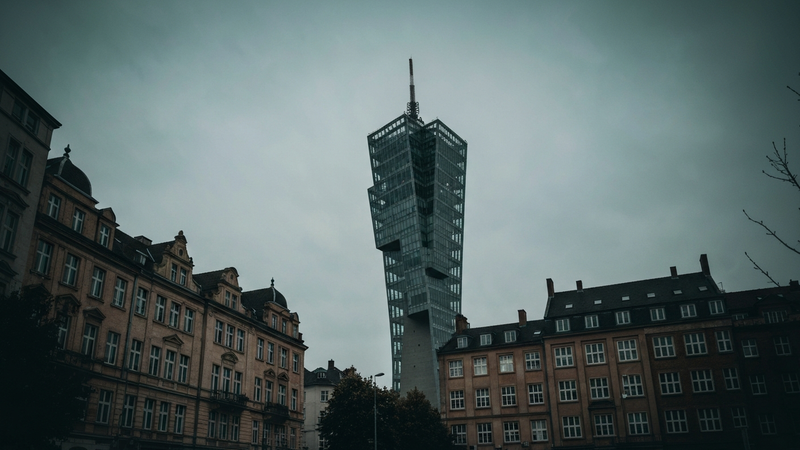
Most towers can be assessed at the building level and adjusted for floor. This one cannot, because the plates differ and so do the apartments on them. That makes the specific residence the whole question, and it makes a properly run inspection worth more here than almost anywhere else in Manhattan.
We cover Tribeca and downtown on Satoshi Onodera's YouTube channel and on Instagram. If a unit here is in view, talk to our team and we will obtain the financials and the terrace details first. Real estate brokerage services are provided through licensed professionals.
For a buyer weighing downtown against the 57th Street corridor, the trade is legible. The uptown towers offer park outlook and height with almost no private outdoor space at that elevation. This building offers terraces and a quieter district without the park.
Neither is the obvious answer, and both are available to a non-resident buyer without a board vote. The deciding factor is usually how the apartment will actually be used, which is a question worth settling before any building is chosen at all.
Reinvent NY provides business consulting, operational support, and coordination services. Legal advice and immigration filings are handled by independent licensed attorneys. Real estate services are provided through licensed professionals and applicable brokerage relationships. This article is for informational purposes only and does not constitute legal or investment advice.
More buildings worth knowing: Mandarin Oriental Fifth Avenue Residences, Olympic Tower, One57. The full set is indexed under New York building profiles.

Satoshi Onodera
Founder & CEO, Reinvent NY Inc.
Founded Reinvent NY in 2024. Providing relocation support from all over the world to America.
Ready to Get Started?
Our team in New York is ready to help with your visa, real estate, or relocation needs.
Schedule a ConsultationFrequently Asked Questions
Where is 56 Leonard Street?
56 Leonard Street in Tribeca, in lower Manhattan. The location is on [Google Maps](https://maps.google.com/?q=56+Leonard+Street+New+York).
Who designed it?
Herzog and de Meuron, the Swiss practice, in their first residential tower in New York. The building was completed in 2017.
Why does it look like that?
The floor plates are individually sized and cantilevered rather than stacked identically, which produces the irregular profile and gives many apartments private outdoor terraces.
Do the apartments repeat?
Far less than in a conventional tower. Because the plates vary, layouts, terraces and ceiling conditions differ from floor to floor, so the specific unit matters more than the building average.
Is it a condominium?
Yes. There is no board approval vote, and non-resident and entity ownership are generally accepted.
What is Tribeca like?
A former industrial district of cast iron and brick loft buildings south of Canal Street, now residential, with lower building heights than Midtown and a quieter street pattern.
What should I confirm first?
The reserve balance, assessment history, two years of board minutes, how the terraces and facade are maintained and funded, and the actual monthly charges for the specific residence.
Real Estate Guides & Data
Related Articles
Ditmas Park Brooklyn Real Estate Guide 2026
An authoritative 2026 guide to Ditmas Park real estate: Victorian housing stock, prices, rents, transit, and schools for international buyers and renters.
Windsor Terrace Brooklyn Real Estate Guide 2026
Our 2026 guide to Windsor Terrace, Brooklyn covers boundaries, housing stock, prices, rents, transit, and schools for buyers and renters.
Sheepshead Bay Brooklyn Real Estate Guide 2026
An expert 2026 guide to buying or renting in Sheepshead Bay, Brooklyn — housing stock, prices, transit, and who this waterfront neighborhood truly suits.
Brighton Beach Brooklyn Real Estate Guide 2026
A 2026 guide to buying and renting in Brighton Beach, Brooklyn: housing stock, prices, transit, and who this seaside neighborhood suits.