Mandarin Oriental Fifth Avenue Residences: What to Check
A Mandarin Oriental address on Fifth Avenue is a condominium and a contract. Structurally you buy a deed, a tax lot and a share of common charges like any other apartment. The name on the door arrives through a licence agreement with a term, a fee and a termination clause.
Satoshi Onodera has filmed inside — this full walkthrough of a Mandarin Oriental Fifth residence shows the finish level and layout, and this short covers the rental side. Let's look at what a buyer should establish.
1. What You Actually Own
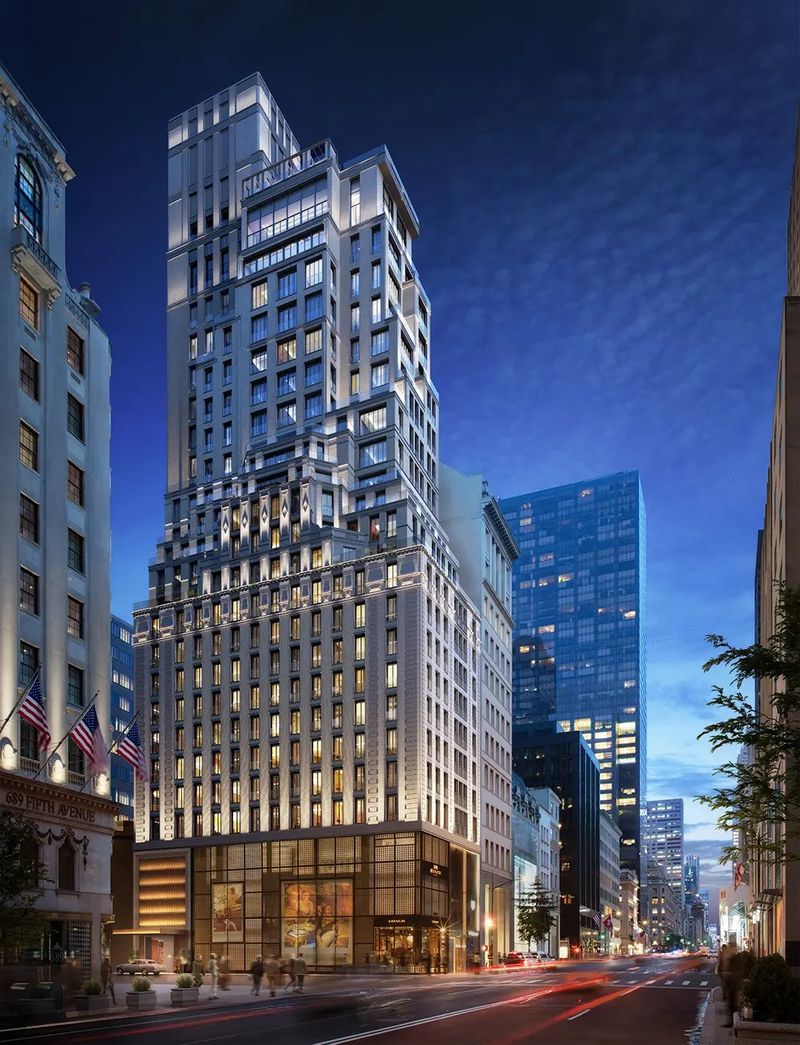
Legally, a condominium unit. The brand relationship sits in two separate documents: a licence agreement permitting use of the name, and usually a management agreement under which an operator runs services to the brand's standard.
Those agreements are between the brand and the condominium, not between the brand and you. They have terms and performance conditions, and they are disclosed in the offering plan rather than in the sales presentation.
| Element | Standard condominium | Branded residence |
|---|---|---|
| Title held | Condominium deed | Condominium deed — identical |
| Board approval | Right of first refusal | Right of first refusal |
| Service model | Set by the board | Set by the operator agreement |
| Monthly charges | Building operating cost | Operating cost plus brand and service fees |
| Price per square foot | Market | Typically 20–35% above comparable |
| Brand permanence | Not applicable | Term-limited licence |
General market practice. Verify each item against the offering plan for the specific building.
The location is on Google Maps here. Our branded residences guide covers the category in full.
2. What the Premium Buys

Three things, in descending order of how reliably they hold value. Service depth — staffing and standards an owner-run board rarely sustains for decades, which for an owner who is away for months is what makes the apartment usable at all.
Professional amenity operation, run by an operator rather than by committee. And resale legibility: an international buyer who has never seen the building recognises the name, which widens the resale pool beyond people who know the submarket.
What the premium does not buy is proportional rental income. Rents in branded buildings carry a premium too, but a smaller one than the price premium — which is why gross yields here sit below the market, as our rental yield guide framework makes clear.
3. The Monthly Number, and the Letting Rules

Ask for the full carrying cost before comparing anything: common charges, property tax, and any brand or amenity fee billed separately. New York condo operating expense runs a median $12.30 per square foot a year citywide and $15.52 in Manhattan; a full-service branded building runs at a substantial multiple of that.
On letting, the constraint is legal rather than contractual. New York City prohibits entire-unit stays under thirty days where the owner is absent, so any income projection built on nightly rates is not a plan. Thirty-day-plus furnished lettings are legal and are what a rental programme can actually offer.
Ask any programme for its actual occupancy and net distribution history rather than its brochure figures — our short-term rental rules guide sets out what the law permits.
4. The Purchase, for an Overseas Buyer
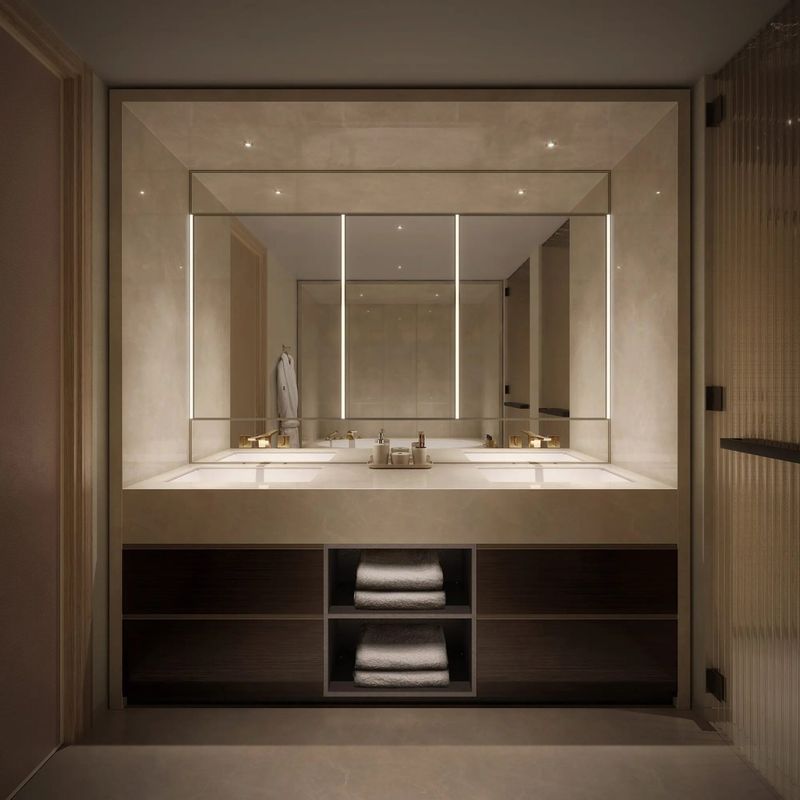
Procedurally straightforward as a condominium: no board approval vote, non-resident and entity ownership accepted. This is a large part of why branded residences attract international purchasers in the first place.
The costs are not ordinary. Mansion tax reaches 2.25% between $5 and $10 million and 3.25% above $10 million, charged on the whole price and paid by the buyer. Where the building is a new development, sponsors customarily shift the New York City and State transfer taxes onto the purchaser — roughly a further 1.8 to 2.0%.
Settle ownership structure before contract; US estate tax reaches non-resident owners above a $60,000 exemption on US-situs assets. See our new development guide and estate tax guide.
Which brands hold their premium
Not all licences are equal and the market prices the difference. What sustains a premium over decades is service delivery residents actually experience, an operator with a long record in residential rather than hotel-only management, and a brand whose owner treats residential licensing as a core business.
The practical signals: how many residential projects the operator has run and for how long, what happened to pricing in their earlier buildings after the first resale cycle, and whether the licence covers measurable service obligations or merely the use of a name.
Financing a branded purchase from abroad
Two points matter for an overseas buyer. Higher monthly carrying costs feed into a lender's debt-to-income assessment, and some lenders limit exposure to buildings with hotel operations or rental programmes. Establish appetite for the specific building early rather than at underwriting.
Where the purchase is pre-construction, the closing may be one to three years after contract, and no lender commits terms that far ahead. Rate, appraisal and currency risk all sit with the buyer in that gap — the mechanics are in our financing article for branded residences.
Final Thoughts: Read the Licence First
The questions that decide a branded purchase are unglamorous: how long the licence runs, what terminates it, what the operator charges, what the reserve holds, and what the total monthly figure is per square foot. Sales galleries answer none of these by default and all of them on request.
We cover Manhattan's branded buildings on Satoshi Onodera's YouTube channel and on Instagram. Before signing anything at a sales gallery, talk to our team — we will read the licence terms and the carrying costs first. Real estate brokerage services are provided through licensed professionals.
A final note on comparison. Branded and unbranded apartments in the same submarket are not the same product, and comparing them on price per square foot alone will always make the branded one look expensive. The honest comparison is total monthly carrying cost per square foot, plus an explicit judgement about how much the service model and the resale legibility are worth to you specifically. For an owner who is in New York a few weeks a year, that number is frequently higher than it looks on paper.
One last practical point for buyers who will be in New York only occasionally. A branded building's service model is precisely what makes intermittent ownership workable — packages received, maintenance supervised, the apartment checked when nobody is there. That is not a luxury for an absent owner; it is the operating system. Weigh it against the premium on those terms rather than on the amenity list.
Reinvent NY provides business consulting, operational support, and coordination services. Legal advice and immigration filings are handled by independent licensed attorneys. Real estate services are provided through licensed professionals and applicable brokerage relationships. This article is for informational purposes only and does not constitute legal or investment advice.
More buildings worth knowing: 53 West 53rd, One57. The full set is indexed under New York building profiles.

Satoshi Onodera
Founder & CEO, Reinvent NY Inc.
Founded Reinvent NY in 2024. Providing relocation support from all over the world to America.
Ready to Get Started?
Our team in New York is ready to help with your visa, real estate, or relocation needs.
Schedule a ConsultationFrequently Asked Questions
What is a Mandarin Oriental branded residence?
A condominium where the hotel brand licenses its name and service standards to the building, usually with a management agreement. Owners hold ordinary condominium title.
Where is it?
On Fifth Avenue in Manhattan. The location is on [Google Maps](https://maps.google.com/?q=Fifth+Avenue+Manhattan+New+York).
Do owners get hotel services?
Typically yes, on terms set out in the condominium documents or a separate services agreement. Establish exactly what is included, what it costs and where the entitlement is recorded.
Are monthly charges higher in branded buildings?
Usually materially. The staffing and amenity operation that justifies the brand is funded through common charges permanently, and the brand fee sits on top.
Can I let the apartment when I am away?
For thirty days or more, subject to the building's rules. New York City prohibits entire-unit stays under thirty days with the owner absent, regardless of who manages the booking.
What happens if the brand leaves?
Licence agreements have terms and termination provisions. A de-branding affects both the service model and the resale premium, which is why the licence term belongs in your diligence.
Can an overseas buyer purchase here?
Yes. Branded residences are condominiums — no board approval vote, and non-resident and entity ownership are generally accepted.
Real Estate Guides & Data
More guides
- Walk-Up vs Doorman Buildings: The Service Premium
- 1031 Exchanging Into NYC: Trading Up to Manhattan
- Assessed vs Market Value: Why the City's Number Differs
- Co-op to Condo Conversion: Why Buildings Rarely Switch
- Buying a US Property Without Flying In
- Closing Costs in New York: Every Line, Itemised
Related Articles
Roosevelt Island NYC Real Estate Guide 2026
What Roosevelt Island costs in 2026: the buildings and their ages, sale and rent ranges, the tram and the F train, and what a buyer should check first.
CEMA Loans in New York: Cutting the Recording Tax
A CEMA loan assigns your existing New York mortgage instead of recording a new one, taxing only the new money. The math, the fees, and when to skip it.
Inwood Manhattan Real Estate Guide 2026
Our 2026 guide to buying and renting in Inwood, Manhattan: buildings, prices, transit, and schools for overseas buyers considering Upper Manhattan.
NYC Co-op Flip Tax: Structures, Costs, and Who Pays
A NYC co-op flip tax is a transfer fee paid to the building, not to the city. The four common structures, what each costs on a $1,000,000 sale, and who pays.