CEMA Loans in New York: Cutting the Recording Tax
Refinance an $800,000 mortgage on a New York City condominium the ordinary way and the borrower's share of the mortgage recording tax is 1.925% — $15,400 in cash, on a loan that does not increase by a dollar.
A CEMA avoids most of it. Instead of satisfying the old mortgage and recording a new one, the outgoing lender assigns the existing lien to the new lender, and the two are consolidated. Tax applies only to new money borrowed above the assigned balance.
In this article, we'll work through the refinance math, show how a purchase CEMA saves the buyer and the seller at the same closing, price the fees and the timeline, and mark the cases where a CEMA is not worth pursuing.
What a CEMA Actually Does

CEMA stands for Consolidation, Extension and Modification Agreement, and the name is the mechanism. The existing mortgage is assigned rather than discharged, extended to the new maturity date, and modified to the new rate and terms.
Where the new loan is larger than the outstanding balance, the lender records a gap mortgage for the difference and consolidates it with the assigned lien. Only that gap is new debt, so only that gap is taxed.
The tax it avoids
New York is one of the few states charging tax on the act of recording a mortgage. In New York City the combined rate is 2.05% on loans under $500,000 secured by one-to-three family homes, and 2.175% at or above that on those homes and individual condominium units.
The lender absorbs 0.25%, so the borrower's effective rate is 1.80% or 1.925%, as set out by the New York City Department of Finance. Commercial and larger residential property pays 2.80% combined. Elsewhere in the state, county rates generally run between roughly 0.75% and 1.30%.
The Refinance Math on an $800,000 Loan

The saving is close to the entire tax when the loan amount does not grow. A borrower refinancing an $800,000 balance into a new $800,000 loan pays recording tax on nothing, because no new money enters the picture.
Against roughly $2,000 of CEMA-specific costs, that is about $13,400 kept, on a transaction that is otherwise identical to a standard refinance from the borrower's side.
| Line item | Standard refinance | CEMA refinance |
|---|---|---|
| New loan amount | $800,000 | $800,000 |
| Balance assigned by existing lender | $0 | $800,000 |
| Amount subject to recording tax | $800,000 | $0 |
| Borrower's recording tax at 1.925% | $15,400 | $0 |
| CEMA assignment and attorney fees | $0 | About $2,000 |
| Cash cost at closing | $15,400 | About $2,000 |
Illustrative NYC condominium refinance. Rates and fees vary by property type, county, and lender.
Cash-out changes the arithmetic but not the direction. Take the same $800,000 balance refinanced into a $950,000 loan: tax applies to the $150,000 of new money only, at 1.925%, for $2,887.50 instead of $18,287.50.
One detail trips up borrowers modeling this early: the assignable amount is the principal balance outstanding at closing, not the original loan amount and not the balance on the statement three months earlier. A file that drifts loses a little ground each month.
Where the break-even sits
At roughly $2,000 of fees and a 1.925% rate, a CEMA pays for itself once the assigned balance passes about $105,000. Below that the paperwork costs more than the tax it saves, which is why lenders rarely propose one on small balances.
The calculation is worth running before the rate lock rather than after. Our mortgage basics guide covers how these costs sit inside the wider loan estimate, and the cost simulator models a full closing.
Purchase CEMAs: Both Sides Save
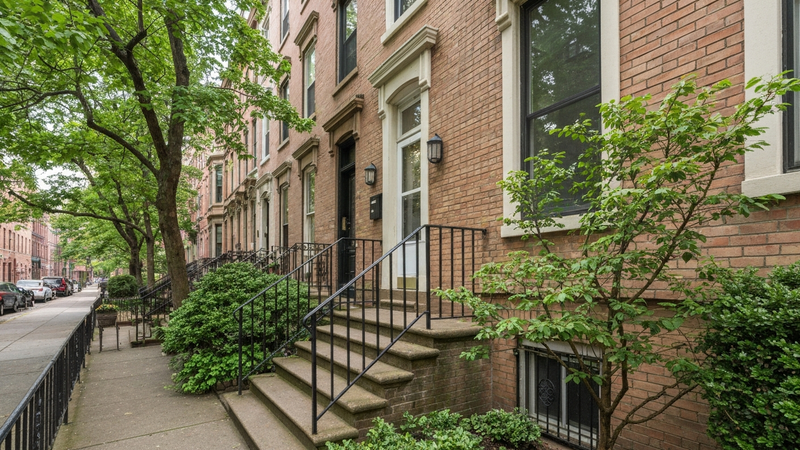
The same mechanism works at a sale. The seller's lender assigns the outstanding mortgage to the buyer's lender rather than being paid off and discharged, and the buyer's new loan is consolidated on top of it.
Consider a $1,500,000 condominium with a $1,000,000 buyer loan, where the seller still owes $600,000. Tax falls on the $400,000 of new money: $7,700 instead of $19,250, saving the buyer $11,550.
The seller has an incentive too. On the assigned balance, sellers commonly avoid the 0.40% New York State transfer tax described by the New York State Department of Taxation and Finance — about $2,400 on that $600,000. The New York City transfer tax is generally not reduced.
Getting it into the contract
A purchase CEMA needs the seller's cooperation, so it belongs in the offer, not in the title report three weeks before closing. A short rider typically requires the seller to request the assignment and splits the saving or the fees between the parties.
Sellers who bought recently and hold a low-rate mortgage from an active servicer are the best candidates. Buyers financing from abroad should raise it early with the loan officer, since not every program permits it — a point covered in our guide to foreign national mortgages.
Fees, Timeline, and When to Skip It

Budget the fees before assuming the saving. The outgoing lender typically charges an assignment fee of roughly $500 to $1,000, with additional attorney work on both sides and title company handling — commonly $1,500 to $3,000 in total.
Time is the real constraint. Producing the assignment package, the original note, and the allonge can take 30 to 90 days, and a servicer that has sold the loan into a pool sits at the slow end of that range.
| Situation | Is a CEMA worth pursuing? |
|---|---|
| Refinancing a balance above $250,000 | Yes, savings run into five figures |
| Balance below roughly $105,000 | Usually not, fees consume the benefit |
| Co-op apartment loan | No, co-op loans pay no recording tax |
| Purchase where the seller's lender will assign | Yes, buyer and seller both save |
| Loan sold into a pool or a slow servicer | Only with a longer closing window |
| Property outside New York State | No, the tax does not exist there |
General guidance only. Confirm feasibility with your lender and closing attorney on each transaction.
Co-ops are the cleanest exclusion. A co-op loan is secured by shares and a proprietary lease, which are personal property, so nothing is recorded against real property and no recording tax arises. Our condo versus co-op guide covers the wider consequences of that distinction.
Junior liens are the other complication. A home equity line behind the first mortgage has to be paid off, closed, or formally subordinated before the consolidation can record in first position, and an unused line left open will stall the title clearance.
The case against bothering
However, some argue a CEMA is not worth the friction. It adds two law firms and a third-party servicer to the critical path, and a borrower chasing a rate lock can lose more to an expired lock than the tax was ever going to cost.
That is a scheduling problem, not an economic one. On a $700,000 balance the saving is roughly $13,500 against about $2,000 of fees — a return no rate negotiation matches. Request the assignment package at application and extend the lock rather than abandoning the structure.
Which lenders cooperate
Portfolio lenders and banks with meaningful New York volume handle CEMAs routinely, because their processing teams see them weekly. Credit unions and local savings banks are usually willing on their own held loans.
The difficult cases are loans sold into securitized pools, subserviced portfolios, and some national online lenders whose workflows have no place for an assignment. Ask both lenders in writing at application, not at the closing table.
Final Thoughts

New York taxes the act of recording a mortgage, and a CEMA is the legitimate way to avoid paying it twice on the same debt. The savings are not marginal — on most six-figure balances they exceed every other closing line the borrower can negotiate.
The structure asks for something in return: a longer timeline, two cooperative lenders, and attorneys who have done it before. None of that is exotic in New York, but none of it happens automatically.
Raise the CEMA at application, confirm in writing that both lenders will process one, and build 30 extra days into the schedule. Our closing cost guide sets the recording tax against the rest of the bill so the comparison is made on complete numbers.
Reinvent NY provides business consulting, operational support, and coordination services. Legal advice and immigration filings are handled by independent licensed attorneys. Real estate services are provided through licensed professionals and applicable brokerage relationships. This article is for informational purposes only and does not constitute legal or investment advice.
More on US property tax: US Real Estate Tax Benefits for Foreign Investors, US Real Estate Tax Strategies 2026, ITIN for Real Estate Investors.

Satoshi Onodera
Founder & CEO, Reinvent NY Inc.
Founded Reinvent NY in 2024. Providing relocation support from all over the world to America.
Ready to Get Started?
Our team in New York is ready to help with your visa, real estate, or relocation needs.
Schedule a ConsultationFrequently Asked Questions
What is a CEMA loan?
A Consolidation, Extension and Modification Agreement is a New York closing structure in which an existing mortgage is assigned to a new lender rather than paid off and discharged. The old lien is consolidated with any new borrowing, so mortgage recording tax applies only to the new money.
How much does a CEMA save?
The saving equals the borrower's recording tax rate applied to the assigned balance. In New York City that is generally 1.925% on loans of $500,000 or more secured by a home or condominium unit, so an assigned balance of $800,000 saves about $15,400 before CEMA fees.
What does a CEMA cost?
Expect roughly $1,500 to $3,000 in total. The outgoing lender typically charges an assignment fee of about $500 to $1,000, with additional attorney fees on both sides and title company handling. Amounts vary by lender, county, and the complexity of the file.
How long does a CEMA take?
Plan for 30 to 90 days. The delay is in obtaining the assignment package, the original note, and the allonge from the existing servicer. Requesting the package at loan application rather than after approval is the single most effective way to protect the closing date.
Do co-op apartments qualify for a CEMA?
No, and they do not need one. A co-op loan is secured by shares and a proprietary lease, which are personal property rather than real property, so no mortgage is recorded and no mortgage recording tax is charged. A CEMA has nothing to assign in that structure.
What is a purchase CEMA?
It is a CEMA used at a sale rather than a refinance. The seller's lender assigns the outstanding mortgage to the buyer's lender instead of taking a payoff, so the buyer pays recording tax only on borrowing above that assigned balance. It requires the seller's cooperation and is normally addressed in the contract.
Does a purchase CEMA benefit the seller?
Usually yes. Sellers commonly avoid the 0.40% New York State transfer tax on the portion of the price represented by the assigned mortgage, which is about $2,400 on a $600,000 balance. The New York City transfer tax is generally not reduced, so confirm the treatment with the closing attorney.
When is a CEMA not worth it?
When the assigned balance is small, roughly under $105,000 in New York City, the fees consume the tax saving. It is also unavailable on co-op loans, pointless outside New York State, and impractical when the existing servicer will not produce an assignment package within the closing timeline.
Real Estate Guides & Data
Related Articles
Yorkville Manhattan Real Estate Guide 2026
An authoritative 2026 guide to buying and renting in Yorkville, Manhattan — housing stock, prices, transit, and who this Upper East Side pocket suits.
Roosevelt Island NYC Real Estate Guide 2026
What Roosevelt Island costs in 2026: the buildings and their ages, sale and rent ranges, the tram and the F train, and what a buyer should check first.
Mandarin Oriental Fifth Avenue Residences: What to Check
A hotel-branded Fifth Avenue address: what the licence and service model deliver, the carrying costs behind them, and what to confirm before signing.
Inwood Manhattan Real Estate Guide 2026
Our 2026 guide to buying and renting in Inwood, Manhattan: buildings, prices, transit, and schools for overseas buyers considering Upper Manhattan.