Yorkville Manhattan Real Estate Guide 2026
What Yorkville Actually Is
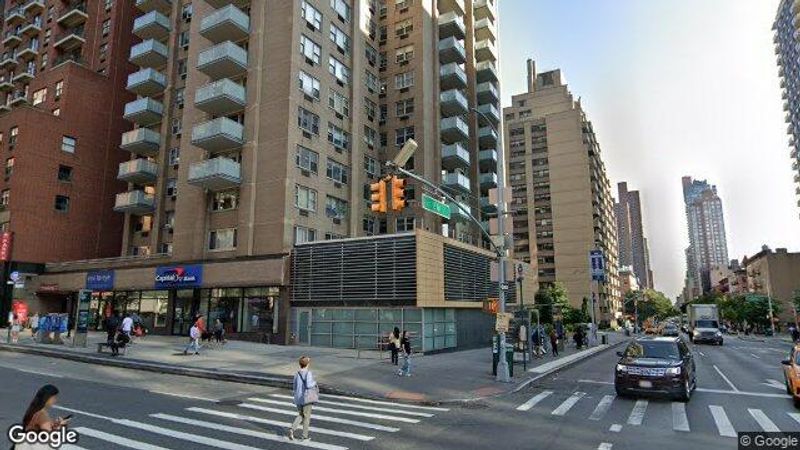
Yorkville occupies the far eastern edge of the Upper East Side, generally bounded by East 79th Street to the south, East 96th Street to the north, Third Avenue to the west, and the East River. Our team in New York treats it as a distinct micro-market, separate from the gallery-and-townhouse blocks closer to Central Park, with its own pricing logic and buyer profile.
The neighborhood's roots are German and Hungarian, a legacy still visible in a handful of old-world bakeries and the annual Steuben Parade route along Fifth Avenue. Postwar waves of Irish and Czech residents followed, and by the 1980s Yorkville had become a solidly middle-and-upper-middle-class enclave of doormen buildings, valued for quiet residential streets rather than nightlife.
Today Yorkville reads as understated Upper East Side: fewer tourists, fewer trophy townhouses, more functional family apartments and long-term owner-occupants. Our clients from abroad often find it offers Manhattan credibility at a materially lower entry price than Lenox Hill or Carnegie Hill, without sacrificing proximity to Central Park or the East River esplanade.
The Housing Stock
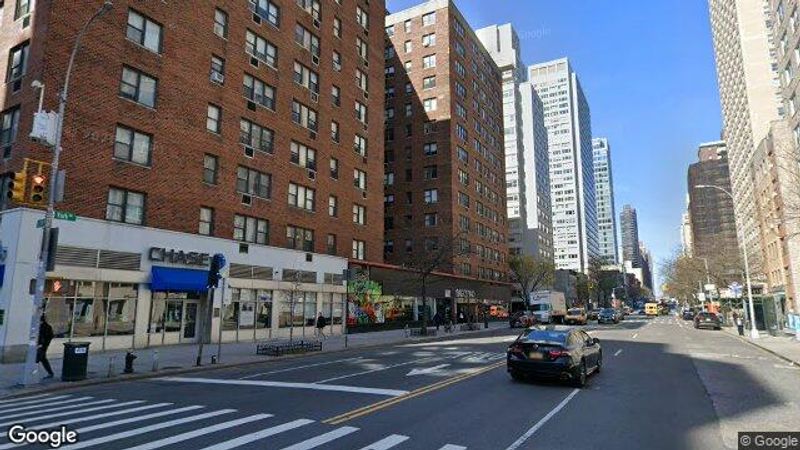
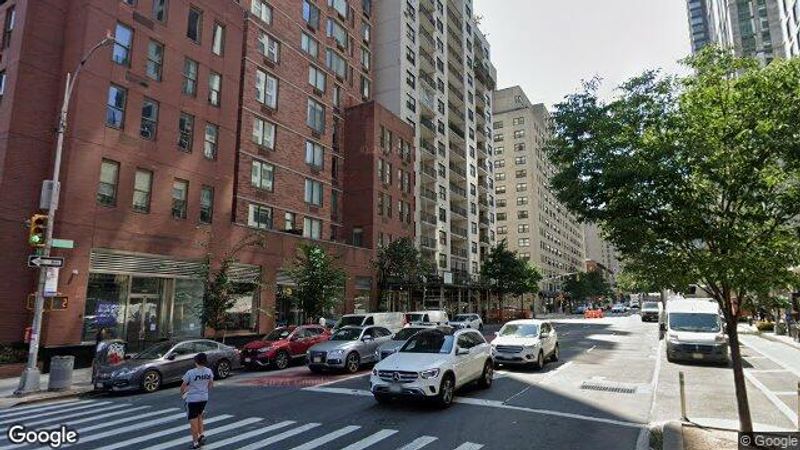
Yorkville's building stock spans prewar walk-ups, postwar white-brick towers, and a growing number of newer glass developments near the river. Classic six-story walk-ups from the 1900s–1920s line side streets like East 84th and East 87th, while doorman towers from the 1960s and 1970s dominate York Avenue and East End Avenue.
Notable buildings include The Wales on Madison at 92nd, a boutique prewar hotel-conversion, and the large postwar cooperatives along East End Avenue overlooking Carl Schurz Park, several with river views. Along Second and Third Avenues, mid-century rental towers offer larger one- and two-bedroom layouts, while newer construction such as buildings on East 91st Street near the river brings full-amenity condo living.
Unit types skew toward practical family-sized apartments: prewar one-bedrooms with railroad layouts, postwar two- and three-bedrooms with eat-in kitchens, and a smaller supply of true trophy penthouses compared to Fifth or Park Avenue. Our licensed brokerage network sees strong demand for co-ops requiring board approval alongside a growing pipeline of no-board condo alternatives.
Prices and Rents
Pricing in Yorkville remains one of the more accessible entry points on the Upper East Side. Approximate, market-conditions-dependent figures put co-op one-bedrooms between $450,000 and $750,000, with condo equivalents running $700,000 to $1.1 million. Two- and three-bedroom units, particularly those with river or park views, command a meaningful premium.
Rental rates track the broader Manhattan cycle but sit below comparable Lenox Hill or Carnegie Hill product. Studios typically rent from $2,600 to $3,400 monthly, while two-bedrooms range from $4,200 to $6,000, with East End Avenue and river-facing buildings at the top of that band.
| Unit Type | Sale Price (Co-op) | Sale Price (Condo) | Monthly Rent |
|---|---|---|---|
| Studio | $300K–$450K | $500K–$650K | $2,600–$3,400 |
| 1-Bedroom | $450K–$750K | $700K–$1.1M | $3,300–$4,400 |
| 2-Bedroom | $800K–$1.3M | $1.2M–$2M | $4,200–$6,000 |
| 3-Bedroom | $1.4M–$2.2M | $2M–$3.2M | $6,500–$9,500 |
Yorkville approximate sale and rental ranges, 2026 (subject to market conditions)
Compared with Lenox Hill or Yorkville's western neighbor Carnegie Hill, buyers here typically save 15% to 25% per square foot for similar quality. Our team in New York advises clients that this discount reflects transit access and building age rather than any deficiency in schools, safety, or long-term liquidity.
Daily Life and Transit
The Second Avenue Subway (Q line) transformed Yorkville after its 2017 opening, adding stations at 86th and 96th Streets that cut commute times to Midtown to roughly 10–15 minutes. The 4/5/6 at Lexington and 86th remains a busy alternative, and crosstown buses like the M86 connect to the West Side and Central Park.
Daily life centers on Carl Schurz Park along the river, the East River Esplanade for running and cycling, and retail corridors on First, Second, and Third Avenues. Grocery options include Gristedes, Fairway, and Whole Foods on East 87th, while families rely on strong public schools like PS 290 and private options including The Chapin School nearby.
| Category | Option | Detail |
|---|---|---|
| Subway | Q (2nd Ave) | 86th & 96th St stations, ~12 min to Midtown |
| Subway | 4/5/6 | Lexington Ave & 86th St, express access |
| Bus | M15, M86 | Crosstown and river-to-river routes |
| Park | Carl Schurz Park | Riverside, adjacent to Gracie Mansion |
| Grocery | Fairway, Whole Foods | East 87th St and Third Ave corridors |
Yorkville transit and lifestyle snapshot, 2026
Yorkville functions as a genuinely residential neighborhood rather than a destination district, which our clients often value: quieter evenings, manageable street noise, and a stronger sense of community than the more transient blocks closer to Fifth Avenue. Weekday commutes to Midtown and Downtown financial districts are both entirely practical.
Final Thoughts
Yorkville suits buyers and tenants who want authentic Upper East Side address recognition without paying Fifth or Park Avenue premiums. It works particularly well for families prioritizing schools and park access, and for professionals commuting via the Second Avenue Subway who value quiet streets over nightlife density.
It suits less well those seeking architectural grandeur, doorman-heavy trophy buildings with sweeping Central Park views, or a walkable restaurant-and-gallery scene comparable to the West Village or SoHo. Yorkville's charm is understated rather than showy, and its inventory rewards patience over impulse purchasing.
Our team in New York has guided international clients through Yorkville transactions since 2019 and continues to see it as a resilient, undervalued corner of Manhattan. For serious buyers, our licensed brokerage network can arrange private viewings and detailed building-by-building comparisons ahead of any 2026 purchase decision.
Reinvent NY provides business consulting, operational support, and coordination services. Real estate services are provided through licensed professionals and applicable brokerage relationships. This article is for informational purposes only and does not constitute legal or investment advice.
Nearby neighbourhoods: Battery Park City, Central Park South, Chelsea. All Manhattan guides are indexed under New York neighbourhood guides.

Satoshi Onodera
Founder & CEO, Reinvent NY Inc.
Founded Reinvent NY in 2024. Providing relocation support from all over the world to America.
Ready to Get Started?
Our team in New York is ready to help with your visa, real estate, or relocation needs.
Schedule a ConsultationFrequently Asked Questions
What are the exact boundaries of Yorkville?
Yorkville generally runs from East 79th Street north to East 96th Street, bounded by Third Avenue on the west and the East River on the east, sitting within the broader Upper East Side.
Is Yorkville cheaper than the rest of the Upper East Side?
Yes, Yorkville typically runs 15% to 25% below Lenox Hill or Carnegie Hill on a per-square-foot basis, largely due to older transit access and building stock, though this has narrowed since the Q line opened.
What subway lines serve Yorkville?
The Q train on the Second Avenue Subway stops at 86th and 96th Streets, while the 4/5/6 lines run along Lexington Avenue at 86th Street, giving residents fast access to Midtown and Downtown.
Are co-ops or condos more common in Yorkville?
Co-ops dominate the older postwar and prewar buildings, particularly along East End Avenue and Third Avenue, while condos are more common in newer developments closer to the river and along York Avenue.
Is Yorkville good for families?
Yes, Yorkville has strong public schools like PS 290, well-regarded private options nearby including The Chapin School, and easy access to Carl Schurz Park, making it popular with families seeking Manhattan living with room to breathe.
What does a one-bedroom typically cost in Yorkville?
Approximate 2026 figures put a one-bedroom co-op between $450,000 and $750,000, with condo equivalents from $700,000 to $1.1 million, though all prices remain subject to market conditions and specific building quality.
How does Yorkville compare to Carnegie Hill for a buyer?
Carnegie Hill offers more prewar prestige buildings and proximity to Central Park, while Yorkville offers larger layouts, river access, and better transit value, making it attractive to buyers prioritizing space and commute over address prestige.
Real Estate Guides & Data
More guides
- New York's Landmark Buildings: Index for Buyers
- Open Houses: The Buyer's Working Visit
- Donating US Property: Charitable Structures for Real Estate
- US Property Insurance: The Line That Breaks a Rental Model
- Reading Building Financials: The Numbers Behind the Lobby
- Rent Stabilization for Buyers: What Regulation Means
Related Articles
Central Park South NYC Real Estate Guide 2026
An expert 2026 guide to Central Park South real estate: buildings, prices, rents, transit, and daily life for international buyers and tenants.
432 Park Avenue: The Tower That Tested a Thesis
Rafael Vinoly's square-windowed supertall on Park Avenue: what the building is, what its owners have learned about slender towers.
Roosevelt Island NYC Real Estate Guide 2026
What Roosevelt Island costs in 2026: the buildings and their ages, sale and rent ranges, the tram and the F train, and what a buyer should check first.
CEMA Loans in New York: Cutting the Recording Tax
A CEMA loan assigns your existing New York mortgage instead of recording a new one, taxing only the new money. The math, the fees, and when to skip it.