130 William: David Adjaye's Tower in the FiDi
130 William is a concrete tower in a district of glass ones. David Adjaye's first New York residential building put a hand-cast textured facade with large arched openings into the financial district, at a moment when almost everything else being built downtown was curtain wall.
That is an architectural argument with practical consequences for how the apartments work. Let's take the building, the district and the diligence in order.
1. What the Building Is
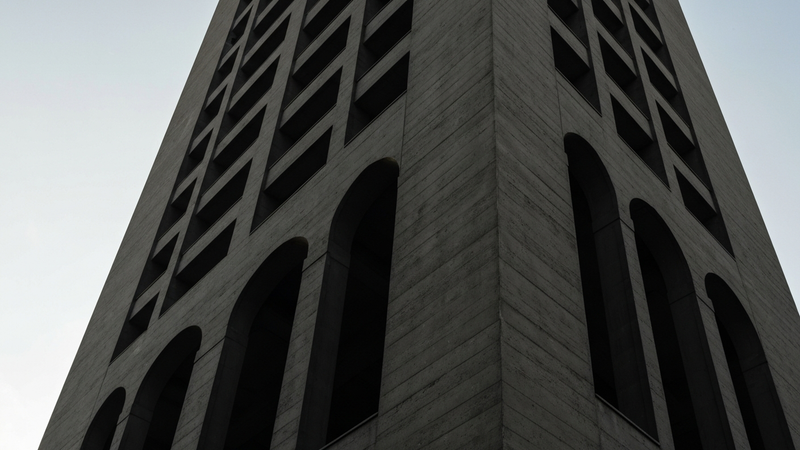
A masonry-expressed tower rather than a glass one. The facade is hand-cast concrete with arched openings, referencing the stone and brick warehouses of lower Manhattan rather than the office towers that replaced many of them.
Adjaye's practice is better known for cultural buildings than for residential towers, and the building reads that way — the exterior is doing work that a developer optimising purely for saleable area would not have paid for.
The interiors follow from that decision. Punched windows produce defined rooms and framed views rather than continuous glass, which some buyers prefer strongly and others do not want at all.
| Attribute | Detail |
|---|---|
| Address | 130 William Street, Manhattan |
| District | Financial district |
| Architect | David Adjaye |
| Facade | Hand-cast textured concrete with arched openings |
| Outdoor space | Private terraces on many lines, varying by unit |
| Ownership | Condominium |
Building facts. Unit-level figures - size, terrace, exposure, charges, tax - must be obtained for the specific residence.
The location is on Google Maps here.
2. Why Solid Facades Behave Differently
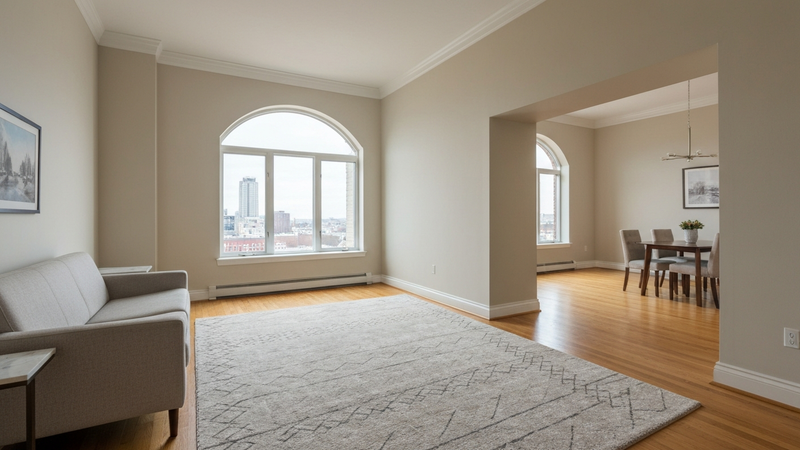
Three practical differences from a glass tower, and they matter more day to day than they sound. Less solar gain, which affects both comfort and cooling cost through a New York summer. Defined rooms, since walls exist between openings rather than glass running continuously.
And variation between units, because window positions are placed rather than repeated. Two apartments of the same size on the same line can have quite different light depending on how the openings fall.
None of this is better or worse in the abstract. It is a different product, and a buyer who has only viewed glass towers should see one of each before deciding which they actually want to live in.
Ask for a walkthrough at a specific time of day so the light condition is visible rather than described. Our remote viewing guide covers how to run that properly.
3. The Financial District Position

The district converted from commercial to substantially residential over three decades, and it now has the schools, food shops and waterfront parks that a working neighbourhood requires. The subway convergence here is among the densest in the city.
Prices per square foot have historically sat below Midtown and the park-adjacent addresses, which is the practical reason a buyer looks here rather than uptown for a comparable apartment.
The stock is also heavily condominium rather than cooperative, because so much of it was converted or newly built. For a non-resident purchaser that widens the available inventory dramatically compared with the Upper East Side.
New York condominium operating expense runs a median $15.52 per square foot a year in Manhattan. Obtain the actual figure for the unit and compare it on that basis — our luxury purchase guide covers the method.
4. Buying Here as an Overseas Purchaser

Straightforward as a condominium: no board approval vote, non-resident and entity ownership accepted, subletting governed by building rules rather than a board's discretion.
Mansion tax applies from $1 million on the whole price, reaching 2.25% between $5 and $10 million. Where units remain with the sponsor, the New York City and State transfer taxes are customarily shifted to the purchaser, roughly a further 1.8 to 2.0%.
Settle ownership structure before contract; US estate tax reaches non-resident owners above a $60,000 exemption on US-situs assets. See our estate tax guide and buying from overseas guide.
Sponsor units and board control
In a recent building, establish how many units the sponsor still holds. While a significant block remains unsold the sponsor controls the board, sets the budget and reserve contributions, and can dispose of units in bulk at a discount.
Ask when board control transfers and what proportion of units has closed. Those two answers describe who sets your monthly costs for the next few years more accurately than any amenity list does.
First-year budgets are projections
The operating budget in an offering plan is a forecast made before the building operated, and forecasts in new buildings are frequently optimistic. Compare the charge per square foot against operating buildings of similar size rather than accepting it.
Our new development guide sets out which line items are most often understated and how to test them before contract.
Terraces and what they cost to maintain
Private outdoor space at height is scarce in Manhattan and priced accordingly, but it also carries maintenance: drainage, waterproofing and the building's own facade cycle around it.
Ask what the reserve study says about terrace and facade work specifically, and confirm what the owner is responsible for versus the condominium. The answer is in the documents, not in the brochure.
Final Thoughts: A Building With a Point of View
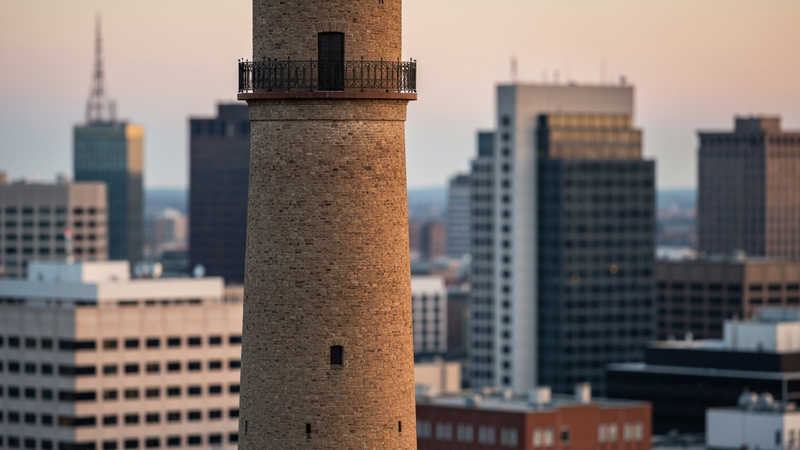
Most towers built downtown in the past decade are variations on a single glass idea. This one is not, and that gives it a distinct audience at resale — deep but particular. For a buyer who wants defined rooms, framed views and a facade that will still look considered in twenty years, the arithmetic works. For a buyer who wants uninterrupted glass, it does not, and no amount of architectural merit changes that.
We cover downtown Manhattan on Satoshi Onodera's YouTube channel and on Instagram. If a unit here is in view, talk to our team and we will obtain the financials and the sponsor position first. Real estate brokerage services are provided through licensed professionals.
One comparison worth running before deciding. Put this building beside a glass tower of similar size and price downtown, and compare on three measures: total carrying cost per square foot, private outdoor space, and how the light behaves in the actual rooms rather than in the renderings.
Buyers frequently arrive convinced they want maximum glass and leave having chosen the building with better rooms. Seeing both in the same week is the only reliable way to find out which one you are.
A note on financing for an overseas buyer. A foreign national mortgage in New York typically requires a larger deposit and a longer underwriting period than a domestic one, and the process runs on documents rather than on relationships. Start it before an apartment is identified, because a seller's timetable will not wait for an approval that has not begun.
Reinvent NY provides business consulting, operational support, and coordination services. Legal advice and immigration filings are handled by independent licensed attorneys. Real estate services are provided through licensed professionals and applicable brokerage relationships. This article is for informational purposes only and does not constitute legal or investment advice.
More buildings worth knowing: 432 Park Avenue, 53 West 53rd, 56 Leonard Street. The full set is indexed under New York building profiles.

Satoshi Onodera
Founder & CEO, Reinvent NY Inc.
Founded Reinvent NY in 2024. Providing relocation support from all over the world to America.
Ready to Get Started?
Our team in New York is ready to help with your visa, real estate, or relocation needs.
Schedule a ConsultationFrequently Asked Questions
Where is 130 William?
130 William Street in Manhattan's financial district. The location is on [Google Maps](https://maps.google.com/?q=130+William+Street+New+York).
Who designed it?
David Adjaye, in his first residential tower in New York. The building was completed in the early 2020s.
What makes the facade distinctive?
It is hand-cast textured concrete rather than glass curtain wall, with large arched window openings — a deliberate reference to the masonry buildings of lower Manhattan.
Why does a solid facade matter to a buyer?
Punched windows in a masonry facade behave differently from full glass: less solar gain, more defined rooms, and window positions that vary by unit rather than running continuously.
Is it a condominium?
Yes. There is no board approval vote, and non-resident and entity ownership are generally accepted.
Does it have outdoor space?
Many units include private outdoor space, and the terrace arrangement varies by line and floor. Confirm what the specific residence has.
What should I confirm first?
The reserve balance, assessment history, board minutes, how many units the sponsor still holds, and the actual monthly charges and property tax for the specific unit.
Real Estate Guides & Data
More guides
- Buying a NYC Townhouse: One Building, All Yours
- US Property Tax for Overseas Owners: Why Averages Mislead
- US Property Ownership Myths: What Buying Does Not Do
- 1031 Exchange: Deferring Gain on US Investment Property
- Fixtures, Furniture, and What Conveys: The Inclusion Rules
- Buying in Brooklyn: How the Borough Actually Prices
Related Articles
One Manhattan Square: Scale on the Lower East Side
One Manhattan Square put over eight hundred residences on the East River waterfront. What buying in a building of that scale offers, and what to confirm first.
Sunnyside Queens Real Estate Guide 2026
A 2026 buyer's and renter's guide to Sunnyside, Queens: boundaries, building stock, prices, transit, and schools, for international buyers and tenants.
Astoria Queens Real Estate Guide 2026
What Astoria in Queens costs in 2026: the housing stock street by street, sale and rent ranges, the trains into Midtown, and what a buyer should check first.
Long Island City Real Estate Guide 2026
An expert 2026 guide to buying and renting in Long Island City, Queens — buildings, prices, rents, transit, and honest advice from our New York team.