Flatiron District Real Estate Guide 2026
What Flatiron District Actually Is
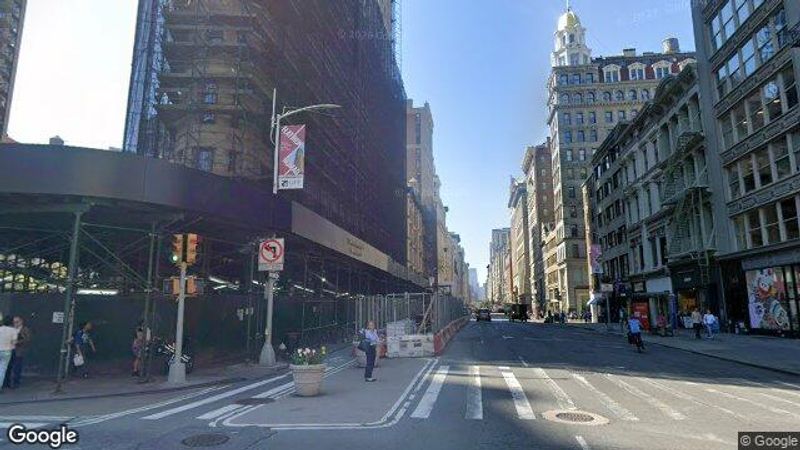
Flatiron District sits at the crossroads of Fifth Avenue and Broadway, roughly bounded by 14th Street to the south, 26th–29th Street to the north, Sixth Avenue to the west, and Park Avenue South to the east. Our team in New York treats Madison Square Park as its true heart, both geographically and socially, anchoring the neighborhood's daily rhythm.
The district takes its name from the 1902 Flatiron Building, one of the city's first steel-framed skyscrapers, whose triangular silhouette still defines the skyline here. Once a hub of publishing houses and photography studios, the area transitioned through the 1990s into a magnet for tech firms and design agencies, earning the nickname Silicon Alley.
Today it reads as polished and grown-up rather than trendy in the downtown sense. Cast-iron facades, converted lofts, and boutique towers sit alongside corporate headquarters. Our clients from abroad often find it strikes a balance: central enough for business, quiet enough for evenings, and architecturally distinct from both Midtown and the Village.
The Housing Stock
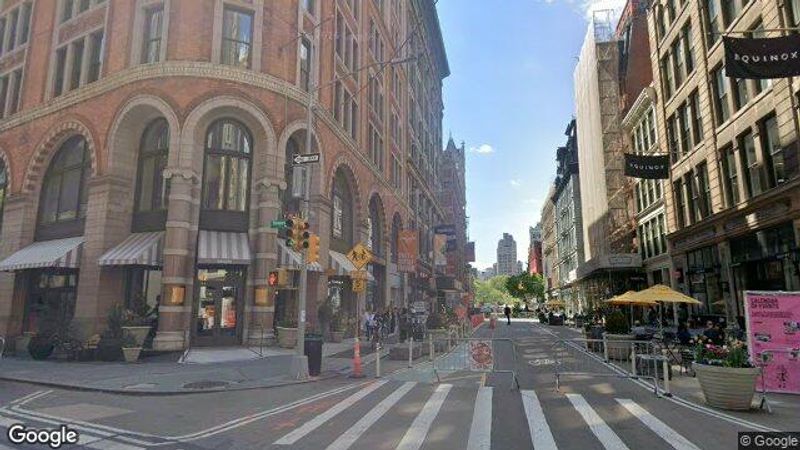
Flatiron's residential base is dominated by loft conversions carved from 19th-century warehouses and commercial buildings, many originally built for the dry-goods and publishing trades between 1880 and 1910. High ceilings, exposed beams, and oversized windows are the norm, and full-floor units remain achievable at price points unmatched further downtown.
Notable addresses include The Toy Building at 200 Fifth Avenue, a landmarked 1909 structure now holding luxury condominiums above retail, and The Flatiron Building itself, converted to residential use in recent years. Newer development is thinner on the ground here than in Chelsea, since much of the district falls within protected historic overlays.
Unit types skew toward one- and two-bedroom lofts and pre-war conversions rather than new-build high-rises. Buyers seeking amenity-heavy towers with pools and concierge staff will find fewer options than in Midtown; those drawn to raw ceiling height, original detailing, and low-density buildings will find Flatiron among Manhattan's strongest offerings.
Prices and Rents
Flatiron commands a premium tied to its architecture and central location, though it typically prices below Tribeca and comparably to Chelsea. Our licensed brokerage network reports steady demand for loft-style condominiums, with co-ops offering relative value for buyers comfortable with board approval processes and stricter financing requirements.
As of early 2026, condominium resale prices generally range from approximately $1,600 to $2,400 per square foot, subject to market conditions, building age, and views. Rental demand remains firm given proximity to Midtown and Union Square employers, with one-bedroom lofts routinely commanding rents above comparable stock in less centrally located districts.
| Unit Type | Purchase Price (Approx.) | Monthly Rent (Approx.) | Common Charges/Month |
|---|---|---|---|
| Studio | $650,000 – $900,000 | $3,200 – $4,200 | $700 – $1,000 |
| 1-Bedroom Loft | $1,000,000 – $1,600,000 | $4,500 – $6,000 | $900 – $1,400 |
| 2-Bedroom Loft | $1,800,000 – $2,900,000 | $6,500 – $9,000 | $1,300 – $2,200 |
| 3-Bedroom Full-Floor | $3,200,000 – $5,500,000 | $10,000 – $15,000 | $2,200 – $3,800 |
| Penthouse/Duplex | $5,000,000+ | $18,000+ | $3,500+ |
Approximate Flatiron District Prices & Rents, Early 2026 (subject to market conditions)
Compared with Tribeca or the West Village, Flatiron offers a meaningful discount per square foot while retaining pre-war character and a central location. Buyers focused on long-term value appreciation should weigh landmark-protection limits on new supply against the neighborhood's consistently strong rental absorption rates.
Daily Life and Transit
Flatiron is exceptionally well served by transit, with the 23rd Street stations on the N/R/W and the 6 line, plus the 14th Street–Union Square hub combining the 4/5/6, L, N/Q/R/W lines just to the south. Most residents reach Midtown or Downtown offices in 10 to 20 minutes without transfers.
Daily needs are well covered: Eataly and Whole Foods Union Square anchor grocery shopping, while Madison Square Park and the Union Square Greenmarket provide green space and fresh produce respectively. Public schools in the zone feed into District 2, generally regarded as one of Manhattan's stronger districts, though many families also consider nearby private options.
| Category | Detail | Approx. Time/Distance |
|---|---|---|
| Subway Access | 23rd St (N/R/W, 6) | 1–4 min walk |
| Major Hub | 14th St–Union Square (4/5/6/L/N/Q/R/W) | 5–10 min walk |
| Commute to Midtown | By subway | 10–15 minutes |
| Commute to Financial District | By subway | 20–25 minutes |
| Green Space | Madison Square Park | On-site amenity for many buildings |
| Grocery | Whole Foods, Eataly, Union Square Greenmarket | 5–10 min walk |
Flatiron District Transit & Lifestyle Snapshot
Walkability is a defining strength: most errands, gyms, and restaurants sit within a 10-minute radius. Our team in New York consistently hears from relocating clients that Flatiron's combination of transit density and low car dependence makes daily logistics simpler than in more residential Uptown or outer-borough locations.
Final Thoughts
Flatiron suits buyers who want pre-war character without sacrificing transit access or proximity to Midtown business districts. Its loft stock appeals particularly to those relocating from cities where converted industrial buildings carry cachet, and to professionals wanting a short, multi-line commute in either direction.
It is less suited to buyers seeking brand-new high-rise amenities, large private outdoor space, or a quieter, more residential feel found in parts of the Upper West Side or Brooklyn Heights. Families prioritizing extensive playground infrastructure may also find nearby districts like Gramercy slightly better equipped.
For an international buyer balancing lifestyle, architecture, and rental liquidity, Flatiron remains a defensible core holding. Our team in New York recommends it strongly for pied-à-terre or primary residence use where centrality and character outweigh the appeal of amenity-laden new construction.
Reinvent NY provides business consulting, operational support, and coordination services. Real estate services are provided through licensed professionals and applicable brokerage relationships. This article is for informational purposes only and does not constitute legal or investment advice.
Nearby neighbourhoods: Gramercy Park, Greenwich Village, Hamilton Heights. All Manhattan guides are indexed under New York neighbourhood guides.
This article is also available on our Japanese site.

Satoshi Onodera
Founder & CEO, Reinvent NY Inc.
Founded Reinvent NY in 2024. Providing relocation support from all over the world to America.
Ready to Get Started?
Our team in New York is ready to help with your visa, real estate, or relocation needs.
Schedule a ConsultationFrequently Asked Questions
Is Flatiron District a good investment for overseas buyers in 2026?
Yes, particularly for loft-style condominiums, which show consistent rental demand due to proximity to Midtown and Union Square employers. Limited new supply from landmark protections also supports long-term price stability, though results vary by building and market cycle.
What subway lines serve Flatiron District?
The N, R, W, and 6 trains stop at 23rd Street within the district, while the nearby 14th Street–Union Square hub adds the 4, 5, L, and Q lines, giving residents exceptional multi-directional access across Manhattan.
Are there co-ops as well as condos in Flatiron?
Yes. Many pre-war loft conversions operate as co-ops with board approval requirements, while newer or fully converted buildings like 200 Fifth Avenue offer condominium ownership, which is typically more accessible to international buyers.
How does Flatiron compare price-wise to Chelsea or Tribeca?
Flatiron generally prices below Tribeca and near or slightly below Chelsea on a per-square-foot basis, offering comparable pre-war character at a relative discount, though exact positioning shifts with market conditions and building specifics.
Is Flatiron good for families with children?
It offers solid District 2 public school access and proximity to Madison Square Park, but families wanting more playgrounds and larger apartments sometimes prefer Gramercy or the Upper West Side, which have deeper family-oriented infrastructure.
What kind of apartments dominate the Flatiron market?
Loft conversions from 19th-century commercial and warehouse buildings dominate, featuring high ceilings and large windows. New-construction, amenity-rich towers are comparatively rare due to historic district overlays limiting redevelopment in much of the neighborhood.
Can Reinvent NY help find a building in Flatiron?
Our team in New York works with a licensed brokerage network to identify suitable buildings and unit types in Flatiron District, matching client priorities around architecture, transit access, and long-term investment goals.
Real Estate Guides & Data
More guides
- Square Footage in NYC: Why the Number Lies
- Timing the NYC Market: Cycles, Seasons, and Honesty
- US Estate Tax for Non-Residents: The $60,000 Exemption
- Vacation Homes Beyond NYC: Hamptons, Hudson, and the Math
- Real Estate Attorneys in NY: What Counsel Actually Does
- Apartment Handover: The First 72 Hours of Ownership
Related Articles
Gramercy Park NYC Guide 2026
An insider's guide to Gramercy Park real estate: buildings, prices, rents, transit, and lifestyle for international buyers considering Manhattan in 2026.
NoMad Manhattan Real Estate Guide 2026
An on-the-ground 2026 guide to buying and renting in NoMad, Manhattan — boundaries, buildings, prices, transit, and who the neighborhood suits.
East Village Manhattan Real Estate Guide 2026
A 2026 buyer and renter guide to East Village, Manhattan: boundaries, housing stock, prices, transit, and who this neighborhood truly suits.
Greenwich Village Real Estate Guide 2026
A local advisor's guide to buying or renting in Greenwich Village, Manhattan: buildings, prices, transit, and daily life for international buyers.