NoMad Manhattan Real Estate Guide 2026
What NoMad Actually Is
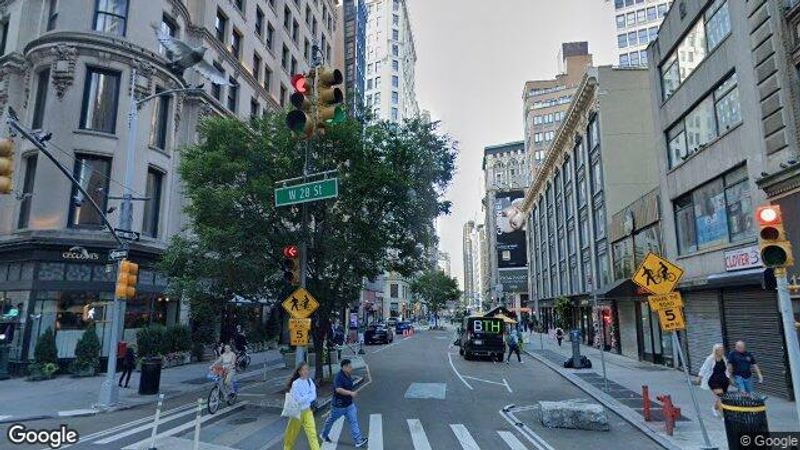
NoMad, short for North of Madison Square Park, sits roughly between 23rd and 30th Streets, bordered by Fifth Avenue to the east side of Sixth and Park Avenue South. Our team in New York treats it as the connective tissue between Midtown's commerce and the Flatiron District's residential calm, a compact enclave that has shed its former identity as an overlooked office corridor.
The neighborhood's modern character formed over the last fifteen years, as hotel-driven revitalization around the Ace Hotel and NoMad Hotel drew restaurants, private members' clubs, and boutique retail. What was once wholesale garment and jewelry trade space became a magnet for design-forward hospitality, giving the streets a polished, low-key sophistication distinct from SoHo's tourist density.
Architecturally, NoMad reads as a Beaux-Arts and early-20th-century commercial district, with cast-iron loft buildings and pre-war office towers now converted to residential use. Madison Square Park anchors the western edge, and the area's scale stays human — mid-rise, walkable, and quieter after dark than Midtown proper, which appeals directly to buyers seeking discretion.
The Housing Stock
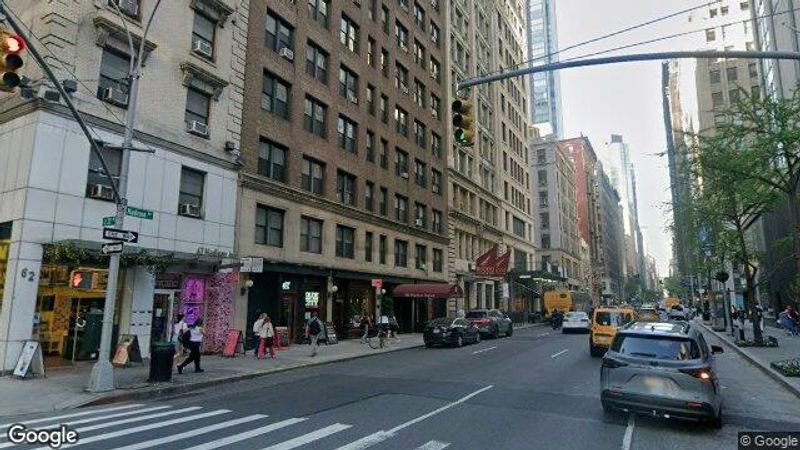
NoMad's residential inventory leans heavily on converted loft buildings and boutique new construction rather than prewar co-op stock common further uptown. Ceiling heights of 11 to 14 feet, oversized windows, and exposed steel or timber columns define many units, a direct legacy of the neighborhood's manufacturing and showroom past along Broadway and Fifth Avenue.
Notable buildings include the Ritz-Carlton NoMad at 250 Fifth Avenue, offering full-service condominium residences above the hotel, and 10 Madison Square West by architect Bjarke Ingels' firm BIG, known for its faceted glass facade and sculptural terraces. Older conversions like 1181 Broadway and buildings along West 28th and West 29th Streets offer raw loft character at comparatively accessible price points.
Unit mix skews toward one- and two-bedroom lofts and larger convertible spaces rather than studios, appealing to buyers wanting scale over density. True prewar co-ops are scarce here; most transactions involve condominiums, which simplifies eligibility for international buyers working through our licensed brokerage network and typically move faster to closing.
Prices and Rents
Pricing in NoMad in 2026 sits between Flatiron and Midtown South, reflecting strong demand for loft-style condos without Tribeca-level scarcity pricing. Approximate figures, subject to market conditions, put one-bedroom condos in the $1.1M to $1.7M range and two-bedrooms from $2M to $3.5M, with penthouse and full-floor units at 10 Madison Square West exceeding that considerably.
Rental demand remains robust given proximity to Midtown employers and NYU's downtown campuses. Studios generally rent from $3,200 to $4,200 monthly, while two-bedroom lofts range $6,500 to $9,500, with hotel-branded residences and full-service buildings commanding premiums for concierge, gym, and rooftop access.
| Unit Type | Sale Price Range | Monthly Rent Range | Typical Building Type |
|---|---|---|---|
| Studio | $650K – $900K | $3,200 – $4,200 | Loft conversion |
| 1-Bedroom | $1.1M – $1.7M | $4,300 – $5,800 | Condo / loft |
| 2-Bedroom | $2.0M – $3.5M | $6,500 – $9,500 | New construction / loft |
| 3-Bedroom+ | $4M – $8M+ | $11,000 – $18,000 | Full-service condo |
| Penthouse | $8M+ | $20,000+ | Boutique tower |
NoMad approximate pricing by unit type (2026, subject to market conditions)
Compared with Flatiron or Chelsea, NoMad offers roughly 5 to 10% pricing relief on comparable square footage while sitting closer to major transit hubs. Buyers should expect common charges in full-service buildings to run higher than converted lofts, given amenity staffing at properties like the Ritz-Carlton residences.
Daily Life and Transit
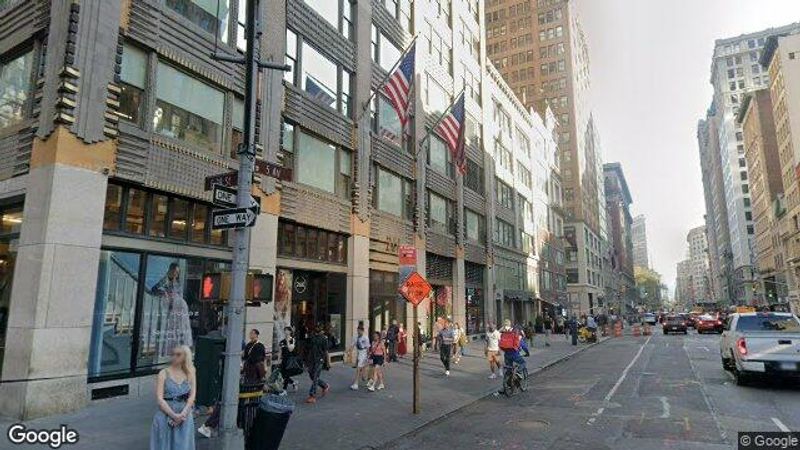
NoMad's transit access is among the strongest in Manhattan, with the 28th Street stations on the 6 and R/W lines, plus the N/Q/R/W and 6 at 23rd Street, putting residents within a 15-minute ride of Midtown, Union Square, or Wall Street. The PATH at 33rd Street and Herald Square is also within walking distance for New Jersey commuters.
Daily needs are well served: Eataly and Whole Foods sit just west near Madison Square Park, and Trader Joe's on Sixth Avenue serves the southern blocks. Madison Square Park itself provides the neighborhood's green space, hosting the Shake Shack flagship and seasonal art installations, while Bryant Park lies a short walk north.
| Amenity/Line | Access Point | Approx. Walk/Ride Time | Notes |
|---|---|---|---|
| 6 Train | 28th St / 23rd St | 0–5 min walk | Direct to Midtown, Downtown |
| N/Q/R/W | 28th St / 23rd St | 0–5 min walk | Herald Square, Union Sq access |
| PATH Train | 33rd St Station | 10–12 min walk | New Jersey commuter link |
| Madison Square Park | Fifth Ave & 23rd St | 0–8 min walk | Primary green space |
| Whole Foods / Eataly | 23rd St corridor | 5–10 min walk | Core grocery/food access |
NoMad transit and lifestyle access
Schooling options are limited within NoMad itself, as the area is predominantly commercial-residential rather than family-oriented; most families look toward Gramercy or Flatiron zoned schools nearby. This makes NoMad better suited to professionals and couples than families with school-age children, a point our team consistently raises with relocating buyers.
Final Thoughts
NoMad suits buyers who want loft-scale living with hotel-grade amenities and rapid transit access, without committing to the density of Midtown or the tourist churn of SoHo. It particularly appeals to professionals who value discretion, design, and walkability to both Midtown offices and downtown creative districts.
It is less suited to families needing established school zones or buyers seeking classic prewar co-op character, since the neighborhood's stock is overwhelmingly condominium and loft-based. Those priorities are better met in Gramercy or the Upper West Side.
For international buyers prioritizing liquidity, amenity quality, and transit convenience, NoMad remains one of Manhattan's more balanced 2026 opportunities. Our team in New York recommends touring both converted lofts and full-service towers before deciding, since the price-per-square-foot gap between them is often larger than expected.
Reinvent NY provides business consulting, operational support, and coordination services. Real estate services are provided through licensed professionals and applicable brokerage relationships. This article is for informational purposes only and does not constitute legal or investment advice.
Nearby neighbourhoods: Roosevelt Island, SoHo, Tribeca. All Manhattan guides are indexed under New York neighbourhood guides.
This article is also available on our Japanese site.

Satoshi Onodera
Founder & CEO, Reinvent NY Inc.
Founded Reinvent NY in 2024. Providing relocation support from all over the world to America.
Ready to Get Started?
Our team in New York is ready to help with your visa, real estate, or relocation needs.
Schedule a ConsultationFrequently Asked Questions
What are the exact boundaries of NoMad?
NoMad generally runs from 23rd to 30th Streets, between Fifth Avenue and Park Avenue South, bordering Midtown South to the north and Flatiron to the south, though some brokers extend it slightly further east or west.
Is NoMad primarily condos or co-ops?
NoMad is overwhelmingly condominium stock, largely due to converted loft and commercial buildings. True prewar co-ops are rare, which simplifies purchasing for international buyers compared with co-op-heavy neighborhoods further uptown.
How does NoMad compare to Flatiron in price?
NoMad typically runs 5 to 10% below comparable Flatiron units, though approximate figures vary by building quality and amenities. Both neighborhoods share similar architectural stock and transit access.
What subway lines serve NoMad?
The 6, N, Q, R, and W trains all stop at 23rd and 28th Streets within NoMad, offering direct access to Midtown, Union Square, and Downtown Manhattan within roughly 15 minutes.
Is NoMad good for families?
Not particularly. NoMad lacks dedicated family-oriented schools and skews toward professionals and couples. Families typically look to adjacent Gramercy or Flatiron for better-zoned school access.
What is a landmark residential building in NoMad?
10 Madison Square West, designed by Bjarke Ingels' firm BIG, and the Ritz-Carlton NoMad residences at 250 Fifth Avenue are two of the neighborhood's most recognized full-service condominium buildings.
Are rents in NoMad rising in 2026?
Rental demand remains strong due to Midtown proximity and limited new supply. Approximate rents have trended upward modestly year over year, though figures remain subject to broader market conditions.
Real Estate Guides & Data
More guides
- Building a US Property Portfolio From Abroad
- The Property Data Room: Records That Transact
- Refinancing US Property: When the Numbers Say Move
- US Rental Income Tax for Non-Residents: Gross or Net
- The Second Property: From Owner to Portfolio
- Buying Short Sales: Discounts on the Lender's Clock
Related Articles
Murray Hill Manhattan Real Estate Guide 2026
What Murray Hill in Manhattan costs in 2026: the boundaries, the buildings and their ages, sale and rent ranges, and what a buyer should check before offering.
Gramercy Park NYC Guide 2026
An insider's guide to Gramercy Park real estate: buildings, prices, rents, transit, and lifestyle for international buyers considering Manhattan in 2026.
Flatiron District Real Estate Guide 2026
An expert 2026 guide to buying and renting in Flatiron District, Manhattan — buildings, prices, transit, and lifestyle for international buyers.
East Village Manhattan Real Estate Guide 2026
A 2026 buyer and renter guide to East Village, Manhattan: boundaries, housing stock, prices, transit, and who this neighborhood truly suits.