400 Fifth Avenue: A Tower With a Hotel Beneath It
400 Fifth Avenue is a tower with a hotel underneath it, at the quiet end of Fifth Avenue. Gwathmey Siegel's building at 36th Street sits near the Morgan Library, a short walk from the Empire State Building, with private condominium residences above a hotel operation.
It is the same model the branded towers on Central Park South sell at several times the price. Let's look at what it actually delivers.
1. What the Building Is
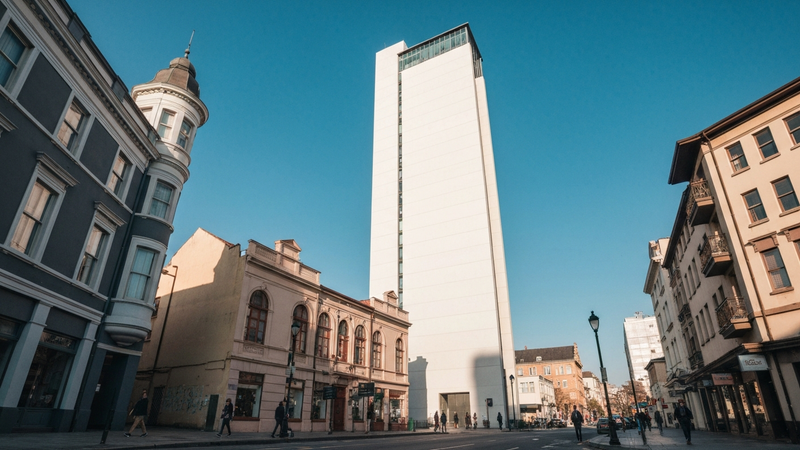
A slender tower in pale cladding on a stretch of Fifth Avenue that is neither the retail corridor to the north nor the residential districts to the south. The scale around it is low, which is why the tower reads as prominent despite not being especially tall by Midtown standards.
The internal arrangement is conventional for its type: hotel below, residences above, service infrastructure funded by an operation that runs continuously.
That is the commercial logic of every branded residence. A residential building alone could not justify staffing at hotel depth; a building already running a hotel can extend it upward at a marginal cost residents fund monthly.
| Attribute | Detail |
|---|---|
| Address | 400 Fifth Avenue, Manhattan |
| Architect | Gwathmey Siegel and Associates |
| Completed | around 2010 |
| Configuration | Hotel below, private residences above |
| District | Murray Hill and lower Fifth Avenue |
| Ownership | Condominium |
Building facts. Unit-level figures - size, exposure, charges, tax - must be obtained for the specific residence.
The location is on Google Maps here.
2. The Same Model at a Different Price
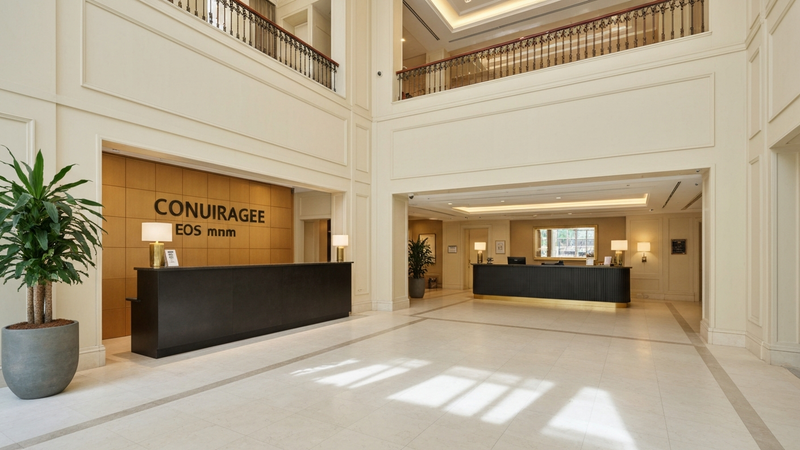
Branded and hotel-adjacent residences cluster around Central Park, where the land costs the most. Here the same arrangement sits forty blocks south, where the price per square foot has historically been materially lower.
What a buyer gives up is the park and the address recognition that comes with it. What they keep is the service model, which is the part that actually makes an apartment usable for an owner who is away for months.
For a purchaser weighing a branded building purely on service rather than on the name above the door, that trade is worth running properly rather than dismissing.
Our branded residences guide covers how these arrangements are structured and what to read in the agreement.
3. Where the Hotel Ends and the Residence Begins

The ordinary review first: audited financial statements, the reserve balance in dollars, assessment history and two years of board minutes.
Then the boundary. Which entrances and lifts serve residents, how deliveries and hotel traffic are handled, and precisely which costs the residential condominium bears as against the hotel.
Those allocations sit in documents rather than in conversation and determine a meaningful share of the monthly figure. Ask your attorney to identify them explicitly.
Our building diligence guide sets out the full document list and what each reveals.
4. Buying Here as an Overseas Purchaser

Straightforward as a condominium: no board approval vote, non-resident and entity ownership accepted, subletting governed by written building rules rather than by a board's discretion.
Mansion tax applies from $1 million on the whole price, reaching 2.25% between $5 and $10 million, paid by the buyer at closing. Obtain common charges and property tax for the specific unit.
Settle ownership structure before contract; US estate tax reaches non-resident owners above a $60,000 exemption on US-situs assets. See our estate tax guide and buying from overseas guide.
The district on the ground
Murray Hill and lower Fifth Avenue form a working Midtown district rather than a quiet residential one. Offices, restaurants and transport in every direction, with the Morgan Library and Bryant Park within a short walk.
Whether that suits you depends on use. For an apartment occupied part of the year by someone who wants Midtown at the door it works well; for a household with children a quieter address usually serves better.
Letting an apartment in a hotel building
Buildings with a hotel component frequently appear to offer flexible short-stay arrangements, but New York prohibits entire-unit stays under thirty days with the owner absent.
Any income plan must therefore be a conventional lease. Read the house rules for the minimum term before assuming anything, and confirm what the hotel relationship does and does not permit.
Comparables in a hotel-adjacent building
Closed prices are public record in New York. Where the residential component is modest, extend the comparison to other hotel-adjacent condominiums in Midtown rather than relying only on sales within the building.
Adjust for floor, exposure and how much service is included in the charge rather than billed separately. Our negotiation guide covers the method.
Final Thoughts: Service Without the Park Premium

The service model here is the same one sold at a considerable premium a few miles north, and the difference in price reflects the address rather than the arrangement. For a buyer who wants a staffed building for an apartment used part of the year, and who does not need Central Park at the window, that is a rational trade rather than a compromise. Read the cost allocation, model the monthly figure, and the decision is straightforward.
We cover Midtown on Satoshi Onodera's YouTube channel and on Instagram. If a residence here is in view, talk to our team and we will obtain the financials and the allocation first. Real estate brokerage services are provided through licensed professionals.
A note on financing for a buyer abroad. Foreign national mortgages require a larger deposit and a longer underwriting period than domestic ones, and lenders assess buildings with a hotel component more carefully than purely residential ones.
Confirm early that your lender is comfortable with the structure itself. That question takes a day to answer in advance and weeks to resolve after a contract is signed.
One further point on how Midtown districts differ from residential ones at resale. A working district draws buyers who want proximity to offices and transport; a residential district draws households. The two groups behave differently through a cycle, and the first is more sensitive to what happens in the office market.
That is worth knowing rather than worrying about. It argues for buying here on use rather than on speculation, and for weighing the monthly carrying cost more heavily than the eventual exit.
One point applies to every purchase of this kind made from another country. The document work — financial statements, reserve balance, assessment history, board minutes and the governing agreements — can be completed in full before anyone travels, and it is what actually determines whether a building is sound rather than merely attractive.
The physical inspection is the only part requiring presence, and even that runs as a live walkthrough with dimensions and light conditions recorded on camera rather than described.
Reinvent NY provides business consulting, operational support, and coordination services. Legal advice and immigration filings are handled by independent licensed attorneys. Real estate services are provided through licensed professionals and applicable brokerage relationships. This article is for informational purposes only and does not constitute legal or investment advice.
More buildings worth knowing: 100 Eleventh Avenue, 111 West 57th Street, 130 William. The full set is indexed under New York building profiles.

Satoshi Onodera
Founder & CEO, Reinvent NY Inc.
Founded Reinvent NY in 2024. Providing relocation support from all over the world to America.
Ready to Get Started?
Our team in New York is ready to help with your visa, real estate, or relocation needs.
Schedule a ConsultationFrequently Asked Questions
Where is 400 Fifth Avenue?
At Fifth Avenue and 36th Street, near the Morgan Library and a short walk from the Empire State Building. The location is on [Google Maps](https://maps.google.com/?q=400+Fifth+Avenue+New+York).
Who designed it?
Gwathmey Siegel and Associates, with the tower completed around 2010.
How is the building arranged?
A hotel occupies the lower portion and private condominium residences sit above it, which is the standard branded-residence configuration.
What does the hotel provide residents?
Service infrastructure that a purely residential building of the same size could not fund. What residents may draw on, and at what cost, is set out in the condominium documents.
Is it a condominium?
Yes. There is no board approval vote, and non-resident and entity ownership are generally accepted.
What is the district like?
Murray Hill and the Morgan Library sit to the east, Koreatown and the Empire State Building to the south and west. It is a working Midtown district rather than a quiet residential one.
What should I confirm first?
How hotel and residential costs are allocated, the reserve balance, assessment history, board minutes, and the actual monthly charges and property tax for the specific residence.
Real Estate Guides & Data
More guides
- Commercial vs Residential: Two Investment Grammars
- Cost Segregation: Accelerating US Property Depreciation
- Divorce and NY Real Estate: Dividing the Apartment
- Exit Planning Five Years Out: Selling Starts Early
- Furnished and Corporate Rentals: The 30-Day-Plus Market
- How to Hold US Property: Personal, LLC or Corporation
Related Articles
Credit Cards for Newcomers to the US: No SSN Needed
How new arrivals get a first US credit card without a Social Security number or credit history, which issuers accept ITINs.
One Sutton Place South: Candela on the East River
One Sutton Place South is Rosario Candela's 1927 cooperative with a private garden on the East River. What it is, and how a buyer should read it.
NYC Short-Term Rental Rules 2026: What Is Legal
New York City bans most stays under 30 days unless the host registers and stays present. What Local Law 18 permits, what it ended, and the legal alternatives.
The Osborne: An 1885 Fortress Opposite Carnegie Hall
The Osborne has stood on 57th Street since 1885, built with walls thick enough to survive the supertalls around it. What it is, and how to read it.