One Sutton Place South: Candela on the East River
Sutton Place is a residential enclave that Midtown grew around without absorbing. One Sutton Place South, completed in 1927 to Rosario Candela's design, sits at the eastern end of 57th Street on the East River with a garden between the building and the water.
It is Candela at the height of his practice, and it is a cooperative. Let's take both.
1. What the Building Is

A 1927 building by the architect whose name still appears in listings a century later. Candela's plans are the reason — formal room sequences, duplex layouts, and a separation between entertaining, private and service space that assumed a household running on staff.
The river position adds the second quality. Water cannot be built on, so the outlook east is fixed in a way an inland view never is, though what stands on the far bank in Queens can change.
The enclave itself is quiet. Sutton Place has no through traffic to speak of and almost no commercial frontage, which is unusual this close to Midtown.
| Attribute | Detail |
|---|---|
| Address | 1 Sutton Place South, Manhattan |
| Completed | 1927 |
| Architect | Rosario Candela |
| Position | East River, eastern end of 57th Street |
| Apartment type | Large, formal prewar plans including duplexes |
| Ownership form | Cooperative |
Building facts. Cooperative requirements are set by the board and are not published; establish them through your attorney and broker.
The location is on Google Maps here.
2. What a Candela Plan Offers
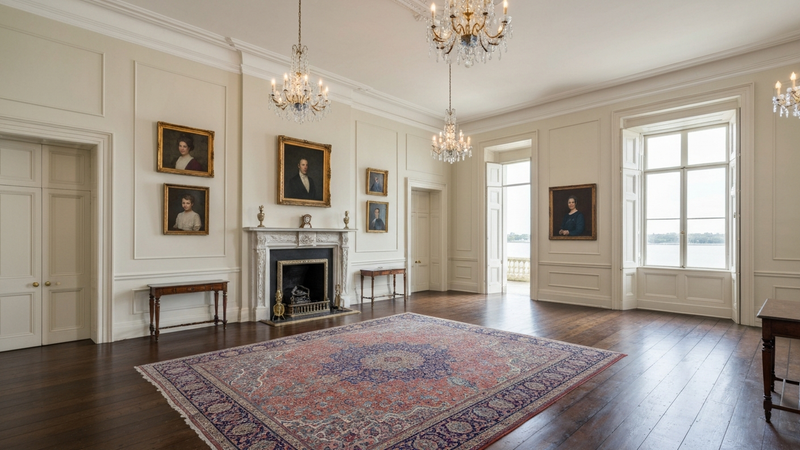
Room proportion and sequence. An apartment works as a series of spaces rather than as an open plan, with entertaining rooms, private rooms and service areas each in their own zone.
New construction almost never reproduces it, partly because floor plates differ and partly because contemporary buyers ask for open living space. Where a purchaser wants formal rooms, prewar is effectively the only source.
The corollary is that these apartments vary enormously between units. A comparable elsewhere in the building tells you very little, and the specific plan carries most of the value.
Our remote viewing guide covers how to establish what a specific apartment is when you cannot walk it yourself.
3. What the Cooperative Form Requires

A purchaser buys shares in a corporation and receives a proprietary lease. The board approves every purchaser and may decline without stating a reason, provided the decision is not made on a basis prohibited by fair housing law.
Buildings at this level commonly require substantial liquid assets remaining after closing, limit how much of the price may be financed, restrict entity and trust ownership, and constrain subletting.
None of that targets foreign purchasers as such. It describes requirements a buyer whose assets sit in another jurisdiction usually cannot document in the expected form.
Our board package guide sets out what an application contains, and our foreign buyer guide explains why that is the obstacle.
4. Where an International Buyer Should Look

Condominium, unless you hold a US tax residence and US-documented assets. No board approval vote, non-resident and entity ownership accepted, subletting governed by written rules rather than by discretion.
Mansion tax reaches 2.25% between $5 and $10 million, 3.25% above $10 million and 3.9% above $25 million, on the whole price and paid by the buyer at closing.
Settle ownership structure before contract; US estate tax reaches non-resident owners above a $60,000 exemption on US-situs assets. See our estate tax guide and luxury purchase guide.
Maintenance is not comparable to common charges
Cooperative maintenance includes the shareholder's proportion of the building's property tax and of any mortgage on the building itself, which is why the monthly figure looks high beside a condominium's.
Add property tax to the condominium figure and ask for the cooperative's underlying mortgage balance and term. Only then are the two numbers describing the same obligation.
The enclave and its limits
Sutton Place is quiet, low-traffic and almost entirely residential, which is its appeal. It is also further from a subway than most of Midtown, and the walk matters more in February than it does on a viewing day in May.
Establish the actual route and time to the nearest line rather than relying on a district-level claim. That single check changes how a buyer feels about the location more often than any other.
If you do hold US assets
A cooperative application becomes realistic once income, assets and tax filings are US-documented. Expect six to ten weeks more than a condominium closing and a package running to hundreds of pages.
Buyers in that position succeed regularly, and the price advantage over a comparable condominium is real. The obstacle was always documentary rather than personal.
Final Thoughts: Prewar Planning at the Water

Candela plans and a river frontage in a quiet enclave is a combination that cannot be built again, because neither the plans nor the sites are available. For a buyer able to satisfy a board it is among the best prewar propositions in Manhattan. For a buyer whose assets sit abroad it is one more case where the ownership form decides the search before the building ever enters the conversation.
We cover Sutton Place and Midtown East on Satoshi Onodera's YouTube channel and on Instagram. If you are buying from abroad, talk to our team and we will filter for buildings that will accept the purchase. Real estate brokerage services are provided through licensed professionals.
One practical note on how these apartments reach the market. In restrictive buildings a meaningful share of sales never appears on a portal, because sellers prefer a controlled process and purchasers arrive introduced.
A buyer relying on public listings therefore sees a fraction of what trades. Our off-market guide covers how that inventory is actually reached and why access runs through relationships rather than through search.
One further consideration for a buyer holding US assets who could satisfy a board. Prewar cooperatives of this standing trade at a meaningful discount to comparable condominiums, and the discount reflects the restrictions rather than the buildings.
Capturing it is rational for an owner intending to stay for decades and unwise for one who may need to sell quickly, because the same approval process will narrow the pool at exactly the wrong moment.
One point applies to every purchase of this kind made from another country. The document work — financial statements, reserve balance, assessment history, board minutes and the governing agreements — can be completed in full before anyone travels, and it is what actually determines whether a building is sound rather than merely attractive.
The physical inspection is the only part requiring presence, and even that runs as a live walkthrough with dimensions recorded on camera rather than described in an email.
Reinvent NY provides business consulting, operational support, and coordination services. Legal advice and immigration filings are handled by independent licensed attorneys. Real estate services are provided through licensed professionals and applicable brokerage relationships. This article is for informational purposes only and does not constitute legal or investment advice.
More buildings worth knowing: 100 Eleventh Avenue, 111 West 57th Street, 130 William. The full set is indexed under New York building profiles.

Satoshi Onodera
Founder & CEO, Reinvent NY Inc.
Founded Reinvent NY in 2024. Providing relocation support from all over the world to America.
Ready to Get Started?
Our team in New York is ready to help with your visa, real estate, or relocation needs.
Schedule a ConsultationFrequently Asked Questions
Where is One Sutton Place South?
At the eastern end of 57th Street on the East River, in the Sutton Place district. The location is on [Google Maps](https://maps.google.com/?q=1+Sutton+Place+South+New+York).
When was it built?
It was completed in 1927 to the design of Rosario Candela, the architect whose plans defined prewar luxury in Manhattan.
What is Sutton Place?
A small residential enclave on the East River in the East 50s, largely built in the 1920s and quiet by Midtown standards.
Is it a co-op or a condominium?
It is a cooperative. Purchasers buy shares in a corporation and receive a proprietary lease rather than a deed.
Can an overseas buyer purchase here?
In practice it is very difficult. Boards require verified financial disclosure, frequently restrict entity and trust ownership, and may decline without giving a reason.
What is a Candela plan?
Formal room sequences separating entertaining rooms from private ones and both from service areas, frequently with duplex layouts. New construction almost never reproduces it.
What should an international buyer look at instead?
Condominium buildings, where there is no board approval vote and non-resident and entity ownership are generally accepted.
Real Estate Guides & Data
More guides
- ACRIS and Public Records: Researching Any NYC Property
- Banking for US Property Owners: The Account Architecture
- Reading a Building Before You Buy: Reserves and Minutes
- Buying With a Partner: Titles, Agreements, Exits
- Closing Day in NYC: What Happens at the Table
- Condo or Co-op for an Overseas Buyer
Related Articles
Ground Lease Condos in NYC: What the Land Lease Means
Some New York condominiums sit on leased land. What a ground lease changes about monthly cost, financing and resale, and how to read it before you buy.
Credit Cards for Newcomers to the US: No SSN Needed
How new arrivals get a first US credit card without a Social Security number or credit history, which issuers accept ITINs.
400 Fifth Avenue: A Tower With a Hotel Beneath It
400 Fifth Avenue put residences above a hotel on Fifth Avenue at 36th Street. What the arrangement offers a buyer, and what to confirm first.
NYC Short-Term Rental Rules 2026: What Is Legal
New York City bans most stays under 30 days unless the host registers and stays present. What Local Law 18 permits, what it ended, and the legal alternatives.