100 Eleventh Avenue: Jean Nouvel's Window Wall
Jean Nouvel put roughly 1,650 differently angled panes into a single facade at 100 Eleventh Avenue. The building, completed in 2010 at 19th Street facing the Hudson, treats its curtain wall as a mosaic rather than a flat plane, and the surface reads differently as light moves across it through a day.
It is one of the buildings that made West Chelsea an architectural district rather than a warehouse one. Let's look at what it delivers and what a buyer should check.
1. What the Building Is
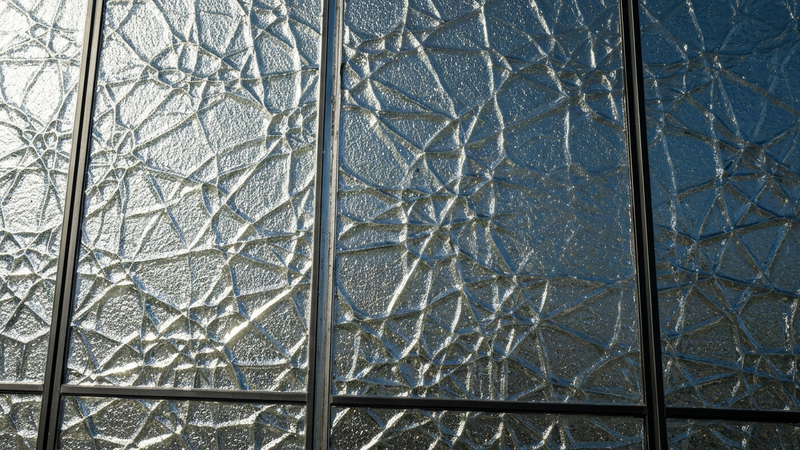
A curtain wall built as a composition. Each pane sits at its own angle and its own size, so the elevation never resolves into the grid that almost every other glass building in New York produces.
The effect is not only exterior. From inside, the window pattern is part of the room, framing the river in fragments rather than through a single sheet of glass — which buyers either find remarkable or find distracting.
Nouvel is a practice known for cultural buildings, and this reads as one. The facade cost money that a developer optimising purely for saleable area would not have spent.
| Attribute | Detail |
|---|---|
| Address | 100 Eleventh Avenue, Manhattan |
| District | West Chelsea, facing the Hudson |
| Architect | Jean Nouvel |
| Completed | 2010 |
| Facade | Roughly 1,650 panes at differing sizes and angles |
| Ownership | Condominium |
Building facts. Unit-level figures - size, exposure, charges, tax - must be obtained for the specific residence.
The location is on Google Maps here.
2. The River Position
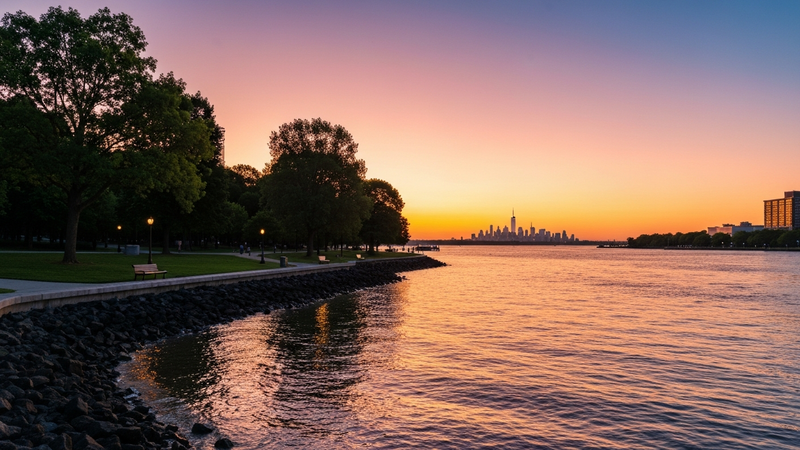
West of the building sits a highway and a waterfront park, which means the Hudson outlook is protected by land use rather than by luck. That is a materially more durable view than one over a low building that can be replaced.
Water views also behave differently from park views commercially. They are less scarce in New York than Central Park frontage but more scarce than a skyline outlook, and they hold value through cycles reasonably well.
Confirm what the specific apartment sees, from which rooms and at what floor. Within a single building the difference between a river-facing line and an inland one is substantial and correctly priced.
Our remote viewing guide covers how to verify an outlook properly when you cannot stand in the room yourself.
3. The Cost of a Bespoke Envelope
A facade assembled from irregular components is not a standard maintenance item with a standard cost. Sealing, replacement and access all cost more than they would on a conventional curtain wall, and the condominium funds that permanently.
In a building of moderate size, those costs divide across a moderate number of owners. That is precisely why the reserve balance and the assessment history matter more in architecturally ambitious buildings than in ordinary ones.
Ask what the reserve study says about the facade specifically, and ask what has already been spent on it since completion. The second answer is frequently more informative than the first.
Our building diligence guide sets out the full document list and how to read a reserve study.
4. Buying Here as an Overseas Purchaser

Straightforward as a condominium: no board approval vote, non-resident and entity ownership accepted, subletting governed by building rules rather than a board's discretion.
Mansion tax applies from $1 million on the whole price, reaching 2.25% between $5 and $10 million and 3.25% above $10 million, paid by the buyer at closing. Obtain common charges and property tax for the specific unit.
Settle ownership structure before contract; US estate tax reaches non-resident owners above a $60,000 exemption on US-situs assets. See our estate tax guide and buying from overseas guide.
Light, heat and a glass facade
Glass buildings in New York gain heat through a summer and lose it through a winter in ways masonry ones do not, and the cost of managing that appears in the monthly bill rather than at closing.
Ask about the glazing specification and about typical energy costs for the line you are considering. Owners in the building will know, and a managing agent can usually provide a range.
West Chelsea after the High Line
The district converted from warehouses and galleries to housing over roughly two decades. Heights are moderate, the gallery presence remains, and the waterfront park runs the length of the neighbourhood.
The stock is heavily condominium rather than cooperative because most of it is recent, which widens the inventory genuinely available to a non-resident buyer far beyond what older uptown neighbourhoods offer.
Buying an architect's building
A building by a practice of international standing carries a name that travels, which shortens the explanation at resale to a purchaser abroad. It also narrows the audience to those who specifically want it.
That is a deep but particular pool, and pricing in such buildings moves on interest rather than on volume. Our negotiation guide covers how to price when the obvious comparable set does not exist.
Final Thoughts: A Facade You Live Inside
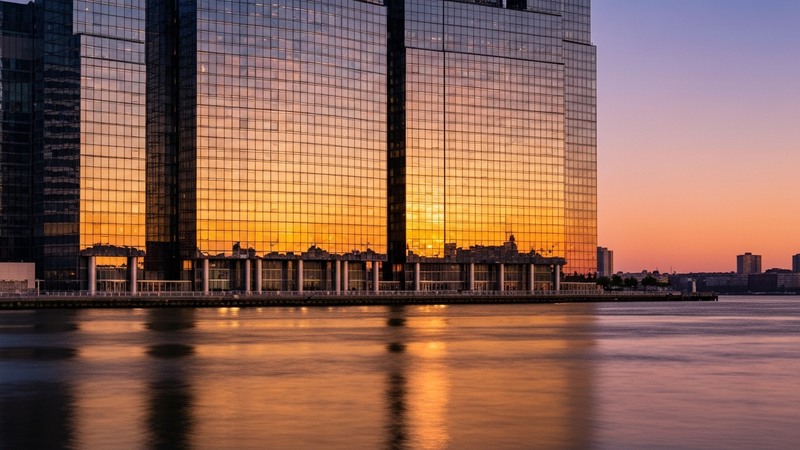
Most glass towers put a flat plane between the room and the view. This one puts a composition there, and that is either the reason to buy the building or the reason not to. The financial question is narrower and answerable: what a bespoke envelope costs to maintain, and whether the reserve is funded to do it without an assessment landing on the next owner.
We cover West Chelsea and the waterfront on Satoshi Onodera's YouTube channel and on Instagram. If a residence here is in view, talk to our team and we will obtain the financials and the facade history first. Real estate brokerage services are provided through licensed professionals.
One further point for a buyer comparing West Chelsea with the Hudson Yards towers a few blocks north. The newer district offers current construction, deeper amenity and a higher carrying cost; this one offers established fabric, gallery streets and buildings that have now operated long enough to have a record.
That record is worth a great deal to a purchaser buying from another country. A building with twelve years of financial statements can be underwritten with confidence; a projection cannot, however carefully it was prepared.
A note on financing for a buyer abroad. A foreign national mortgage in New York usually requires a larger deposit and a longer underwriting period than a domestic one, and lenders assess the building as well as the borrower. Begin that process before an apartment is identified rather than after an offer is accepted.
There is also a practical point about timing in a building of this size. Apartments appear intermittently rather than continuously, so a purchaser who wants a specific line may wait months for one. A buyer whose structure, financing and attorney are already in place can act on that window; one who is starting from nothing generally cannot.
Reinvent NY provides business consulting, operational support, and coordination services. Legal advice and immigration filings are handled by independent licensed attorneys. Real estate services are provided through licensed professionals and applicable brokerage relationships. This article is for informational purposes only and does not constitute legal or investment advice.
More buildings worth knowing: 111 West 57th Street, 130 William, 30 Park Place. The full set is indexed under New York building profiles.

Satoshi Onodera
Founder & CEO, Reinvent NY Inc.
Founded Reinvent NY in 2024. Providing relocation support from all over the world to America.
Ready to Get Started?
Our team in New York is ready to help with your visa, real estate, or relocation needs.
Schedule a ConsultationFrequently Asked Questions
Where is 100 Eleventh Avenue?
At 19th Street and Eleventh Avenue in West Chelsea, facing the Hudson River. The location is on [Google Maps](https://maps.google.com/?q=100+Eleventh+Avenue+New+York).
Who designed it?
Jean Nouvel, the French architect. The building was completed in 2010.
What is unusual about the facade?
It is composed of roughly 1,650 panes of differing size set at differing angles in a curtain wall, so the surface catches light differently across its whole area.
What does that do inside?
The window pattern is visible from within, which produces a distinctive light condition and a facade that reads as part of the room rather than as a flat glass plane.
Is it a condominium?
Yes. There is no board approval vote, and non-resident and entity ownership are generally accepted.
What is the river position worth?
The Hudson frontage here is protected by the highway and the waterfront park, which makes the outlook considerably more durable than an inland view.
What should I confirm first?
The reserve balance and how a bespoke facade is maintained, assessment history, board minutes, and the actual monthly charges and property tax for the specific residence.
Real Estate Guides & Data
More guides
- US Property Tax for Overseas Owners: Why Averages Mislead
- US Property Ownership Myths: What Buying Does Not Do
- 1031 Exchange: Deferring Gain on US Investment Property
- Fixtures, Furniture, and What Conveys: The Inclusion Rules
- Buying in Brooklyn: How the Borough Actually Prices
- Buying US Property From Overseas: The Full Sequence
Related Articles
Lantern House: Heatherwick's Bay Windows on the High Line
Heatherwick Studio's Lantern House straddles the High Line with bubbled bay windows in two towers. What it offers a buyer, and what to confirm first.
Rego Park NYC Real Estate Guide 2026
A 2026 buyer's guide to Rego Park, Queens: housing stock, prices, rents, transit, and daily life, prepared by our team in New York for international clients.
Forest Hills NYC Real Estate Guide 2026
An authoritative 2026 guide to Forest Hills, Queens: housing stock, prices, rents, transit, and schools for international buyers and renters.
Elmhurst Queens Real Estate Guide 2026
A 2026 guide to buying and renting in Elmhurst, Queens — housing stock, prices, transit, and schools, briefed by Reinvent NY's local team.