Forest Hills NYC Real Estate Guide 2026
What Forest Hills Actually Is — Boundaries, Character, How It Got Here
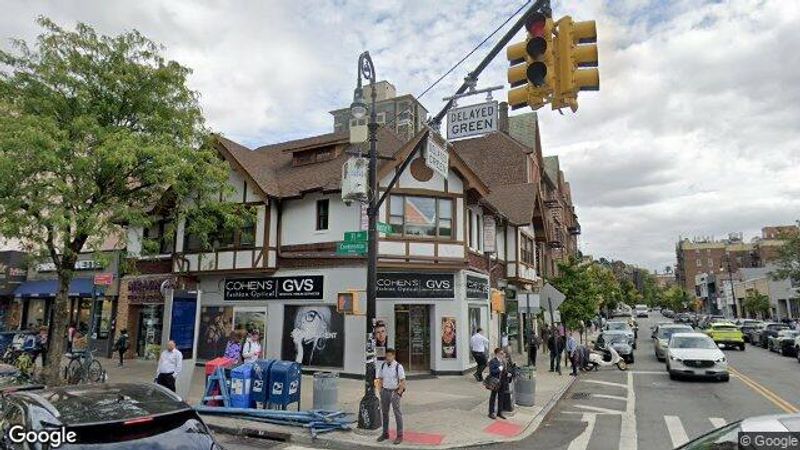
Forest Hills sits in central Queens, bordered roughly by Union Turnpike, Grand Central Parkway, Yellowstone Boulevard, and the Long Island Rail Road tracks near Metropolitan Avenue. Our team in New York often describes it to overseas clients as a leafy, low-rise enclave that feels closer to a European garden suburb than to Manhattan's density, despite sitting only twenty minutes from Midtown.
The neighborhood's identity traces to Forest Hills Gardens, a planned community developed in 1909 by the Sage Foundation Homes Company, designed by Grosvenor Atterbury with landscape work by Frederick Law Olmsted Jr. Tudor-style houses, curving lanes, and the Forest Hills Inn set a template of deliberate, orderly charm that still governs the area's reputation today.
Beyond the Gardens, Forest Hills proper is a mix of prewar cooperative buildings, postwar apartment towers, and single-family blocks near Forest Park. It draws professionals, longtime Queens families, and increasingly international buyers seeking stable value and quiet residential streets without sacrificing subway access to Manhattan.
The Housing Stock — Buildings, Architects, Eras, Unit Types
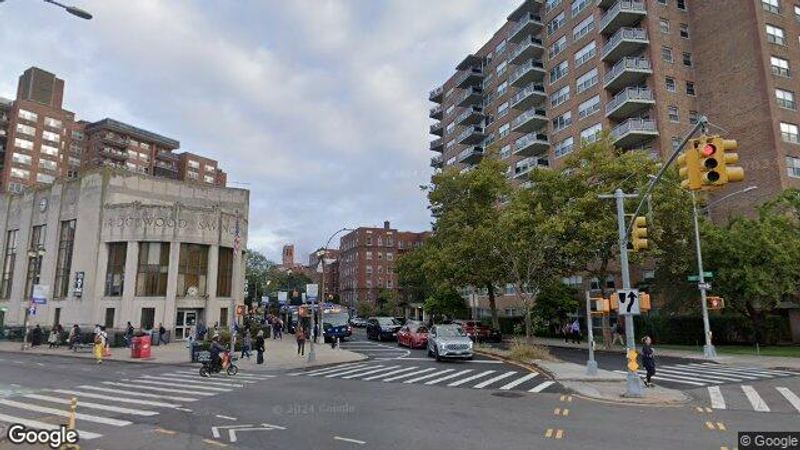
Forest Hills' housing spans nearly a century of New York apartment construction. Prewar cooperatives dominate along Continental Avenue and Queens Boulevard, many built in the 1920s and 1930s in Tudor and Renaissance Revival styles, offering high ceilings, sunrooms, and generous room counts rarely found at comparable price points in Manhattan.
Notable buildings include The Cavendish on Yellowstone Boulevard, the Windsor Park Cooperative, and various six-story walk-ups along Burns Street and Ascan Avenue. Forest Hills Gardens itself contains architect-designed single-family and semi-attached homes, some by Atterbury and Frederick Palmer, with slate roofs, half-timbering, and mature plantings that command premium resale value.
Postwar and newer construction fills gaps along Yellowstone Boulevard and Union Turnpike, including elevator co-ops and a handful of condominium conversions. Unit types range from studios to five-bedroom co-ops; condo inventory is limited, so buyers seeking fee-simple ownership without co-op board approval should expect fewer choices and longer search timelines.
Prices and Rents — Concrete Numbers
As of early 2026, co-op prices in Forest Hills typically range from $220,000 for a studio to $650,000–$950,000 for a two-bedroom in a well-maintained prewar building, with figures approximate and subject to market conditions. Forest Hills Gardens houses command significantly more, often $1.8 million to $3.5 million depending on lot size.
Condominiums, where available, price higher per square foot than co-ops, generally $700–$950 per square foot, reflecting fewer board restrictions and easier resale. Rentals remain active given proximity to transit, with one-bedrooms averaging $2,400–$2,900 monthly and two-bedrooms $3,000–$3,800, though prime blocks near Austin Street push above these ranges.
| Unit Type | Co-op Sale Price | Condo Sale Price | Monthly Rent |
|---|---|---|---|
| Studio | $180,000–$260,000 | $350,000–$450,000 | $1,900–$2,300 |
| 1-Bedroom | $300,000–$450,000 | $500,000–$650,000 | $2,400–$2,900 |
| 2-Bedroom | $650,000–$950,000 | $800,000–$1,100,000 | $3,000–$3,800 |
| 3-Bedroom | $900,000–$1,300,000 | $1,200,000–$1,600,000 | $4,000–$5,200 |
| Single-Family (Gardens) | $1,800,000–$3,500,000 | n/a | n/a |
Approximate Forest Hills Prices and Rents, Early 2026 (subject to market conditions)
Compared with Forest Hills' close neighbors, pricing sits meaningfully below Manhattan and below parts of Long Island City, while running higher than Rego Park or Kew Gardens. This positions the neighborhood as a value-conscious alternative for buyers wanting Manhattan proximity without Manhattan-scale carrying costs or Long Island City's newer, less established towers.
Daily Life and Transit
Forest Hills is served by the E and F trains at Forest Hills–71st Avenue, plus the M and R trains at 67th Avenue and 75th Avenue, delivering Midtown Manhattan in roughly 25–35 minutes. The Long Island Rail Road's Forest Hills station on the Main Line adds a faster option, reaching Penn Station in about 15 minutes during peak service.
Daily life centers on Austin Street, the neighborhood's retail spine, lined with cafes, restaurants, and shops between Continental Avenue and Ascan Avenue. Grocery options include Trader Joe's and several long-standing markets, while Forest Park, one of Queens' largest green spaces, offers golf, hiking trails, and an equestrian center along its western edge.
| Category | Detail | Approx. Time/Distance |
|---|---|---|
| Subway | E, F, M, R at 71st Ave / 67th Ave / 75th Ave | 25–35 min to Midtown |
| Rail | LIRR Forest Hills Station, Main Line | ~15 min to Penn Station |
| Green Space | Forest Park | Adjacent, western neighborhood edge |
| Retail Corridor | Austin Street | Central spine, 0.5 mile stretch |
| Schools | PS 144, PS 101, Forest Hills High School | Zoned, varying ratings |
Forest Hills Transit and Lifestyle Snapshot
Families weigh zoned schools including PS 101 and Forest Hills High School, alongside private options nearby. Commute times, park access, and the Austin Street corridor together make daily errands walkable, a rarity for outer-borough New York and a frequent selling point our team highlights to clients relocating from car-dependent cities.
Final Thoughts
Forest Hills suits buyers and renters prioritizing space, quiet, and transit access over ground-floor retail density or nightlife. Families drawn to prewar co-op layouts, tree-lined streets, and the architectural distinction of Forest Hills Gardens will find genuine long-term value here, particularly compared with equivalent Manhattan square footage.
It suits less well those wanting new condominium construction, doorman-heavy luxury towers, or a fast-paced urban social scene. Condo inventory remains scarce, co-op board approval processes can be lengthy, and nightlife options are modest relative to Manhattan or even nearby Astoria.
Our team in New York, working through our licensed brokerage network, regularly guides international clients through Forest Hills' co-op approval process and comparative neighborhood analysis. For buyers seeking stability over spectacle, this remains one of Queens' most defensible long-term residential choices in 2026.
Reinvent NY provides business consulting, operational support, and coordination services. Real estate services are provided through licensed professionals and applicable brokerage relationships. This article is for informational purposes only and does not constitute legal or investment advice.
Nearby neighbourhoods: Jackson Heights, Jamaica, Kew Gardens. All Queens guides are indexed under New York neighbourhood guides.

Satoshi Onodera
Founder & CEO, Reinvent NY Inc.
Founded Reinvent NY in 2024. Providing relocation support from all over the world to America.
Ready to Get Started?
Our team in New York is ready to help with your visa, real estate, or relocation needs.
Schedule a ConsultationFrequently Asked Questions
Is Forest Hills a good area for international buyers?
Yes. Forest Hills offers stable co-op values, strong transit access, and a quiet residential character. Our team frequently guides overseas clients through the co-op board approval process, which can require additional documentation compared with condo purchases elsewhere in New York.
What is the difference between Forest Hills and Forest Hills Gardens?
Forest Hills is the broader neighborhood; **Forest Hills Gardens** is a smaller planned enclave within it, built in 1909 with Tudor-style houses and curving lanes. Gardens properties command significantly higher prices than the surrounding apartment buildings.
How long is the commute to Manhattan from Forest Hills?
Subway commutes via the E or F train run roughly 25–35 minutes to Midtown. The Long Island Rail Road from Forest Hills station reaches Penn Station in about 15 minutes, making it one of the faster outer-borough commutes.
Are there condominiums available in Forest Hills, or mostly co-ops?
Co-ops dominate the market, particularly in prewar buildings along Continental Avenue and Queens Boulevard. Condominium inventory is limited, so buyers wanting fee-simple ownership without board approval should expect fewer options and potentially longer search timelines.
What do apartments in Forest Hills typically cost in 2026?
Approximate 2026 figures show co-op studios from $180,000–$260,000 and two-bedrooms from $650,000–$950,000, subject to market conditions. Single-family homes in Forest Hills Gardens range from $1.8 million to $3.5 million depending on lot size.
Is Forest Hills good for families with children?
Yes. The neighborhood has zoned schools including PS 101 and Forest Hills High School, plus access to Forest Park's trails and recreation. Walkable retail along Austin Street and quieter residential blocks make it appealing for families relocating internationally.
How does Forest Hills compare to Long Island City for buyers?
Forest Hills offers established prewar co-op stock and lower per-square-foot pricing than Long Island City's newer condo towers. Long Island City has more modern amenities and skyline views, while Forest Hills emphasizes quiet, tree-lined residential character.
Real Estate Guides & Data
Related Articles
Rego Park NYC Real Estate Guide 2026
A 2026 buyer's guide to Rego Park, Queens: housing stock, prices, rents, transit, and daily life, prepared by our team in New York for international clients.
100 Eleventh Avenue: Jean Nouvel's Window Wall
Jean Nouvel's 100 Eleventh Avenue set 1,650 differently angled panes into one facade. What that building offers a buyer, and what to confirm first.
Elmhurst Queens Real Estate Guide 2026
A 2026 guide to buying and renting in Elmhurst, Queens — housing stock, prices, transit, and schools, briefed by Reinvent NY's local team.
520 West 28th: Zaha Hadid's Only New York Building
Zaha Hadid's only residential building in New York sits on the High Line in West Chelsea. What it offers a buyer, and what to confirm before an offer.