520 West 28th: Zaha Hadid's Only New York Building
Zaha Hadid built once in New York, and this is it. The residential building at 520 West 28th Street fronts directly onto the High Line in West Chelsea, its curved metal facade organised in a chevron pattern that appears nowhere else in the city.
A building by a practice of that standing is a particular kind of asset, and a particular kind of obligation. Let's take both.
1. What the Building Is
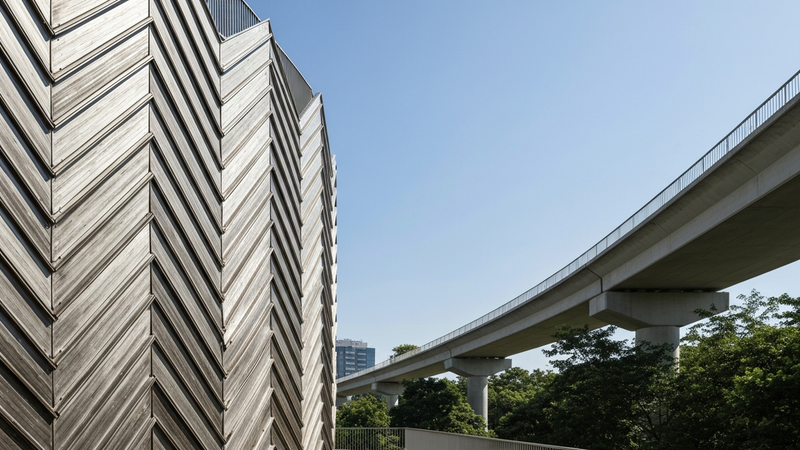
A small building with a facade that is genuinely structural rather than applied decoration. The curves continue inside, which means rooms are shaped rather than rectangular and the plans have very little in common with a conventional tower.
That is the point of it and also the constraint. Buyers who want the building want it specifically; buyers who want a conventional apartment will find the geometry works against furniture, art hanging and the ordinary assumptions of a floor plan.
It also means fabrication cost. A facade of this kind is expensive to build and expensive to maintain, and the condominium funds that maintenance permanently through charges and reserves.
| Attribute | Detail |
|---|---|
| Address | 520 West 28th Street, Manhattan |
| District | West Chelsea, on the High Line |
| Architect | Zaha Hadid Architects |
| Completed | 2017 |
| Facade | Curved metal panels in a chevron pattern |
| Ownership | Condominium |
Building facts. Unit-level figures - size, exposure, charges, tax - must be obtained for the specific residence.
The location is on Google Maps here, directly on the elevated park.
2. What Fronting the High Line Changes
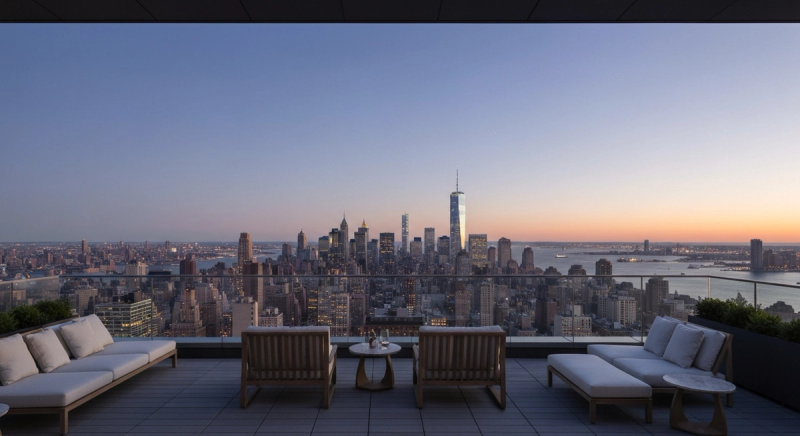
The park is permanently there, which fixes the outlook from that side in a way a neighbouring development cannot undo. That is genuine scarcity — the number of buildings fronting the High Line is finite and no construction adds to it.
The corresponding consideration is privacy. Lower floors face a public walkway with continuous foot traffic, and the exposure differs considerably between floors in a way that is obvious on site and invisible on a plan.
Confirm the specific apartment's relationship to the park: which rooms face it, at what height, and how the glazing and any screening are handled. This is one of the few things a floor plan genuinely cannot tell you.
Our remote viewing guide covers how to have that filmed and measured properly from another country.
3. Small Buildings and Their Arithmetic

A building with few apartments spreads its fixed costs — staffing, insurance, systems, facade maintenance — across few owners. That is why small architectural buildings frequently carry higher charges per square foot than larger towers with deeper amenity.
It also concentrates risk. A capital item that would be absorbed comfortably by three hundred owners is a material assessment when divided among a few dozen, which is why the reserve balance matters more here rather than less.
Ask specifically what the reserve study says about the facade, because a bespoke metal envelope is not a standard maintenance item with a standard cost.
Our building diligence guide sets out the documents to request and how to read a reserve study properly.
4. Buying Here as an Overseas Purchaser

Straightforward as a condominium: no board approval vote, non-resident and entity ownership accepted, subletting governed by building rules rather than a board's discretion.
Mansion tax applies from $1 million on the whole price, reaching 2.25% between $5 and $10 million and 3.25% above $10 million, paid by the buyer at closing. Obtain common charges and property tax for the specific unit.
Settle ownership structure before contract; US estate tax reaches non-resident owners above a $60,000 exemption on US-situs assets. See our estate tax guide and buying from overseas guide.
Architecture as a resale argument
A building by an internationally recognised practice carries a name that travels, which shortens the explanation required when selling to a purchaser in another country. That is a commercial quality rather than a sentimental one.
It also narrows the audience. The pool of buyers who specifically want a Hadid building is deep in absolute terms and small as a proportion of the market, which means pricing moves on interest rather than on volume.
Comparables when the units are not equivalent
Closed sale prices are public record in New York, but in a small building with shaped rooms and varying park exposure, a raw price per square foot comparison misleads badly.
Extend the set to other architect-led buildings in West Chelsea and downtown, adjusting for floor, outlook and condition. Our negotiation guide covers how to build a defensible comparison when the obvious one does not exist.
West Chelsea as a district
The neighbourhood converted from warehouses and galleries into a residential district over roughly two decades, and the High Line accelerated it. Building heights are moderate, the gallery presence remains, and the waterfront is a short walk west.
The stock here is heavily condominium rather than cooperative, because most of it was built or converted recently. For a non-resident buyer that widens what is actually purchasable considerably compared with older uptown neighbourhoods.
Final Thoughts: A Building You Choose Deliberately
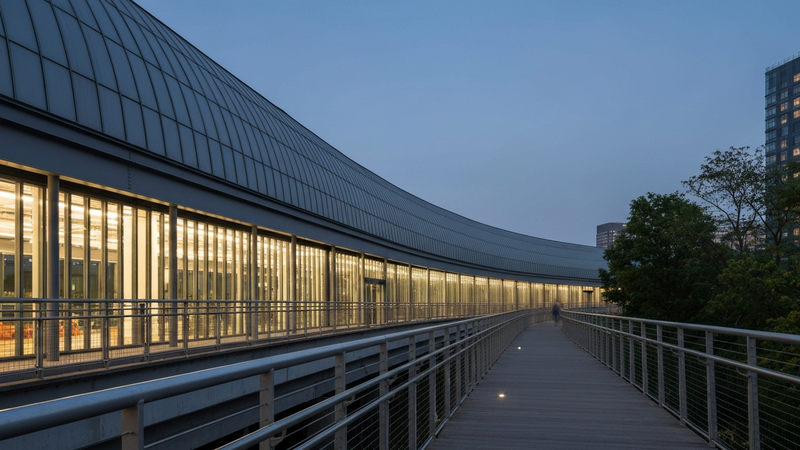
Nobody buys here by accident. The geometry, the facade and the park frontage make this a building a purchaser either wants specifically or does not want at all, and that is a cleaner position than it sounds. What it demands in return is attention to the reserve, because a bespoke envelope on a small building is the one cost that has no standard benchmark.
We cover West Chelsea and the High Line on Satoshi Onodera's YouTube channel and on Instagram. If a residence here is in view, talk to our team and we will obtain the financials and the facade position first. Real estate brokerage services are provided through licensed professionals.
One comparison worth running. Put this beside a conventional glass building of similar size and price nearby, and compare on three measures: charge per square foot, what the reserve study anticipates over ten years, and whether the rooms actually work for how you live.
The third question is the one buyers skip and regret. A remarkable building that does not accommodate your furniture, your art or your routine is a poor purchase regardless of who designed it, and that is only discoverable by standing in the rooms.
A note on financing for an overseas buyer. Small architectural buildings occasionally raise questions for lenders that large conventional ones do not, particularly around the number of units and the concentration of ownership. Confirm early that your lender is comfortable with the building rather than only with you.
Reinvent NY provides business consulting, operational support, and coordination services. Legal advice and immigration filings are handled by independent licensed attorneys. Real estate services are provided through licensed professionals and applicable brokerage relationships. This article is for informational purposes only and does not constitute legal or investment advice.
More buildings worth knowing: Aman New York Residences, Brooklyn Point, The Brooklyn Tower. The full set is indexed under New York building profiles.

Satoshi Onodera
Founder & CEO, Reinvent NY Inc.
Founded Reinvent NY in 2024. Providing relocation support from all over the world to America.
Ready to Get Started?
Our team in New York is ready to help with your visa, real estate, or relocation needs.
Schedule a ConsultationFrequently Asked Questions
Where is 520 West 28th Street?
In West Chelsea, directly on the High Line between Tenth and Eleventh Avenues. The location is on [Google Maps](https://maps.google.com/?q=520+West+28th+Street+New+York).
Who designed it?
Zaha Hadid Architects. It is the practice's only residential building in New York, completed in 2017.
What makes the building distinctive?
A curved, chevron-patterned metal facade and interiors organised around continuous curves rather than rectilinear rooms — a design language that appears in very few residential buildings anywhere.
Does it sit on the High Line?
Yes. The building fronts directly onto the elevated park, which is both the appeal and a consideration for privacy on lower floors.
Is it a condominium?
Yes. There is no board approval vote, and non-resident and entity ownership are generally accepted.
How many residences are there?
It is a small building by New York standards, which concentrates the fixed operating costs across relatively few owners.
What should I confirm first?
The reserve balance and how the curved facade is maintained, assessment history, board minutes, and the actual monthly charges and property tax for the specific residence.
Real Estate Guides & Data
More guides
- Buying a NYC Townhouse: One Building, All Yours
- US Property Tax for Overseas Owners: Why Averages Mislead
- US Property Ownership Myths: What Buying Does Not Do
- 1031 Exchange: Deferring Gain on US Investment Property
- Fixtures, Furniture, and What Conveys: The Inclusion Rules
- Buying in Brooklyn: How the Borough Actually Prices
Related Articles
Forest Hills NYC Real Estate Guide 2026
An authoritative 2026 guide to Forest Hills, Queens: housing stock, prices, rents, transit, and schools for international buyers and renters.
Elmhurst Queens Real Estate Guide 2026
A 2026 guide to buying and renting in Elmhurst, Queens — housing stock, prices, transit, and schools, briefed by Reinvent NY's local team.
Jackson Heights Real Estate Guide 2026
A 2026 buyer's guide to Jackson Heights, Queens: co-op prices, historic districts, transit, and rental yields for international investors and residents.
NYC Property Tax Appeal: How Certiorari Works
How a NYC property tax appeal works: assessment notices, Tax Commission deadlines by class, who files, what evidence matters, and what reductions are realistic.