Lantern House: Heatherwick's Bay Windows on the High Line
Lantern House puts rounded glass bays on a brick facade and straddles the High Line with them. Heatherwick Studio's first New York residential building sits at 515 West 18th Street as two volumes with the elevated park running between them.
The bays are the whole idea, and they change what the rooms are. Let's look at what that produces and what a buyer should establish.
1. What the Building Is
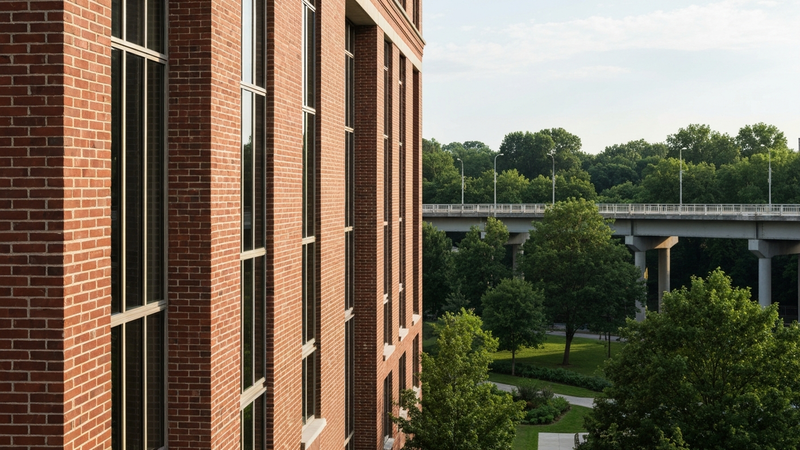
Brick rather than curtain wall, with projecting curved bays punched through it at regular intervals. That combination is unusual: the building reads as masonry from a distance and as glass at the window line.
Heatherwick Studio is better known for objects and public structures than for housing, and the building carries that sensibility. The bays are the design, not an applied feature, and they are visible from every angle.
Because the site sits on both sides of the elevated park, the building is arranged as two volumes rather than one. Orientation therefore varies more between apartments than the address suggests.
| Attribute | Detail |
|---|---|
| Address | 515 West 18th Street, Manhattan |
| District | West Chelsea, on the High Line |
| Architect | Heatherwick Studio |
| Form | Two volumes flanking the elevated park |
| Facade | Brick with projecting curved glass bays |
| Ownership | Condominium |
Building facts. Unit-level figures - size, exposure, charges, tax - must be obtained for the specific residence.
The location is on Google Maps here.
2. What a Bay Window Actually Changes

It adds usable space at the perimeter rather than merely glass. A projecting bay creates an alcove — somewhere to sit, to place a desk, to occupy — which a flat window plane does not.
It also produces light from three directions rather than one. That changes how a room behaves across a day in a way that is obvious standing in it and invisible on any floor plan.
The cost is maintenance and heat. Curved glazing is more expensive to service than flat, and any projecting glass element carries a thermal penalty that shows up in the monthly bill rather than at closing.
Ask what the reserve study says about the glazing and the facade specifically. Our building diligence guide covers how to read that properly.
3. Living on the Elevated Park
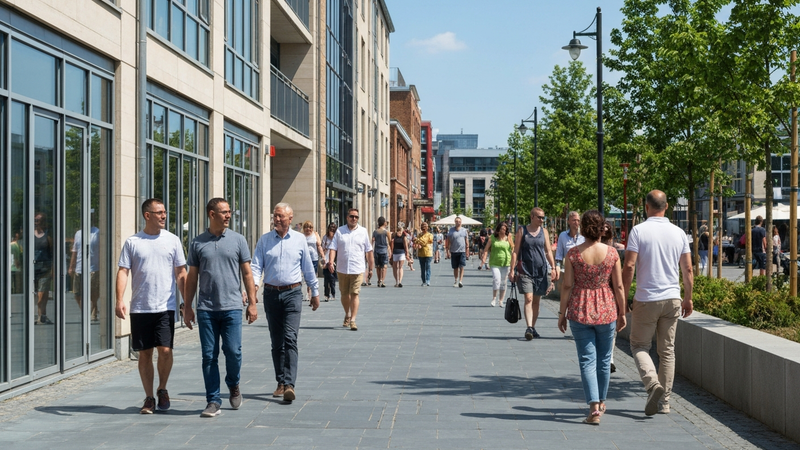
The park is permanent, which fixes the outlook on that side in a way no neighbouring development can undo. The number of buildings fronting the High Line is finite and construction cannot add to it.
The trade is privacy on lower floors. The walkway carries continuous foot traffic in daylight hours, and the exposure differs sharply between floors and between the two volumes of the building.
This is the single item most worth verifying in person or on camera. Confirm which rooms face the park, at what height, and how the glazing is treated.
Our remote viewing guide covers exactly what to ask an agent to film so that a walkthrough produces evidence rather than an impression.
4. Buying Here as an Overseas Purchaser

Straightforward as a condominium: no board approval vote, non-resident and entity ownership accepted, subletting governed by building rules rather than a board's discretion.
Mansion tax applies from $1 million on the whole price, reaching 2.25% between $5 and $10 million. Where units remain with the sponsor, the New York City and State transfer taxes are customarily shifted to the purchaser, roughly a further 1.8 to 2.0%.
Settle ownership structure before contract; US estate tax reaches non-resident owners above a $60,000 exemption on US-situs assets. See our estate tax guide and new development guide.
Sponsor position in a recent building
Establish how many units the sponsor still holds. While a significant block remains unsold the sponsor controls the board, sets budgets and reserve contributions, and can dispose of units in bulk at a discount that resets the comparables under your own resale.
Ask when board control transfers and what proportion of units has closed. Those two answers describe who is setting your monthly costs for the next few years.
First-year budgets are forecasts
The operating budget in an offering plan was prepared before the building operated, and forecasts in new buildings are frequently optimistic on staffing, insurance and energy.
Compare the charge per square foot against operating buildings of similar size in the same district rather than accepting the projection. Manhattan condominium operating expense runs a median $15.52 per square foot a year as a reference point.
Two volumes, two conditions
Because the building is arranged either side of the park, apartments differ not only by floor and line but by which volume they sit in. Orientation, outlook and the relationship to the walkway all change accordingly.
Treat the two as separate buildings when comparing prices, and ask for closed sales by volume rather than for the building as a whole. The pattern usually becomes visible immediately.
Final Thoughts: The Bays Are the Purchase
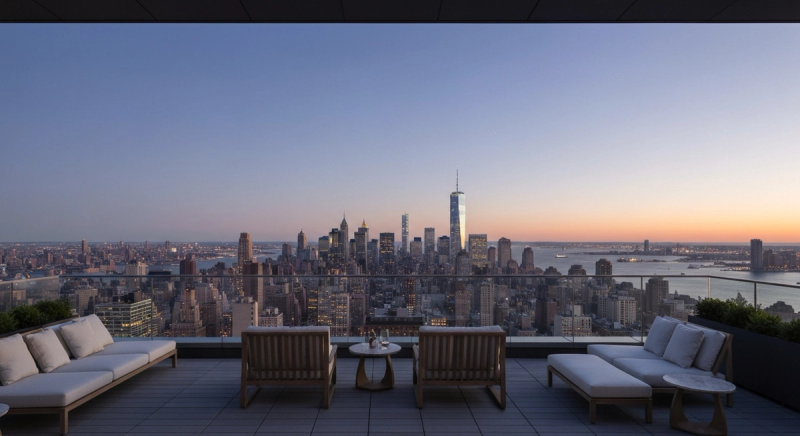
Strip away the architecture and this is a well-located West Chelsea condominium. Leave it in and it is a building where the rooms have alcoves, light arrives from three sides and the elevated park runs through the middle of the address. That is worth paying for if you will use those bays daily, and worth nothing if you will not — which is a question only a walkthrough answers.
We cover the High Line and West Chelsea on Satoshi Onodera's YouTube channel and on Instagram. If a residence here is in view, talk to our team and we will obtain the financials and the sponsor position first. Real estate brokerage services are provided through licensed professionals.
For a buyer weighing the architectural buildings in this district against each other, the comparison is unusually tractable. They sit within a few blocks, they are all condominium, and they are all fully open to a non-resident purchaser.
What separates them is how the rooms behave and what the facade costs to maintain. Compare on those two measures and the list narrows quickly, usually to one building rather than three.
A note on financing for a buyer abroad. Foreign national mortgages in New York require a larger deposit and a longer underwriting period than domestic ones, and the lender assesses the building as well as the borrower. Start that work before an apartment is chosen, because a seller's timetable will not wait for it.
One further point on the district. West Chelsea now holds several architecturally ambitious buildings within a few blocks of each other, all condominium and all open to non-resident purchasers. Viewing three of them in the same week is the fastest way to establish which kind of building you actually want to live in.
Reinvent NY provides business consulting, operational support, and coordination services. Legal advice and immigration filings are handled by independent licensed attorneys. Real estate services are provided through licensed professionals and applicable brokerage relationships. This article is for informational purposes only and does not constitute legal or investment advice.
More buildings worth knowing: One Manhattan Square, One Wall Street, One57. The full set is indexed under New York building profiles.

Satoshi Onodera
Founder & CEO, Reinvent NY Inc.
Founded Reinvent NY in 2024. Providing relocation support from all over the world to America.
Ready to Get Started?
Our team in New York is ready to help with your visa, real estate, or relocation needs.
Schedule a ConsultationFrequently Asked Questions
Where is Lantern House?
515 West 18th Street in West Chelsea, with two volumes flanking the High Line. The location is on [Google Maps](https://maps.google.com/?q=515+West+18th+Street+New+York).
Who designed it?
Heatherwick Studio, the London practice, in their first residential building in New York.
What are the bay windows?
Rounded, bubble-like window bays that project from the facade, giving many rooms a curved glass alcove rather than a flat window plane.
Why is the building in two parts?
The site sits on both sides of the High Line, so the building is arranged as two volumes with the elevated park passing between them.
Is it a condominium?
Yes. There is no board approval vote, and non-resident and entity ownership are generally accepted.
Does the High Line affect privacy?
On lower floors facing the park, yes — the walkway carries continuous foot traffic. Exposure differs considerably by floor and by orientation within the building.
What should I confirm first?
The reserve balance and how the bay glazing is maintained, assessment history, sponsor position, board minutes, and the actual charges for the specific residence.
Real Estate Guides & Data
More guides
- NYC Buying FAQ: Fifty Questions, Straight Answers
- Terraces and Outdoor Space: Pricing the Open Air
- Building a US Property Portfolio From Abroad
- The Property Data Room: Records That Transact
- Refinancing US Property: When the Numbers Say Move
- US Rental Income Tax for Non-Residents: Gross or Net
Related Articles
Kew Gardens Queens Real Estate Guide 2026
Our 2026 guide to Kew Gardens, Queens covers boundaries, co-ops and Tudor homes, prices and rents, transit, schools, and who this neighborhood truly suits.
Off-Market Properties NYC: How Quiet Deals Work
How off-market properties work in NYC: what quiet and whisper listings are, where the inventory comes from, what it does to price, and the red flags to avoid.
Rego Park NYC Real Estate Guide 2026
A 2026 buyer's guide to Rego Park, Queens: housing stock, prices, rents, transit, and daily life, prepared by our team in New York for international clients.
100 Eleventh Avenue: Jean Nouvel's Window Wall
Jean Nouvel's 100 Eleventh Avenue set 1,650 differently angled panes into one facade. What that building offers a buyer, and what to confirm first.