Off-Market Properties NYC: How Quiet Deals Work
Every year, a portion of New York's most expensive apartments and townhouses change hands without ever appearing on StreetEasy. No public asking price, no days-on-market counter, no open house line stretching down the block.
Most buyers hear off-market and translate it as discount. In practice it means something narrower and considerably more interesting: the seller chose to limit who sees the property, and that single decision cuts in both directions on price.
Let's examine what off-market actually means in New York, where this inventory comes from, what the absence of competition does to pricing, and how to pursue these deals without walking into a bad one.
What Off-Market Really Means in New York
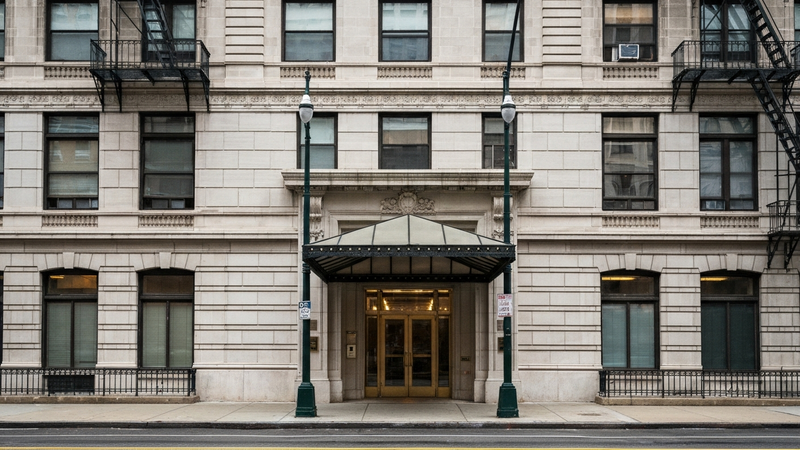
An off-market property is one that has never been entered into REBNY's Residential Listing Service (RLS), the syndication feed that pushes New York listings out to StreetEasy, brokerage websites, and the major portals. If a property is not in the RLS, public search tools have nothing to show you.
The label covers several arrangements that are not interchangeable. A quiet listing being shown to a short list of brokers is a very different animal from an owner who has simply never decided to sell.
| Arrangement | What it actually is | How a buyer reaches it |
|---|---|---|
| Quiet or pocket listing | Signed listing agreement, deliberately not syndicated | Broker-to-broker relationships |
| Whisper listing | No formal agreement; an agent floats a price to test appetite | A call from a covering agent |
| Pre-market | Will be published in weeks; shown early to a select group | Early access through your agent |
| Direct-to-owner | Owner is unrepresented and has not decided to sell | Targeted outreach and referrals |
Terminology varies by brokerage. Confirm in writing which arrangement applies before you spend money on diligence.
The practical takeaway is that off-market is a distribution decision, not a property category. The same apartment can be off-market on Monday and live on StreetEasy by Friday, at the same price, with nothing about the asset having changed.
Why Sellers Go Quiet, and What It Costs Them
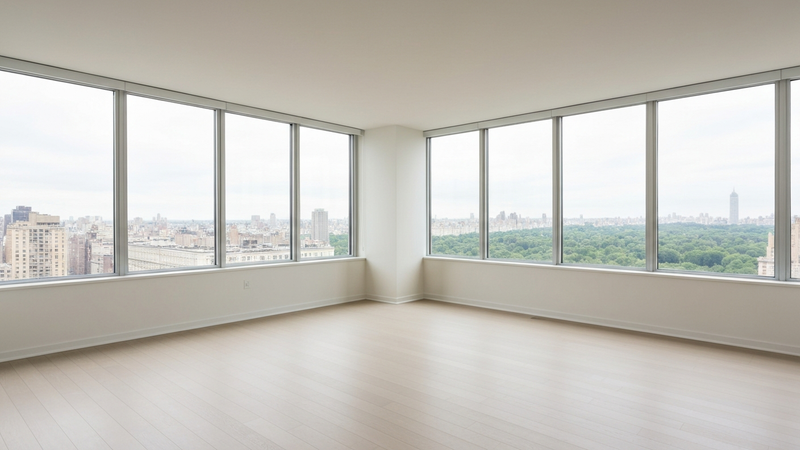
Privacy is the dominant motive. Public figures, executives in the middle of a transition, and families settling an estate frequently have concrete reasons not to publish floor plans, interior photographs, and a permanent price history of their home.
The second motive is price discovery on the seller's own terms. Listing at $12 million and cutting to $9.75 million four months later becomes a public record attached to the property. Testing $12 million privately leaves no trace at all.
The third is days-on-market stigma, which bites hardest at the luxury tier. A trophy apartment that has sat for 300 days invites every subsequent buyer to open well below ask, regardless of what the property is genuinely worth.
What the seller gives up
Exposure is what produces competing bids, and competing bids are what produce above-ask outcomes. A seller who shows to six buyers instead of six hundred has traded the possibility of a bidding war for control over the process.
Off-market activity is also heavily concentrated at the top. Practitioners generally describe it as a meaningful minority of $10 million-plus Manhattan transactions and close to irrelevant below roughly $2 million, where sellers need exposure to find a buyer at all.
That concentration is the most useful filter a buyer has. If the budget is $900,000 for a one-bedroom in Murray Hill, chasing off-market inventory is largely wasted effort. At that price point the supply is public, and the public supply is deep.
Where Off-Market Inventory Actually Comes From

Off-market deals do not materialize from nowhere. They arrive through a small number of identifiable channels, and each one rewards a different kind of preparation on the buyer's side.
Broker networks and estate sales
The largest channel is ordinary broker-to-broker conversation. An agent with a quiet listing calls the ten people most likely to have a matching buyer, which is why the composition of your agent's network matters far more here than their marketing budget.
Estate sales are the second. When a property moves through probate, the executor's mandate is often a clean, discreet, defensible sale rather than the absolute highest number, and the timeline is set by the estate rather than the market.
Sponsor units, expired listings, and direct outreach
New development sponsors sitting on their final few units frequently stop advertising them, because a visible unsold remainder undercuts pricing across the building. Those units get negotiated quietly with brokers who already have relationships inside the project.
Expired and withdrawn listings are the most accessible channel for an ordinary buyer. A property that came off the market in November at $3.2 million still has an owner who wanted to sell, and that owner is now eight months more realistic about price.
Unsolicited outreach to owners who have not listed has the worst hit rate and the highest cost per conversation. It works, but only at volume and only with an agent willing to do unglamorous work. Our guide to structuring a property search covers how to organize that effort.
The Economics, the Playbook, and the Red Flags

Here is what most buyers get wrong: off-market does not mean below market. Without competing bids there is no price signal, and a missing signal is not the same thing as a discount.
The absence of competition genuinely cuts both ways. It can let a prepared buyer close at a sensible number without being run up in a bidding war. It can equally let a seller anchor high with nothing in the room to contradict them.
The counterargument
However, some agents argue that off-market sellers are structurally more motivated, on the theory that anyone avoiding public exposure is already trading price for speed and discretion, so a discount is effectively built into the arrangement.
That does not hold as a general rule. Discretion-driven sellers at the top of the market tend to be the least price-sensitive owners in New York. Motivation varies deal by deal, which is precisely why comparable sales analysis matters more off-market, not less.
| Factor | On-market | Off-market |
|---|---|---|
| Price signal | Tested by open competition | Weak in both directions |
| Buyer competition | High; bidding wars common | Low or none |
| Seller exposure | Full market reach | Limited to a short list |
| Timeline control | Driven by market response | Set by the seller |
| Diligence pressure | Standard offer period | Compressed; must still be complete |
The trade is exposure for control. Buyers gain quiet and lose comparables; sellers gain privacy and lose price discovery.
The buyer's playbook
Four things separate buyers who actually close quiet deals from buyers who only hear about them afterward: a genuinely well-networked agent, documented proof of funds ready before the call comes, fast but complete diligence, and counsel engaged in advance.
Speed is the currency in these transactions, but speed is not the same as skipping steps. Never compress attorney review to appear nimble, and understand how your earnest money deposit is held and released before you sign anything.
Red flags worth walking away from
Treat any party who does not own the property and cannot show a signed contract giving them equitable interest as a serious warning sign. Assignment contracts, undisclosed markups, and pressure to sign before your attorney reviews the file are the standard pattern, and none of it belongs in a legitimate New York transaction.
Final Thoughts

Off-market inventory is real, and at the upper end of the New York market it represents a genuine share of what trades. It is not a secret discount rack, and any agent who sells it that way is selling access rather than analysis.
The buyers who win these deals are the ones who were ready before the phone rang: financing documented, attorney retained, and criteria narrow enough that a broker can match them in a single sentence.
Do the ordinary work extremely well and the quiet opportunities become reachable. Our guides on choosing an agent and making an offer are the right place to build that foundation.
Reinvent NY provides business consulting, operational support, and coordination services. Legal advice and immigration filings are handled by independent licensed attorneys. Real estate services are provided through licensed professionals and applicable brokerage relationships. This article is for informational purposes only and does not constitute legal or investment advice.

Satoshi Onodera
Founder & CEO, Reinvent NY Inc.
Founded Reinvent NY in 2024. Providing relocation support from all over the world to America.
Ready to Get Started?
Our team in New York is ready to help with your visa, real estate, or relocation needs.
Schedule a ConsultationFrequently Asked Questions
What does off-market mean in NYC real estate?
An off-market property has never been entered into REBNY's Residential Listing Service, so it does not appear on StreetEasy or the major portals. The term covers quiet listings with a signed agreement, informal whisper listings, pre-market showings ahead of a public launch, and properties owned by people who have not decided to sell.
Are off-market properties cheaper than listed ones?
Not reliably. Off-market means fewer competing bids, which removes upward pressure on price but also removes the price signal that competition creates. Some off-market deals close below comparable sales and some close above. The only way to judge is a comparable sales analysis, which matters more here than on a public listing.
How do I find off-market listings in New York?
Through an agent whose network reaches the brokerages active in your target buildings and neighborhoods. The practical channels are broker-to-broker referrals, estate sales, unsold sponsor units in new developments, expired or withdrawn listings, and direct outreach to owners. There is no public database of off-market inventory.
What price range is off-market activity concentrated in?
Practitioners generally describe it as a meaningful minority of transactions above roughly $10 million and close to irrelevant below roughly $2 million. Below that level sellers need broad exposure to find a buyer, so the inventory is almost entirely public and searching for quiet deals is not a productive use of time.
Do I still need an attorney on an off-market purchase?
Yes, and arguably more than on a listed deal. New York transactions are attorney-driven, and off-market timelines are compressed by design. Engage counsel before you make an offer so that contract review, title, and building financials can move quickly without anything being skipped.
What is a wholesaler and why is it a red flag?
A wholesaler puts a property under contract and then sells that contract to an end buyer at a markup rather than closing themselves. If a party offering you a property does not own it and cannot produce a signed contract establishing equitable interest, treat that as a reason to stop and have your attorney examine the chain before proceeding.
Why would a seller give up public exposure?
Usually privacy, price testing, or avoiding a public days-on-market record. Public figures and estates often have concrete reasons to avoid published photographs and price histories, and a seller testing an ambitious number privately leaves no visible trail of price cuts if the number does not work.
Does going off-market help a seller get a higher price?
Generally the opposite. Exposure produces competing bids and competing bids produce above-ask outcomes, so a seller showing to a short list is trading potential upside for control and discretion. Off-market makes sense when privacy or timing genuinely outweighs the last few percent of price.
Real Estate Guides & Data
More guides
- US Property in Retirement Planning: The Long Hold's End
- FIRPTA and Seller Costs: What a Foreign Owner Actually Nets
- NYC Sponsor Units: Buying Without Board Approval
- The 183-Day Rules: Tax Residency by the Calendar
- US Metro Comparison: Price, Rent, Yield and Growth
- Vacancy and Turnover: The Cost Between Tenants
Related Articles
Rent vs Buy in NYC: The 2026 Math
Rent vs buy in NYC for 2026: price-to-rent ratios, mansion tax and closing costs, a worked $1.5M example, and the breakeven horizon that decides the answer.
Kew Gardens Queens Real Estate Guide 2026
Our 2026 guide to Kew Gardens, Queens covers boundaries, co-ops and Tudor homes, prices and rents, transit, schools, and who this neighborhood truly suits.
Lantern House: Heatherwick's Bay Windows on the High Line
Heatherwick Studio's Lantern House straddles the High Line with bubbled bay windows in two towers. What it offers a buyer, and what to confirm first.
Rego Park NYC Real Estate Guide 2026
A 2026 buyer's guide to Rego Park, Queens: housing stock, prices, rents, transit, and daily life, prepared by our team in New York for international clients.