111 West 57th Street: Steinway Tower, and What It Costs
111 West 57th Street is the most slender skyscraper in the world, and it is built above the landmarked Steinway Hall. SHoP Architects' tapering tower, clad in terracotta and bronze, is a deliberate argument against the flat glass rising around it on Billionaires' Row.
This walk along Billionaires' Row shows the street these towers share. Let's look at what the building actually delivers and what it asks in return.
1. What the Building Is
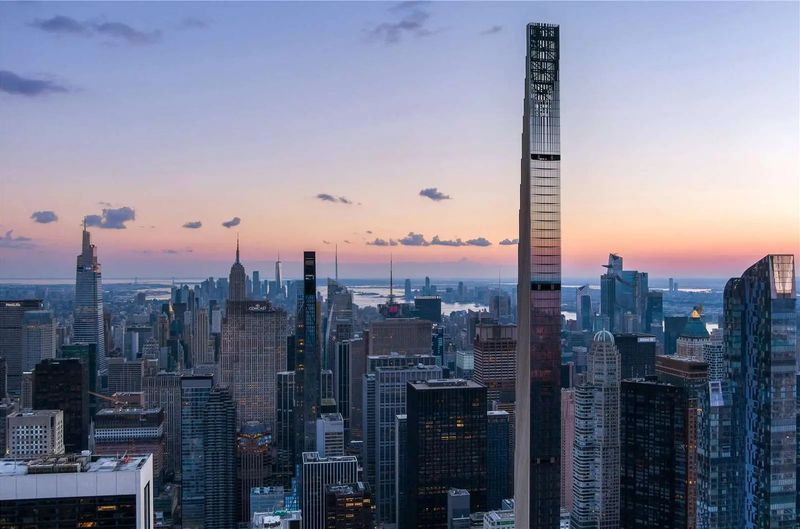
Two parts. The restored Steinway Hall at the base — the former Steinway & Sons showroom, a landmarked structure — and the new tower rising behind and above it, tapering as it climbs.
The cladding is the point of difference. Where One57 and Central Park Tower are glass, SHoP used terracotta and bronze in a vertical rhythm that reads as craft rather than curtain wall. That is an aesthetic choice with commercial consequences: it dates differently from glass, and it attracts a specific buyer.
| Attribute | Detail |
|---|---|
| Address | 111 West 57th Street, Manhattan |
| Architect | SHoP Architects |
| Distinction | Most slender skyscraper in the world by height-to-width ratio |
| Base building | Landmarked Steinway Hall, restored |
| Cladding | Terracotta and bronze |
| Ownership | Condominium |
| Board approval | Right of first refusal only |
Building facts. Unit-level figures — size, charges, tax, exposure — must be obtained for the specific residence.
The location is on Google Maps here, on the same block as Carnegie Hall.
2. What Extreme Slenderness Delivers
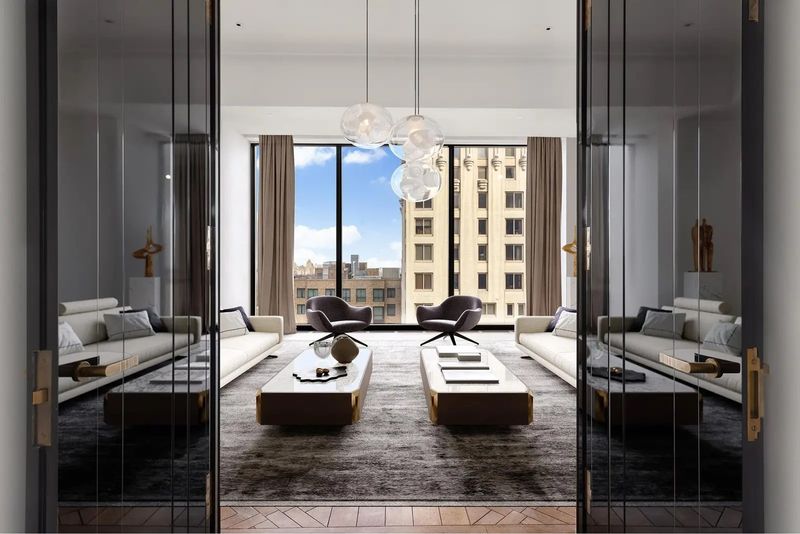
The narrow floor plate is the product. Most residences occupy a full floor, with exposures on several sides and light through the building rather than into one face of it. In a city where a single-aspect apartment is normal, that is genuinely different.
The engineering cost of achieving it is equally real. Towers at this proportion require structural and mechanical solutions that conventional buildings do not, and the long-term maintenance of those systems is funded by owners through charges and, when necessary, assessments.
That is a characteristic of the category rather than a defect. Our guide to evaluating large towers sets out what to establish in any building of this scale.
3. Where It Sits Among Its Neighbours

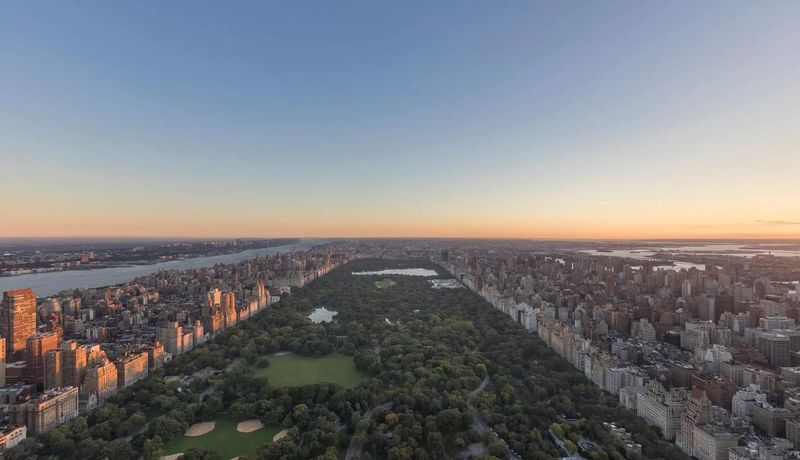
Billionaires' Row now contains several towers selling different arguments to the same buyer. One57 opened the street. Central Park Tower competes on height and scale. 220 Central Park South sells Robert A.M. Stern limestone. 111 West 57th sells craft, slenderness and full-floor living.
For a purchaser that variety is useful, because it means the choice is between propositions rather than between floors of the same building. It also means resale competition is specific: your buyer is someone who wants what this building offers, not merely a park view.
Closed sale prices are public record in New York, and the most useful comparables are inside the building itself. Our negotiation guide covers how to use them.
4. Buying Here as an Overseas Purchaser
Procedurally ordinary: a condominium, no board approval vote, non-resident and entity ownership accepted, subletting far freer than in a cooperative. The tax arithmetic is what needs attention.
Mansion tax reaches 2.25% between $5 and $10 million and 3.25% above $10 million, on the whole price and paid by the buyer. Where units are still sold by the sponsor, the New York City and State transfer taxes are customarily shifted onto the purchaser — roughly a further 1.8 to 2.0%.
Settle ownership structure before contract. See our new development guide, luxury purchase guide and estate tax guide.
What a landmarked base adds to the building
Incorporating Steinway Hall was a requirement and an asset. The restored landmark gives the tower a base with genuine history rather than a lobby carved out of a podium, and it fixes part of the building's identity in something that cannot be replicated next door.
It also brings obligations. Landmarked structures carry maintenance and approval requirements that ordinary buildings do not, and those costs sit with the condominium. Ask how the landmark portion is treated in the budget and the reserve study.
Full-floor living, and what it changes
A full-floor residence removes the shared corridor, the neighbour through the wall, and the compromise of a single aspect. Light arrives from several directions through the day rather than from one, which changes how the apartment is used far more than a floor plan suggests.
It also concentrates the cost. There are fewer apartments to share the building's fixed operating costs among, which is part of why charges in buildings of this type run well above the citywide median of $12.30 per square foot a year.
Final Thoughts: A Tower With a Position
111 West 57th is not competing to be the tallest or the widest-viewed building on its street. It is competing on how an apartment feels when the whole floor is yours and the light comes from every side, and on a facade that was made rather than assembled. For the buyer who values those things, nothing else on the row substitutes.
We cover 57th Street regularly on Satoshi Onodera's YouTube channel and on Instagram. If a floor here is in view, talk to our team and we will obtain the financials and comparables first. Real estate brokerage services are provided through licensed professionals.
For a buyer comparing this with the glass towers nearby, the honest test is what you want to look at for twenty years — the view out, or the building you are in. 111 West 57th is unusual on Billionaires' Row in giving a persuasive answer to the second question as well as the first.
A note on timing for buyers considering the sponsor's remaining inventory. Late in a sell-out, sponsors become considerably more willing to absorb the transfer taxes they customarily shift to purchasers, or to credit fees, because a recorded price reduction resets the comparable for every unit that follows and a closing credit does not.
That asymmetry is worth using. Ask for the concession in the form the sponsor can grant rather than the form you would prefer, and the same economic result frequently becomes available when a straight discount is refused.
The wider point applies across Billionaires' Row. These towers are now old enough to be judged on operating evidence rather than on renderings, and a decade of financial statements, minutes and assessment history exists for the earlier ones. Reading that record is what separates buying a known building from buying a reputation, and it is available to any purchaser who asks for it.
Reinvent NY provides business consulting, operational support, and coordination services. Legal advice and immigration filings are handled by independent licensed attorneys. Real estate services are provided through licensed professionals and applicable brokerage relationships. This article is for informational purposes only and does not constitute legal or investment advice.
More buildings worth knowing: 53 West 53rd, Mandarin Oriental Fifth Avenue Residences, One57. The full set is indexed under New York building profiles.

Satoshi Onodera
Founder & CEO, Reinvent NY Inc.
Founded Reinvent NY in 2024. Providing relocation support from all over the world to America.
Ready to Get Started?
Our team in New York is ready to help with your visa, real estate, or relocation needs.
Schedule a ConsultationFrequently Asked Questions
Where is 111 West 57th Street?
111 West 57th Street, on Billionaires' Row between Sixth and Seventh Avenues. The location is on [Google Maps](https://maps.google.com/?q=111+West+57th+Street+New+York).
Why is it called Steinway Tower?
The development incorporates the landmarked Steinway Hall, the former Steinway & Sons showroom building on the site, which was restored and integrated with the new tower.
Who designed it?
SHoP Architects, with a tapering form clad in terracotta and bronze — a deliberate contrast to the flat glass of its neighbours.
How slender is it?
It is widely described as the most slender skyscraper in the world by height-to-width ratio, which is the defining engineering fact about the building.
What does that mean for apartments?
Very narrow floor plates, so most residences occupy a full floor with exposures on multiple sides. It also means the engineering demands on structure and systems are exceptional.
Can an overseas buyer purchase here?
Yes. It is a condominium, so there is no board approval vote and non-resident and entity ownership are accepted.
What should I check before buying?
The reserve balance, assessment history, two years of board minutes, and the actual common charges and property tax for the specific unit.
Real Estate Guides & Data
More guides
- Buying Estate Sale Apartments: Probate, Price, Patience
- The Owner's US Tax Calendar: Deadlines by Month
- NYC Ground Lease Buildings: The Land Under the Price
- Hotel Condos and Serviced Apartments
- Reading a US Lease: The Clauses That Cost You
- Managing a US Rental From Abroad: Choosing the Manager
Related Articles
Tudor City Manhattan: 2026 Real Estate Guide
An authoritative 2026 guide to Tudor City, Manhattan: buildings, prices, rents, transit, and daily life for prospective buyers and renters.
Real Estate Attorney NYC: Why Every Deal Needs One
New York closings run through attorneys, not escrow. What a real estate attorney in NYC does for buyers and sellers, typical flat fees, and when to hire one.
Columbus Circle NYC Real Estate Guide 2026
Our team in New York breaks down Columbus Circle real estate for 2026: buildings, prices, rents, transit, and who this Manhattan address truly suits.
Central Park South NYC Real Estate Guide 2026
An expert 2026 guide to Central Park South real estate: buildings, prices, rents, transit, and daily life for international buyers and tenants.