Tudor City Manhattan: 2026 Real Estate Guide
What Tudor City Actually Is
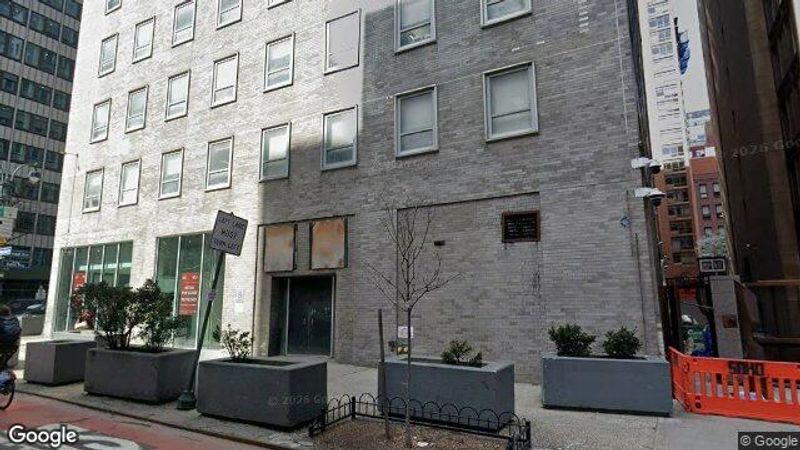
Tudor City is a self-contained enclave perched on a bluff above East 42nd Street, roughly bounded by First and Second Avenues, East 40th and East 43rd Streets, in Midtown East. Our team in New York often describes it as Manhattan's first residential skyscraper community, built in the late 1920s by the Fred F. French Company as a planned garden city for middle-class professionals working nearby.
The neighborhood's defining feature is its elevation and orientation: most buildings deliberately face inward, away from the East River and the former slaughterhouses and rail yards that once lined the waterfront, now the site of the United Nations. This gives Tudor City an unusually quiet, insulated feel despite sitting minutes from Grand Central and the UN complex.
Architecturally, the enclave is a cohesive collection of Tudor Revival brick towers with half-timbering, leaded glass, and stone carvings, arranged around two private parks. Its landmarked status protects this character, meaning buyers should expect limited exterior alteration rights but a stable, historically consistent streetscape that has changed remarkably little since the 1930s.
The Housing Stock
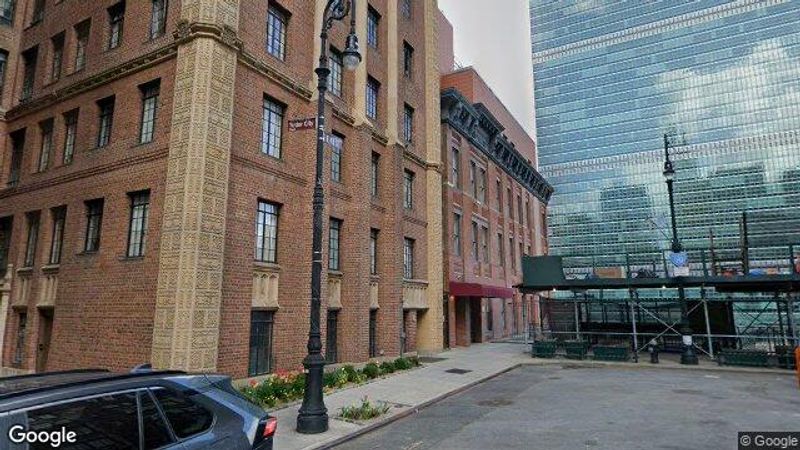
Tudor City comprises twelve buildings developed largely between 1927 and 1930, most still operating as cooperatives. Landmark structures include Tudor Tower and Hardwicke Hall on East 41st Street, Woodstock Tower, Prospect Tower, and Hatfield House, several rising over twenty stories with elevator service original to the buildings, later modernized.
Unit types skew toward efficient, pre-war layouts: studios and one-bedrooms dominate, many with the enclave's signature small footprints, herringbone floors, and casement windows. Larger two- and three-bedroom apartments exist but are less common, often found in Tudor Tower or Essex House, and typically require board approval given the co-op structure governing most sales.
A smaller number of rental buildings, including Hatfield House and Windsor Tower, offer flexibility for those who prefer not to pursue co-op board review. Renovation quality varies significantly unit to unit since individual owners have controlled interiors for decades, so our licensed brokerage network typically walks clients through several units before drawing conclusions about the building overall.
Prices and Rents
Pricing in Tudor City remains notably below comparable Midtown East co-op stock, largely because of building age, maintenance structures, and smaller average unit sizes. As of 2026, studio co-ops trade roughly between $250,000 and $420,000, while one-bedrooms range from approximately $400,000 to $650,000, figures that are approximate and subject to market conditions.
Two-bedroom co-ops, less plentiful, generally run from $700,000 to $1.1 million depending on line, floor, and park or river-adjacent light. Rentals, concentrated in the enclave's non-co-op buildings, offer a lower entry point relative to Midtown East broadly, appealing to tenants prioritizing quiet blocks and proximity to Grand Central over new-construction amenities.
| Unit Type | Sale Price Range | Monthly Maintenance/Common Charges | Monthly Rent Range |
|---|---|---|---|
| Studio | $250,000 - $420,000 | $900 - $1,300 | $2,300 - $2,900 |
| One-Bedroom | $400,000 - $650,000 | $1,100 - $1,600 | $3,000 - $3,800 |
| Two-Bedroom | $700,000 - $1,100,000 | $1,500 - $2,200 | $4,200 - $5,500 |
| Three-Bedroom (rare) | $1,200,000 - $1,800,000 | $2,000 - $2,800 | $6,000 - $7,500 |
Approximate Tudor City Sale and Rental Prices, 2026
Compared with Murray Hill or Turtle Bay, Tudor City delivers a meaningful discount per square foot, partly reflecting co-op flip taxes, board scrutiny, and financing restrictions many buildings impose, including limits on subletting. Buyers weighing this trade-off should have our licensed brokerage network confirm each building's specific financial and subletting policies before making an offer.
Daily Life and Transit
Tudor City sits within a short walk of the 4/5/6, 7, and S (shuttle) lines at Grand Central-42nd Street, putting Midtown, the Upper East Side, and Brooklyn within a 15 to 25 minute commute for most residents. The M15, M42, and M104 buses serve the immediate area, and pedestrian bridges lead directly into the enclave from 42nd Street.
Grocery options include a Morton Williams on East 42nd Street and additional markets along Second and Third Avenues, while daily errands are easily handled on foot given the neighborhood's compact scale. Families have access to public schools in District 2, and the enclave's two private parks, Tudor City Greens North and South, function as genuine neighborhood gathering spaces.
| Category | Details | Approx. Distance/Time |
|---|---|---|
| Subway | 4/5/6, 7, S at Grand Central-42nd St | 5-8 min walk |
| Bus | M15, M42, M104 | 2-5 min walk |
| Grocery | Morton Williams, 42nd St | 3-6 min walk |
| Parks | Tudor City Greens North & South | On-site |
| Landmark | United Nations Headquarters | 5-10 min walk |
Transit and Amenities Snapshot
For those working in Midtown or downtown financial districts, Tudor City offers one of Manhattan's shortest true commutes on paper, though residents note the walk down to street level via stairs or the pedestrian bridge adds a few extra minutes compared to flat Midtown blocks, a minor but real consideration for daily routines.
Final Thoughts
Tudor City suits buyers and renters who value quiet, architecturally distinctive housing stock, walkability to Grand Central, and pricing below typical Midtown East levels, while accepting smaller unit sizes and co-op board processes. It particularly appeals to professionals working in Midtown or at the UN who prioritize commute time over new-construction amenities.
It is less suited to buyers seeking doorman-heavy full-service luxury towers, large floor plates, or river views from every window, since most buildings face inward by design. Those requiring flexible short-term subletting or minimal board oversight should also consider the enclave's smaller rental stock rather than its dominant co-op inventory.
Our team in New York generally recommends Tudor City to clients who understand pre-war co-op dynamics and want long-term value in a historically protected, low-turnover neighborhood. For buyers newer to New York's co-op system, our licensed brokerage network can walk through board packages and building financials before any commitment is made.
Reinvent NY provides business consulting, operational support, and coordination services. Real estate services are provided through licensed professionals and applicable brokerage relationships. This article is for informational purposes only and does not constitute legal or investment advice.
Nearby neighbourhoods: Central Park South, Chelsea, Chinatown. The full set is indexed under New York neighbourhood guides.

Satoshi Onodera
Founder & CEO, Reinvent NY Inc.
Founded Reinvent NY in 2024. Providing relocation support from all over the world to America.
Ready to Get Started?
Our team in New York is ready to help with your visa, real estate, or relocation needs.
Schedule a ConsultationFrequently Asked Questions
Is Tudor City a co-op or condo neighborhood?
It is predominantly a co-op neighborhood, with twelve original buildings mostly operating under cooperative ownership. A few buildings function as rentals, but true condominium inventory is essentially nonexistent in Tudor City itself.
What subway lines serve Tudor City?
The 4, 5, 6, 7, and S shuttle trains at Grand Central-42nd Street are all within a 5 to 8 minute walk, making Tudor City one of Midtown's better-connected residential enclaves despite its elevated, secluded layout.
Are there river views in Tudor City?
Most Tudor City buildings deliberately face inward toward the two private parks rather than the East River, a design choice dating to the neighborhood's 1920s construction. River-facing units exist but are limited.
How much does a one-bedroom cost in Tudor City in 2026?
Approximate 2026 pricing places one-bedroom co-ops between $400,000 and $650,000, subject to market conditions, building, floor, and renovation quality. Rentals for comparable units run roughly $3,000 to $3,800 monthly.
Do Tudor City co-ops allow subletting?
Policies vary significantly by building, with some permitting limited subletting after a minimum ownership period and others restricting it heavily. Our licensed brokerage network reviews each building's specific bylaws before clients commit.
What are Tudor City Greens?
Tudor City Greens North and South are two private parks at the heart of the enclave, offering benches, plantings, and quiet gathering space. They are among Manhattan's earliest examples of planned residential green space.
Is Tudor City walkable to the United Nations?
Yes, the UN Headquarters sits approximately 5 to 10 minutes on foot from Tudor City, making the neighborhood historically popular among diplomatic and international professional residents working nearby.
Real Estate Guides & Data
Related Articles
Net Effective Rent in NYC: The Math Behind It
Net effective rent is not what you pay each month. How NYC free-rent concessions work, the renewal jump they hide, and what they signal to investors.
Aman New York Residences: The Crown Building, Reworked
Aman's New York residences occupy the landmarked Crown Building on Fifth Avenue. What the branded model delivers, and what to establish first.
Real Estate Attorney NYC: Why Every Deal Needs One
New York closings run through attorneys, not escrow. What a real estate attorney in NYC does for buyers and sellers, typical flat fees, and when to hire one.
111 West 57th Street: Steinway Tower, and What It Costs
Steinway Tower at 111 West 57th Street: the slenderest tower in the world, built above Steinway Hall, and what a residence in it costs to buy and to hold.