Chinatown Manhattan Real Estate Guide 2026
What Chinatown Actually Is — Boundaries, Character, and How It Got Here
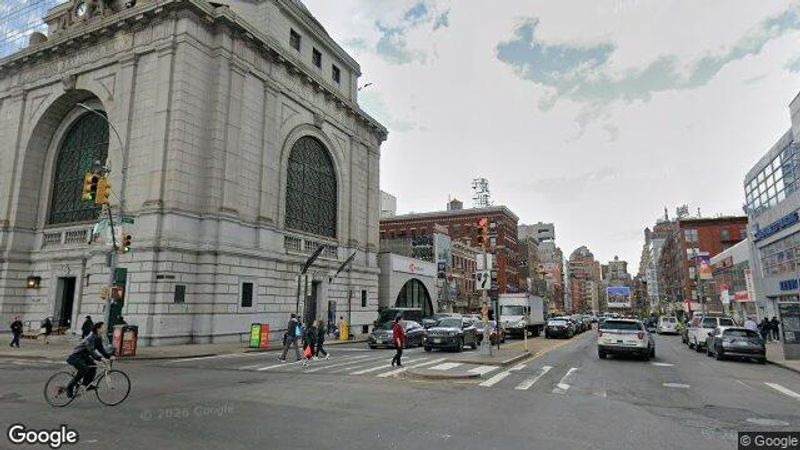
Manhattan's Chinatown sits below Canal Street, bounded roughly by Broadway to the west, the Bowery and East Broadway to the east, and Worth Street to the south, blending into Little Italy and the Lower East Side at its edges. Our team in New York treats these boundaries as fluid, since block-by-block character shifts quickly.
The neighborhood formed in the mid-19th century around Mott Street and Doyers Street, growing through waves of Cantonese, then Fujianese, immigration. Its street grid is older and narrower than most of Manhattan, predating the 1811 Commissioners' Plan in places, which explains the tight, irregular blocks near Chatham Square.
Today Chinatown retains a working, market-driven identity — produce stalls, herbal shops, family associations — alongside encroaching development pressure from SoHo and Tribeca. Our team in New York sees this tension as central to its investment case: authentic street life with rezoning potential at the margins, particularly near the Manhattan Bridge overpass and Canal Street corridor.
The Housing Stock — Buildings, Eras, and Unit Types
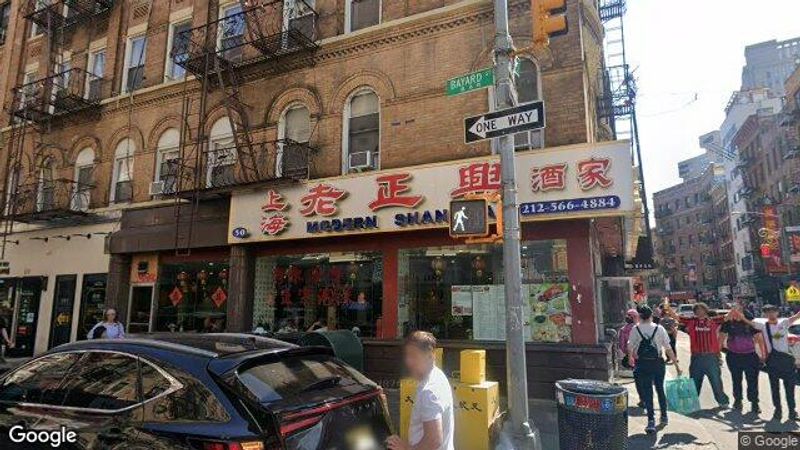
Chinatown's housing stock is dominated by pre-war tenement buildings, many dating to the 1880s-1910s, typically five to six stories of walk-up units on Mott, Mulberry, and Elizabeth Streets. Units run small — often 400 to 800 square feet — with railroad-style layouts, though many have been gut-renovated behind original brick facades.
Larger-scale development appears along Chrystie Street and near the East River, including Confucius Plaza, a 1976 Housing and Urban Development-era co-op tower at 33 Chrystie Street with over 700 units, offering elevator service and river or bridge views uncommon elsewhere in the neighborhood's low-rise fabric.
Newer boutique condo conversions have emerged near the Bowery and Grand Street, appealing to buyers wanting loft-style layouts with modern systems inside a historically zoned envelope. Our team in New York advises clients that inventory turns over slowly here; patience and a strong local network matter more than in faster-moving downtown submarkets.
Prices and Rents — What Things Actually Cost
Chinatown remains one of the more accessible submarkets in Lower Manhattan, though pricing has firmed considerably since 2023. Co-op units in older tenement buildings and at Confucius Plaza trade at a discount to condo product, while true condos near the Bowery command a premium tied to finishes and elevator access.
Rental demand stays strong given proximity to Tribeca, SoHo, and the Financial District, with studio and one-bedroom units turning over quickly. All figures below are approximate, sourced from our licensed brokerage network's transaction data, and subject to market conditions through 2026.
| Unit Type | Sale Price Range (USD) | Monthly Rent Range (USD) | Typical Building Era |
|---|---|---|---|
| Studio co-op | $350,000 – $550,000 | $2,300 – $2,900 | Pre-war tenement |
| One-bedroom condo | $700,000 – $1,000,000 | $3,200 – $4,200 | Post-2010 conversion |
| Two-bedroom co-op (Confucius Plaza) | $650,000 – $900,000 | $3,600 – $4,500 | 1976 tower |
| Two-bedroom condo (Bowery corridor) | $1,300,000 – $1,900,000 | $5,000 – $6,500 | 2015–2022 development |
| Ground-floor commercial | $1,500 – $3,000 per sq ft | $40 – $75 per sq ft annually | Pre-war retail |
Approximate Chinatown Manhattan Prices and Rents (2026, subject to market conditions)
Compared with adjacent Tribeca or SoHo, Chinatown offers a 30 to 45 percent discount per square foot for comparable finishes, largely due to building age and co-op board restrictions. Our team in New York flags that financing older co-ops here often requires larger down payments, since many boards limit financing to 50 to 70 percent.
Daily Life and Transit — Getting Around, Groceries, Schools, and Parks
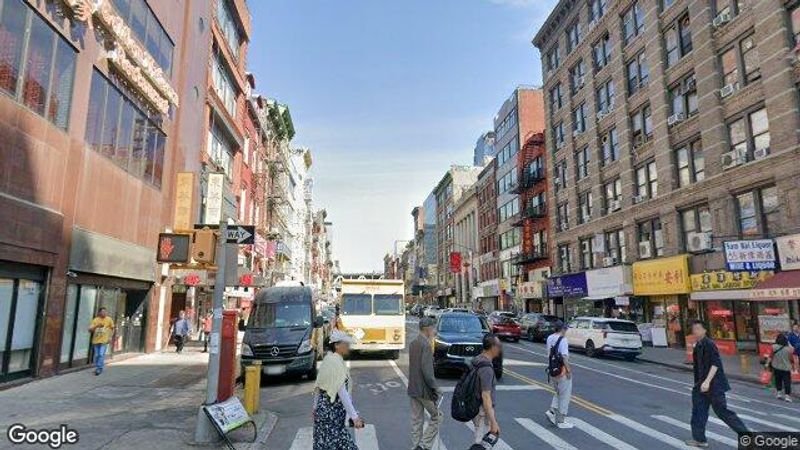
Chinatown offers exceptional subway access, sitting atop the Canal Street hub where the N, Q, R, W, J, Z, and 6 trains converge, with the B and D also reachable nearby. Commutes to Midtown run 20 to 25 minutes, while Wall Street and the Financial District are reachable in under 10 minutes.
Daily life centers on wet markets and produce stands along Mott and Canal Streets, alongside supermarkets like Hong Kong Supermarket. Green space is limited but well used, anchored by Columbus Park, a historic gathering spot for tai chi, mahjong, and community events near Mulberry and Bayard Streets.
| Category | Detail | Approximate Time/Distance |
|---|---|---|
| Subway hub | Canal Street (N, Q, R, W, J, Z, 6) | Central to neighborhood |
| Commute to Midtown | Via N/Q/R to 42nd Street | 20–25 minutes |
| Commute to Financial District | Via 6 or J/Z | 8–10 minutes |
| Main park | Columbus Park | 0.5-mile radius from most housing |
| Groceries | Hong Kong Supermarket, Canal Street markets | Walkable, under 10 minutes |
Chinatown Manhattan Transit and Lifestyle Snapshot
Public schools zoned to the area include options within the Two Bridges and District 2 boundaries, drawing interest from families prioritizing access rather than suburban-style campuses. Our team in New York notes that walkability here rivals anywhere in Manhattan, with most daily errands completed within a 10-minute radius on foot.
Final Thoughts
Chinatown suits buyers and tenants who value authentic urban texture, transit convenience, and relative value over polish and amenity-rich buildings. It rewards those comfortable with older housing stock, smaller floorplates, and a neighborhood still defined by working-class commerce rather than curated retail.
It is less suited to clients wanting doorman buildings, large in-unit amenities, or brand-new construction at scale, since inventory of that type remains limited. Families wanting sprawling green space or newly built schools may find the density and older infrastructure more demanding than in comparable Lower Manhattan submarkets.
Our team in New York positions Chinatown as a strong long-term value play given its transit position and gradual gentrification from SoHo and Tribeca. Clients ready to work through co-op board processes and older building systems, via our licensed brokerage network, often find outsized value here relative to neighboring markets.
Reinvent NY provides business consulting, operational support, and coordination services. Real estate services are provided through licensed professionals and applicable brokerage relationships. This article is for informational purposes only and does not constitute legal or investment advice.
Nearby neighbourhoods: Columbus Circle, East Harlem, East Village. All Manhattan guides are indexed under New York neighbourhood guides.

Satoshi Onodera
Founder & CEO, Reinvent NY Inc.
Founded Reinvent NY in 2024. Providing relocation support from all over the world to America.
Ready to Get Started?
Our team in New York is ready to help with your visa, real estate, or relocation needs.
Schedule a ConsultationFrequently Asked Questions
Is Chinatown Manhattan a good investment in 2026?
Yes, particularly for value-oriented buyers. Prices remain below comparable Tribeca and SoHo units, while transit access and gradual gentrification support long-term appreciation. Co-op restrictions and building age require careful diligence through an experienced local brokerage network.
Can foreign buyers purchase co-ops in Chinatown?
Many buildings, including Confucius Plaza, accept foreign buyers, though co-op boards may impose financing limits and require detailed financial disclosures. Condo purchases generally involve fewer restrictions. Our team in New York guides buyers through board-specific requirements case by case.
What subway lines serve Chinatown?
The Canal Street station connects the N, Q, R, W, J, and Z lines, with the 6 train also stopping nearby. This gives residents fast access to Midtown, the Financial District, and Brooklyn without needing to transfer through Manhattan's core hubs.
Are there new condo developments in Chinatown?
Boutique condo conversions have appeared near the Bowery and Grand Street over the past decade, offering modern layouts within older building envelopes. Large-scale new construction remains limited due to zoning and preservation considerations across much of the historic core.
How does Chinatown compare to the Lower East Side?
Chinatown generally offers lower price points per square foot than the Lower East Side, with older building stock and fewer amenity-rich developments. The Lower East Side has seen faster luxury development, while Chinatown retains a more traditional, market-driven residential character.
What is Confucius Plaza and is it a good option?
Confucius Plaza is a 1976 co-op tower at 33 Chrystie Street with over 700 units, elevators, and river or bridge views. It suits buyers wanting scale and building amenities uncommon in Chinatown's tenement stock, though board approval processes apply.
Is Chinatown walkable and family-friendly?
Yes, most daily errands are completed within a 10-minute walk, and Columbus Park anchors community life. Families should note limited large green space and older school infrastructure compared to some Manhattan neighborhoods, though District 2 zoning options exist nearby.
Real Estate Guides & Data
More guides
- Managing a US Rental From Abroad: Choosing the Manager
- NYC Mortgage Recording Tax: The Cost of Borrowing
- Researching Neighborhoods From Abroad: The Remote Method
- Where to Buy in New York, by Neighbourhood
- Opportunity Zones: The Deferral With a Map
- Pied-à-Terre in NYC: Buying a Part-Time Home
Related Articles
Two Bridges Manhattan Real Estate Guide 2026
A concrete 2026 guide to Two Bridges, Manhattan: buildings, prices, rents, transit and daily life for overseas buyers and renters.
DSCR Loan for Foreign Nationals: 2026 Terms Explained
How DSCR loans let foreign nationals and self-employed investors finance US rental property on the rent it earns: 2026 rates, down payments, and fine print.
Little Italy Manhattan Real Estate Guide 2026
What Little Italy in Manhattan costs in 2026: the buildings and their ages, sale and rent ranges, what the district rules restrict, and how to read it.
Nolita NYC Real Estate Guide 2026
A 2026 guide to buying and renting in Nolita, Manhattan — boundaries, buildings, prices, and daily life, from our team on the ground in New York.