Net Effective Rent in NYC: The Math Behind It
A rental listing advertises $3,667 a month. The lease you are handed says $4,000. Both numbers are accurate, neither is a mistake, and the gap between them is the single most common source of confusion in the New York rental market, for tenants and for the investors underwriting the buildings they live in.
Net effective rent is the advertised figure: gross rent minus free months, averaged across the lease term. It is a marketing number, not a payment schedule. Your bank account sees the gross number, in full, in every month that you actually owe rent.
In this article, we'll work through the math, the renewal problem the concession creates for tenants, the broker fee rules that changed in 2025, and what a concession-heavy building tells an investor about the revenue underneath it and the valuation that revenue supports.
What Net Effective Rent Actually Means
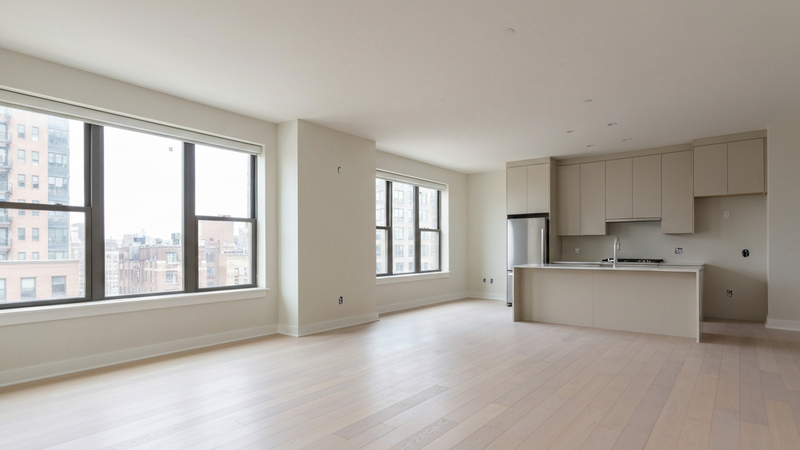
Net effective rent equals the gross rent multiplied by the number of paying months, divided by the total lease term. On a 12-month lease at $4,000 with one month free, you pay eleven months of $4,000, which is $44,000, and $44,000 divided by twelve gives the advertised $3,667. Longer terms of 13 or 14 months push that figure lower still.
The trap sits in the cash flow. In eleven of those months you write a check for $4,000, not $3,667. Anyone budgeting against the advertised figure is roughly $333 a month short for most of the year, and landlords, guarantors and income-qualification rules all work from the gross number, typically requiring annual income of 40 times it, not 40 times the net effective figure.
| Gross rent | Concession | Paid over 12 months | Net effective | Increase at flat renewal |
|---|---|---|---|---|
| $4,000 | None | $48,000 | $4,000 | 0% |
| $4,000 | 1 month free | $44,000 | $3,667 | 9.1% |
| $4,000 | 2 months free | $40,000 | $3,333 | 20.0% |
| $4,000 | 3 months free | $36,000 | $3,000 | 33.3% |
| $2,800 | 1 month free | $30,800 | $2,567 | 9.1% |
| $6,500 | 1 month free | $71,500 | $5,958 | 9.1% |
| $6,500 | 2 months free | $65,000 | $5,417 | 20.0% |
Assumes a 12-month lease. The final column is the increase a tenant feels if the landlord renews at the same gross rent with no concession.
One question decides how a concession is actually delivered. Is it a single free month, or is the free rent prorated across the term as a monthly credit? A prorated concession means you genuinely pay $3,667 every month. A single free month means eleven payments of $4,000 and one of zero. Ask which structure applies, and confirm it in the lease rider rather than the listing.
The Renewal Problem Nobody Prices In

Renewals are negotiated from the gross number, never the advertised one. When a landlord offers to hold your rent flat at $4,000 in year two, that is a 9.1% increase in what you actually pay if the first year carried one free month, and a 20.0% increase if it carried two. Nothing in the renewal letter will describe it as an increase, because the legal rent never moved.
This is a structural feature, not a trick. In free-market apartments the concession is a one-time lease-up cost rather than a permanent price cut, and no statutory cap limits a renewal increase. Rent-stabilized units follow separate rules set annually by the Rent Guidelines Board and administered by New York State Homes and Community Renewal.
The lever exists at signing, not at renewal. You can ask for the concession to be repeated in a written renewal option, or trade it away entirely for a lower gross rent, since $3,700 gross with no free month beats $4,000 with one free month from year two onward. Our guide to NYC lease terms covers which clauses are usually negotiable.
When Concessions Appear, and Who Pays the Broker
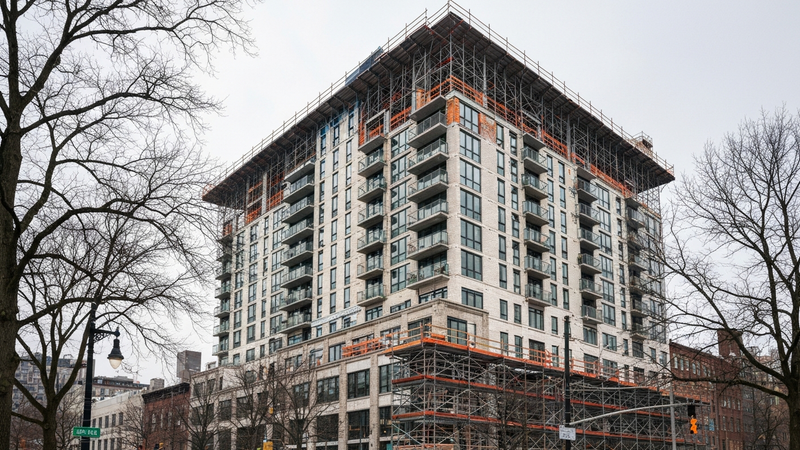
Free rent clusters in three places. New developments in initial lease-up offer it because an owner absorbing 300 units at once is buying velocity rather than price. The winter season, roughly November through February, carries the year's lowest leasing volume. And submarkets absorbing a wave of new supply compete on concessions instead of cutting face rents.
However, some argue a concession is simply free money, and that the right move is to take it and move again in a year. In practice the exit is expensive. Moving costs, a fresh security deposit sitting idle, time off work, and the risk that concessions have thinned by the time you search again can easily exceed the single month you saved.
Owner-paid fees versus fee apartments
New York City's FARE Act, effective June 11, 2025, requires the party who hires a broker to pay that broker's fee and requires listings to disclose any fee a tenant will owe. The "OP" label for owner-paid listings therefore signals far less of a premium than it once did, though a tenant who hires their own agent still pays that agent. See our rental application guide.
How Investors Should Read a Concession-Heavy Building
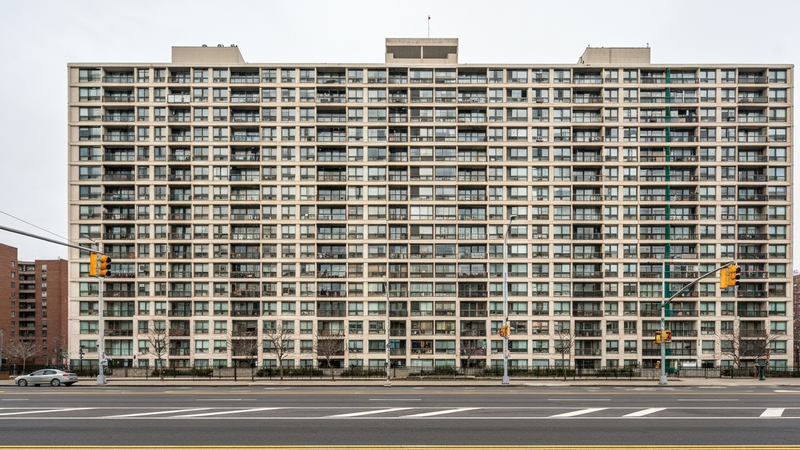
Underwrite net effective, never face rent. A 200-unit building advertising $4,000 with two months free is collecting $3,333 per unit per month, which is 16.7% below what a rent roll presented at face rents implies, before a single vacancy, bad debt write-off or unit turn is counted anywhere in the model.
That gap does not stay in the revenue line. It flows straight through to net operating income, and because value equals net operating income divided by a cap rate, the error is magnified roughly twenty times at a 5% cap rate. A rent roll rarely shows it, so ask for the concession schedule alongside the leases.
| Line item | At face rent | At net effective |
|---|---|---|
| Rent per unit, per month | $4,000 | $3,333 |
| Gross potential rent, 200 units | $9,600,000 | $8,000,000 |
| Operating expenses | $3,500,000 | $3,500,000 |
| Net operating income | $6,100,000 | $4,500,000 |
| Value at a 4.5% cap rate | $135,600,000 | $100,000,000 |
| Annual revenue gap across the property | — | $1,600,000 lower |
| Valuation gap at the same cap rate | — | $35,600,000 lower |
Illustrative only: 200 units at $4,000 face rent with two months free, shown before vacancy, credit loss and capital reserves.
Heavy concessions also carry burn-off risk. Owners eventually have to convert net effective rents into gross ones, and the year-two renewal is where tenants leave, so a building running two months free is signaling soft current demand and a turnover spike ahead. Lenders read it the same way, which is why our rental yield guide starts from collected rent.
Final Thoughts

Six questions settle almost every net effective lease. What gross rent is written into the lease, is the free rent a single month or prorated, which month is free, what figure will next year's renewal be quoted from, who pays the broker, and is the unit free-market or rent-stabilized. Get all six answered in writing, in the lease itself, before you sign anything.
From there the decision is straightforward. Tenants should budget on the gross number and negotiate renewal terms at signing, while they still have leverage and the landlord still wants the unit filled. Investors should treat face rents as an asking price and net effective as revenue, exactly as a lender will. Conditions by submarket sit in our NYC rent market guide.
Concessions are not a problem to avoid; they are a price signal to read correctly. A tenant who understands the renewal math can use a soft leasing season to lock in a genuinely lower gross rent, and an investor who prices a building on collected revenue rather than advertised revenue can move early. We support both sides through licensed New York real estate professionals.
Reinvent NY provides business consulting, operational support, and coordination services. Legal advice and immigration filings are handled by independent licensed attorneys. Real estate services are provided through licensed professionals and applicable brokerage relationships. This article is for informational purposes only and does not constitute legal or investment advice.

Satoshi Onodera
Founder & CEO, Reinvent NY Inc.
Founded Reinvent NY in 2019. Providing relocation support from all over the world to America.
Ready to Get Started?
Our team in New York is ready to help with your visa, real estate, or relocation needs.
Schedule a ConsultationFrequently Asked Questions
What is net effective rent?
Net effective rent is the average monthly cost of a lease after free-rent concessions are spread across the full term. It equals the gross rent multiplied by the number of paying months, divided by the total lease months. A $4,000 apartment with one month free on a 12-month lease has a net effective rent of $3,667.
Do I pay the net effective rent every month?
Usually not. Unless the lease specifically prorates the concession as a monthly credit, you pay the full gross rent in every month that is not free. On a $4,000 lease with one free month, that means eleven payments of $4,000 and one month of zero. Always confirm which structure applies in the lease rider.
What is the difference between gross rent and net effective rent?
Gross rent, sometimes called face rent, is the legal rent written into the lease and the figure your renewal will be negotiated from. Net effective rent is a marketing average that reflects the concession. Gross rent is what you budget for; net effective rent is what the listing advertises.
How much will my rent increase at renewal?
If the concession disappears and the gross rent stays the same, your payment rises by the concession percentage: about 9.1% after one free month on a 12-month lease, and 20.0% after two. In free-market apartments there is no statutory cap on a renewal increase, so treat a concession as a one-year discount rather than a price.
When are net effective rents most common in NYC?
They concentrate in new developments during initial lease-up, in the winter leasing season from roughly November through February, and in submarkets absorbing a large volume of new supply at once. Concessions are a velocity tool, so they widen whenever a landlord needs to fill many units quickly.
Who pays the broker fee on a New York City rental?
Under New York City's FARE Act, effective June 11, 2025, the party who hires the broker pays that broker's fee, and listings must disclose any fee a tenant will owe. A tenant who engages their own agent still pays that agent. Separately, under state law application fees are capped at $20 and security deposits at one month's rent.
Should investors value a building on net effective or face rents?
Net effective. Face rents sit above collected revenue by the free-rent share of the term, and because value is net operating income divided by a cap rate, that overstatement is magnified roughly twenty times at a 5% cap rate. Lenders underwrite net effective rents and often apply a further haircut for burn-off risk at renewal.
Real Estate Guides & Data
More guides
- Home Inspections in the US: Finds and Misses
- Property Insurance Claims: Getting Paid, Properly
- Air Rights and Lot-Line Windows: The Sky Next Door
- Micro-Units and Alcove Studios: Small-Space Buying
- Two-to-Four Family Buildings: The Underwriting
- Noise and Light Diligence: Testing What Photos Hide
Related Articles
Williamsburg Brooklyn Real Estate Guide 2026
An expert 2026 guide to buying and renting in Williamsburg, Brooklyn: boundaries, buildings, prices, transit, and who the neighborhood truly suits.
Stuyvesant Town Manhattan: 2026 Real Estate Guide
Our 2026 guide to Stuyvesant Town covers buildings, prices, rents, transit, and daily life for buyers and renters considering this Manhattan enclave.
Aman New York Residences: The Crown Building, Reworked
Aman's New York residences occupy the landmarked Crown Building on Fifth Avenue. See the sales the city has recorded there since 2023 and the median price.
Tudor City Manhattan: 2026 Real Estate Guide
An authoritative 2026 guide to Tudor City, Manhattan: buildings, prices, rents, transit, and daily life for prospective buyers and renters.