Stuyvesant Town Manhattan: 2026 Real Estate Guide
What Stuyvesant Town Actually Is
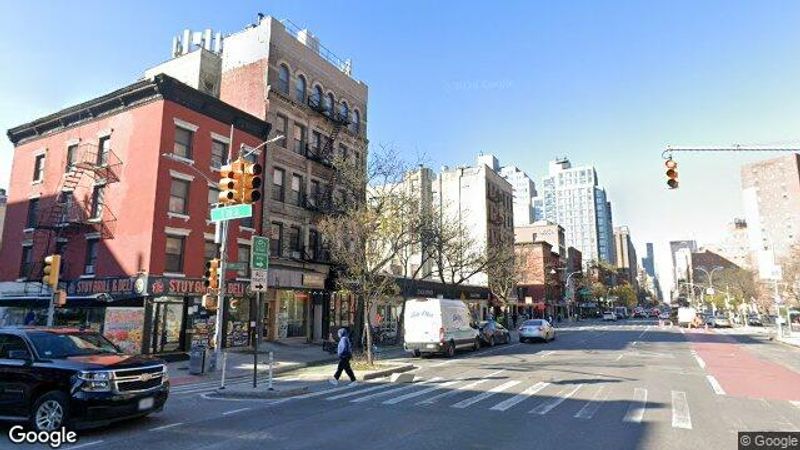
Stuyvesant Town occupies roughly 80 acres on Manhattan's East Side, bounded by 14th Street, 20th Street, First Avenue, and Avenue C. Built in 1947 by Metropolitan Life Insurance Company on the site of the former Gas House District, it was conceived as affordable postwar housing for returning veterans and working families, and it remains a defining example of planned residential development.
The neighborhood's character is defined by its superblock layout: no through-traffic streets, uniform brick towers set among lawns, playgrounds, and mature trees. This layout was radical for its era and remains unusual in Manhattan, giving Stuyvesant Town a campus-like calm that residents from denser blocks often find surprising on first visit.
Today the property is owned by Blackstone, which acquired it alongside sister property Peter Cooper Village in 2015. The combined complex, often referred to as StuyTown, functions as one of the largest single residential landlords in Manhattan, with a mix of market-rate and regulated units still governed by New York's rent stabilization framework.
The Housing Stock
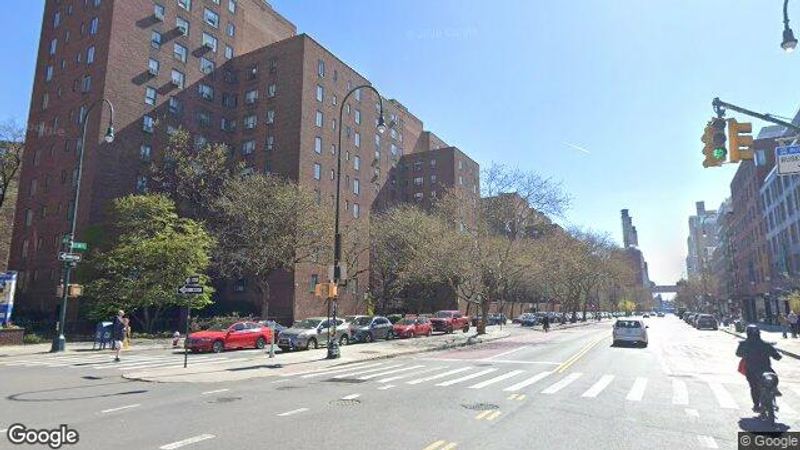
Stuyvesant Town consists of 35 red-brick residential buildings, generally 13 stories tall, designed by the architectural firm Irwin Clavan with landscape input shaping the superblock's open lawns. Construction ran from 1945 to 1947 under MetLife's direction, and the buildings share a consistent postwar utilitarian aesthetic rather than individual architectural distinction.
Unit types run from studios to two-bedrooms, with layouts largely unchanged since original construction: galley kitchens, prewar-adjacent room proportions, and limited closet space by contemporary luxury standards. Many units have been renovated internally by Blackstone or by individual owners of the smaller number of privately held condo-like resale units, though the exteriors and building shells remain landmark-adjacent in feel if not in official designation.
Ownership within Stuyvesant Town is almost entirely rental rather than for-sale, distinguishing it from most Manhattan neighborhoods our clients consider. Buyers interested in ownership typically look at nearby cooperative and condominium buildings just outside the complex boundaries, while those drawn to Stuyvesant Town itself are usually pursuing long-term rental arrangements through our licensed brokerage network.
Prices and Rents
As of 2026, rental rates in Stuyvesant Town are approximate and subject to market conditions, but studios typically run from $2,900 to $3,600 per month, one-bedrooms from $3,600 to $4,800, and two-bedrooms from $5,200 to $7,000, with rent-stabilized units priced below market where applicable under existing leases.
Because Stuyvesant Town is overwhelmingly rental, for-sale inventory inside the complex itself is negligible; comparable ownership opportunities sit in adjacent Peter Cooper Village or in nearby Kips Bay and East Village cooperatives and condominiums. Clients seeking to purchase should expect to look just beyond StuyTown's borders rather than within its 35 buildings.
| Neighborhood | Studio | 1-Bedroom | 2-Bedroom |
|---|---|---|---|
| Stuyvesant Town | $2,900–$3,600 | $3,600–$4,800 | $5,200–$7,000 |
| Peter Cooper Village | $3,100–$3,800 | $3,900–$5,000 | $5,600–$7,400 |
| Gramercy Park | $3,400–$4,200 | $4,300–$5,800 | $6,500–$9,000 |
| East Village | $3,000–$3,900 | $3,800–$5,200 | $5,800–$8,000 |
| Kips Bay | $3,100–$3,900 | $4,000–$5,300 | $5,900–$8,200 |
Approximate monthly rents by neighborhood, 2026 (subject to market conditions)
Compared with neighboring East Side submarkets, Stuyvesant Town offers meaningfully lower per-square-foot rental cost than Gramercy or the East Village's newer condo stock, trading a landmark address for larger green space and lower density. This value gap is the primary draw for tenants prioritizing space and quiet over building prestige.
Daily Life and Transit
Subway access centers on the L train at First Avenue and the 4, 5, 6 trains at 14th Street–Union Square, both roughly a 10 to 15 minute walk from most Stuyvesant Town buildings. The 6 train at 23rd Street is also within walking distance for residents in the complex's northern buildings near 20th Street.
Grocery needs are met by a Morton Williams supermarket on First Avenue within the complex and additional options along 14th Street and in nearby Union Square, including Trader Joe's and Whole Foods. Stuyvesant Town's own retail strip along First Avenue covers pharmacies, banks, and casual dining without requiring residents to leave the immediate area.
| Line/Station | Walk Time | Key Destinations | Approx. Commute |
|---|---|---|---|
| L @ First Ave | 8–12 min | Union Square, Brooklyn | 5–15 min |
| 4/5/6 @ 14th St–Union Sq | 10–15 min | Midtown, Downtown | 10–20 min |
| 6 @ 23rd St | 10–14 min | Grand Central, Midtown East | 8–15 min |
| M14 Bus | 0–5 min | Crosstown, East River | 5–10 min |
| Citi Bike docks | 0–5 min | Waterfront, Gramercy | 5–15 min |
Transit access from Stuyvesant Town, 2026
Families weigh P.S. 40 and P.S. 34, both zoned options serving the district, alongside private school choices further uptown or in Gramercy. Green space is abundant by Manhattan standards, with Stuyvesant Oval as the complex's central lawn and Stuyvesant Cove Park along the East River providing additional waterfront recreation.
Final Thoughts
Stuyvesant Town suits tenants who value space, greenery, and predictable management over architectural pedigree or ownership potential. Families and professionals seeking a quieter, campus-like slice of Manhattan with strong transit access will find few comparable options at similar rental price points elsewhere on the East Side.
It is a poor fit for buyers seeking direct ownership, condo boards, or architecturally distinctive prewar or postmodern buildings. Those clients are better directed toward Gramercy, the East Village, or Kips Bay, where our licensed brokerage network can identify cooperative and condominium inventory suited to purchase strategies.
Our team in New York generally recommends Stuyvesant Town to relocating executives and families prioritizing stability and outdoor space during multi-year rental commitments. For clients focused on long-term capital appreciation through ownership, we steer discussions toward adjacent submarkets with active resale and condominium markets instead.
Reinvent NY provides business consulting, operational support, and coordination services. Real estate services are provided through licensed professionals and applicable brokerage relationships. This article is for informational purposes only and does not constitute legal or investment advice.
Nearby neighbourhoods: Sutton Place Manhattan, Tudor City Manhattan, Battery Park City. The full set is indexed under New York neighbourhood guides.

Satoshi Onodera
Founder & CEO, Reinvent NY Inc.
Founded Reinvent NY in 2024. Providing relocation support from all over the world to America.
Ready to Get Started?
Our team in New York is ready to help with your visa, real estate, or relocation needs.
Schedule a ConsultationFrequently Asked Questions
Can foreign buyers purchase property in Stuyvesant Town?
Stuyvesant Town's 35 buildings are almost entirely rental, owned by Blackstone, so direct purchase within the complex is not typically available. Buyers seeking ownership should consider adjacent Peter Cooper Village, Gramercy, or Kips Bay cooperatives and condominiums instead.
What is the difference between Stuyvesant Town and Peter Cooper Village?
Both were built by MetLife and are now owned by Blackstone, forming one combined complex. Peter Cooper Village sits slightly north, has fewer, taller buildings, and generally commands modestly higher rents than Stuyvesant Town's 13-story brick structures.
Are Stuyvesant Town apartments rent-stabilized?
Many units remain under New York's rent stabilization framework due to past tax incentive programs, while others have shifted to market rate. Availability of stabilized units varies by building and lease history, so verifying status per unit is essential.
How far is Stuyvesant Town from Midtown Manhattan?
Using the 6 train from 14th Street or 23rd Street, commutes to Grand Central and Midtown East typically run 10 to 20 minutes. The L train also connects quickly to Union Square for onward transfers across Manhattan and Brooklyn.
Is Stuyvesant Town a good fit for families?
Yes, its car-free superblock layout, playgrounds, Stuyvesant Oval, and proximity to zoned schools like P.S. 40 and P.S. 34 make it popular with families. The abundant green space is unusual for Manhattan and appeals to those relocating with children.
What amenities exist within Stuyvesant Town itself?
Residents have access to a Morton Williams supermarket, pharmacies, banks, and casual dining along First Avenue, plus Stuyvesant Oval's lawns and nearby Stuyvesant Cove Park on the East River, reducing the need to travel for daily essentials.
How do Stuyvesant Town rents compare to nearby neighborhoods?
As of 2026, and subject to market conditions, Stuyvesant Town rents run lower per square foot than Gramercy or newer East Village condo buildings, generally $300 to $1,500 less monthly depending on unit size, per our current market data.
Real Estate Guides & Data
More guides
- Buying Short Sales: Discounts on the Lender's Clock
- Tax Treaties and US Property: Avoiding Double Taxation
- Trusts and US Property: The Structures Behind the Names
- US Real Estate Investing: Yields, Taxes and How to Buy
- Walk-Up vs Doorman Buildings: The Service Premium
- 1031 Exchanging Into NYC: Trading Up to Manhattan
Related Articles
The Brooklyn Tower: Brooklyn's First Supertall, Assessed
9 DeKalb Avenue is Brooklyn's first supertall, built around a landmarked bank. What it offers, and how it compares with Manhattan at the same budget.
Williamsburg Brooklyn Real Estate Guide 2026
An expert 2026 guide to buying and renting in Williamsburg, Brooklyn: boundaries, buildings, prices, transit, and who the neighborhood truly suits.
Net Effective Rent in NYC: The Math Behind It
Net effective rent is not what you pay each month. How NYC free-rent concessions work, the renewal jump they hide, and what they signal to investors.
Aman New York Residences: The Crown Building, Reworked
Aman's New York residences occupy the landmarked Crown Building on Fifth Avenue. What the branded model delivers, and what to establish first.