Ground Lease Condos in NYC: What the Land Lease Means
Some New York condominiums sit on land the building does not own. The apartment is yours, the ground under it is leased, and the lease terms sit between you and the value of what you bought.
Battery Park City is the largest example in Manhattan, ninety-two acres of landfill where the land is leased from the state. It is the clearest place to see what a ground lease does to price, monthly cost and resale.
1. The Largest Example: Battery Park City
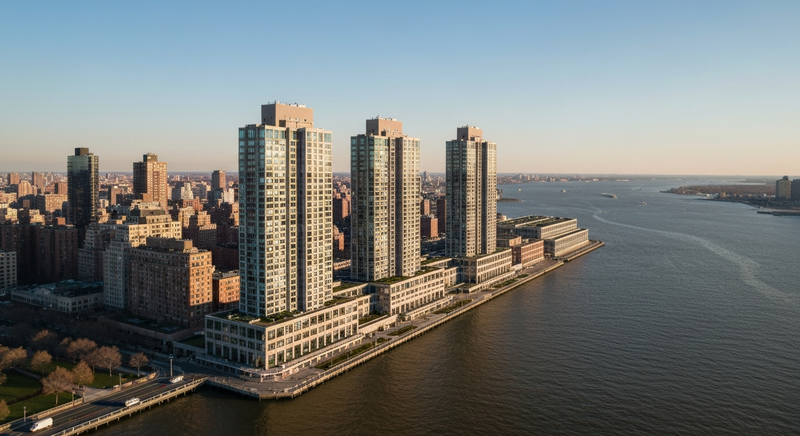
Ninety-two acres of made land on the Hudson, built from material excavated for the original World Trade Center and developed from the 1980s onward.
The result is unusual for Manhattan: a planned district with continuous waterfront parkland, wide sight lines and almost no through traffic. Roughly a third of the acreage is public open space.
For a buyer coming from overseas this reads as the most suburban-feeling part of Manhattan without leaving the island, which is precisely its appeal to families and precisely why it trades differently from Tribeca a few blocks east.
| Attribute | Detail |
|---|---|
| Location | Hudson River waterfront, Lower Manhattan |
| Land | State-owned; buildings hold ground leases |
| Current lease horizon | 2069 for most parcels |
| Built | 1980s onward, in phases |
| Ownership types | Condominium and rental; some co-op |
| Open space | About one third of the district |
District facts. Ground lease terms differ by building and are established from each building's own documents.
The location is on Google Maps.
2. The Ground Lease Is the Whole Story
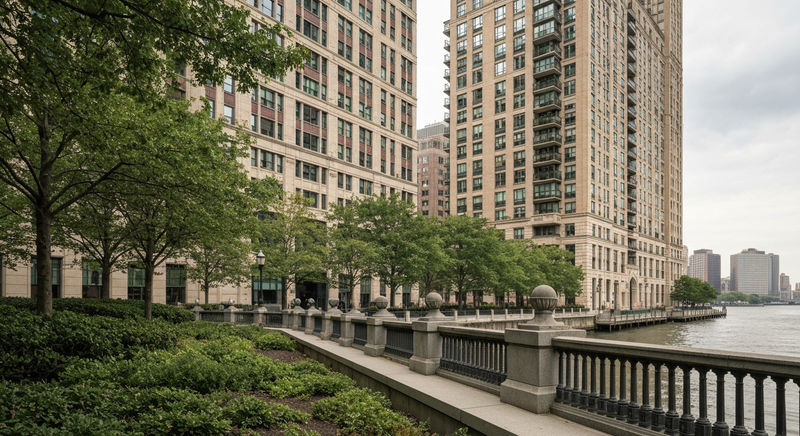
Buyers here purchase the apartment, not the land beneath it. Each building holds a lease from the Battery Park City Authority, and the payments under that lease flow into the building's monthly charges.
Two consequences follow. Monthly costs run higher than a comparable condominium on owned land, because ground rent and a payment in lieu of taxes sit inside the charges. And lenders look closely at the remaining lease term, because a mortgage cannot outlast the land it stands on.
The current horizon is 2069. That is far enough out to be financeable today and close enough that it will start to matter to resale within the ownership period of anyone buying now. Establish the exact terms, escalation schedule and any extension history for the specific building with your attorney.
This is the one item never to take on summary. Read the lease itself.
3. What the Money Looks Like
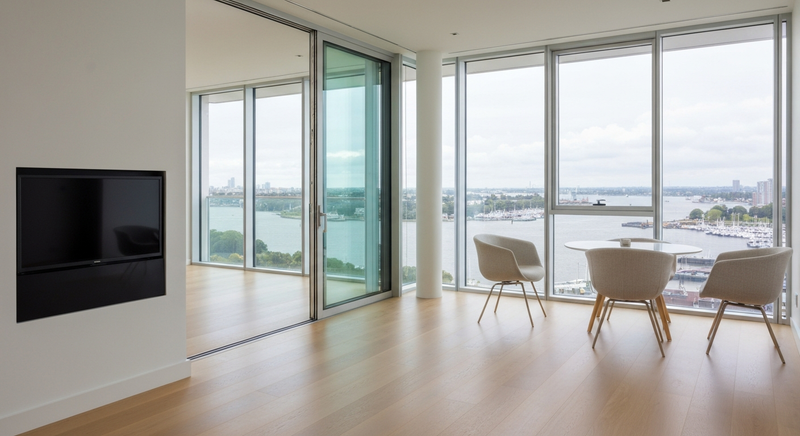
The pattern is a lower purchase price against higher monthly charges than equivalent space in Tribeca or the Financial District.
Whether that trade favors you depends on holding period and financing. A cash buyer holding ten years reads it differently from a leveraged buyer planning to sell in four, because the monthly is a fixed drag while the discount is captured once at purchase.
Run both. Our closing-cost guide and the New York purchase process guide set out the transfer taxes and the rest of the closing bill, which do not change here.
Ask for the building's last two annual financial statements before you offer.
4. Who It Suits

Families and buyers who want quiet and open space more than they want a prestige address. The parks, the esplanade and the low traffic volume are real, not marketing.
It suits a foreign national buying a primary or secondary residence better than an investor optimizing yield, because the ground rent inside the monthly compresses the net.
It is a poor fit for anyone who needs the resale liquidity of a conventional fee-simple condominium, or who cannot get comfortable holding an apartment on land someone else owns.
Match the structure to the holding period first, the view second.
5. How to Approach It as an Overseas Buyer
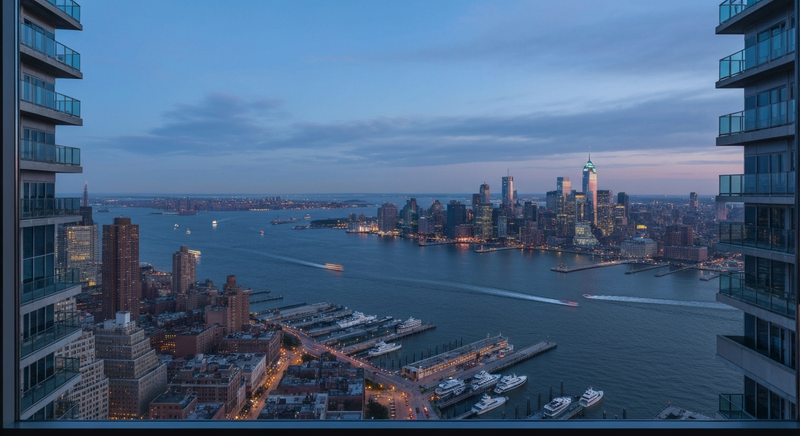
Three documents decide this purchase: the ground lease, the offering plan and the most recent financial statement. Everything else is preference.
Financing is available but the lender pool is narrower than for fee-simple condominiums, and narrower again for a foreign national without US credit. Start the loan conversation before you make an offer, not after.
Condominium here means a board approval process that is lighter than a co-op's, which matters if you are buying from outside the country. Our guide on condominiums versus co-ops for foreign buyers sets out the difference.
We represent buyers through this process from first viewing to closing.
Figures here describe the building, not any one apartment. Asking prices, monthly carrying costs, tax abatement status and sublet rules are established unit by unit from the offering plan, the most recent financial statement and the managing agent. Real estate services are provided through R New York.
More buying guides: Rent vs Buy in NYC, Buying a New York Condo as an International Buyer, NYC Apartments for Sale.

Satoshi Onodera
Founder & CEO, Reinvent NY Inc.
Founded Reinvent NY in 2024. Providing relocation support from all over the world to America.
Ready to Get Started?
Our team in New York is ready to help with your visa, real estate, or relocation needs.
Schedule a ConsultationFrequently Asked Questions
Where is Battery Park City?
The Hudson River waterfront of Lower Manhattan, west of the World Trade Center site. The area is on [Google Maps](https://maps.google.com/?q=Battery+Park+City+New+York).
Why are monthly charges higher here?
Buildings pay ground rent to the Battery Park City Authority and a payment in lieu of property taxes. Both sit inside the monthly charges rather than appearing as a separate tax bill.
When does the ground lease expire?
Most parcels run to 2069. Terms differ by building, so the exact date, escalation schedule and any extension history must be read from that building's own lease.
Can a foreign national get a mortgage here?
Yes, but fewer lenders write against leasehold land and fewer still write for borrowers without US credit history. Establish financing before making an offer.
Does the lease affect resale?
It affects the buyer pool and the lender pool, and the effect grows as the remaining term shortens. This is a holding-period question, not a yes or no.
Are these condos or co-ops?
Mostly condominium, with rental buildings and some co-op stock. Condominium ownership makes an overseas purchase considerably simpler.
Is it a good area for families?
The parkland, the esplanade and the low traffic are the reasons families choose it. School zoning is confirmed address by address with the Department of Education.
Real Estate Guides & Data
More guides
- The US Closing Timeline: Attorney States vs Escrow States
- NYC Contract Deposits: The 10% Between Offer and Close
- When a Property Owner Dies: The Family's First Steps
- Education-Adjacent Buying: Schools as Property Strategy
- What You Need for a First New York Purchase
- Energy Grades and Green Buildings: Efficiency as Value
Related Articles
Buying a House in New York State: The 10 Steps
The New York house-buying sequence: attorney review, contract deposit, inspection, mortgage commitment, title and closing.
Cutting a Mortgage Payment Without Refinancing
A recast costs $250 to $500 and needs no underwriting. Removing mortgage insurance at 80% saves 0.3% to 1.5% a year. Neither requires a new loan.
Credit Cards for Newcomers to the US: No SSN Needed
How new arrivals get a first US credit card without a Social Security number or credit history, which issuers accept ITINs.
One Sutton Place South: Candela on the East River
One Sutton Place South is Rosario Candela's 1927 cooperative with a private garden on the East River. What it is, and how a buyer should read it.