The Osborne: An 1885 Fortress Opposite Carnegie Hall
The Osborne was built in 1885 out of load-bearing masonry, and the walls are the reason it is still there. The building at 205 West 57th Street, opposite Carnegie Hall, predates steel framing — its walls carry the structure rather than merely enclosing it, and they are correspondingly thick.
It now stands at the foot of the tallest residential towers ever built. Let's take what that means for a buyer.
1. What the Building Is
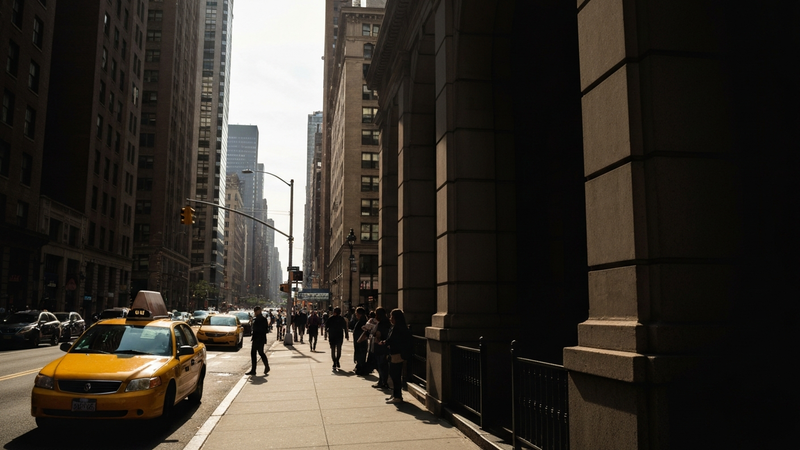
One of the oldest surviving apartment buildings in New York and a designated landmark. It was built for households leaving private houses, at a moment when living in an apartment still required persuading people it was respectable.
That produced very high ceilings, deep window reveals and rooms sized for a domestic life that assumed staff, space and formality.
The masonry construction is not decorative. Load-bearing walls of that thickness give sound and thermal performance that no contemporary building matches at any price.
| Attribute | Detail |
|---|---|
| Address | 205 West 57th Street, Manhattan |
| Completed | 1885 |
| Construction | Load-bearing masonry, pre-steel framing |
| Status | Designated landmark |
| Context | Opposite Carnegie Hall, at the foot of Billionaires' Row |
| Ownership form | Cooperative |
Building facts. Cooperative requirements are set by the board and are not published; establish them through your attorney and broker.
The location is on Google Maps here.
2. The Block Changed Around It
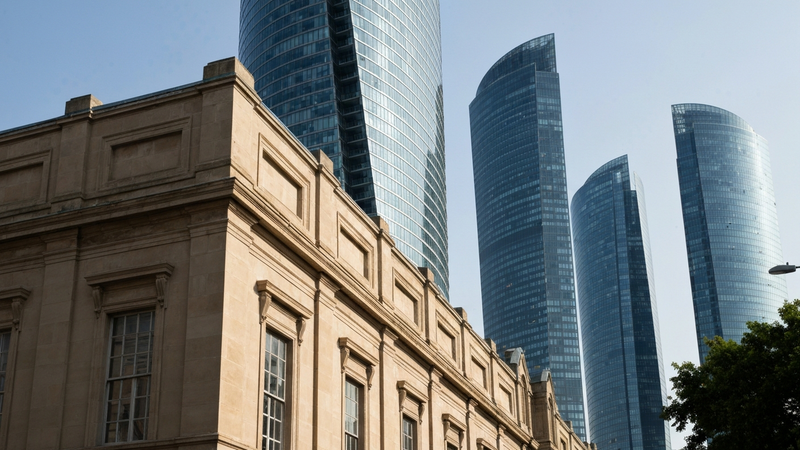
Fifty-seventh Street between Sixth and Eighth Avenues is now the most concentrated cluster of supertall residential towers in the world. This building sits underneath them, unchanged since 1885.
The practical consequence for a buyer is light and outlook. What an apartment here sees today is not what it saw fifteen years ago, and further construction on the corridor is possible.
Establish what the specific apartment sees now and what is protected. Both are answerable before you travel, and neither is visible in an old photograph.
Our remote viewing guide covers how to have an outlook filmed and verified from another country.
3. What 1885 Construction Actually Offers

The quality buyers complain about most after moving into new construction is noise, and it is the hardest thing to fix afterwards. Masonry walls and heavy floors solve it structurally.
Ceiling height is the second. Nineteenth-century apartments were built taller than almost anything since, and that changes how a room feels in a way no finish can replicate.
The trade is systems. A building of this age has heating, plumbing and electrical arrangements that have been renewed in stages, and the reserve study should say what remains.
Our building diligence guide covers how to read a reserve study and an assessment history properly.
4. What the Cooperative Form Requires

A purchaser buys shares in a corporation and receives a proprietary lease. The board approves every purchaser and may decline without stating a reason, provided the decision is not made on a basis prohibited by fair housing law.
Boards typically require full financial disclosure, verified liquidity after closing, reference letters and an interview, and many restrict entity ownership and subletting.
For a buyer whose assets sit abroad the obstacle is documentary. The condominium alternative on the same street is 111 West 57th or One57 — see our foreign buyer guide.
Living at the foot of Billionaires' Row
The corridor is busier than it was, with construction, deliveries and traffic that a quiet residential block does not generate. Some of that is temporary and some is permanent.
Walk the street at the hour you would actually be living there, or have it filmed. A building with 1885 masonry handles street noise better than most, which is precisely why the test is worth running rather than assuming either way.
Maintenance in a nineteenth-century cooperative
Maintenance includes the shareholder's proportion of the building's property tax and of any mortgage on the building itself, so it is not comparable to a condominium's common charges without adjustment.
Add property tax to the condominium figure and ask for the cooperative's underlying mortgage balance and term before comparing anything.
Carnegie Hall across the street
The concert hall opposite is itself a landmark and is not going to be replaced, which protects that side of the street in a way little else on the corridor is protected.
For an apartment facing it, that is a meaningful and permanent advantage over one facing a development site — and it is exactly the kind of detail that a floor plan does not disclose.
Final Thoughts: Built to Outlast the Towers

The buildings around it are taller, newer and vastly more expensive, and this one was built to a standard none of them will match in construction terms. For a buyer with US-documented assets who wants ceiling height and silence rather than elevation, it is among the most interesting addresses in Midtown. For everyone else it is a reminder that the best building on a block is not always one you are eligible to buy.
We cover 57th Street on Satoshi Onodera's YouTube channel and on Instagram. If you are buying from abroad, talk to our team and we will filter for buildings that will accept the purchase. Real estate brokerage services are provided through licensed professionals.
One point applies to every purchase of this kind from another country. The document work can be completed before anyone travels, and it is what determines whether a building is sound.
The physical inspection is the only part requiring presence, and even that runs as a live walkthrough with dimensions and light recorded on camera. Buyers who reverse the order lose weeks on buildings the documents would have ruled out in an afternoon.
A last point on why buildings like this survive at all. A site on 57th Street between Sixth and Eighth Avenues is worth a great deal more as a tower than as an 1885 apartment house, and only landmark designation prevents that arithmetic from resolving itself.
For an owner that protection is the whole basis of the investment. It fixes the building in place, fixes the streetscape opposite, and guarantees that what you buy is what remains there.
It also imposes the corresponding obligation. Landmarked exteriors must be maintained to a standard rather than to a budget, and the cost of that runs through the maintenance charge permanently rather than arriving once.
One point applies to every purchase of this kind made from another country. The document work — financial statements, reserve balance, assessment history, board minutes and the governing agreements — can be completed in full before anyone travels, and it is what actually determines whether a building is sound rather than merely attractive.
A last note on the comparison with the towers behind it. Those buildings offer height, amenity and no board interview at a far higher price per square foot; this one offers construction quality and ceiling height that none of them attempt.
Reinvent NY provides business consulting, operational support, and coordination services. Legal advice and immigration filings are handled by independent licensed attorneys. Real estate services are provided through licensed professionals and applicable brokerage relationships. This article is for informational purposes only and does not constitute legal or investment advice.
More buildings worth knowing: 100 Eleventh Avenue, 111 West 57th Street, 130 William. The full set is indexed under New York building profiles.

Satoshi Onodera
Founder & CEO, Reinvent NY Inc.
Founded Reinvent NY in 2024. Providing relocation support from all over the world to America.
Ready to Get Started?
Our team in New York is ready to help with your visa, real estate, or relocation needs.
Schedule a ConsultationFrequently Asked Questions
Where is the Osborne?
205 West 57th Street, opposite Carnegie Hall. The location is on [Google Maps](https://maps.google.com/?q=205+West+57th+Street+New+York).
When was it built?
It was completed in 1885, making it one of the oldest surviving apartment buildings in New York, and it is a designated landmark.
Why are the walls so thick?
It was built in load-bearing masonry before steel framing became standard, so the walls carry the building rather than merely enclosing it.
Is it a co-op or a condominium?
It is a cooperative. Purchasers buy shares in a corporation and receive a proprietary lease rather than a deed.
Can a non-resident buy here?
In practice it is difficult. Boards require verified financial disclosure, frequently restrict entity ownership, and may decline without giving a reason.
What are the apartments like?
Very high ceilings, deep window reveals and interiors from a period when apartments were built for households moving out of private houses.
How has the supertall construction nearby affected it?
The block has changed completely around it. Establish what a specific apartment now sees and what remains protected.
Real Estate Guides & Data
Related Articles
400 Fifth Avenue: A Tower With a Hotel Beneath It
400 Fifth Avenue put residences above a hotel on Fifth Avenue at 36th Street. What the arrangement offers a buyer, and what to confirm first.
NYC Short-Term Rental Rules 2026: What Is Legal
New York City bans most stays under 30 days unless the host registers and stays present. What Local Law 18 permits, what it ended, and the legal alternatives.
FHA Loans in New York City: What Qualifies
FHA allows a small down payment, but the building must be FHA-approved and few NYC condos are. How to check a project, and what the mortgage insurance costs.
Getting a Mortgage When You Are Self-Employed
Lenders read net profit after deductions, not revenue. Cutting taxable income by $50,000 can cut borrowing capacity by around $200,000. How to plan around it.