SoHo NYC Real Estate Guide 2026
What SoHo Actually Is — Boundaries, Character, and How It Got Here
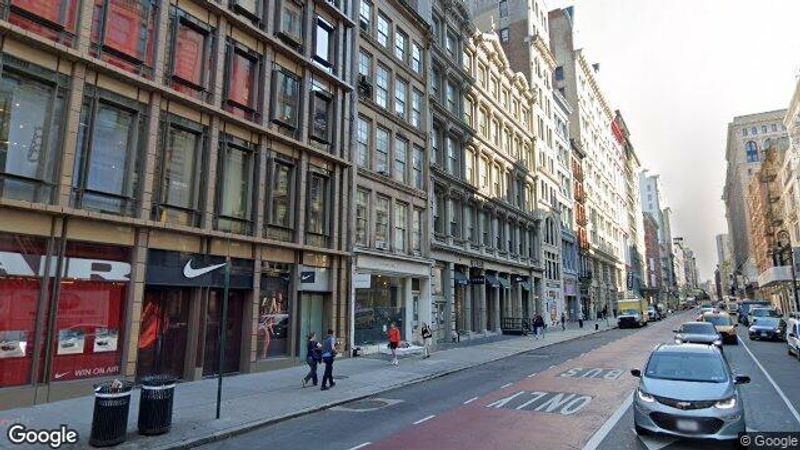
SoHo — short for South of Houston — runs roughly from Houston Street south to Canal Street, and from Sixth Avenue east to Lafayette Street or Crosby Street depending on who is drawing the line. Broadway splits it lengthwise. Our team in New York treats these boundaries as firm when advising clients, since pricing and building stock shift noticeably once you cross them.
The neighborhood's identity comes from its cast-iron architecture, a 19th-century industrial legacy that survived a 1960s demolition threat thanks to preservationist activism. That fight produced the SoHo–Cast Iron Historic District, designated in 1973, which now governs exterior alterations on most blocks and keeps the streetscape frozen in its 1870s–1890s form.
By the 1970s and 80s, artists colonized the empty cast-iron lofts, legalized through so-called AIR (Artist-in-Residence) zoning, and that bohemian chapter gave way to galleries, then luxury retail. Today SoHo functions as a retail-and-residential hybrid — Prada and Chanel storefronts sit beneath converted loft apartments, and that tension defines its character.
The Housing Stock — Buildings, Architects, Eras, and Unit Types
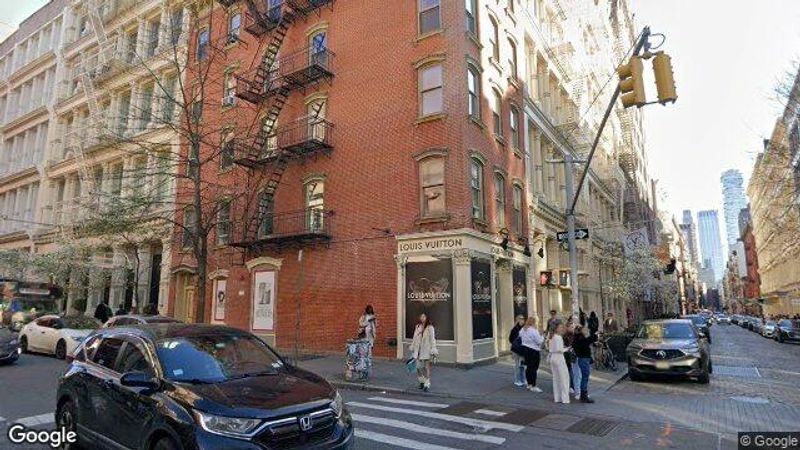
SoHo's defining unit is the raw or converted loft — open-plan, high-ceilinged spaces inside former textile and dry-goods warehouses. Ceiling heights of 11 to 14 feet, exposed cast-iron columns, and oversized windows are standard. Many buildings retain landmarked facades on Greene Street, Mercer Street, and Broadway, where entire blocks are protected under the historic district designation.
Notable conversions include 72 Greene Street, one of the district's most ornate cast-iron facades, and 101 Spring Street, the former Donald Judd Foundation building, which set a benchmark for architecturally significant loft ownership. Newer development is limited by landmark rules, so ground-up construction like 565 Broome Street, a Renzo Piano tower on the SoHo/Hudson Square edge, stands out as an exception.
Unit types range from raw, unrenovated lofts requiring full buildout to fully finished duplexes with private outdoor space. Co-ops exist but are less common here than in Uptown Manhattan; condominiums dominate resale inventory. Buyers should expect low unit turnover, since many lofts have been held by the same owners since the 1980s or 90s conversions.
Prices and Rents — What Things Actually Cost
SoHo commands some of Manhattan's highest per-square-foot figures, driven by scarcity of landmarked inventory and retail-anchored prestige. Sale prices for condo lofts typically run from roughly $1,800 to over $3,200 per square foot, figures that are approximate and subject to market conditions, with penthouse and Judd-adjacent properties trading well above that range.
Rental rates track closely with the sales market's tightness. A one-bedroom loft conversion generally rents in the $4,500 to $7,000 monthly range, while two-bedrooms and larger raw lofts push toward $8,000 to $14,000, again approximate figures. Our licensed brokerage network reports limited inventory turnover, meaning well-priced units move quickly, often within two to three weeks.
| Unit Type | Typical Size | Sale Price Range | Monthly Rent Range |
|---|---|---|---|
| Studio/Junior 1BR | 500–700 sq ft | $950,000–$1.5M | $3,500–$4,800 |
| 1-Bedroom Loft | 800–1,100 sq ft | $1.6M–$2.6M | $4,500–$7,000 |
| 2-Bedroom Loft | 1,300–1,800 sq ft | $2.8M–$4.5M | $7,500–$11,000 |
| 3-Bedroom/Duplex | 2,000–3,000 sq ft | $5M–$9M+ | $12,000–$18,000 |
| Penthouse/Trophy Loft | 3,000+ sq ft | $10M+ | $20,000+ |
Approximate SoHo Pricing by Unit Type (2026, subject to market conditions)
Compared with the West Village or Tribeca, SoHo sits roughly in the middle on a per-square-foot basis but often exceeds both on rental yield for well-located retail-adjacent units. Buyers targeting long-term appreciation typically favor upper Broadway and Greene Street addresses over Canal Street-adjacent blocks, where retail congestion depresses residential premiums.
Daily Life and Transit — Getting Around and Living Well
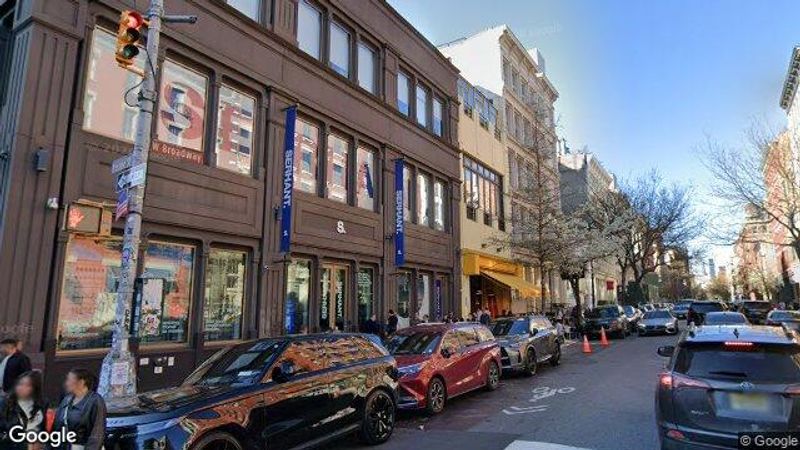
SoHo is served by the N, R, W trains at Prince Street, the 6 train at Spring Street, and the C, E trains at Spring Street on Sixth Avenue, giving residents fast access to Midtown, Downtown, and Brooklyn. Most Midtown commutes run 15 to 20 minutes; Financial District trips are typically under 15 minutes.
Daily errands center on Broadway and Lafayette Street for retail, with Dean & DeLuca's legacy replaced by newer gourmet grocers and a Whole Foods a short walk north in Union Square's vicinity; closer options include Westside Market on Houston. Green space is limited within SoHo proper, pushing residents toward nearby Washington Square Park and the Hudson River Park waterfront.
| Category | Detail | Approx. Time/Distance |
|---|---|---|
| Subway Access | N/R/W, 6, C/E lines | 3–8 min walk |
| Midtown Commute | Via N/R/W to 34th St | 15–20 min |
| Financial District Commute | Via 6 or A/C | 10–15 min |
| Nearest Major Park | Washington Square Park | 10–12 min walk |
| Waterfront Access | Hudson River Park | 15 min walk |
SoHo Transit and Lifestyle Snapshot
Families are a minority demographic here; public schools zoned to SoHo include P.S. 130 on Baxter Street, but many resident families look toward Tribeca or the Village for broader options. The neighborhood suits car-free, walk-everywhere living — most daily needs, dining, and transit sit within a 10-minute radius.
Final Thoughts
SoHo suits buyers and renters who want architectural character, walkability, and proximity to world-class retail and dining, and who are comfortable with tourist foot traffic on weekends. It rewards those purchasing for long-term hold in landmarked buildings, where scarcity supports value, rather than those seeking new-construction amenities like doormen-heavy full-service buildings.
It is less suited to families needing extensive school choice, buyers wanting large in-building amenity packages, or anyone sensitive to street-level retail congestion on Broadway and Spring Street during peak hours. Noise from nightlife and tour groups is a real factor on the most commercial blocks, particularly near Prince and Spring Streets.
For the right buyer — one who values loft living, architectural pedigree, and central Manhattan positioning — SoHo remains one of the borough's most defensible long-term holds. Our team in New York recommends viewing at least six to eight units across price points before committing, given how much condition varies within seemingly similar lofts.
Reinvent NY provides business consulting, operational support, and coordination services. Real estate services are provided through licensed professionals and applicable brokerage relationships. This article is for informational purposes only and does not constitute legal or investment advice.
Nearby neighbourhoods: Tribeca, Turtle Bay, Two Bridges. All Manhattan guides are indexed under New York neighbourhood guides.
This article is also available on our Japanese site.

Satoshi Onodera
Founder & CEO, Reinvent NY Inc.
Founded Reinvent NY in 2024. Providing relocation support from all over the world to America.
Ready to Get Started?
Our team in New York is ready to help with your visa, real estate, or relocation needs.
Schedule a ConsultationFrequently Asked Questions
Is SoHo a good investment for overseas buyers in 2026?
Yes, particularly for landmarked loft units with strong architectural pedigree. Scarcity of buildable land under the historic district designation supports long-term value, though buyers should expect lower rental yield than newer Downtown developments with full amenities.
Are SoHo lofts co-ops or condos?
The vast majority of SoHo's resale inventory is **condominium**, not co-op. This makes purchasing more straightforward for overseas buyers, since condo boards typically impose fewer restrictions on ownership structure than Manhattan co-op boards do.
What subway lines serve SoHo?
The **N, R, W** trains stop at Prince Street, the **6** train stops at Spring Street, and the **C, E** trains stop at Spring Street near Sixth Avenue. Most points in Manhattan are reachable within 20 minutes.
Is SoHo noisy or family-friendly?
SoHo's main commercial corridors, especially Broadway and Spring Street, see heavy retail and tourist traffic. It's better suited to professionals and couples than families, who more often look to Tribeca or the West Village for quieter blocks and schools.
What is the historic district designation and why does it matter?
The **SoHo–Cast Iron Historic District**, designated in 1973, restricts exterior alterations on most buildings. It preserves the neighborhood's 19th-century character but also limits new construction, which keeps inventory scarce and supports long-term pricing.
How do SoHo prices compare to Tribeca or the West Village?
SoHo generally sits between the two on a per-square-foot basis, often below Tribeca's newer luxury towers but above much of the West Village's townhouse stock. Figures are approximate and vary significantly by building and renovation quality.
Can raw lofts in SoHo be renovated freely?
Interior renovations are generally flexible, but exterior work on landmarked facades requires Landmarks Preservation Commission approval. Buyers considering major buildouts should confirm a building's landmark status and any co-op or condo board restrictions before purchasing.
Real Estate Guides & Data
More guides
- Buyer Agency Agreements: The Paper Behind Your Agent
- Capital Assessments: When the Building Sends a Bill
- Roommate Law and Shared Housing: Who May Live There
- Office-to-Residential Conversions: The New Old Buildings
- Wills for US Property: The Cross-Border Estate Documents
- Buying Estate Sale Apartments: Probate, Price, Patience
Related Articles
West Village Real Estate Guide 2026
A local advisor's guide to buying and renting in West Village, Manhattan — buildings, prices, transit, and schools, compiled by Reinvent NY's New York team.
Tribeca Real Estate Guide 2026
An expert 2026 guide to buying and renting in Tribeca, Manhattan — boundaries, buildings, prices, and daily life from our team on the ground in New York.
Chelsea NYC Real Estate Guide 2026
An expert guide to buying and renting in Chelsea, Manhattan: buildings, prices, transit, and lifestyle insight from our team on the ground in New York.
REIT Investment for Foreigners 2026: Tax Rules & Returns
Learn how REIT investment for foreigners works in the US market. Discover tax implications, diversification benefits, and stable inflation-beating returns.