West Village Real Estate Guide 2026
What West Village Actually Is — Boundaries, Character, How It Got Here
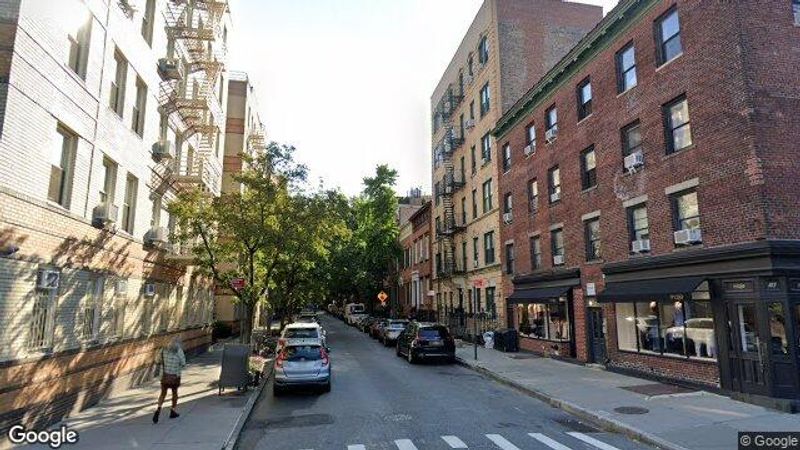
West Village sits within Greenwich Village, roughly bounded by 14th Street to the north, the Hudson River to the west, Seventh Avenue South to the east, and Houston Street to the south. Our team in New York treats this as the quieter, more residential half of the historic Village, defined by its crooked colonial-era streets rather than the numbered grid used elsewhere in Manhattan.
The neighborhood grew from a 19th-century enclave of merchants and dockworkers into a bohemian arts hub by the mid-20th century, drawing writers, musicians, and activists to streets like Bedford, Christopher, and Charles. That legacy shaped a low-rise, low-density character preserved today by the Greenwich Village Historic District, designated in 1969.
Today West Village functions as one of Manhattan's most exclusive residential pockets, favored by finance and media executives, longtime creative families, and international buyers seeking discretion. Our team in New York consistently sees clients drawn to its townhouse scale, tree-lined blocks, and absence of high-rise towers — a rarity this close to Manhattan's core.
The Housing Stock — Specific Buildings, Architects, Eras, Unit Types
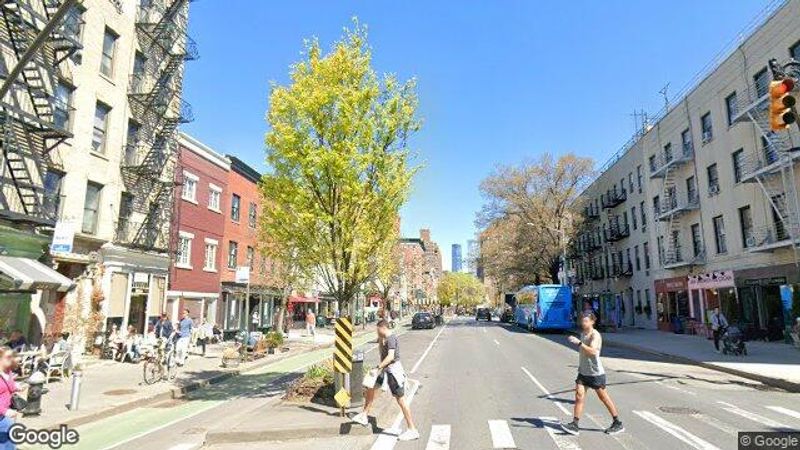
West Village housing is dominated by 19th-century rowhouses and low-rise brick tenements converted to co-ops, alongside a handful of architecturally significant towers. Bedford Street and Grove Street retain Federal and Greek Revival townhouses dating to the 1820s–1840s, many still configured as single-family homes or two- to three-unit conversions favored by buyers seeking full-building ownership.
Landmark developments include Westbeth Artists Housing on Bethune Street, a former Bell Labs complex converted to artist residences in 1970, and the Archive on Christopher Street, a converted 19th-century warehouse now holding loft-style condominiums. Richard Meier's glass towers along the Hudson at 165 and 173/176 Perry Street brought a modernist counterpoint to the district starting in 2002.
Unit types range widely: prewar co-ops with formal layouts near Abingdon Square, loft conversions with exposed beams near the Hudson, and boutique new condominiums such as 150 Charles Street, completed in 2016 with river views and full amenities. Our team in New York advises that inventory turns slowly here, and pre-war co-op board approval remains rigorous.
Prices and Rents — Concrete Numbers
West Village commands some of Manhattan's highest per-square-foot prices, driven by scarcity of new construction and enduring demand for townhouses. As of early 2026, co-op apartments generally trade lower per square foot than condos due to financing and board restrictions, while single-family townhouses on prime blocks like Charles or Perry Street routinely exceed $10 million.
Rental rates track similarly high, with studios near Hudson Street and one-bedrooms in walk-up buildings commanding premiums over comparable units in Chelsea or the East Village. All figures below are approximate and subject to market conditions, seasonal shifts, and building-specific factors such as amenities and board requirements.
| Unit Type | Purchase Price (Approx.) | Monthly Rent (Approx.) | Typical Size |
|---|---|---|---|
| Studio Co-op/Rental | $550,000 – $850,000 / N/A | $3,200 – $4,200 | 350–500 sq ft |
| One-Bedroom Condo | $1.2M – $2.1M | $4,500 – $6,500 | 650–900 sq ft |
| Two-Bedroom Co-op/Condo | $2.2M – $4.5M | $7,000 – $11,000 | 1,000–1,500 sq ft |
| Loft (Converted Warehouse) | $3M – $6M | $9,000 – $15,000 | 1,500–2,200 sq ft |
| Townhouse (Full Building) | $8M – $20M+ | N/A (rarely rented whole) | 3,500–6,000 sq ft |
Approximate West Village Prices and Rents (Early 2026, Subject to Market Conditions)
Our team in New York generally sees the fastest transactions in the $1.5–3 million condo range and in one- and two-bedroom rentals under $6,500 monthly, where competition among applicants is intense. Townhouses and penthouse condos move more slowly but rarely see meaningful price reductions given persistent scarcity of comparable inventory.
Daily Life and Transit — Subway Lines, Commute Times, Groceries, Schools, Parks
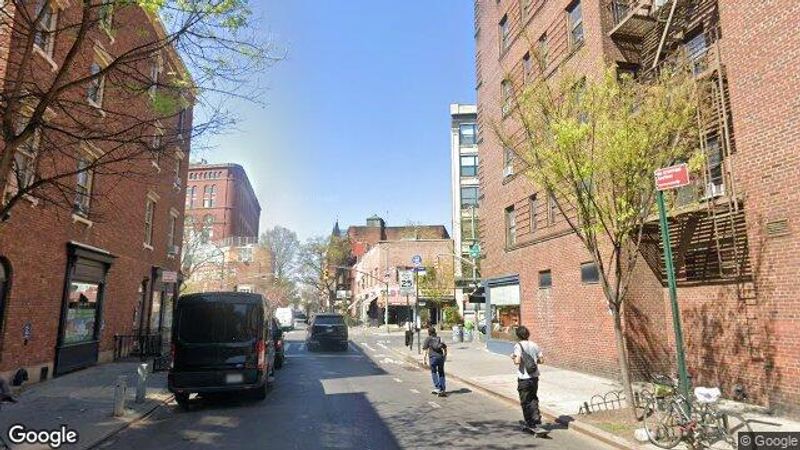
West Village is served primarily by the 1 train at Christopher Street–Sheridan Square, with the A/C/E and L accessible at West 4th Street and 14th Street respectively. Commutes to Midtown run roughly 15–20 minutes, while downtown financial district trips take about 10–15 minutes, making it practical for professionals working across Manhattan.
Residents shop at Citarella on Sixth Avenue, Jefferson Market's specialty grocers, and the Union Square Greenmarket a short walk northeast. Families gravitate toward Public School 3 (Charrette School) on Hudson Street for zoned elementary education, while private options like Little Red School House sit within the district. Green space centers on Washington Square Park and the Hudson River Park esplanade.
| Feature | Location/Line | Approx. Commute or Distance | Notes |
|---|---|---|---|
| Subway (1 train) | Christopher St–Sheridan Sq | 10–20 min to Midtown/Downtown | Local service |
| Subway (A/C/E) | West 4th St–Washington Sq | 12–18 min to Midtown | Express options available |
| Subway (L train) | 14th St / 8th Ave | 10 min to Union Square | Crosstown connection |
| Grocery | Citarella, Sixth Ave | 5–10 min walk | High-end specialty |
| Park | Washington Square Park | 5–15 min walk | Central gathering space |
| Waterfront | Hudson River Park | Along West St | Running, cycling paths |
West Village Transit and Lifestyle Reference
Daily life here favors walking and cycling over driving; Citi Bike stations are dense, and the Hudson River Greenway provides uninterrupted riverside paths north and south. Our team in New York notes that residents typically value this pedestrian scale and low car dependency as much as the housing stock itself.
Final Thoughts
West Village suits buyers and renters who prioritize architectural character, walkability, and low-density streets over modern towers and large-scale amenities. It rewards those planning a long-term residence rather than a quick flip, given slow inventory turnover and rigorous co-op approval processes that favor patient, well-documented buyers.
It is less suited to those wanting brand-new full-amenity towers, large floor plates, or the fastest possible closing timeline. Buyers seeking maximum square footage per dollar, or renters wanting doorman convenience at lower price points, will generally find better value in neighborhoods like Hudson Yards or Long Island City.
Our team in New York, working alongside our licensed brokerage network, regularly guides overseas clients through the specific due diligence West Village demands — landmark restrictions, board packages, and townhouse structural considerations. For clients who value discretion, history, and scale over scale-for-its-own-sake, this remains among Manhattan's most defensible long-term choices.
Reinvent NY provides business consulting, operational support, and coordination services. Real estate services are provided through licensed professionals and applicable brokerage relationships. This article is for informational purposes only and does not constitute legal or investment advice.
Nearby neighbourhoods: Yorkville, Battery Park City, Central Park South. All Manhattan guides are indexed under New York neighbourhood guides.

Satoshi Onodera
Founder & CEO, Reinvent NY Inc.
Founded Reinvent NY in 2024. Providing relocation support from all over the world to America.
Ready to Get Started?
Our team in New York is ready to help with your visa, real estate, or relocation needs.
Schedule a ConsultationFrequently Asked Questions
What are the exact boundaries of West Village?
West Village is generally bounded by 14th Street to the north, the Hudson River to the west, Seventh Avenue South to the east, and Houston Street to the south, sitting within the larger Greenwich Village Historic District.
Are West Village co-ops harder to buy than condos?
Yes. Co-op boards typically require extensive financial documentation, interviews, and often lower financing limits than condos. Our team in New York advises buyers to prepare thorough paperwork well before submitting offers on prewar co-op units.
Is West Village a good rental market for short stays?
It is better suited to longer leases. Inventory is limited, competition is high, and landlords generally favor tenants committing to a year or more, making short-term rentals scarce and comparatively expensive.
Which subway lines serve West Village best?
The 1 train at Christopher Street–Sheridan Square is the neighborhood's primary line, supplemented by the A/C/E at West 4th Street and the L train near 14th Street, covering most Manhattan destinations efficiently.
Are there new-construction condominiums in West Village?
New construction is limited due to landmark protections, but boutique developments like 150 Charles Street have added modern condominiums with amenities, appealing to buyers wanting contemporary interiors within a historic streetscape.
What school options exist for families in West Village?
Families often consider Public School 3 (Charrette School) on Hudson Street for zoned elementary education, alongside private options such as Little Red School House, both within or near the neighborhood's boundaries.
How do West Village prices compare to nearby Chelsea?
West Village generally commands higher per-square-foot prices than Chelsea, particularly for townhouses and prewar co-ops, though Chelsea often offers newer full-amenity towers at comparatively lower price points for similar square footage.
Real Estate Guides & Data
More guides
- Timing the NYC Market: Cycles, Seasons, and Honesty
- US Estate Tax for Non-Residents: The $60,000 Exemption
- Vacation Homes Beyond NYC: Hamptons, Hudson, and the Math
- Real Estate Attorneys in NY: What Counsel Actually Does
- Apartment Handover: The First 72 Hours of Ownership
- Heating and Cooling in NYC Buildings
Related Articles
East Village Manhattan Real Estate Guide 2026
A 2026 buyer and renter guide to East Village, Manhattan: boundaries, housing stock, prices, transit, and who this neighborhood truly suits.
Greenwich Village Real Estate Guide 2026
A local advisor's guide to buying or renting in Greenwich Village, Manhattan: buildings, prices, transit, and daily life for international buyers.
Tribeca Real Estate Guide 2026
An expert 2026 guide to buying and renting in Tribeca, Manhattan — boundaries, buildings, prices, and daily life from our team on the ground in New York.
SoHo NYC Real Estate Guide 2026
An in-depth 2026 guide to buying and renting in SoHo, Manhattan — buildings, prices, transit, and daily life from our team on the ground in New York.