Superior Ink: 400 West 12th Street in the West Village
Superior Ink is a Robert A.M. Stern condominium at 400 West 12th Street, completed by The Related Companies in 2009 on the site of the factory whose name it keeps.
It pairs a riverfront tower on West Street with seven townhouses on Bethune Street, and that split, together with its waterfront position, shapes what ownership involves. Here is what to know before buying there.
1. What the Building Is
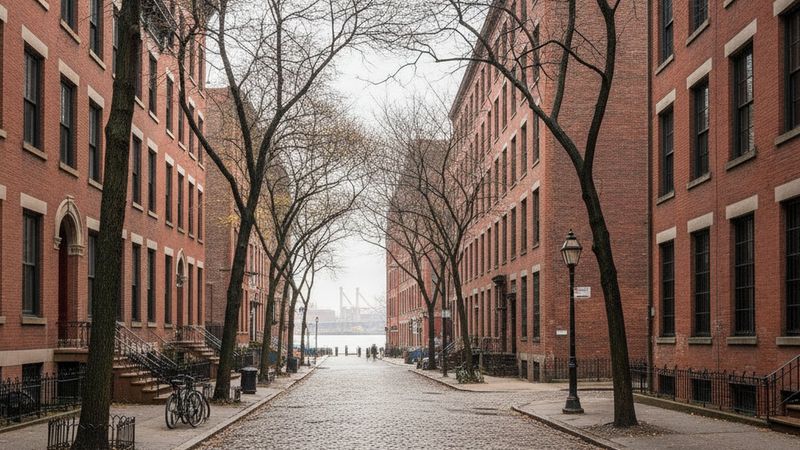
Superior Ink fronts West Street between West 12th and Bethune Streets, facing the Hudson River at the western edge of the West Village. The Related Companies developed it, and it was completed in 2009 as a condominium in two parts: an apartment tower on the river and seven townhouses along Bethune Street.
Robert A.M. Stern Architects designed the complex, with Ismael Leyva Architects as architect of record and Yabu Pushelberg responsible for the interiors. The tower is clad in precast brick panels with metal panels and window wall, while the townhouses are built in red brick and masonry in a nineteenth-century idiom.
| Attribute | Detail |
|---|---|
| Address | 400 West 12th Street (also 469 West Street), West Village; West Street between West 12th and Bethune Streets |
| Completed | 2009 |
| Developer | The Related Companies |
| Architects | Robert A.M. Stern Architects (design); Ismael Leyva Architects (architect of record) |
| Interiors | Yabu Pushelberg |
| Configuration | Apartment tower on West Street and seven townhouses on Bethune Street |
| Residences | 60 residential condominium units on the city tax roll, including the seven townhouses, plus a garage unit |
| Ownership and status | Condominium; LEED Silver certified; not within a designated historic district |
Building facts. Unit-level figures such as size, monthly charges and tax must be obtained for each apartment or townhouse.
The city's tax roll lists 60 residential condominium units, including the seven townhouses, together with a garage unit. Published counts have run higher, partly because some apartments have since been combined, so confirm the current figure and floor plans from the condominium's own records.
The location is on Google Maps.
2. From Ink Factory to Condominium
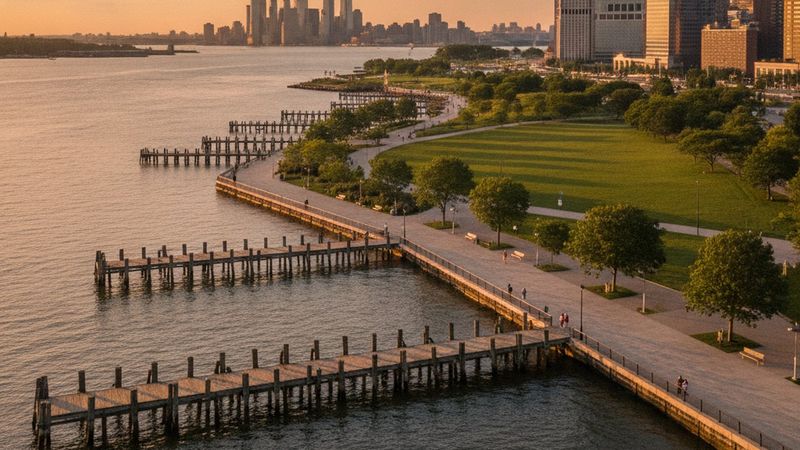
The complex takes its name from the Superior Ink factory, a building dating from 1919 that stood on the site, known for its pair of tall chimneys and home to a maker of lithographic inks until 2006. Preservationists asked the city to designate it a landmark, but it was never designated, and demolition began late that year.
Development needed relief from the zoning that applied to the site. The Board of Standards and Appeals approved a variance in February 2006, and Related later replaced its first architect, Charles Gwathmey, with Robert A.M. Stern, then filed a revised design that reduced the variances required.
The result is deliberately contextual: the tower draws on the area's factory buildings, and the townhouses look to the row houses of the surrounding streets. Much of the neighbouring fabric lies within the Greenwich Village Historic District, but the Superior Ink lot itself is not designated.
If you are weighing a townhouse, ask how its costs and maintenance are allocated within the condominium.
3. Amenities, Flood History and Upkeep
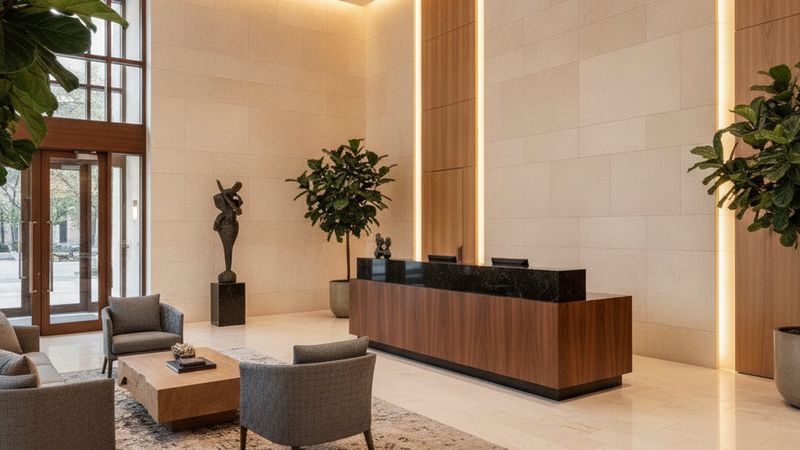
Shared facilities include a 24-hour attended lobby with concierge, a fitness centre with a yoga and Pilates studio, an entertainment lounge, a screening room, a children's play area and a valet garage. Each townhouse has its own street address, a private garden and a roof terrace, and the project is LEED Silver certified.
The river frontage brings a risk to price in. In 2012 Hurricane Sandy took the building out of service after seawater reached its pipes, and residents were told it could be months before they returned. City planning data show part of the tax lot inside FEMA's 1% annual chance floodplain on both the 2007 and 2015 maps.
The facade has a history too. The engineering firm Superstructures records a restoration of the tower's prefabricated brick panel wall system that addressed loose brick veneer and deteriorated expansion joints, so ask the board when that work was completed and how it was funded.
Ask for the reserve fund balance, the assessment history and the flood insurance policy together.
4. Buying Here as an Overseas Purchaser

Because Superior Ink is a condominium, there is no co-op board approval, and foreign buyers can purchase, whether an apartment in the tower or one of the townhouses. Some lenders offer financing to foreign nationals, but they expect larger deposits and fuller documentation than for a US borrower, so start early.
At closing the buyer pays New York's mansion tax on residential purchases of $1 million or more, charged on the whole price at graduated rates from 1% between $1 million and $2 million up to 3.9% at $25 million and above. On a later sale by a foreign owner, FIRPTA withholding of 15% of the gross price applies unless an IRS withholding certificate reduces it.
A non-resident who is not a US citizen has only a $60,000 US estate tax exemption on US-situs assets, so settle the ownership structure with tax counsel before contract. Since July 2026 New York City also levies an annual pied-à-terre surcharge on high-value apartments that are not anyone's primary residence, and its administration is before the courts.
Settle structure and financing first, then make the offer.
Recorded Sales: What the Public Record Shows
NYC's Department of Finance records every sale with its address and price. Between January 2023 and September 2026 it recorded 17 sales of apartments at Superior Ink, at a median price of $9 million. Half of them closed between $5.08 million and $15.72 million; the highest was $19.25 million.
| Year | Sales | Median price | Highest price |
|---|---|---|---|
| 2023 | 5 | $12.4 million | $16.38 million |
| 2024 | 3 | $9.75 million | $15.85 million |
| 2025 | 6 | $7.03 million | $19.25 million |
| 2026 (Jan–Sep) | 3 | $4.4 million | $10.22 million |
Recorded sales of residential units at Superior Ink, by sale date. Source: NYC Department of Finance annualized sales 2023–2025 and rolling sales to September 2026. Sales under $100,000 and multi-unit bulk transfers are excluded; a combined purchase of two units counts once.
A median across a whole building mixes small and large apartments, low floors and high ones, so it describes the building rather than any one residence. Use it to see how often apartments here change hands and where the building's prices sit. Price a specific apartment from recorded sales on the same line and floor range, which can be pulled from the deed records before you make an offer.
These are recorded deed prices, not asking prices, and none of them is a Reinvent NY transaction. A sale appears in the record weeks after closing, and a deed price can include a parking space or storage unit bought at the same time.
Final Thoughts: Tower or Townhouse

Superior Ink gives a buyer a choice that is unusual within a single Manhattan condominium: a river-view apartment with full services, or a condominium townhouse with its own front door, garden and roof terrace under the same association. Read the offering plan to see how responsibilities and costs are divided between the two.
Both share the same waterfront position, which is the source of the views and of the building's main diligence items. Flood history, insurance cover and the condition of the facade belong at the top of the list, ahead of finishes and layouts.
Price a specific apartment or townhouse from recorded sales of comparable units in the building rather than from a building-wide average, because the two types trade as different products. Then read the offering plan, the latest financial statements and the board minutes before committing.
Request the offering plan and recent financials before you schedule a viewing.
Figures here describe the building, not any one apartment. Asking prices, monthly carrying costs, tax abatement status and sublet rules are established unit by unit from the offering plan, the most recent financial statement and the managing agent.
Reinvent NY Inc. provides real estate and business expansion consulting in New York. This article is for informational purposes only and does not constitute legal, tax or investment advice.
More buildings worth knowing: 100 Eleventh Avenue, 111 West 57th Street, 130 William. The full set is indexed under New York building profiles.

Satoshi Onodera
Founder & CEO, Reinvent NY Inc.
Founded Reinvent NY in 2019. Providing relocation support from all over the world to America.
Buying, renting or expanding to New York?
Our New York team helps international buyers, renters and companies with property and US business expansion.
Talk to our teamFrequently Asked Questions
Where is Superior Ink?
Superior Ink is at 400 West 12th Street in the West Village. The tower fronts West Street between West 12th and Bethune Streets, facing the Hudson River, and its townhouses line Bethune Street. The location is on [Google Maps](https://maps.google.com/?q=400+West+12th+Street+New+York).
Who designed Superior Ink?
Robert A.M. Stern Architects designed the complex, with Ismael Leyva Architects as architect of record and Yabu Pushelberg responsible for the interiors. Charles Gwathmey was Related's original architect before Stern's firm took over the project.
How many residences are in Superior Ink?
New York City's tax roll lists 60 residential condominium units, including seven townhouses on Bethune Street. Published counts have been higher, partly because some apartments have been combined, so confirm the current figure in the condominium's records.
Can foreign buyers purchase at Superior Ink?
Yes. It is a condominium, so there is no co-op board approval for either the tower apartments or the townhouses. Plan for the mansion tax at purchase, FIRPTA withholding on a later sale and US estate tax exposure, and set the ownership structure with tax counsel before contract.
Why is it called Superior Ink?
The complex stands on the site of the Superior Ink factory, a building dating from 1919 known for its two tall chimneys. The city declined requests to landmark it, and demolition began in late 2006.
Was Superior Ink affected by Hurricane Sandy?
Yes. In 2012 the storm took the building out of service after seawater reached its pipes, and residents were told it could be months before they returned. Part of the tax lot lies within FEMA's 1% annual chance floodplain, so review flood insurance and resilience work before contract.
What have apartments at Superior Ink sold for recently?
NYC Department of Finance records show 17 sales at Superior Ink between January 2023 and September 2026, at a median recorded price of $9 million, with half between $5.08 million and $15.72 million. A building-wide median mixes very different apartments, so price a specific unit from recorded sales on the same line and floor range.
Real Estate Guides & Data
More guides
- Selling a US Property: Timeline, Costs, Net
- Square Footage in NYC: Why the Number Lies
- Timing the NYC Market: Cycles, Seasons, and Honesty
- US Estate Tax for Non-Residents: The $60,000 Exemption
- Vacation Homes Beyond NYC: Hamptons, Hudson, and the Math
- Real Estate Attorneys in NY: What Counsel Actually Does
Related Articles
US Real Estate Tax Strategies 2026: Keep More Yield
1031 exchanges, depreciation, entity choice, and estate tax exposure: the tax levers that decide what US real estate investors actually keep in 2026.
VA Loan Guide 2026: Zero Down & Fee Rules
Master VA loan eligibility, funding fees and occupancy rules for veterans. Secure zero down payments with our step-by-step application guide.
150 Charles Street: A West Village Condominium by COOKFOX
150 Charles Street in the Far West Village: the COOKFOX condominium built on a former Whitehall warehouse, and what buying an apartment there involves.
515 Park Avenue: A Zeckendorf Condo Tower at 60th Street
515 Park Avenue, a Zeckendorf condominium tower completed in 2000 at Park Avenue and East 60th Street: its layouts, staff suites and what buying there involves.